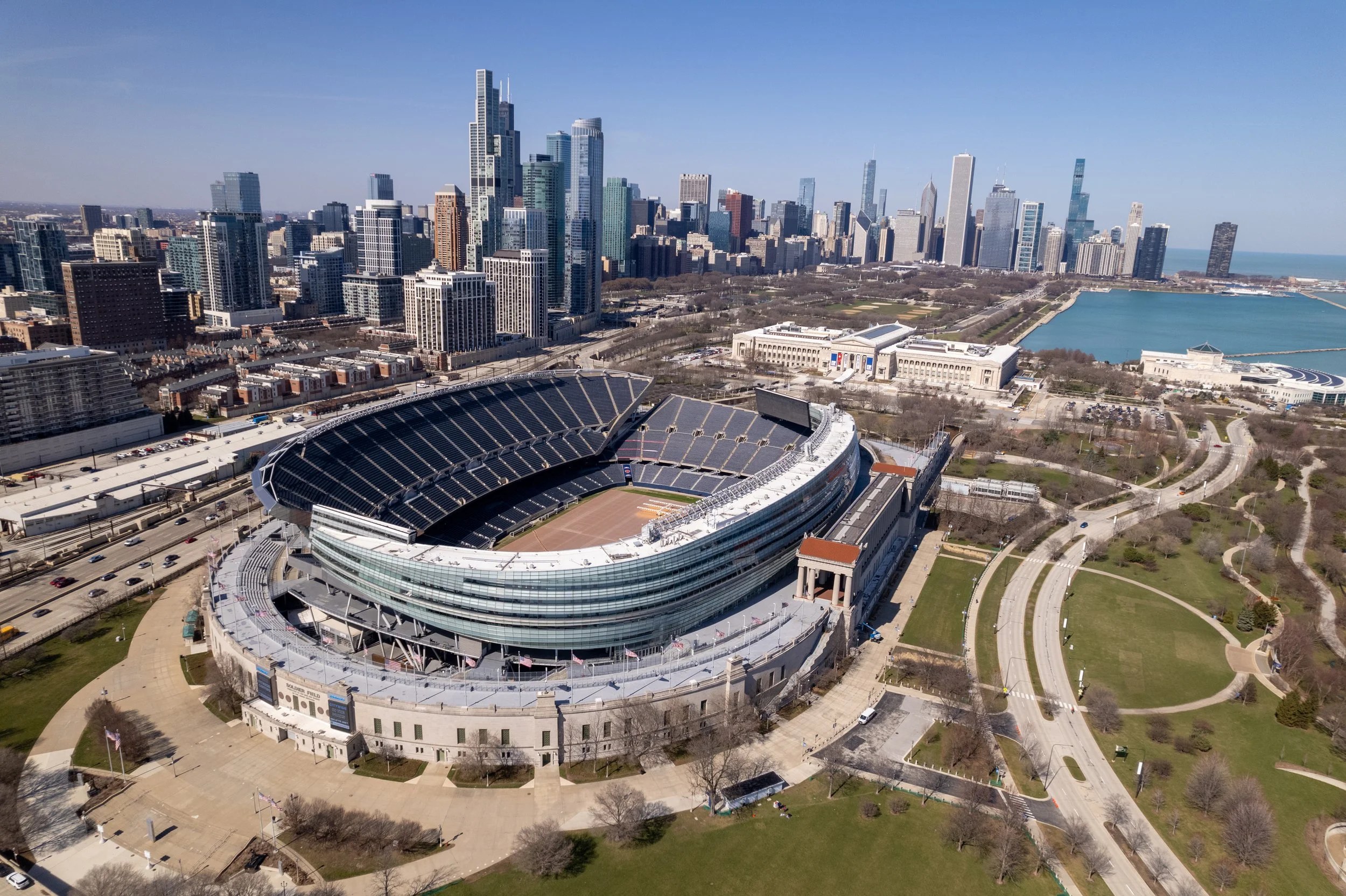
SUNDAY, OCTOBER 4, 2026 — The long-running saga over where the Chicago Bears will play their football has entered a new chapter — one that runs through the governor's office. On Thursday, NFL commissioner Roger Goodell sat down in Illinois with Gov. J.B. Pritzker, Bears minority owner Pat Ryan and the state's top legislative negotiators, in what the governor's office said was "a productive meeting focused on keeping the Bears in Illinois and protecting taxpayers."
It was, by several accounts, the most serious signal yet that the league itself is working to keep the franchise in its home state — even as the Bears' own brass continues to say publicly that its "sole focus" is a move across the state line to Hammond, Indiana.
The meeting, first confirmed in a statement from the governor's office on Thursday, included House Speaker Emanuel "Chris" Welch, Rep. Kam Buckner and Sen. Bill Cunningham alongside Goodell, Pritzker and Ryan. "The Governor's Office has remained in conversation with the Bears about their plans in Illinois throughout the summer," the statement read, noting that Pritzker had met with Goodell over the summer as well as again this week.
Reading the guest list
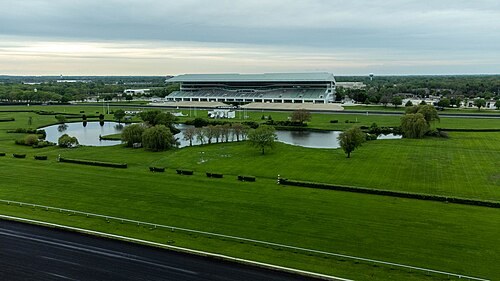
In stadium politics, who shows up is the story — and this guest list was telling. None of the three legislators represents Arlington Heights, the Chicago suburb where the Bears own a 326-acre property, the former Arlington International Racecourse, that was the centerpiece of the team's original $4.7 billion plan for a domed stadium and mixed-use development. All three represent districts in and around Chicago.
Also notably absent: Bears president and CEO Kevin Warren and controlling owner George McCaskey, the two men who have been the public faces of the team's stadium search. Warren said in August that the team's "sole focus" was potential sites in Hammond, Indiana. A few weeks later, Warren added: "The moment that we finish our due diligence and have the appropriate capital stack and financing together, we are looking forward to making the decision so we can break ground and get our project going forward." McCaskey said on Aug. 13 that "our focus is on Hammond," adding that "that's where we're advancing our efforts, and that's where the bulk of our time, attention and resources are being devoted."
The one Bears voice in the room was Pat Ryan — a minority owner whose family name now carries unusual weight in Chicago sports construction. Ryan is the namesake of Northwestern University's Ryan Field, which just completed an $870 million transformation and opened Friday with a 34-13 win over Penn State. According to ABC Chicago's reporting, Ryan has emerged in recent weeks as a facilitator of discussions between Illinois leaders and the NFL, after appearing as a last-minute addition to an August meeting between Illinois deputy governor Andy Manar and the Bears' stadium development chief.
The Indiana leverage
The Bears' interest in Indiana is real, and it has a price tag attached. Indiana has made a heavy push to bring the franchise to northwest Indiana, with a public funding package of up to $1 billion in public funding and tax incentives signed by Gov. Mike Braun in February. McCaskey has said that if the team moves, it will keep the "Chicago" name — a concession to history, if not geography.
But the Indiana option has always looked, at least in part, like leverage. Goodell himself hinted at the dynamic in late August: "There's no specific timetable from my standpoint, other than we know that they are looking at the alternate groups, Indiana or Arlington Heights," he said. "We want to make sure that Arlington Heights and Illinois have an opportunity, as well as Indiana, to put their best foot forward."
The leverage appears to be working. According to Crain's Chicago Business, recent discussions between the Bears and Illinois officials have centered on a publicly-owned stadium model for the Arlington Heights site — a significant shift from the team's original plan to own and privately finance the venue. Public ownership would solve the property-tax question that has stalled the team's ability to convert the Arlington Park site, which the Bears already own, into a new stadium. The goal, per the reporting, is to craft legislation that could pass both houses of the Illinois legislature.
The taxpayer question
This is where the business of the story gets serious. Stadium economics in America has a long and mostly one-sided history: teams extract public money, taxpayers absorb the risk, and the promised economic windfalls rarely materialize at the scale advertised. The governor's emphasis on "protecting taxpayers" is a direct response to that history — and to Indiana's $1 billion counteroffer, which sets the floor for what Illinois must match or beat in creative financing if not raw dollars.
The public-ownership model now under discussion is the most taxpayer-friendly structure on the table. Under it, the state or a public authority would own the venue — resolving the property-tax dispute that froze the Arlington Heights plan — while the Bears would presumably pay rent or revenue shares. It's the model that has kept places like Green Bay's Lambeau Field anchored in their communities, and it avoids the worst outcome for Illinois taxpayers: writing a blank check for a privately owned asset.
The counterweight is time. The NFL's statement — "Timely action is essential as the Bears work to find a long-term stadium solution for the club and their fans," delivered via WTTW — reads as a polite deadline. The league does not want its charter franchise playing stadium poker indefinitely, and every month of delay is a month the Indiana option gains credibility.
What the mayors are saying
The two towns with the most to gain or lose are watching closely. Arlington Heights Mayor Jim Tinaglia said he was encouraged by the governor's remarks and welcomed "continued progress toward keeping the Bears in Illinois," adding that the village believes Arlington Heights "offers the best opportunity for the Bears to build a state-of-the-art stadium and entertainment district."
Across the border, Hammond Mayor Thomas McDermott Jr. was less enthusiastic. He told residents the Bears had informed him of the Illinois meeting before it took place — he wasn't happy about it, but said he understood the decision. The Bears, for their part, declined to comment on the meeting, per ABC Chicago.
What happens next
The honest answer: nobody knows. The Bears' ownership still says its focus is Hammond. The league is now visibly working the Illinois side. The state's legislative leaders are at the table, the property-tax logjam has a proposed solution, and the man who just delivered an $870 million stadium in Evanston is in the room.
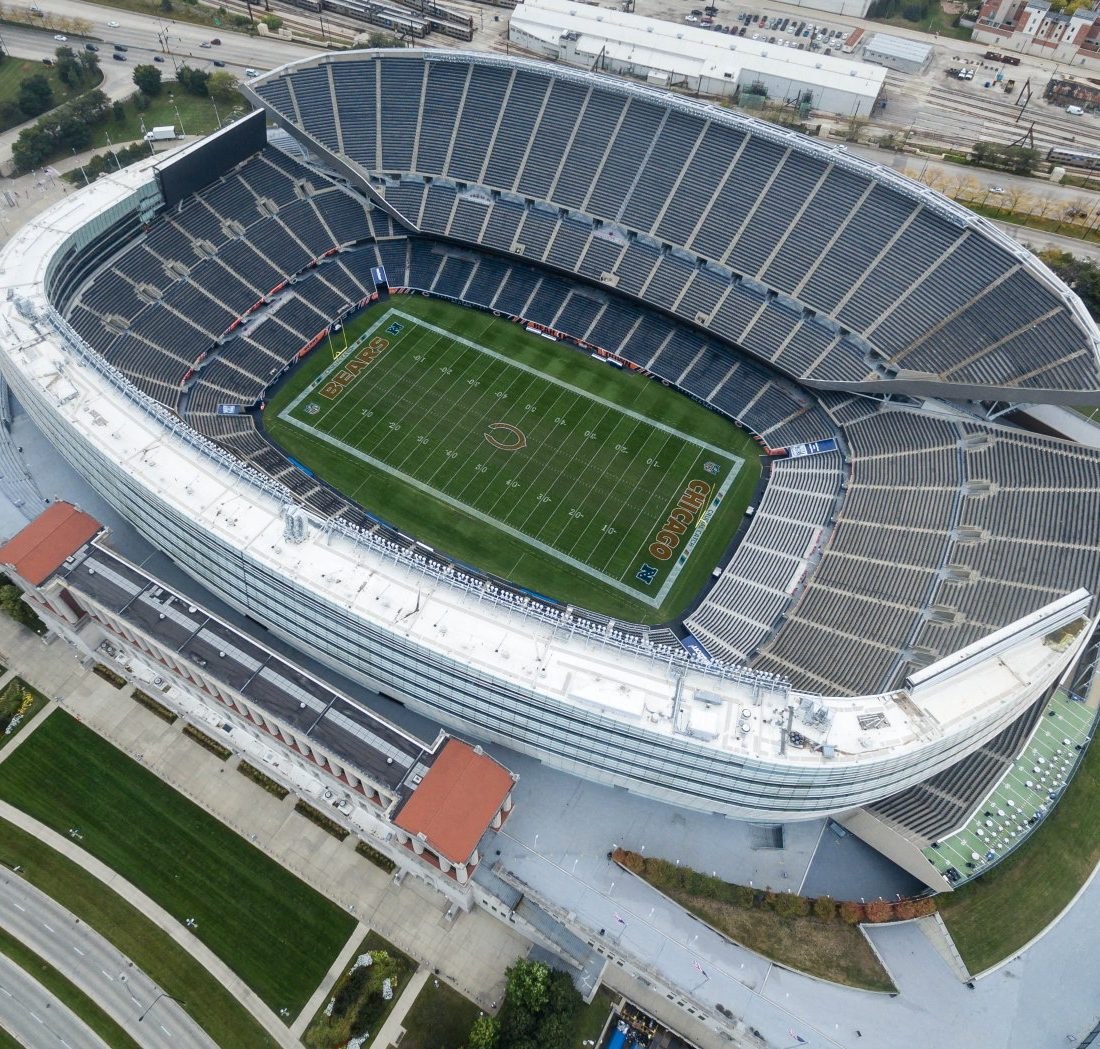
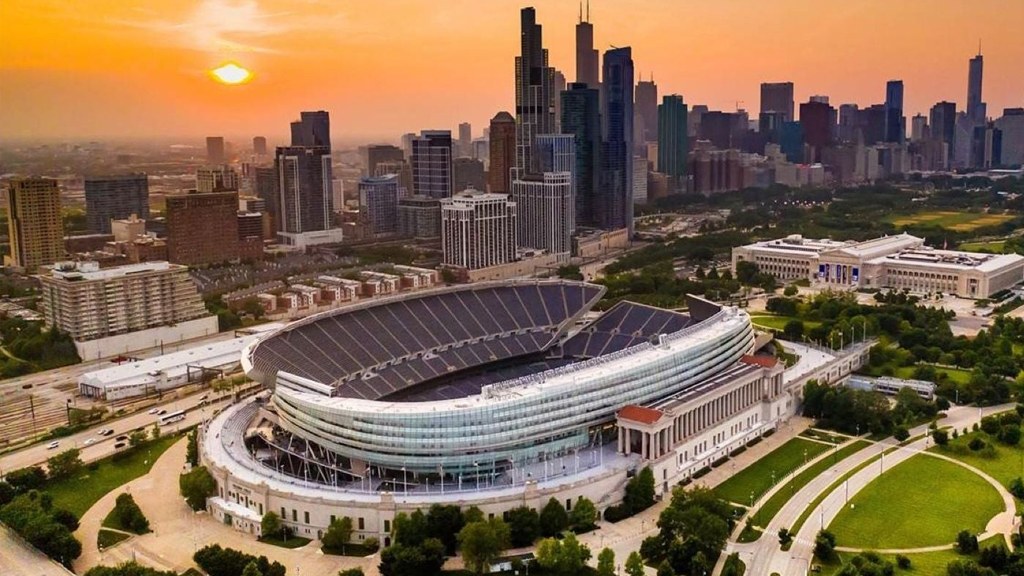
The one certainty in this saga is the starting point. The Bears have played at Soldier Field since 1971, and whatever the next home looks like — a publicly-owned dome in Arlington Heights or a billion-dollar build in Hammond — it will not be the lakefront landmark. For a franchise that has spent years insisting it needs a better gameday experience than the NFL's second-smallest stadium can provide, the question is no longer whether it moves. It's which state writes the deal — and what the taxpayers get in return. The Bears host the Jets at Soldier Field on Sunday; our Week 4 guide has the full slate.