The Short Version
- CNN, MS NOW and Politico are in Washington federal court Thursday asking a judge to block the White House's revocation of their access until a final ruling.
- Trump pulled their credentials for publishing what he called "FAKE NEWS" — the latest escalation of his pressure campaign against coverage he dislikes.
- U.S. District Judge Timothy Kelly temporarily blocked the ban on Sept. 24, finding it likely violated the outlets' right to fair treatment under the Fifth Amendment. He did not rule on their First Amendment free-speech claim.
- The Justice Department says the outlets endangered national security by publishing classified information, citing stories on the White House ballroom construction and turnout at the recent Republican midterm convention.
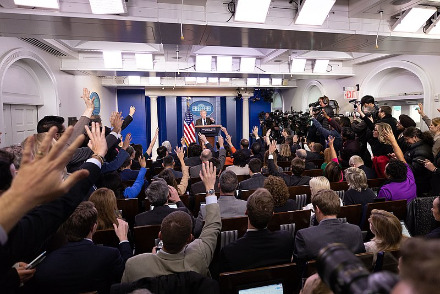
WASHINGTON — Three news outlets the White House wants out are back in front of a federal judge Thursday, asking him to keep their access to the White House intact until their case against the ban is fully decided.
CNN, MS NOW and Politico were stripped of their credentials after President Trump revoked their access for publishing what he said was "FAKE NEWS" — the latest and most aggressive step in his campaign against media coverage he dislikes. Trump has said he might ban other outlets too, though he acknowledged he was unsure whether such a move would survive in court.
That doubt is what Thursday's hearing is about. The outlets are due in Washington federal court to ask U.S. District Judge Timothy Kelly to extend their protection against the ban until a final ruling — effectively keeping the status quo in place while the full case plays out.
Kelly has already sided with the outlets once, and the basis matters. On September 24 he temporarily blocked the ban, finding it likely violated the outlets' right to fair treatment under the Constitution's Fifth Amendment. What he did not do is rule on the outlets' bigger claim — that the ban also violated their First Amendment free-speech rights. That question is still open, and Thursday's hearing is about bridge protection, not the final answer.
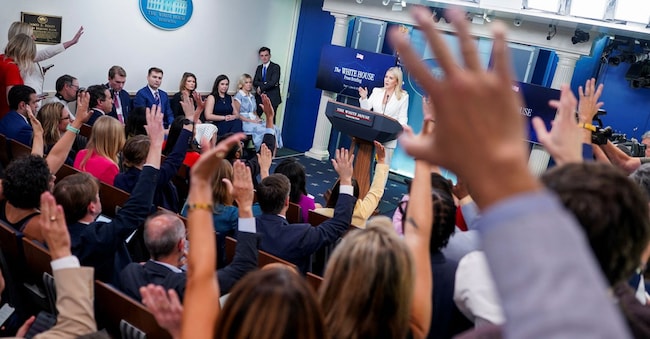
The outlets' argument, per Reuters' account of their filings: the revocation of their passes was unlawful retaliation for their coverage, and the administration has invented meritless national security justifications after the fact. The Justice Department's counter is considerably heavier. Government lawyers say the outlets endangered national security by publishing classified information — pointing specifically to stories about construction of Trump's White House ballroom and to turnout at the recent Republican midterm convention.
Kelly did not sound sold on the government's position at a hearing on September 23, when he was described as skeptical of its arguments. And there is history between this judge and this president on exactly this kind of fight. During Trump's first term, Kelly blocked the administration from revoking CNN correspondent Jim Acosta's White House pass, finding the decision was not transparent or fair. The current case echoes that one: the question is not whether the president likes the coverage, but whether the government can yank access without a fair and transparent process.
The timing is not incidental. The legal battle is playing out just weeks before the November 3 midterm elections, in which Republicans are fighting to hold Congress. Trump is doing so from a weak polling position: his job approval ratings are at the lowest of his political career in opinion polls, weighed down by concerns over the Iran war and inflation, per Reuters. A White House banning outlets that cover it closely, weeks before an election, is the kind of fact pattern judges tend to notice.
What the outlets want Thursday is narrower than it sounds and bigger than it sounds. They are not asking Kelly to decide the whole case — they are asking for an order blocking the ban until a final ruling exists. But if Kelly grants it, the practical effect is that CNN, MS NOW and Politico report from the White House through the election and beyond, while the First Amendment question — whether a president can condition press access on coverage he likes — waits for its full hearing.
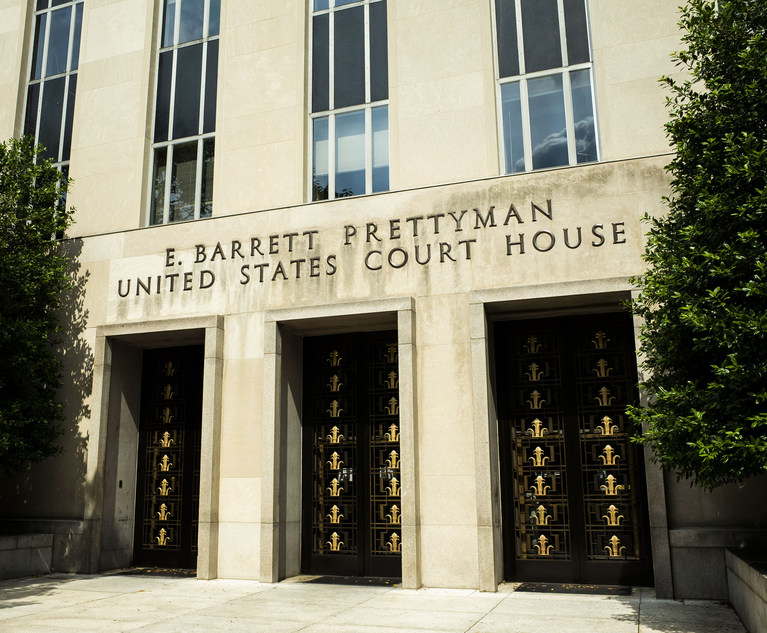
It is worth keeping the Fifth Amendment piece front and center, because it is easy to misread. Kelly's September 24 ruling was about due process and fair treatment — the idea that even when the government has discretion, it cannot exercise it arbitrarily against specific people without a transparent standard. That is a narrower holding than a First Amendment ruling, but it is also a more immediately enforceable one: it does not require the court to decide the full scope of press rights against the White House, only whether the government played fair in this instance. The First Amendment claim, still unresolved, is the larger fight lurking behind Thursday's ask.
The government will have to convince Kelly that its national security rationale is something more than a post-hoc wrapper for retaliation. At the September 23 hearing the judge was not persuaded; Thursday is the government's second chance, with a longer runway to make the case. For the outlets, the strategy is simpler: remind the court that the ban was announced as punishment for "FAKE NEWS," that retaliation is the stated motive in the president's own words, and that whatever classified-information claims followed arrived after the decision, not before it.
This hearing is part of a broader Thursday news picture — it lands the same morning the administration announced a sweeping immigration crackdown on tech employers and nine universities — but its stakes are its own: the ground rules for how the White House can treat the press corps that covers it, decided in real time, weeks before a midterm.
Sources
- Reuters — CNN, MS NOW, Politico to urge judge to block White House ban long-term
- NPR (via KRPS) — 3 media companies barred from White House return to court