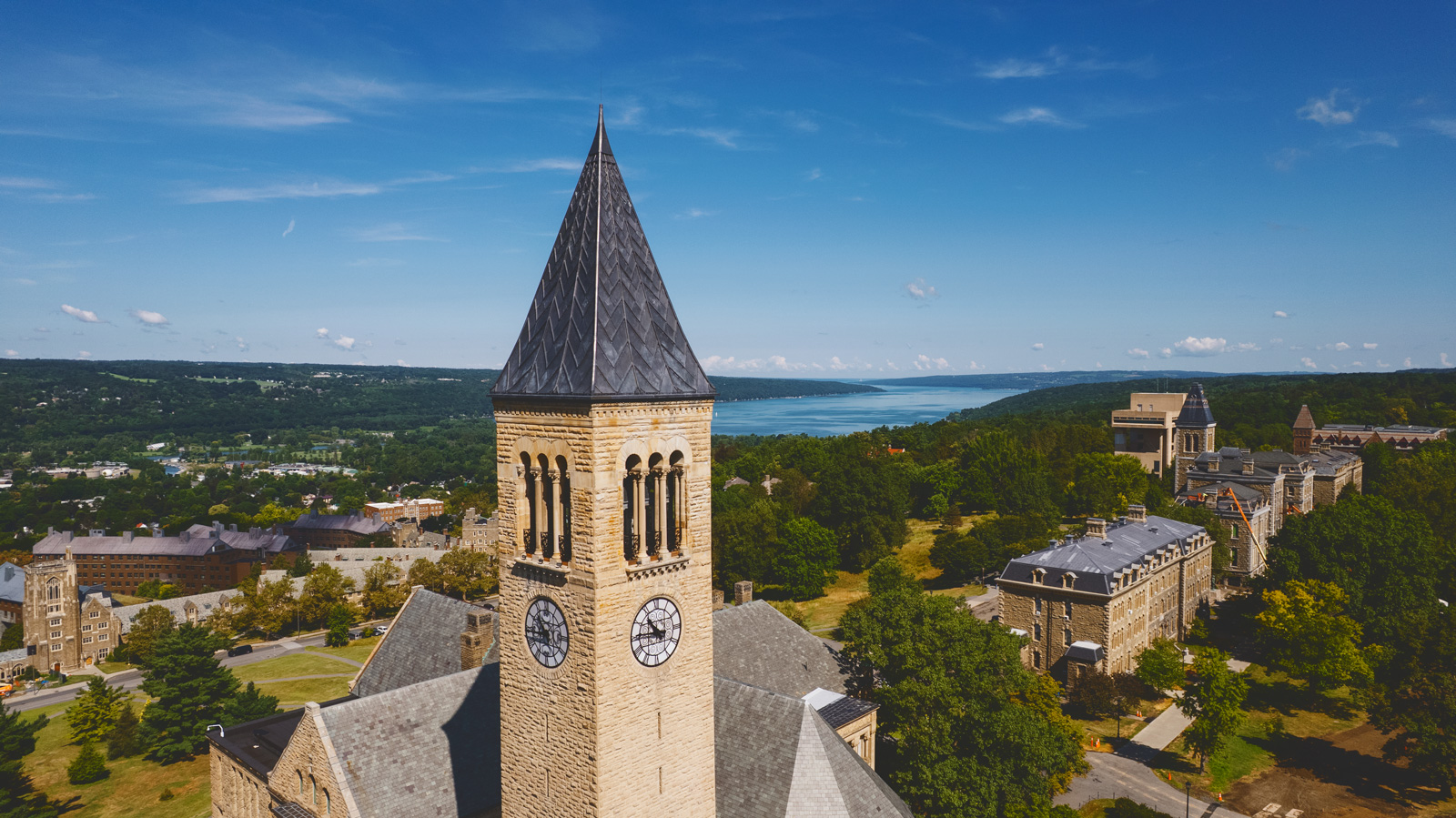
SATURDAY, OCTOBER 4, 2026 — Two years after a Cornell University sophomore says she was gang raped inside the Chi Phi fraternity house by seven accused fraternity members, the case has become a national reckoning over sexual assault on college campuses — and this week it grew again. The New York Times, reporting from hundreds of pages of previously private Title IX files, has reconstructed the three weeks between the alleged October 2024 assault and the night the woman — identified in court papers only as Jane Doe — decided to take her story to the campus police. At the same time, the criminal investigation that stalled in 2024 has been reopened, New York's governor has taken it away from the local district attorney and handed it to the attorney general as a special prosecutor, and the debate over Cornell's own punishments — two of the accused were expelled — refuses to stay closed.
The records obtained by the Times, reported by Sharon Otterman, trace what the paper describes as Doe's journey from shame to action. Around 11:15 a.m. on Oct. 20, 2024, she returned to her dorm room still wearing "big boots and small dress" from the night before, according to interviews in the Title IX files. She told her two roommates she had taken ketamine and had sex with multiple men. One roommate told investigators Doe did not use the word "rape" or "assault" yet. Another said she seemed to be "in shock," the paper reported — recounting the night "as this sort of crazy thing that she had done" rather than as a crime.
The next day, Doe went to her "big sister" — a mentor — in Cornell's Tri Delta sorority and told her rumors were circulating that she was a "slut," the Times reported, adding with a laugh that "unfortunately they are true." That same day she received a text from Jonathan Newell, one of the men she would later accuse, in which he wrote that both he and another accused man, Matthew Ingalls, felt terrible for being too under the influence of drugs and alcohol to "shut it down and kick people out before it got way out of hand." Doe reassured him, the paper reported — a message her attorney would later describe as the product of trauma and denial.

According to a six-page statement Doe gave to Cornell Campus Police roughly a month after the alleged assault, several fraternity members had been bragging about having an "eightsome" with her, and word of what happened had become "public knowledge" around campus the next day, the New York Post reported. She told police her reputation had been "destroyed." In texts with Ingalls on Oct. 23, she wrote that what happened was "RUINING my life temporarily"; Ingalls replied that it would blow over and that she had nothing to be ashamed of, according to the documents published in the Times' reporting.
She also gave her roommates strict instructions, one of them told investigators: "If anyone asks about this," she said, "say it didn't happen." The roommate added that as the days went on, Doe seemed to come to realize "it was something bad," the Times reported.
The three weeks that changed everything
The turning point, according to the Times, came about a week after the party, when Doe was browsing an online forum about Greek life and encountered a post asking, "Are Chi Phi brothers Crips or Bloods because I hear they have been doing hell Gang Banging?" — followed by another saying, "They do drugs and gang r*ped a sophomore. Report them." Doe told investigators, according to the paper, "That's the first time I had ever heard the narrative change that I wasn't a whore and that I was assaulted."
Days later she sent Ingalls an image of the forum post with the single word "???" He wrote back "Ridiculous," adding, "I'm gonna report that," the Times reported. Around Halloween, the fraternity's president — who was not among those accused, the paper noted — called Doe to disinvite her from the chapter's Halloween party. It was for her own good, he said. Her reply, the Times reported, was unsparing: "I knew this was going to happen. The woman will always get the short end of the stick. Yall aren't my friends. Yall are covering your asses."
By Nov. 3, the documents show, Doe appeared to have concluded she was assaulted. She texted Newell: "let's be clear that 90% of what happened that night was not consensual. i was given more key than i can remember," using a shorthand for ketamine, the Times reported. Four days later, on Nov. 7, she went to an emergency room in Ithaca and requested a rape kit. And on Nov. 14, she reported the incident both to a Cornell University campus police investigator and to the university's Office of Civil Rights Title IX office, according to People, which cited the case records.
No charges — then a reopened investigation
Tompkins County District Attorney Matthew Van Houten reviewed Doe's complaint and declined to bring criminal charges, saying there was not sufficient evidence to do so, the Times reported. The criminal track appeared dead. Then, on Sept. 16, 2026, Doe filed a civil lawsuit against the seven men, Cornell University, the national and local Chi Phi organizations, her sorority, and others — including an Ithaca bar the complaint says served her while she was underage — and the case exploded back into public view.
On Sept. 28, Van Houten announced his office would reexamine the case, with the possibility of presenting it to a grand jury. He said the allegations in the lawsuit differ substantially from the account prosecutors reviewed in 2024, and he acknowledged that his office had relied on the Cornell University Police investigation rather than conducting its own separate inquiry, according to Law Commentary's reporting. The district attorney also said his office never received the screenshot from a "Chi Phi Actives" group chat — included in the civil complaint — in which a member appeared to advertise "free pussy" upstairs; Cornell says investigative information shared with prosecutors did include the screenshot, according to Inside Higher Ed's account of the university's published FAQ.
CBS News, meanwhile, obtained the transcript of Doe's November 2024 police interview, in which she told the investigator, "I can say with 100 percent confidence I was raped," and said she had been "completely and totally incapacitated" and "physically hit very, very hard," according to Inside Higher Ed and the New York Post. Van Houten told CBS he had never seen the full transcript — his office had worked from a police-prepared written statement that, he said, described her participation as voluntary. The dispute over what prosecutors actually had is now central to the case's second life.

On Oct. 1, Governor Kathy Hochul removed Van Houten from the matter entirely and appointed New York Attorney General Letitia James as special prosecutor, citing lost confidence in the original handling, according to Law Commentary's reporting. The criminal investigation is now active, with a grand jury presentation possible. None of the seven accused has been convicted of any crime.
What Cornell did — and the fight over whether it was enough
While prosecutors deliberated, Cornell ran its own process. The university opened a Title IX investigation in January 2025, holding at least a dozen hearings that May, USA Today reported. The outcomes were laid out by Cornell President Michael Kotlikoff to the student government on Sept. 29: two of the seven students were expelled; two were suspended for at least two semesters; one had already graduated before sanctions could be imposed; and two were found not responsible for sexual misconduct, according to multiple accounts of Kotlikoff's remarks, including USA Today's and Law Commentary's. Cornell has declined to identify which sanction applied to which student, citing federal student privacy rules — so, crucially, no public source ties an individual name to an individual punishment.
That breakdown has not settled the dispute. Doe's attorney, Thomas P. Giuffra, said his client did not feel justice had been done — noting that only two of the men were expelled, USA Today reported. The lawsuit alleges that some of the accused were allowed to mitigate their punishment by writing essays, an allegation Cornell flatly rejects: "None of the individuals charged were offered the opportunity to write essays as a sole consequence of their involvement," the university said, according to the University Herald's reporting. Kyle Kimball, Cornell's vice president for university relations, put it more pointedly: "Any suggestion that the university did not impose consequential punishments for those involved is false," USA Today reported.
Lawyers for at least three of the accused men have broadly denied criminal wrongdoing, the Times reported. Jeremy Saland, the attorney for Scott Kretzschmar, told CBS News that his client entered the room briefly after seeing the group-chat message, never touched Doe, found her coherent, and left within minutes — adding that Cornell found Kretzschmar not responsible and that a hair-follicle test showed no ketamine in his system, according to a published summary of the coverage. Scott Norris, through an attorney, told ABC News that he acknowledges sending a message included in the complaint but denies any sexual activity or drug use, saying Cornell did not find him responsible for the allegations involving sex or drugs, the same summary reported. Doe's attorney, Giuffra, told CNN his client's early reactions were "a textbook reaction to trauma," the network reported.
The fraternity's response
Chi Phi's national organization broke its silence on Sept. 30. In a statement, Interim Executive Director Trey Robb said that just three days after Doe filed her police report, Cornell's Xi chapter voted unanimously to remove the accused members from its rolls, and recommended that the national fraternity permanently expel them — which the Grand Council did at a subsequent meeting, USA Today reported. "It should not need to be said, but we will say it plainly: Chi Phi condemns sexual assault and drug and alcohol abuse in the strongest possible terms," Robb said. "Neither has any place in our fraternity or on college campuses." The Xi chapter was shut down in 2024 and remains barred from campus, according to the university.
One wrinkle: a source told the Times that only four members were removed by the chapter — because, the source said, the fraternity only knew about four accused at the time — and that what happened to the other three is unclear, TMZ reported. Robb's statement said the national action went "beyond anything the law or Cornell University required of us."
A campus, and a system, under scrutiny
The case has also pulled Cornell's broader record on sexual assault into the light. A USA Today analysis of seven years of state data found Cornell received more than 1,200 reports of sexual and gender-based violence from 2018 through 2024; of 51 cases that ended with someone found responsible, 21 resulted in suspension, expulsion or dismissal. A university survey that fall found 35 percent of undergraduate women reported nonconsensual sexual contact during their time at Cornell, up from 23 percent in 2023 — though the paper noted the survey's response rate was 13 percent. Doe stopped attending Cornell, the Times reported; New York State Sen. Lea Webb said in a statement that "some of these men graduated with Ivy-league degrees," according to USA Today.
Legal analysts have framed the case as a test of the systems built to handle campus sexual assault. Former federal prosecutor Joyce Vance, writing on her Civil Discourse newsletter, noted the case arrives as Americans are reconsidering how society approaches sexual assault — from the Me Too movement through the Epstein survivors to E. Jean Carroll's civil cases — and wrote that Doe's complaint says she never knew Cornell had been the scene of numerous prior sexual assault and rape incidents before her arrival. The paper noted Cornell was already advising incoming students about the risks of sexual assault and running anti-sexual-violence training in its Greek houses. Cornell, responding to the lawsuit through Kimball, said it was aware of the suit concerning "deeply disturbing allegations," that its offices investigated and adjudicated them consistent with university policy, and that it would "respond in detail through the legal process," according to PrimeTimer's reporting. The university also launched a Presidential Task Force on Campus Sexual Assault after the incident, which issued a report in March 2026, several recommendations of which Cornell says have been implemented.
What happens next
What comes next now sits largely with the special prosecutor. Attorney General James is reviewing Cornell's handling of the case and the underlying allegations; the criminal investigation is active, with a grand jury presentation possible. Doe's civil suit is pending, and she is seeking damages and a jury trial, USA Today reported. The Cornell Daily Sun — the student paper that published the names of all seven accused men under the editorial headline "Cornell Won't, We Will" — is still reporting on the contradictions between Cornell's FAQ and the district attorney's account of what evidence prosecutors received.
And the Times' reporting ends, in a sense, where it began: with a young woman whose internal processing, in her attorney's telling, went "from denial, to shame and ultimately acceptance that she had been raped by people that she thought were her friends." Where the story goes from here — a grand jury, a courtroom, or another institutional reckoning — will be decided in the months ahead. Previously's news desk will keep following it.
Our news desk continues to cover the case and its fallout as the special prosecutor's review proceeds.
Sources
- How a Cornell Student Went From Shame to Action The New York Times (via Big Media syndication) · Oct 2026
- Special Prosecutor Taking Over Investigation of Cornell University Gang Rape Allegations CNN · Oct 1, 2026
- "I Was Brutalized": Cornell Rape Allegations, Investigation, Lawsuit — Timeline USA Today · Sep 30, 2026
- Fraternity in Alleged Cornell Rape Says Accused Members Were Expelled USA Today · Sep 30, 2026
- Cornell Rape Investigation Reopened. Here's What We Know USA Today · Sep 28, 2026
- Alleged "Cornell 7" Gang Rape Victim Said Frat Members Joked About Having "Eightsome" With Her New York Post · Oct 1, 2026
- Cornell Accuser Told Cops: "With 100% Confidence I Was Raped," Bombshell Transcript Reveals New York Post · Sep 30, 2026
- Cornell Rape Investigation Files Reveal Alleged Victim Kept the Dress She Wore as Evidence of Assault People · Oct 2026
- Cornell Agrees to Independent Investigation of Alleged Rape Inside Higher Ed · Oct 1, 2026
- New York AG Letitia James Opens Review Into Cornell's Handling of Chi Phi Gang-Rape Case Law Commentary · Oct 2026
- Cornell Campus Reels as Sexual Assault Lawsuit Sparks Debate Over Greek Life University Herald · Oct 1, 2026
- Cornell's Chi Phi Fraternity Ousted Members Accused of Sexual Assault TMZ · Sep 30, 2026
- Jane Doe Civil Discourse with Joyce Vance · Oct 2026