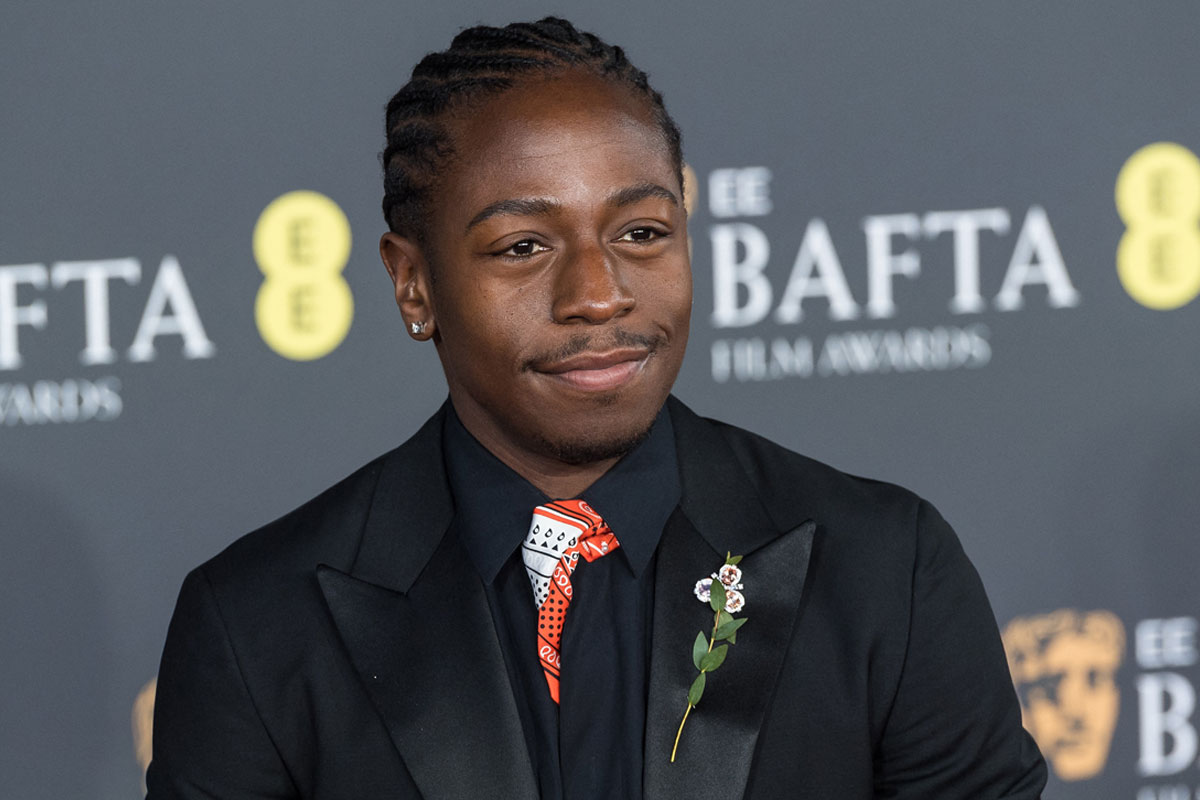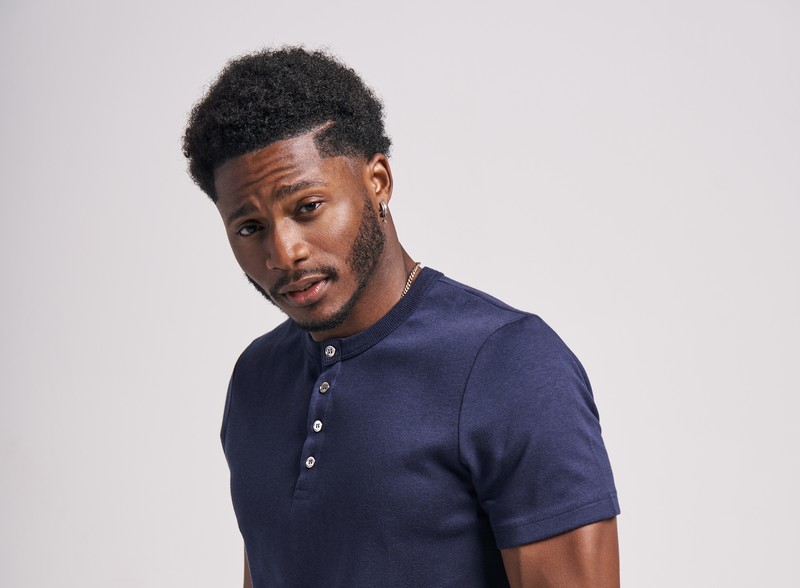
MONDAY, OCTOBER 5, 2026 — Da'Vinchi didn't misspeak once. He sat across from Cam Newton and said several things, in a row, on camera — and the internet has receipts. On the October 2 episode of Newton's Funky Friday podcast, the BMF star walked into what should have been a standard career conversation and walked out at the center of one of the loudest diaspora debates of the year: Americans, he said, are "lazy" and "incompetent" — and slavery, he argued, shouldn't be the story Black Americans carry anymore.
The clips went viral within hours. By the weekend, the 30-year-old actor — real name Abraham Juste, born in Brooklyn to Haitian parents — was trending across every platform that has a comment section, and the responses ranged from disappointed to furious. What he said, what he meant, and why the reaction was so swift are three different things. All of them are worth sitting with.
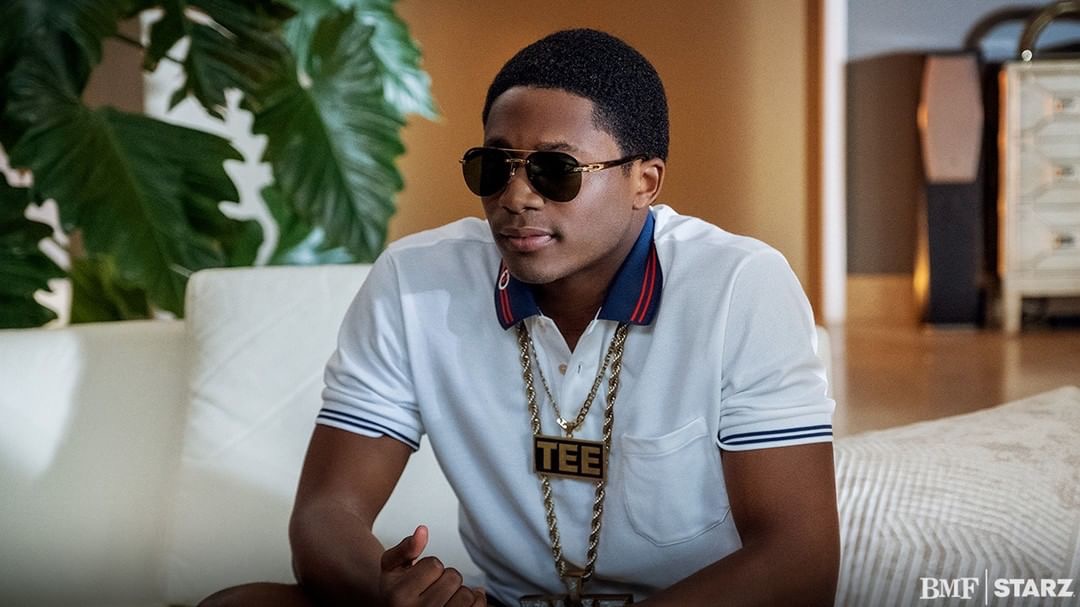
For the record: Da'Vinchi is best known as Terry "Southwest T" Flenory on Starz's BMF, the 50 Cent–executive-produced crime drama about the Black Mafia Family. His résumé also includes Darnell Hayes on The CW's All American, Tyler Perry's All the Queen's Men, and the 2020 film The Way Back. That résumé matters, because almost all of it was built on Black-created productions, in front of a predominantly Black audience. Keep that in mind.
"Lazy" and "incompetent"
The first clip to take off was the broadside at Americans in general. Da'Vinchi told Newton that Americans have been "lazy" and "incompetent for a really long time," and mused that Hollywood producers may prefer overseas actors because they're "probably gonna be more focused" on the work rather than on celebrity.
It's the kind of take that sounds like a green-room opinion that was never supposed to leave the green room — a sweeping indictment of an entire country's work ethic, delivered by an American actor, on an American platform, to an audience of Americans. The irony wrote itself in the replies, and people were not shy about pointing it out.
The slavery comments
But it was the history talk that turned a bad interview into a genuine controversy. Asked about slavery and how it shapes the Black American experience, Da'Vinchi offered this, per Baller Alert's transcript: "I could understand the emotions that it conjure up because of what people of African descent have gone through under the hands of Caucasians. But however, the story is much bigger. Caucasians have enslaved Caucasians. Black people have enslaved Black people."
He went further: "We're looking at history from a point of view that is cutting our legs off from on our feet to really be able to move forward and be like smarter and more like, I think just more awareness."
Let's call the framing what it is: ridiculous. The "everyone was enslaved" construction flattens a specific, distinct, centuries-long system — race-based chattel slavery in the United States, hereditary and total, followed by a century of Jim Crow and its ongoing afterlives — into a universal "everybody suffered" abstraction. Other forms of bondage existing elsewhere in human history does not make that American story smaller, and treating them as interchangeable is the oldest trick in the minimization playbook. The critics who said exactly this were right on the substance.
The diaspora divide
The conversation also waded into the diaspora fault line that never quite heals. Newton raised the perception that Black people from the Caribbean, Africa, and the UK think they're superior to Black Americans, and Da'Vinchi agreed: "I think that's true" — while immediately adding, "I mean… look, I don't think it's right."
He tied the attitude to Haiti's 1804 revolution, when the Haitian people defeated Napoleon's France and founded the first free Black republic — arguing that history feeds a sense of distinction among some in the diaspora. The history lesson was accurate. Whether it belonged in the middle of a take about Black Americans needing to move on from slavery is a different question, and plenty of viewers answered it: no.
Why the internet turned so fast
Here's the part that made the backlash personal for a lot of people: the messenger. Da'Vinchi's career was built almost entirely on Black-created productions — BMF and 50 Cent, Tyler Perry, All American's Black ensemble — and sustained by a predominantly Black audience. To hear him call that audience's countrymen lazy and incompetent, and then lecture about moving past the history that shaped their lives, landed for many as a special kind of ingratitude. Fair or not, that's the read that took hold.
Then came the personal allegations. Actor Brandon Barry Brown, who described himself as a former friend, publicly called Da'Vinchi out — claiming Da'Vinchi had previously said he wanted to "stay away from the Black thing" when it came to his brand, and calling him "very anti-Black." That's a claim from one person about private conversations, and it should be read with that caveat — but in the middle of this firestorm, it poured gasoline.
You may also see follower counts thrown around — one post claimed he dropped from 2.1 million to 1.9 million followers within hours; Bossip claimed he lost nearly half of 3 million. Treat both as unverified claims: the numbers are conflicted, unsourced, and flying around in the middle of a pile-on. What isn't in dispute is that the response was massive and overwhelmingly negative.
His response — and a fairness note
Da'Vinchi did respond. On Threads, replying to a fan, he wrote: "You're not, I'm sorry you felt like it was you. It was a generalized statement. I should've been more specific. Love you, queen."
It's a clarification, not quite an apology — the "I'm sorry you felt like it was you" construction puts the emphasis on the audience's feelings rather than the statement itself. Whether that lands as accountability or deflection depends on where you were already standing.
One fairness note, via AllHipHop: the full conversation may carry more nuance than the viral clips, and clips are, by design, the most combustible thirty seconds of a much longer talk. That's worth remembering before writing the final verdict. It is also worth remembering that nobody forced him to say any of it — the words on the clips are his, verbatim, and the "everyone was enslaved" framing is not a nuance problem. It's a substance problem.
The Rewind will keep following this one. In the meantime, our culture desk has the latest on 50 Cent's world — the same world that gave Da'Vinchi his biggest stage.
Sources
- Da'Vinchi Says Black Americans Should Move On From Slavery Baller Alert · Oct 2026
- BMF Actor Da'Vinchi Sparks Diaspora Debate With "Lazy" Americans Comments Bossip · Oct 2026
- Da'Vinchi Faces Backlash Over Funky Friday Comments WhereIsTheBuzz · Oct 2026
- BMF Actor Da'Vinchi Angers Black Americans Over "Lazy," Slavery Comments AllHipHop · Oct 2026
- Funky Friday Clips YouTube · Oct 2026
- BMF Actor Da'Vinchi Angers Black Americans Over "Lazy," Slavery Comments DisnDat Radio · Oct 2026