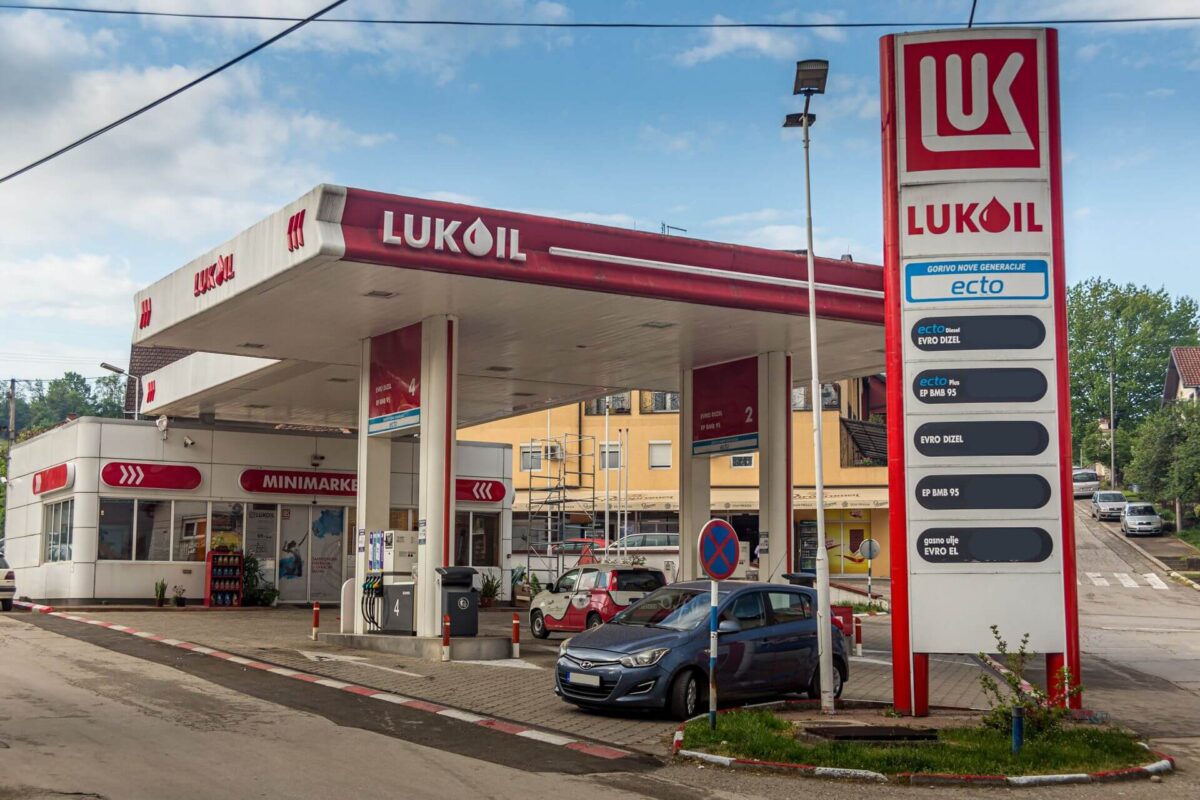
SUNDAY, OCTOBER 4, 2026 — The talks to end the war in Ukraine are no longer just about the war. According to New York Times reporting published Saturday, the Trump administration’s negotiations with Russia have expanded to include a multibillion-dollar oil deal — the sale of Russian energy giant Lukoil’s sprawling international empire of oil fields, refineries and gas stations, valued at roughly $20 billion to $22 billion.
The dealOil enters the peace talks
The deal, the Times reported, would benefit Middle Eastern business executives with ties to the two Americans leading the outreach to Moscow: special envoy Steve Witkoff and Jared Kushner. The group pursuing the transaction includes U.S. billionaire Todd Boehly, two Middle Eastern groups that have done business with Kushner’s or Witkoff’s family, and an arm of the U.S. government itself, the newspaper said.
The Times reported that there is no indication Witkoff or Kushner personally stand to profit from the transaction — a caveat that matters, given that both men are conducting the diplomacy that would make the deal possible.
Any sale would be contingent on approval from both the U.S. government and the Kremlin. That U.S. approval would effectively lift the American sanctions that currently make it all but impossible for Lukoil’s Russian owners to operate the assets abroad — instantly raising their market value. The White House, the Treasury Department and Lukoil did not respond to requests for comment, according to Reuters’ account of the Times reporting.
The pitchPutin raised it himself
The most striking detail in the Times account is who put the idea on the table. Russian President Vladimir Putin himself raised the Lukoil sale during a September 5 meeting with Witkoff and Kushner at the Kremlin, the newspaper reported, citing people familiar with the meeting. Putin proposed completing the deal as a way to show Russians they could do business with the United States, one of the people said.
Witkoff and Kushner told Putin they would work on it, the Times reported — framing the potential sale as a goodwill gesture that might also help bring down global energy prices.
It is a remarkable window into how the diplomacy is actually functioning: the Russian president pitching a commercial transaction to the American president’s envoys as a trust-building exercise, with the war’s end state and a $20 billion asset sale discussed in the same breath. Whether that blending of dealmaking and peacemaking accelerates a settlement or complicates it is the question now hanging over the talks.

The playersBoehly, Carlyle, and a government bank
The assets in question are the overseas holdings of one of Russia’s largest oil companies — a portfolio built over decades that includes production, refining and retail footprints across Europe and beyond. Lukoil agreed in January to sell those international assets to the private equity firm Carlyle in a transaction valued at around $20 billion to $22 billion, according to reporting on the deal.
The leading rival bid, the Times reported, comes from Todd Boehly — the billionaire asset manager and co-owner of the Los Angeles Dodgers, who has donated $2 million to President Trump’s political efforts, according to the Financial Times reporting cited by the Times. The Middle Eastern investors in the bidding group have business ties to people close to the Witkoff and Kushner families.
Also in the mix: the U.S. International Development Finance Corporation, the government’s development-finance arm — meaning the American taxpayer could end up a participant in the purchase of formerly Russian oil assets, with the envoys who negotiated the opening sitting across from the sellers.
The context around the talks has been building for weeks. Kirill Dmitriev, the head of Russia’s sovereign wealth fund RDIF, was in Washington on September 28 meeting with Treasury and Energy representatives to discuss energy initiatives — another sign that the commercial track of U.S.–Russia engagement is running in parallel with the diplomatic one.
The stakesSanctions, scrutiny, and $20 billion
The politics of the deal are as combustible as the assets. Supporters can frame it as creative statecraft: convert frozen Russian assets into a transaction that rewards cooperation, eases global energy prices, and gives Moscow a tangible stake in a settlement. Critics will see the sanctions regime — built painstakingly over years — being unwound as a sweetener, with the president’s own envoys’ business circles positioned near the money.
The Times’ explicit finding that neither Witkoff nor Kushner personally stands to profit is doing heavy lifting in the story — and it will be tested. Congressional oversight of the talks, already skeptical of the envoys’ dual roles as diplomats and businessmen, now has a $20 billion reason to look closer.
What to watch: whether the White House acknowledges the commercial track publicly, whether the sanctions-lifting mechanics draw a congressional response, and whether the Carlyle and Boehly bids converge or collide. The Ukraine talks were already the highest-stakes negotiation of the Trump presidency. They now come with an oil deal attached.
For more on Washington and the world, follow the Previously Newsroom.
Sources
- Reuters — “US-Russia talks on Ukraine involve multi-billion dollar oil deal, NYT reports.” Oct 3, 2026
- The New York Times (via Reuters) — reporting on the Lukoil asset sale in Ukraine talks. Oct 3, 2026
- Newsmax — “Lukoil, Russia, Steve Witkoff” summary of NYT reporting. Oct 3, 2026