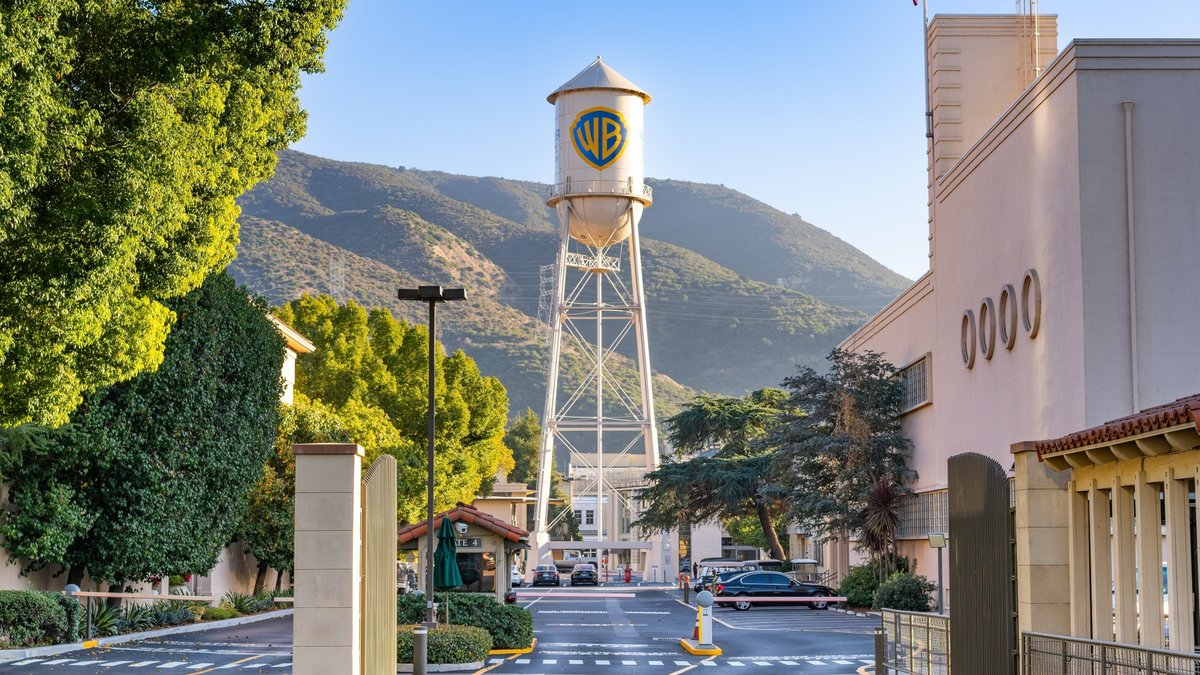
BURBANK, Calif. — It's official. Paramount Skydance completed its $110 billion takeover of Warner Bros. Discovery on Tuesday, creating one of the largest entertainment companies on the planet — and one of the biggest media mergers in history. The combined company will be called Skydance Corporation, trading on the New York Stock Exchange under the ticker SKYD. David Ellison, the 43-year-old son of Oracle co-founder Larry Ellison, now controls a Hollywood empire spanning film, television, streaming, and news.
THE DEAL — The transaction, agreed back in February, closed after clearing its final legal hurdle: a federal judge approved a settlement resolving an antitrust lawsuit brought by 12 state attorneys general. The Writers Guild also signed off. Paramount outbid Netflix — which had offered roughly $82 billion for Warner's studios and streaming operations — and fended off interest from Comcast. Warner Bros. Discovery CEO David Zaslav is expected to depart. Ellison will serve as chairman and CEO alongside newly named co-CEO Ynon Kreiz, the outgoing Mattel chief, who will run day-to-day operations and lead the integration.
THE NUMBERS — Start with $110 billion — the total enterprise value including debt. The combined streaming footprint is massive: Paramount+ and HBO Max together count more than 200 million subscribers, instantly making Skydance a genuine third power behind Netflix and Disney. But the price of admission is steep. The merged company carries an estimated net debt of more than $80 billion, with annual interest payments expected to top $6 billion. Executives say they'll find $6 billion in cost savings — which, translated from corporate-speak, means layoffs. As part of the regulatory settlement, the company also committed to at least $300 million in additional annual U.S. film production spending.
WHAT'S IN THE VAULT — The combined library runs deep. On the film side: Warner Bros. Pictures and Paramount Pictures, home to Harry Potter, DC, The Lord of the Rings, Game of Thrones, Mission: Impossible, and Top Gun. On television: CBS, CNN, HBO, Discovery, Nickelodeon, Cartoon Network, MTV, and Comedy Central. James Gunn and Peter Safran are expected to stay on at DC Studios. The Skydance name — from Ellison's production company, founded in 2010 — sits above it all as the corporate identity, while Paramount and Warner Bros. keep their names as studio brands.
THE GOOD — Scale is the whole argument. Hollywood's streaming wars have been brutal — declining cable subscriptions, sky-high content costs, and Netflix and Disney eating everyone else's lunch. A combined HBO Max and Paramount+ finally gives the industry a third heavyweight with the content library and the balance sheet to compete. The theatrical business gets a lifeline too: two major studios under one roof means more big swings at the box office, not fewer. And keeping Gunn and Safran at DC signals the new owners understand what actually drives value — the creative people, not just the IP.
THE BAD — Consolidation is consolidation. Fewer studios means fewer buyers for scripts, fewer greenlights, and less leverage for writers, actors, and directors — the exact thing the unions fought over. The $6 billion in promised "synergies" is a euphemism for thousands of lost jobs across Burbank and New York. Then there's the debt: $80 billion is a heavy load, and $6 billion a year in interest payments will hang over every creative decision. Critics of the settlement argue the conditions don't go far enough — the combined company can still use its leverage across HBO, Showtime, and CBS to squeeze higher prices out of cable negotiations. And for viewers? Expect streaming bundles to get reshuffled, prices to creep up, and beloved niche networks to face the chopping block.
THE ROAD HERE — This deal has been a Hollywood saga all year. Paramount agreed to acquire Warner Bros. Discovery in February at $31 a share in cash, but the path to closing was anything but smooth. Netflix had agreed to acquire Warner Bros.' streaming and studio businesses before the broader Paramount deal moved forward, and Comcast was circling as a potential suitor. The U.S. Department of Justice signed off in June, and regulators in 68 countries — including Australia, the UK, and the European Union — gave their blessing. The final block was a lawsuit from 12 state attorneys general; a federal judge approved the settlement on September 30, and Paramount confirmed October 6 as the closing date. Then came the money: Paramount arranged a $52 billion debt financing package last week, one of the largest high-yield debt deals ever — and early trading in the bonds has been weak, with some issues off 3 to 4 percent, a sign of how much risk the market sees in this bet.
WHAT'S NEXT — The stock moves from Nasdaq to the NYSE today under SKYD. Integration begins immediately under Kreiz, and the first test will be how fast — and how ruthlessly — the $6 billion in savings materializes. For audiences, the near-term change is branding: one corporate parent, two studio names, and eventually, almost certainly, one mega-streaming bundle. Hollywood just got a lot smaller. Whether it got better depends on who you ask — and whether Ellison's stated goal, as he wrote on X on Friday, that "we never wanted a new corporate identity to diminish, alter or overshadow either one," holds once the integration starts.
Sources
- Reuters — Paramount wraps up mega Warner Bros merger
- Wikipedia — Proposed acquisition of Warner Bros. Discovery by Paramount Skydance
- GSMDome — Skydance set to unite Paramount and Warner Bros. Discovery
- Quantli — Paramount and Warner Bros. Discovery merge to form Skydance Corp
- New York Post — Post-merger name revealed