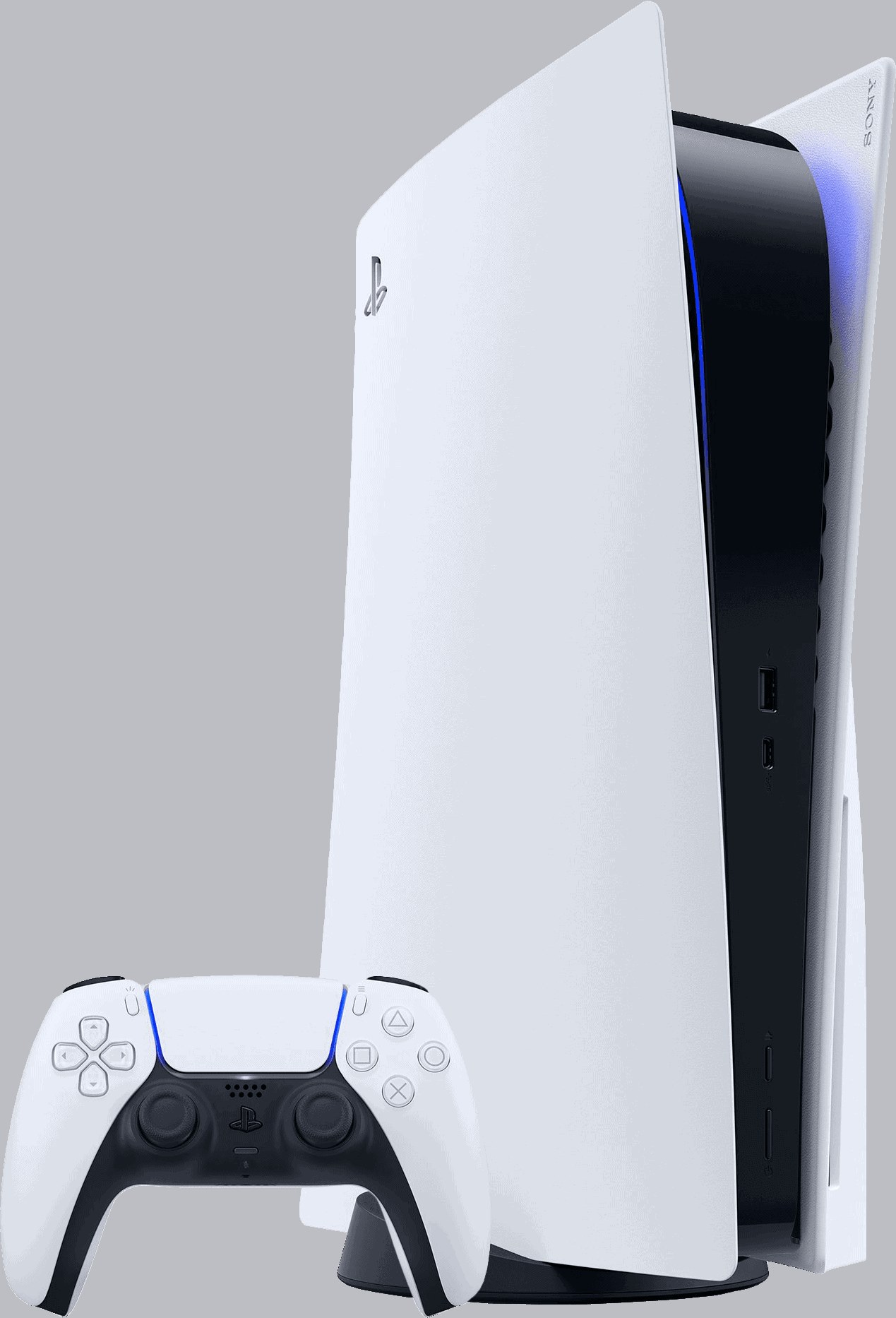
Tuesday, October 6, 2026 — For two years, AI upscaling on PlayStation has been a luxury tax: if you wanted machine-learning image reconstruction, you bought the PS5 Pro and its PSSR. Not anymore. Sony has announced Quick Spectral Super Resolution — QSSR — a new tier of AI upscaling built specifically for the standard PlayStation 5, and it is already live in two games: Marvel's Wolverine and Ghost of Yōtei, both patched on October 1 to add it as an extra graphics option.
This is a bigger deal than it sounds. The base PS5 is the console most people actually own, and for years its upscaling story has been whatever upscaler the developer happened to ship — usually FSR or a bespoke temporal upscaler. Sony bringing its own first-party AI reconstruction to the standard machine is the company finally treating the base console as a first-class citizen again. But before anyone starts pricing out a Pro trade-in, let's talk about what QSSR is, what it costs, and where the hype should stop.
What QSSR actually is
An AI upscaler does one job: render the game at a lower internal resolution, then use a trained neural network to rebuild a sharper, higher-resolution image — ideally one that looks better than native rendering at that internal resolution, with fewer artifacts than traditional upscaling. PlayStation Spectral Super Resolution (PSSR) brought that to the PS5 Pro two years ago. QSSR is its leaner sibling, developed through Project Amethyst — Sony's AI graphics collaboration with AMD — and described by Sony as "a new performance tier of AI upscaling" rather than a replacement for PSSR.
According to Daniel Craig, principal engineer of graphics R&D at Sony Interactive Entertainment, QSSR rests on two innovations: a streamlined neural network architecture, and an implementation hand-tuned to squeeze the most out of the standard console. That second part is doing the heavy lifting, because the hardware gap is real: the PS5 Pro carries dedicated machine-learning hardware that Craig puts at 300 TOPS (trillions of operations per second for AI work). The standard PS5 has nothing equivalent. So QSSR "relies primarily on FP16 math," per Craig, using packed math instructions and other GPU optimizations to get the neural network running on silicon that was never designed for it.

The first two games — and what the studios say
Sony picked its two flagship first-party showpieces for the debut, which tells you how seriously it takes this. For Marvel's Wolverine, Insomniac says QSSR brings "more pixel-level clarity and stability" to dense environments — specifically calling out Madripoor and Shinjuku, the game's detailed urban playgrounds. That matters because Wolverine is positioned as a technical showcase for the base PS5, with the studio previously targeting 60 FPS with ray tracing enabled. In that context, QSSR is a tool for keeping image quality competitive without sacrificing the frame rate.
Sucker Punch's comment on Ghost of Yōtei is arguably the more interesting one: the studio says QSSR delivers "a level of temporal stability that hasn't been possible on the [standard] PS5 console until now," helping resolve fine details in characters and environments. Temporal stability — how well the image holds together while things move — is the thing cheap upscalers fail at most visibly: shimmering foliage, crawling edges, ghosting. If QSSR genuinely fixes that class of artifact on the base console, it is solving the right problem.
Sony also released official comparison footage for both games showing the reconstruction handling fine environmental detail and motion stability. As always with vendor-provided comparisons: encouraging, not conclusive. Independent testing is where the truth lives.

What it costs: the Digital Foundry numbers
Sharper images are never free, and the early independent testing puts real numbers on the trade. Digital Foundry's testing, reported across the gaming press, found that reconstructing Marvel's Wolverine from 864p to 1440p with QSSR adds roughly 1.5 to 1.8 milliseconds of frame time compared with Insomniac's existing upscaler — which works out to about 8 to 10 frames per second in uncapped performance mode. Pushing the output to 2160p in the game's fidelity mode raised the cost to around 4.4 milliseconds. Their early read: 1440p output is the ideal target for this tech, and in performance mode — which favors smooth motion over sharpness — the trade looks acceptable.
Ghost of Yōtei told a different story: it ran at roughly the same frame rate as its existing FSR 3 implementation in unlocked performance mode, suggesting Sucker Punch's integration is either cheaper or the game's existing upscaler was already expensive. Either way, the takeaway is that QSSR's cost is game-dependent — it is not a magic "free sharpness" toggle, and developers will tune it per title.
QSSR vs. PSSR: know the difference
Sony is being unusually careful with its messaging here, and you should read it as a deliberate anti-hype campaign: in Sony's own words, PSSR "remains the gold standard" on the PS5 Pro. QSSR is explicitly a lower tier — a way to bring some of the PSSR experience to the standard console, not to close the gap. The Pro's dedicated ML hardware is doing work the base console's GPU simply cannot match, and no amount of hand-tuning changes the silicon.
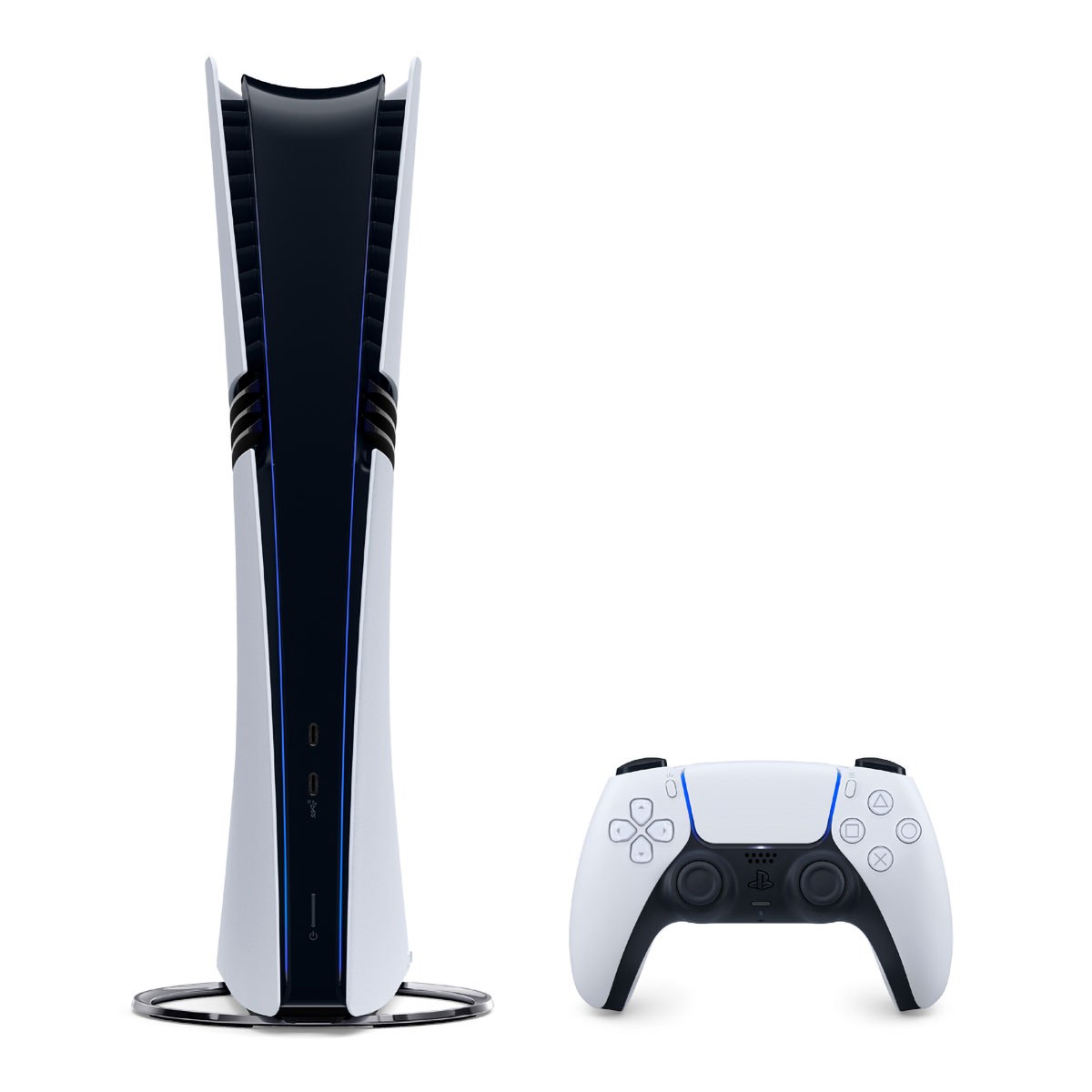
That's the right framing, honestly. The worst thing Sony could do is oversell this and have every base-PS5 owner expecting Pro-tier image quality. What QSSR actually is: a meaningful, measurable upgrade over the upscalers base-console games have been shipping with — especially for temporal stability — at a modest frame-time cost that performance modes can absorb.
Why it matters for 2026's games
Here's the part I'm genuinely excited about: the QSSR library will be available to all PlayStation developers, with Sony expecting wider adoption over time. That is the real story — not two patches, but a platform-level tool. Integration isn't automatic; each studio has to adopt QSSR per game through its own patches. But now every developer targeting the base PS5 has a first-party AI upscaler in the toolbox, purpose-built for the hardware their players actually own.
Think about what that means for the back half of this console generation. The base PS5 is deep into its lifecycle, and developers are squeezing harder every year to hit visual targets at 60 fps. A free (in performance terms: cheap) image-quality upgrade that works on the existing install base extends the console's competitive life without asking anyone to buy new hardware. In a year when hardware costs are the story nobody wants to talk about, a software-side visual upgrade is exactly the kind of move that keeps the standard PS5 relevant.
My honest take: QSSR is the rare platform announcement that underpromises. It's not parity with the Pro, it's not free, and two games do not make an ecosystem. But it is real, it is measurable, it is in players' hands today, and it points at a future where the base console ages more gracefully than any PlayStation before it. Check your graphics options in Wolverine and Yōtei — the future of the PS5 might already be installed.
For more on PlayStation this month, see the PS Plus October lineup and CD Projekt Red's PS5 performance patch plans.
Sources
- PS5 QSSR AI upscaling comes to base console Dot Esports · Oct 2, 2026
- Sony QSSR AI Upscaling Arrives on Standard PS5 in Two Games God is a Geek · Oct 2026
- Sony rolls out QSSR, a streamlined PSSR variant for PS5 KitGuru · Oct 2026
- Sony brings AI upscaling to the standard PS5 with QSSR Gagadget · Oct 2026
- Sony Brings QSSR AI Upscaling to the Standard PlayStation 5 Duck-IT Tech News · Oct 2026
- PS5 QSSR Explained: How Sony's New AI Upscaling Works Eventide Gaming · Oct 2026
- AI Upscaling for PS5: No Longer Limited to Pro Models! Dixie Sun News · Oct 2026