WEDNESDAY, OCTOBER 7, 2026 — Today’s Las Vegas Review-Journal said it plainly: the ban on stopping or standing on Strip pedestrian bridges stays alive. Nearly three years after the Clark County Commission voted unanimously to criminalize pausing on the overpasses that carry hundreds of thousands of visitors across Las Vegas Boulevard, the law remains the law of the Strip — enforced, defended, and still the subject of a federal constitutional fight that has yet to reach a verdict.
The lawWhat the ordinance actually says
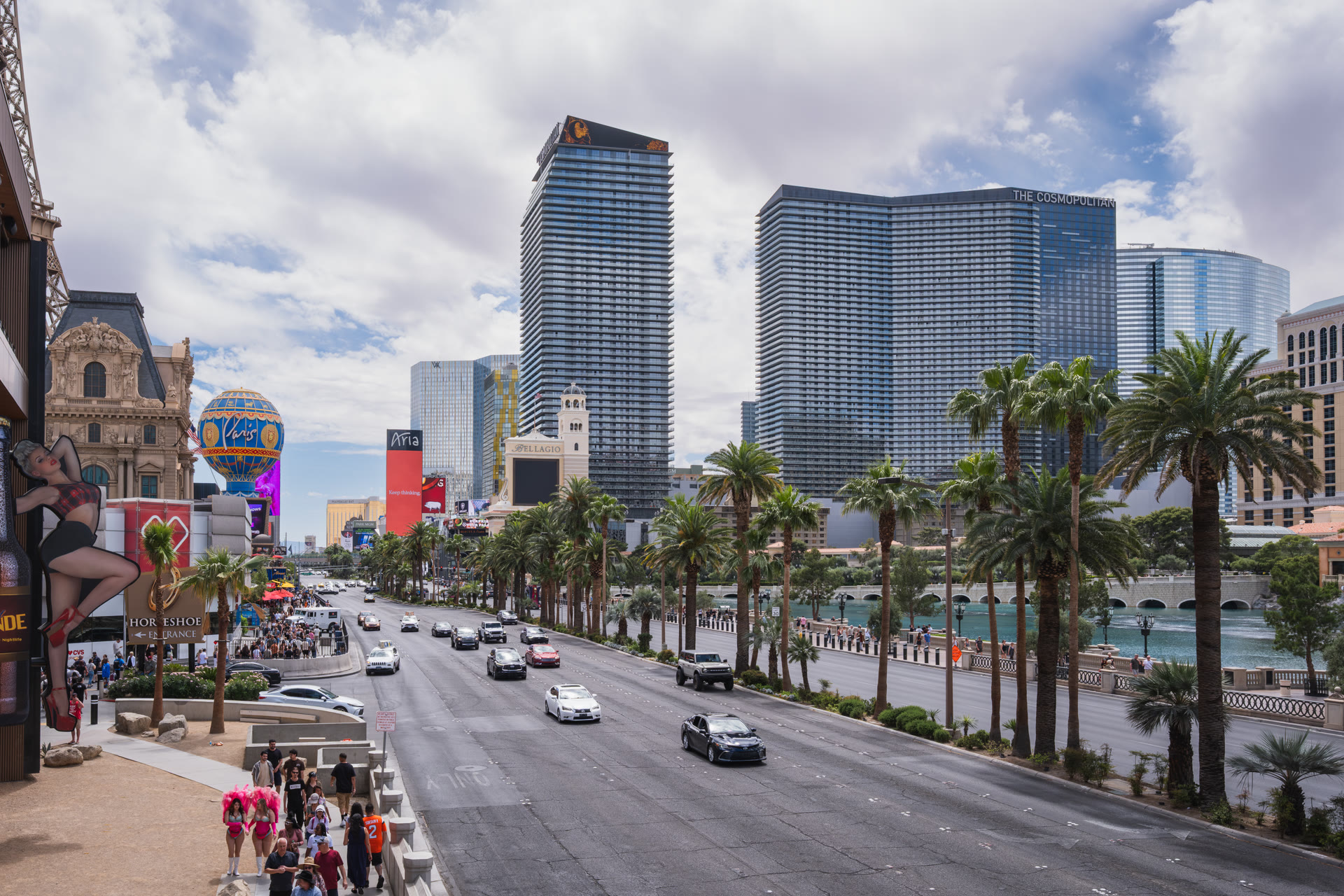
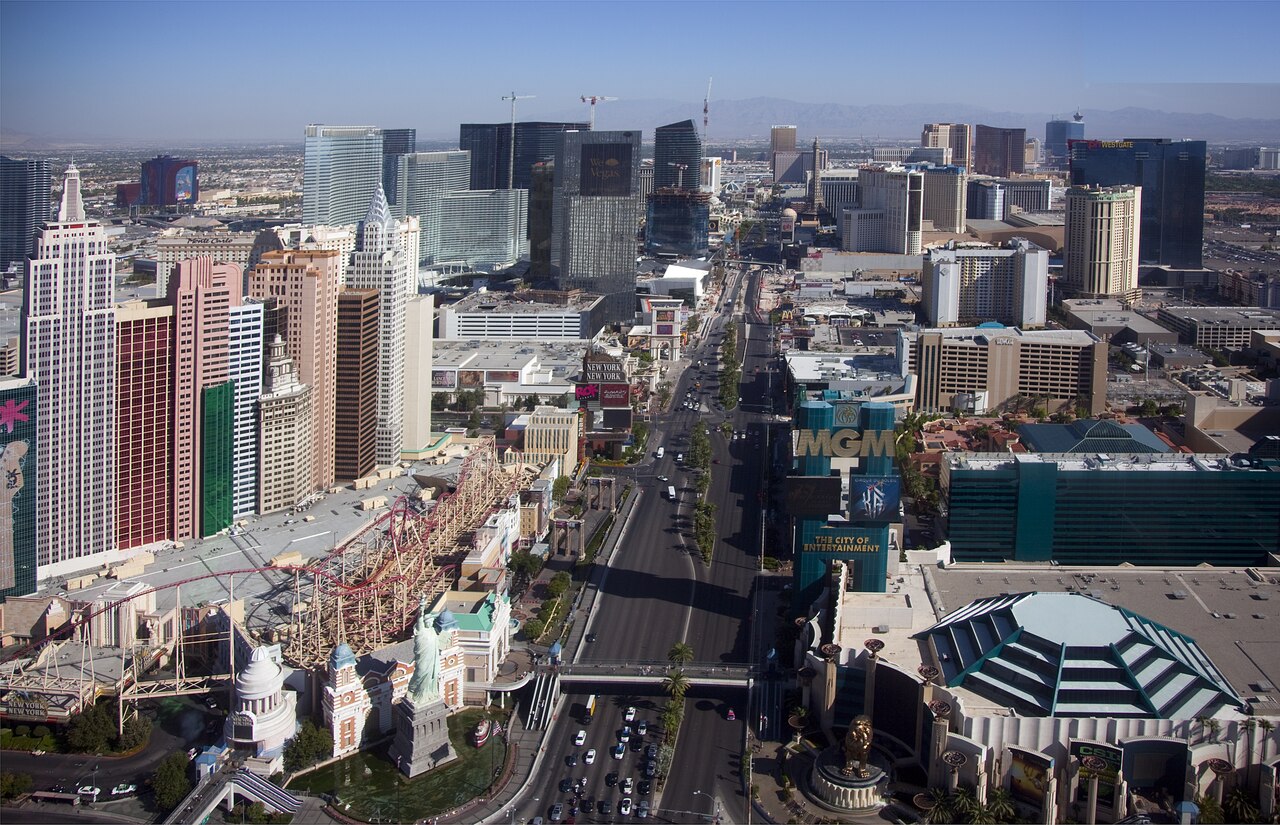
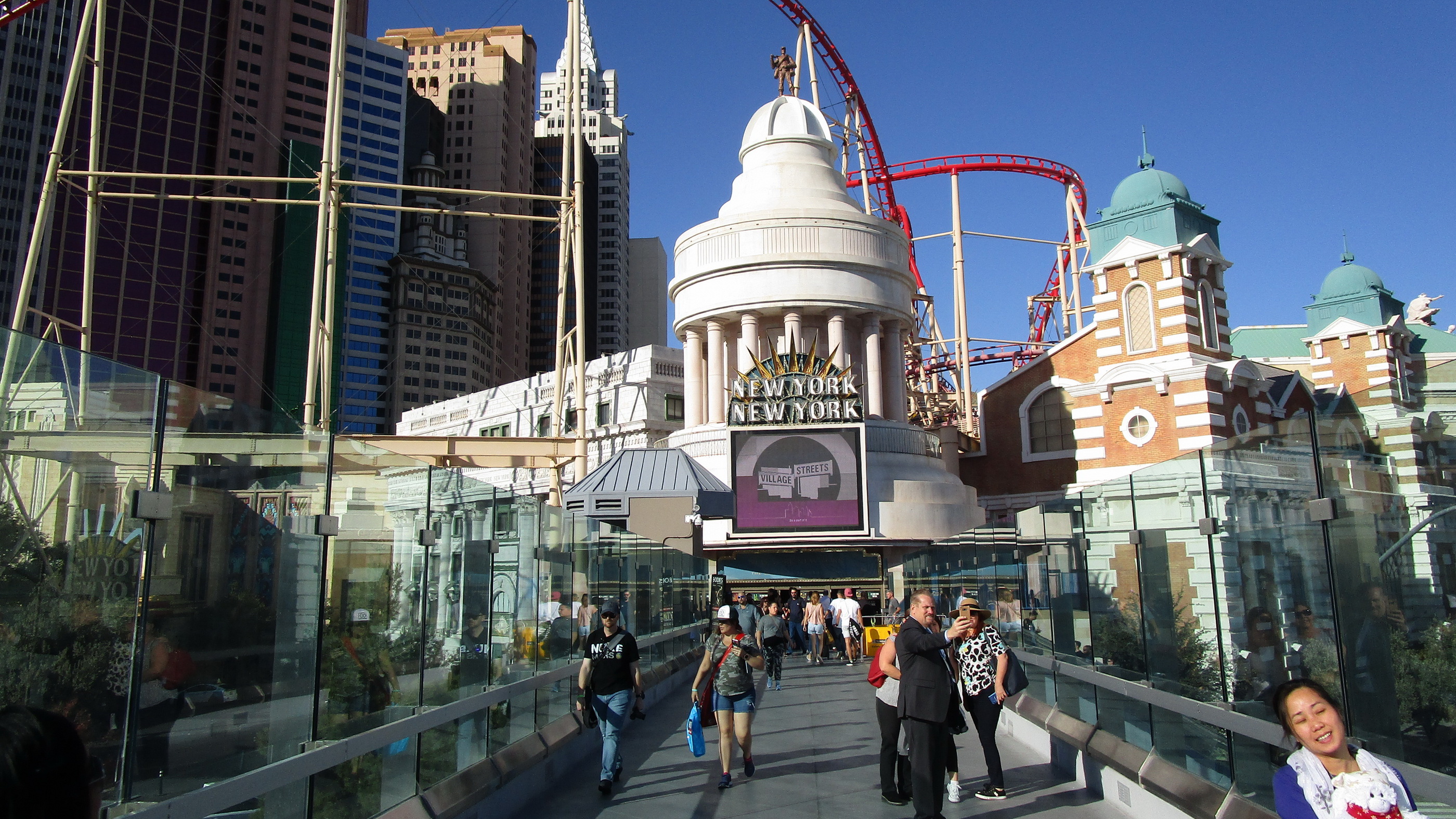
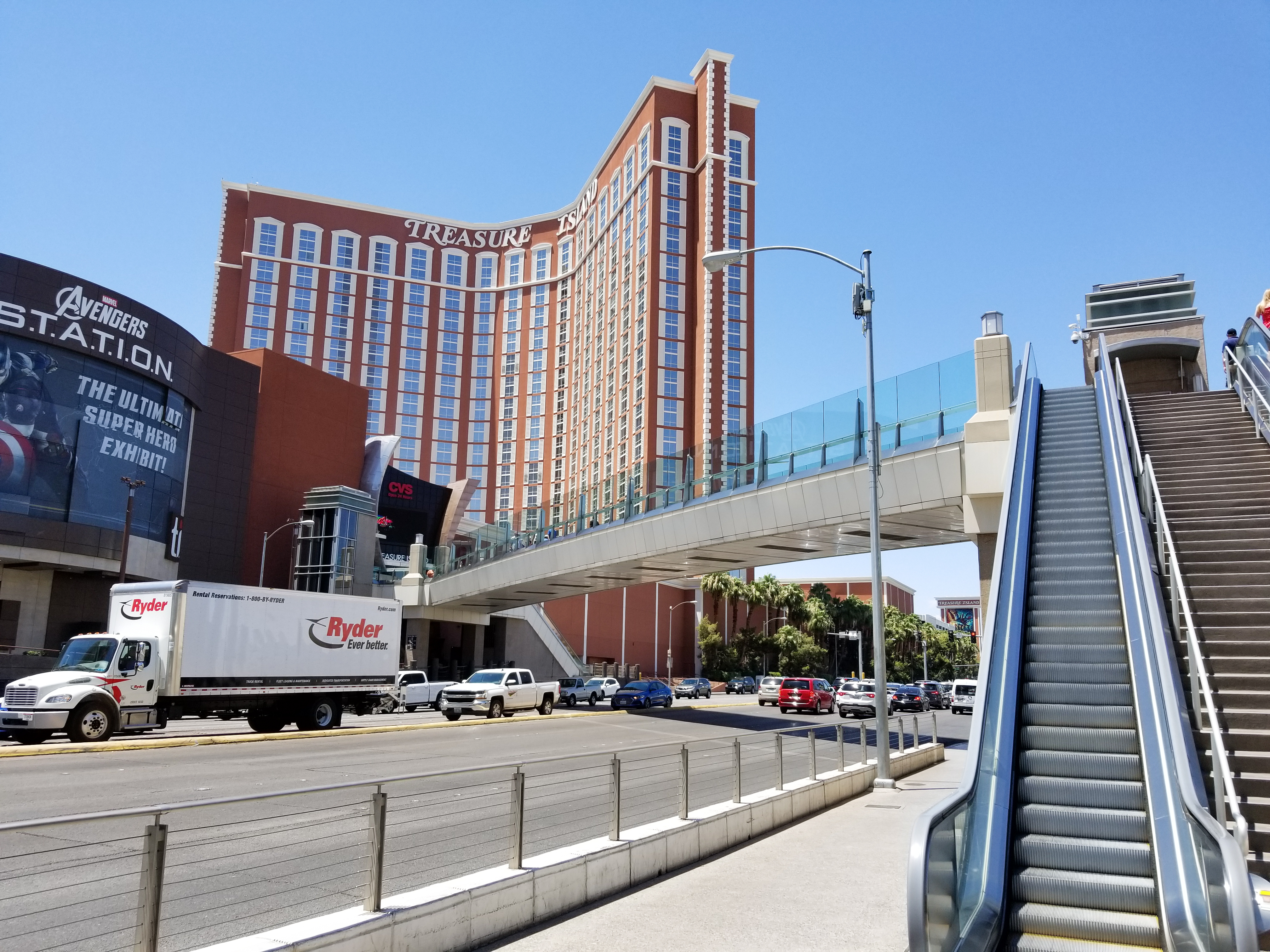
The “Pedestrian Flow Zone Ordinance,” Clark County Code 16.13.030, passed the Clark County Commission 7-0 on Jan. 2, 2024, with enforcement beginning two weeks later. It makes it a misdemeanor to stop, stand, or engage in any activity with the intent of causing another person to stop or stand inside a “pedestrian flow zone” — the pedestrian bridges themselves, plus up to 20 feet surrounding their “touchdown structures”: the escalators, elevators and stairs that feed them. The zones cover the bridges from Russell Road to Sahara Avenue. The penalty: up to a $1,000 fine, up to six months in jail, or both.
There is one carve-out. Stopping while waiting to use an elevator, stairway or escalator doesn’t count — the only exception the ordinance names. Clark County also said publicly, the day the measure passed, that it should not be read to mean tourists and locals can’t take photos from a pedestrian bridge, though that interpretation lives in the county’s messaging rather than in the text of the law itself.
The case for itWhy supporters say the bridges had to be kept moving
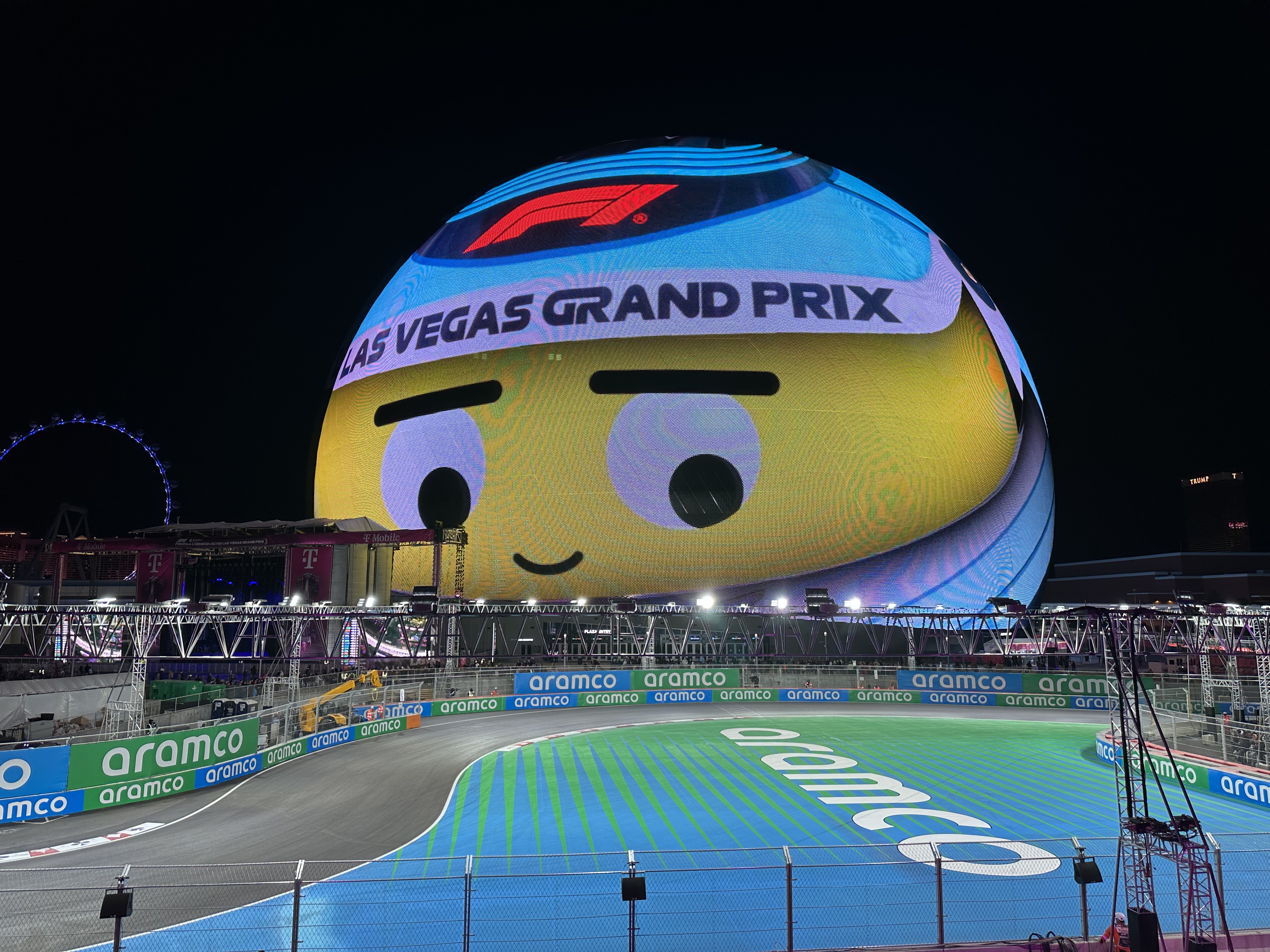
The county’s argument has always been about crowd safety on structures that were never designed to hold a crowd. The pedestrian bridges were built to separate foot traffic from vehicle traffic, not to serve as viewing platforms — and during the Formula 1 Grand Prix, with its sightlines over the Strip, and Super Bowl LVIII’s flood of visitors, commissioners worried about crushes on the spans. County Commissioner Jim Gibson told the Las Vegas Sun that the unique nature of the bridges, the city and the Boulevard — “when there can be 100,000 people moving up and down the street at the same time” — made keeping people moving essential.
The county’s evidence included a UNLV criminal justice study that found disorderly calls for service on Las Vegas Boulevard rose 23 percent between 2018 and 2022, with 11 percent of them on the bridges. LVMPD’s leadership backed the measure, and the Nevada Resort Association filed an amicus brief in court arguing, among other things, that First Amendment activity can still be conducted on 96 percent of the sidewalks on Las Vegas Boulevard. Clark County’s public position has stayed consistent: as the county stated, the ordinance “will help to ensure our world-class tourism destination remains a safe place for people to visit and transverse” — not a ban on performers or photo-takers, but a rule to keep the bridges flowing. The F1 preparations show the same logic in action: bridges get partially closed and sightlines get blocked every November precisely because stopped crowds on the spans are a safety problem.
The federal fightThe ACLU’s challenge is still pending
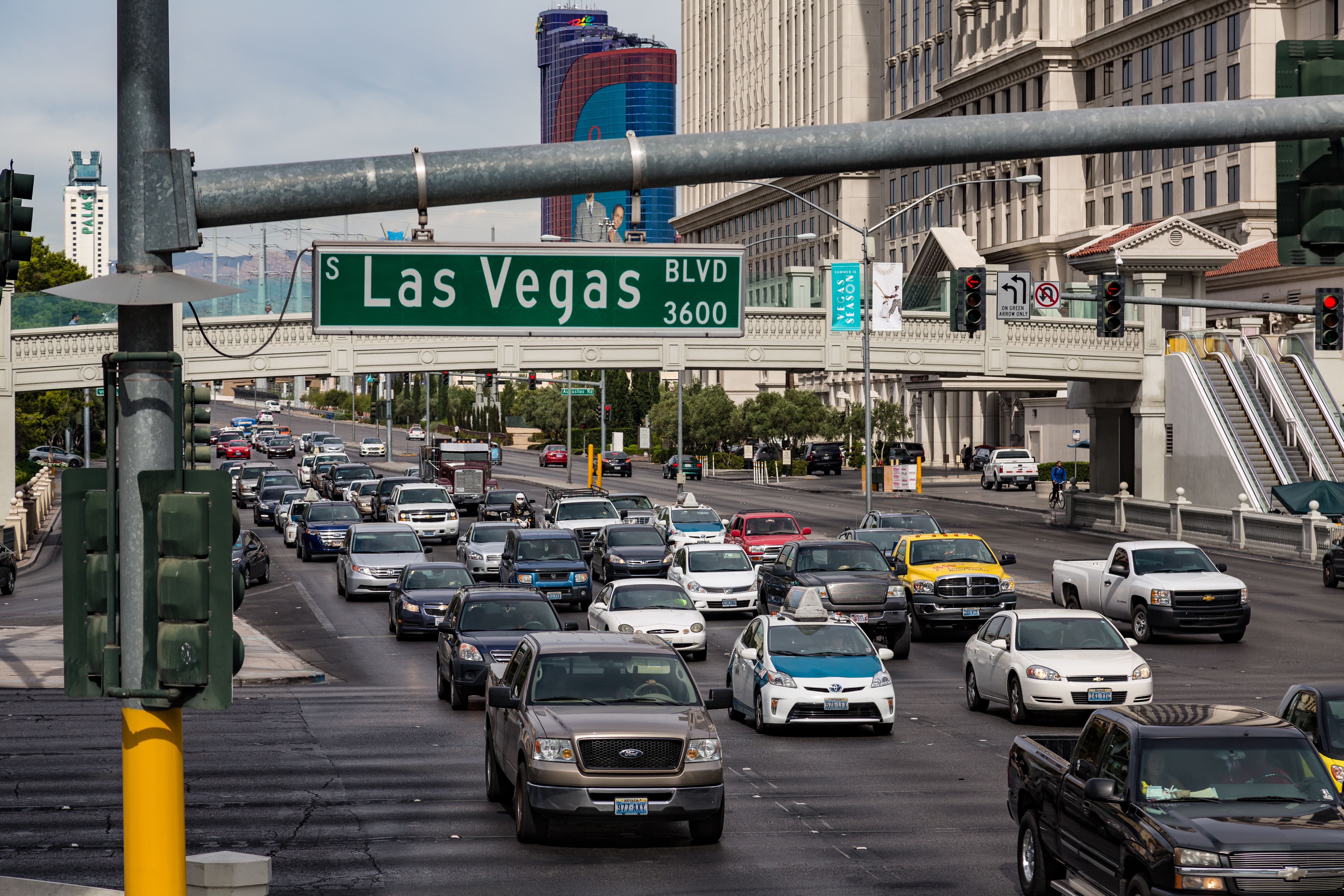
Two and a half years after the ACLU of Nevada sued, the constitutional challenge is still working its way through federal court — and the ordinance has survived every ruling to date. McAllister et al v. Clark County, Case No. 2:24-cv-00334-JAD-NJK, was filed Feb. 16, 2024, in the U.S. District Court for Nevada and assigned to Judge Jennifer A. Dorsey. The plaintiffs: Lisa McAllister, a wheelchair user who brought an ADA claim arguing she sometimes cannot cross a bridge without stopping; Brandon Summers, a violinist who has performed for tips on the Strip since 2009; and Jordan Polovina, a street cellist. Their claims span the First Amendment, the Fourteenth Amendment’s ban on unconstitutionally vague laws, the Nevada Constitution and ADA Title II.
The case has moved in stages, not leaps. Early on, Judge Dorsey denied Clark County’s motion to dismiss the as-applied challenge and joined District Attorney Steven Wolfson as a defendant. Since then both sides have filed cross-motions for summary judgment, with the final briefs in by April 2026. What the record does not yet contain is a ruling on the merits of the ordinance itself — no court has struck it down, and none has upheld it either. The ban, in other words, is in full effect while the constitutional question waits on a decision.
The cello caseA misdemeanor citation, then a selective-prosecution fight
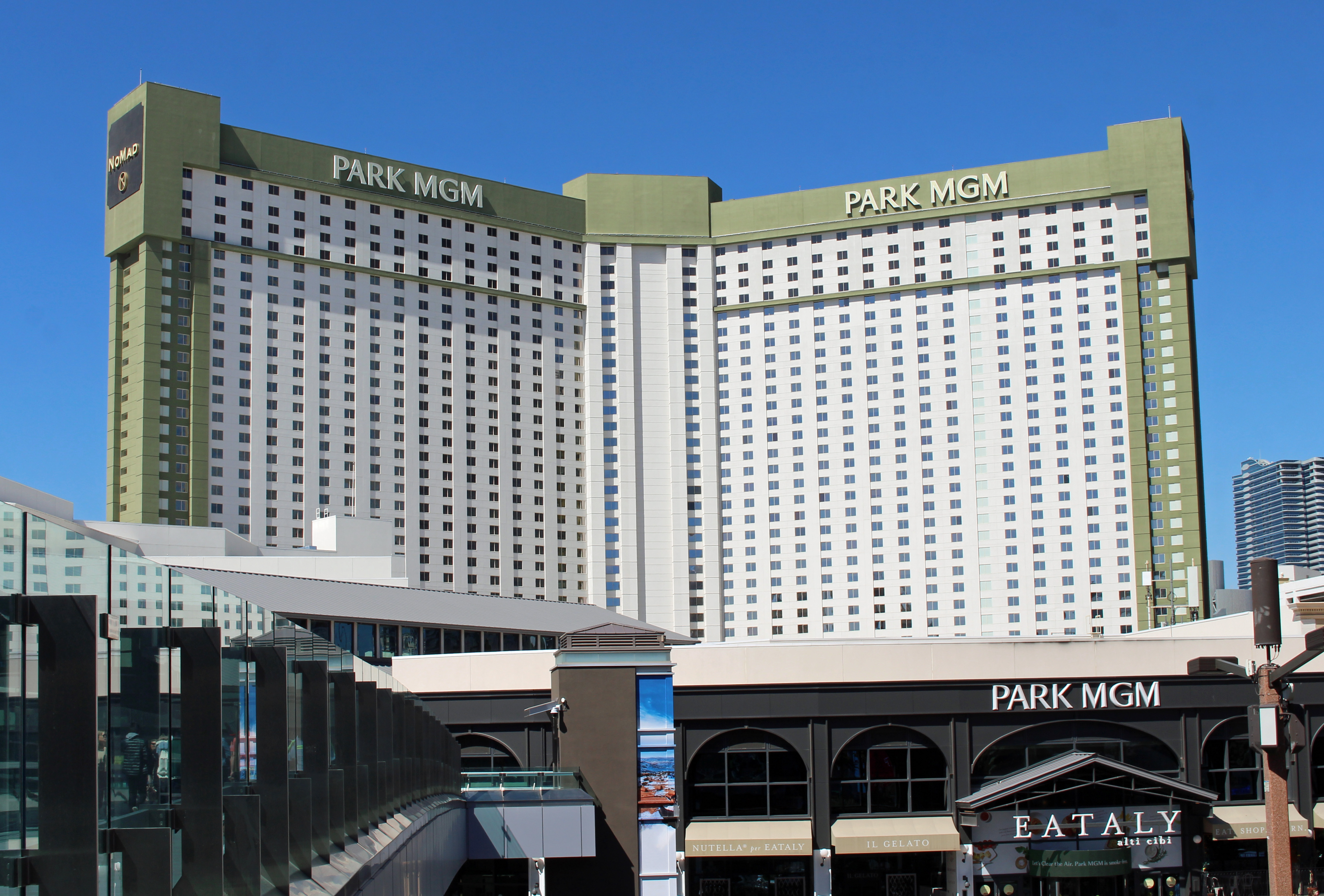
While the federal case waits, the ordinance’s real-world enforcement is being tested in a state courtroom over a cello. On May 22, 2025, Jordan Polovina — one of the federal plaintiffs — was cited on the pedestrian bridge at Las Vegas Boulevard and Park Avenue, accused of playing his cello against the bridge’s north wall in the middle of the span. That citation became State v. Jordan Polovina, Las Vegas Justice Court case 25-CR-054145, and the ACLU’s lawyers have turned it into a case study in how the law is actually applied.
Their filings argue selective prosecution and vagueness: officers who cited the cellist, they say, ignored roughly 46 other people on the same bridge that day — people taking photos, talking on phones, standing and conversing. The ACLU filed a motion to dismiss for selective prosecution in November 2025 and a vagueness motion in January 2026; the state opposed in December 2025, and the motions were argued at a hearing on Jan. 26, 2026. The county and LVMPD, for their part, have drawn a distinction in their own filings: LVMPD deposition testimony in the state’s opposition says stopping to take a photograph is not enforced because it doesn’t cause the disorder the ordinance targets — enforcement, they argue, is aimed at conduct that actually impedes pedestrian flow.
The critics’ caseFree speech, vagueness and access
The ACLU’s objection starts from a simple premise: the bridges are where speech happens. “That might mean the right to protest. That might mean someone who’s sharing expressions of their faith. That might mean a street performer,” executive director Athar Haseebullah told the Associated Press when the ordinance passed, arguing those rights are “protected at their highest level” in public spaces, including pedestrian bridges. The organization’s legal argument leans on a Ninth Circuit ruling from 2003 — ACLU of Nevada v. City of Las Vegas — that treated the Resort Corridor’s sidewalks and bridges as traditional public fora, where speech gets the strongest First Amendment protection.
The second objection is about vagueness and uneven enforcement. The ordinance’s text bans all stopping; the county’s practice, by its own account, exempts photo-takers — a carve-out the law itself doesn’t contain. That gap, critics argue, leaves officers deciding whose pause is a crime and whose isn’t, which is exactly how selective enforcement happens. The third objection is McAllister’s: under the ADA, a law that criminalizes stopping can punish people with disabilities for whom stopping isn’t a choice but a necessity — a wheelchair malfunction, exhaustion, a blocked path — even if the county never intends to write that ticket.
What it means nowKeep moving
For anyone crossing the Strip today, the practical rule is unchanged: keep moving on the bridges. The signs the county promised are still part of the streetscape, officers still have the misdemeanor on their citation books, and the law has now survived every legal test put to it — a denied motion to dismiss in the federal case, no injunction, and enforcement that continues through the state-court fight. Whether that changes depends on Judge Dorsey’s still-pending ruling on the summary-judgment motions, which could arrive any time — or on an appeal that takes the question to the Ninth Circuit.
The deeper question the case poses isn’t going away either. Las Vegas keeps building bigger spectacles — mega-fights, Formula 1, residencies that swallow weekends — and every one of them puts more bodies on bridges designed to move people, not hold them. The county’s bet was that the law could thread the needle: keep the spans safe without outlawing the Strip’s sidewalk culture. Three years in, the law is still on the books. What it’s really cost — in court, on the street, and for the performers who make the bridges worth stopping on — is still being counted. We’ll be back tomorrow with the next Vegas Daily — today’s full rundown is here.
Sources
- The ban on stopping or standing on Strip pedestrian bridges stays alive — Las Vegas Review-Journal · Oct 7, 2026
- Standing, stopping is now banned on pedestrian bridges on the Las Vegas Strip — Associated Press · Jan 2024
- They won’t stand for it: New Las Vegas ordinance promotes pedestrian traffic flow — Travel Industry Today · Jan 2024
- Las Vegas Bans People From Stopping on Pedestrian Bridges — Las Vegas Sun · Jan 2024
- Las Vegas Strip adopts a controversial new law — TheStreet · Jan 2024
- ACLU Sues Vegas Over Pedestrian Bridge Standing Ban — Casino.org · Feb 16, 2024
- Ban on stopping on Las Vegas Strip bridges targets people with disabilities, lawsuit alleges — CDC Gaming · Feb 2024
- It’s Now Illegal to Stop on Las Vegas Strip Pedestrian Bridges — VegasNews.com · Jan 2024
- Bridge enforcement and F1 sightline coverage — FOX5 Las Vegas via Trends Vegas
- McAllister et al v. Clark County motion for summary judgment and Nevada Resort Association amicus brief — ACLU of Nevada court filings · aclunv.org