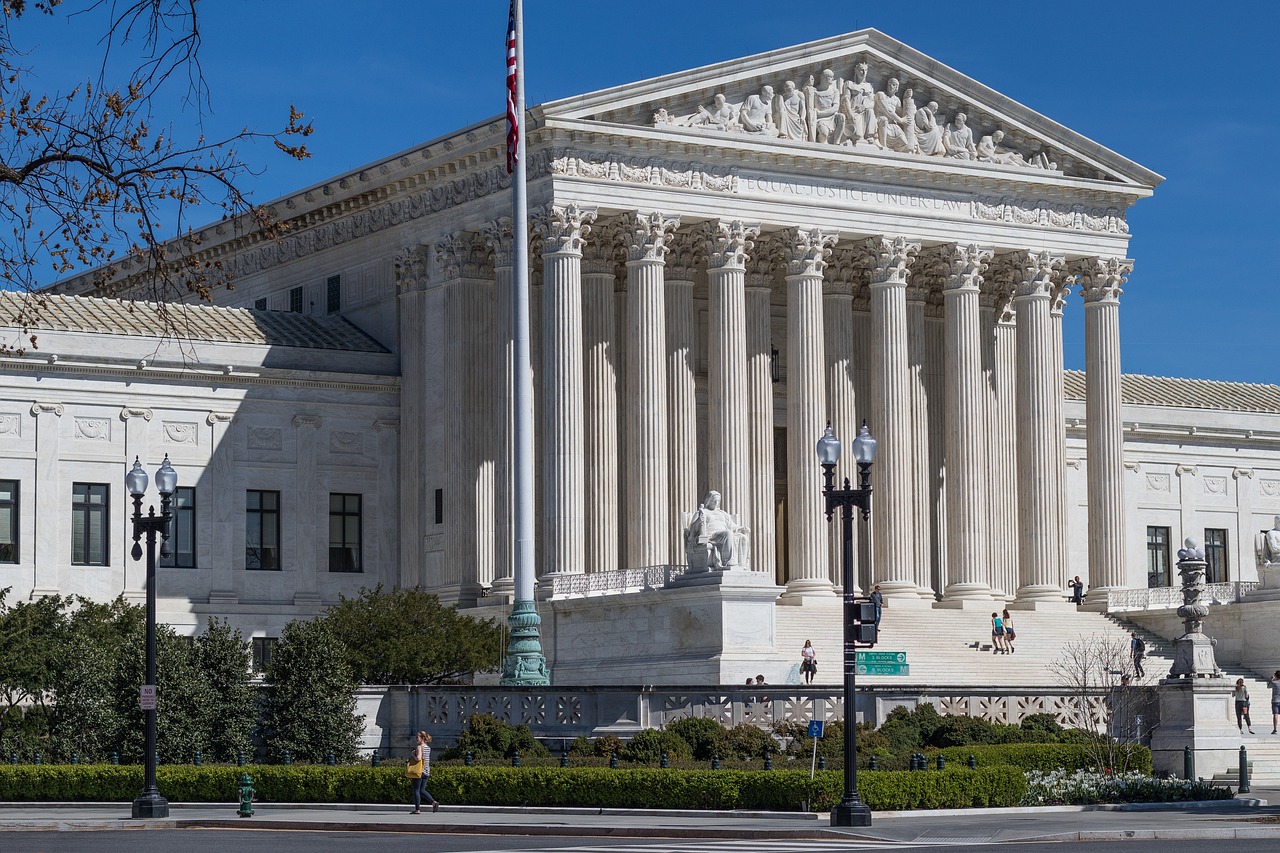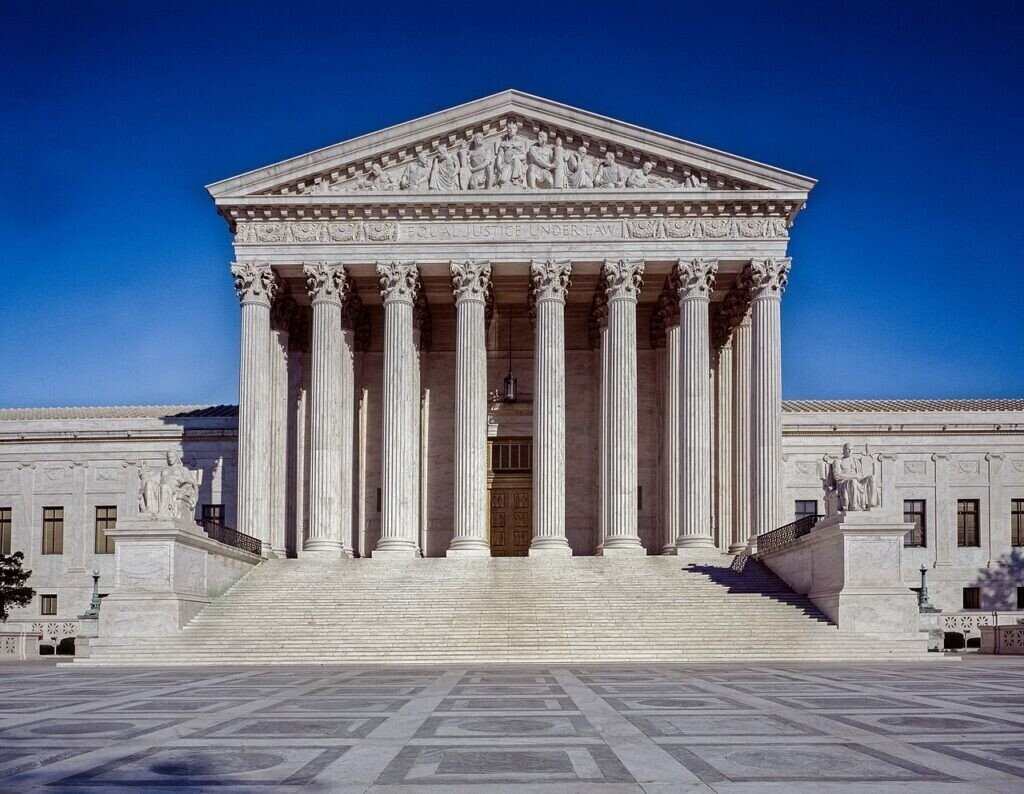
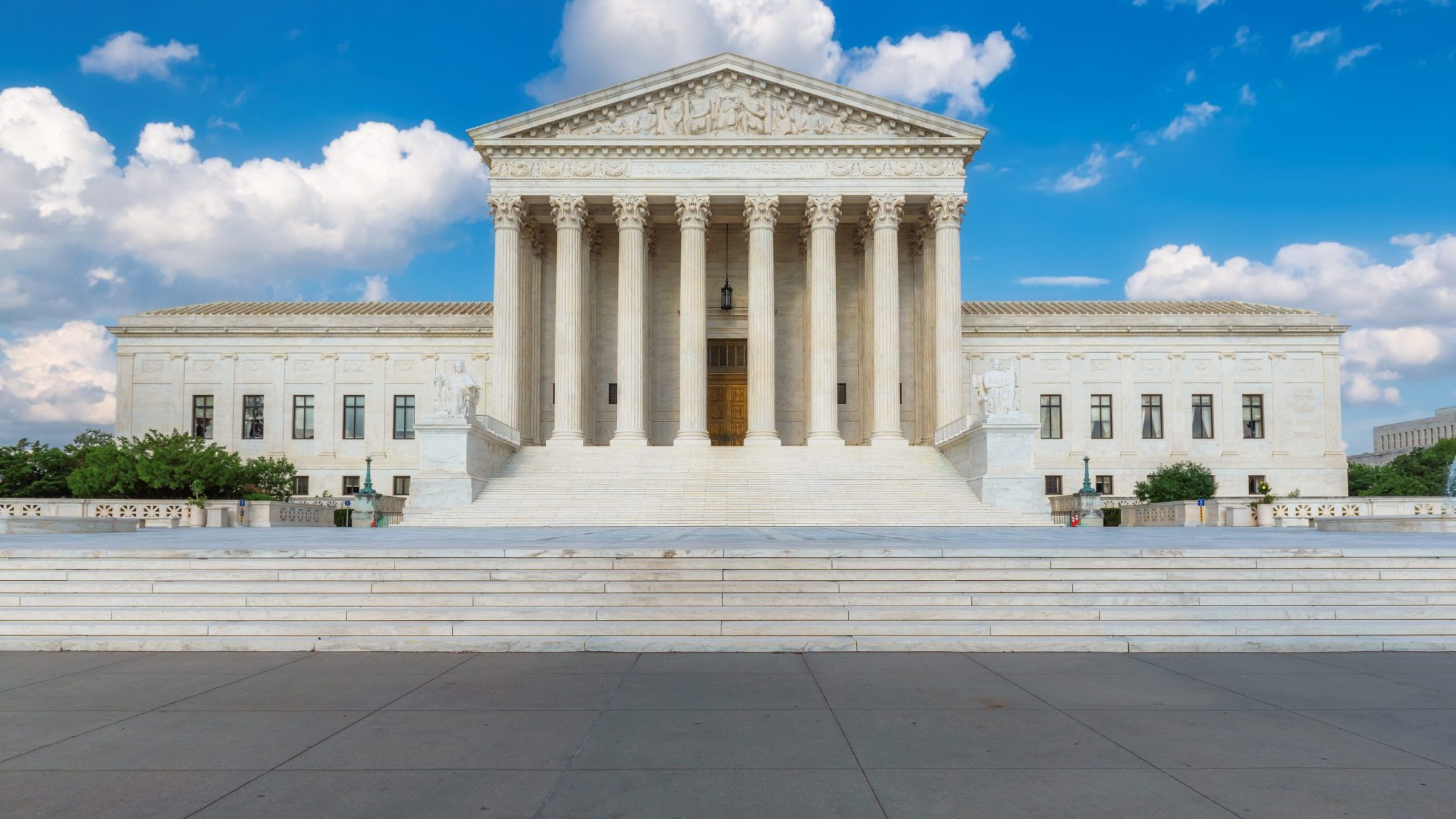
SUNDAY, OCTOBER 4, 2026 — On Monday morning the nine justices of the Supreme Court will walk through the curtains behind the bench and open a new term — and the docket waiting for them is about as heavyweight as it gets. Over the next nine months the court is expected to decide whether states can sue oil giants in state court over climate change, whether bans on AR-15-style rifles survive the Second Amendment, whether Colorado can tie universal preschool money to LGBTQ nondiscrimination rules, whether Arizona can demand proof of citizenship to register voters, and how far the federal government can go in detaining and deporting immigrants.
It is the same nine justices who closed out the last term — the roster hasn't changed in five years, and summer speculation that one of the court's veteran conservatives might retire to let President Donald Trump name a successor with a Republican-controlled Senate came to nothing. The court's 6-3 conservative majority, which has moved American law steadily rightward in recent years, is intact for the whole ride.
That matters because of what happened last term: the court struck down the president's tariffs and his executive order on birthright citizenship, according to Gray DC's preview reporting — proof that a conservative majority does not automatically mean an administration victory in every dispute. As one analyst put it in a roundup of the new term, anyone who followed last session knows better than to count votes before oral argument.
The opener: can states sue Big Oil in state court?
The very first argument of the term, Monday morning, is Suncor Energy (U.S.A.) Inc. v. Commissioners of Boulder County (No. 25-170), which the justices added to the docket back in February. The fight started in 2018, when the city of Boulder and Boulder County, Colorado, sued Suncor Energy and Exxon Mobil under Colorado state common law, alleging that the companies' worldwide conduct contributed to global climate change that caused a range of local harms — from wildfire risk to water-supply damage — in Colorado.
Suncor's counter: federal law — the Clean Air Act and federal common law — precludes, or blocks, those state-law claims. A divided Colorado Supreme Court sided with Boulder, and now the justices will take two questions. First, whether the court even has the standing to hear the case. Second, the big one: whether federal law precludes state-law claims seeking relief for injuries allegedly caused by the effects of interstate and international greenhouse-gas emissions on the global climate.
The stakes go far beyond Boulder. Suncor has said at least 60 state and local governments have filed similar lawsuits, the National Constitution Center reports, and a win for the energy companies could shut down the whole wave of municipal climate litigation in one ruling. A win for Boulder keeps those cases alive in state courtrooms across the country. The case will proceed without Justice Samuel Alito, who recused himself.
Guns: the AR-15 question
In December, the justices will hear Viramontes v. Cook County, a direct Second Amendment challenge to bans on AR-15-style rifles. This is the case gun-rights and gun-control advocates have been waiting years for: the court has repeatedly declined to take up "assault weapon" bans, and this term it finally will.
The constitutional framework is the one the court built in its recent Second Amendment cases: governments must justify firearm restrictions by showing they fit within the nation's historical tradition of gun regulation — not by arguing that the policy is a good idea. As Georgetown Law professor Michele Goodwin told Gray DC, "this is an important case because we see the Supreme Court's efforts to give life to individual liberties associated with the Second Amendment and gun rights... You see that further cemented in this challenge."
A ruling striking down the bans would call into question similar laws in multiple states; a ruling upholding them would signal the outer limits of the history-and-tradition test the court itself created. Either way, it is one of the term's biggest potential decisions.
Religion: Catholic preschools vs. Colorado
The court will hear oral argument in St. Mary Catholic Parish v. Roy on November 3 — which also happens to be Election Day for the 2026 midterms, the Catholic Review reports — the latest chapter in a long-running war between Colorado and religious objectors. Colorado's Universal Preschool Program gives parents up to about $6,000 to send a child to the preschool of their choice, including faith-based schools — but participating schools must sign a nondiscrimination agreement barring them from refusing admission based on a child's or family's sexual orientation or gender identity.
Two Catholic parishes in the Archdiocese of Denver — St. Mary in Littleton and St. Bernadette in Lakewood — sued, arguing the requirement violates their First Amendment right to freely practice their religion. The 10th Circuit sided with Colorado; the Supreme Court agreed in April to hear the case.
This is the fourth time in a decade that Colorado's antidiscrimination laws have reached the justices, after Masterpiece Cakeshop (2018), 303 Creative (2023), and Chiles v. Salazar last March — and in each of those the court sided with the conservative religious litigants. A ruling for the parishes would continue that streak and clarify how far states can go in conditioning public money on acceptance of nondiscrimination rules. A ruling for Colorado would hand the state its first win in this line of cases and give governments a clearer path to attach civil-rights conditions to public funding. EdSource notes the preschool fight is one of two education cases on the term's docket; the other, Thomas Crowther v. Board of Regents of the University System of Georgia, asks whether employees at federally funded schools and colleges can personally sue their employers for sex discrimination under Title IX.
Voting: Arizona's proof-of-citizenship law
On December 8 the court takes up Republican National Committee v. Mi Familia Vota (No. 25-1017), and its timing — one month after the midterms — is hard to miss. Arizona passed laws requiring new voter registrants to provide physical "documentary proof of citizenship" when registering with a state form, and directing county recorders to audit voter rolls against state and federal citizenship databases. Mi Familia Vota and Voto Latino sued to block them.
The justices will weigh two questions: whether the National Voter Registration Act — or a federal consent decree — bars Arizona from demanding proof of citizenship on state registration forms, and whether the NVRA also blocks the state from checking for and purging suspected noncitizens from the rolls within 90 days of a federal election.
"What this case is ultimately about is whether the Voter Registration Act would prohibit what is basically, in essence, happening in Arizona," Goodwin told Gray DC. The decision, expected by the end of June, could reshape voter-registration rules nationwide — and it arrives as election-law fights keep piling up in the court's pipeline.
Immigration: detention and deportation
Two immigration fronts will test the administration directly. Reuters reported the detention dispute was among the cases the justices were weighing as the term approached — and on October 1 the court agreed to hear it: a fight over the mandatory detention of certain noncitizens arrested inside the United States — the administration argues federal law requires those detainees to remain locked up with no bond hearings, while most federal appeals courts to address the question have read the statute the other way. The Fifth and Eighth Circuits have sided with the government, and that split can't stand forever: immigration law shouldn't mean one thing in Texas and another in California.
Separately, the court has allowed the administration to resume deporting some migrants to third countries — nations not named in their removal orders — while a legal challenge proceeds, with full arguments expected in December. For millions of noncitizens, the detention case decides whether they can ask a judge for release while their cases grind on; the third-country case decides how much latitude the executive branch has to choose where deportees are sent.
The Eighth Amendment — but not the death penalty
Two Eighth Amendment cases are on the calendar, and neither is a capital case — worth noting in a term where court-watchers might expect one. In Jouppi v. Alaska (No. 25-246), set for the November 30–December 9 session, the justices will apply the Excessive Fines Clause to one of the term's most colorful disputes: Alaska seized pilot Ken Jouppi's Cessna — valued at about $95,000 — after state police spotted a six-pack of Budweiser on his passenger's luggage and found three cases of beer bound for a village that had banned alcohol. The question is whether courts judging an excessive-fines claim may look at the offense in the abstract or must consider the gravity of the specific defendant's wrongdoing.
Earlier, in early November, Nielsen v. Watanabe (No. 25-417) asks when a prisoner's medical mistreatment — the respondent says a fractured coccyx suffered in a prison gang fight went untreated, leaving chronic pain — amounts to unconstitutional "deliberate indifference" under the standard set in Carlson v. Green (1980). For the growing number of incarcerated people bringing medical-care claims, the answer will set the bar.
The court's criminal docket keeps expanding beyond these cases — a reminder that while Washington argues about the marquee disputes, the justices quietly shape the rules that govern arrests, prisons, and fines for ordinary people every year. (States are moving on their own track too — see our Delaware criminal-justice reform package coverage.)
The term's invisible backdrop: the emergency docket
Hovering over all of this is the court's shadow — the emergency docket, where the justices increasingly make law without full briefing, oral argument, or much explanation. Georgetown law professor Stephen Vladeck told NPR that emergency appeals have ballooned during the Trump administration while fully briefed and argued cases have dropped: "So now we have twice as many full court rulings on emergency applications as we have on the merits docket... That is a very new phenomenon."
The contrast is stark. A merits decision is worked on for months after full briefing and lengthy argument. An emergency ruling can arrive in days with little or no reasoning — yet still lift stays, allow policies to take effect, or freeze them while litigation continues. Lower-court judges, liberal and conservative alike, have complained they can't get enough guidance from the short orders; the administration has repeatedly leapfrogged hostile lower appellate courts to get to the justices fast.
The emergency docket has already been busy this year: the court let the Department of Homeland Security use the SAVE database to check state voter rolls for noncitizens ahead of the November elections — over the public dissent of Justices Jackson, Sotomayor, and Kagan — and for the third time blocked Missouri from using a congressional map expected to benefit Republicans, with no public dissents recorded. The court typically hears arguments in about 70 cases a term and has granted about two dozen so far, with more expected to be added through the fall.
Decisions in the argued cases won't start arriving until early 2027, with the biggest rulings landing by the end of June. The news desk will track every argument day and every decision as the term unfolds — because by the time the justices recess next summer, the rules on guns, climate lawsuits, religious schools, voting, and immigration in America may look very different than they do today.