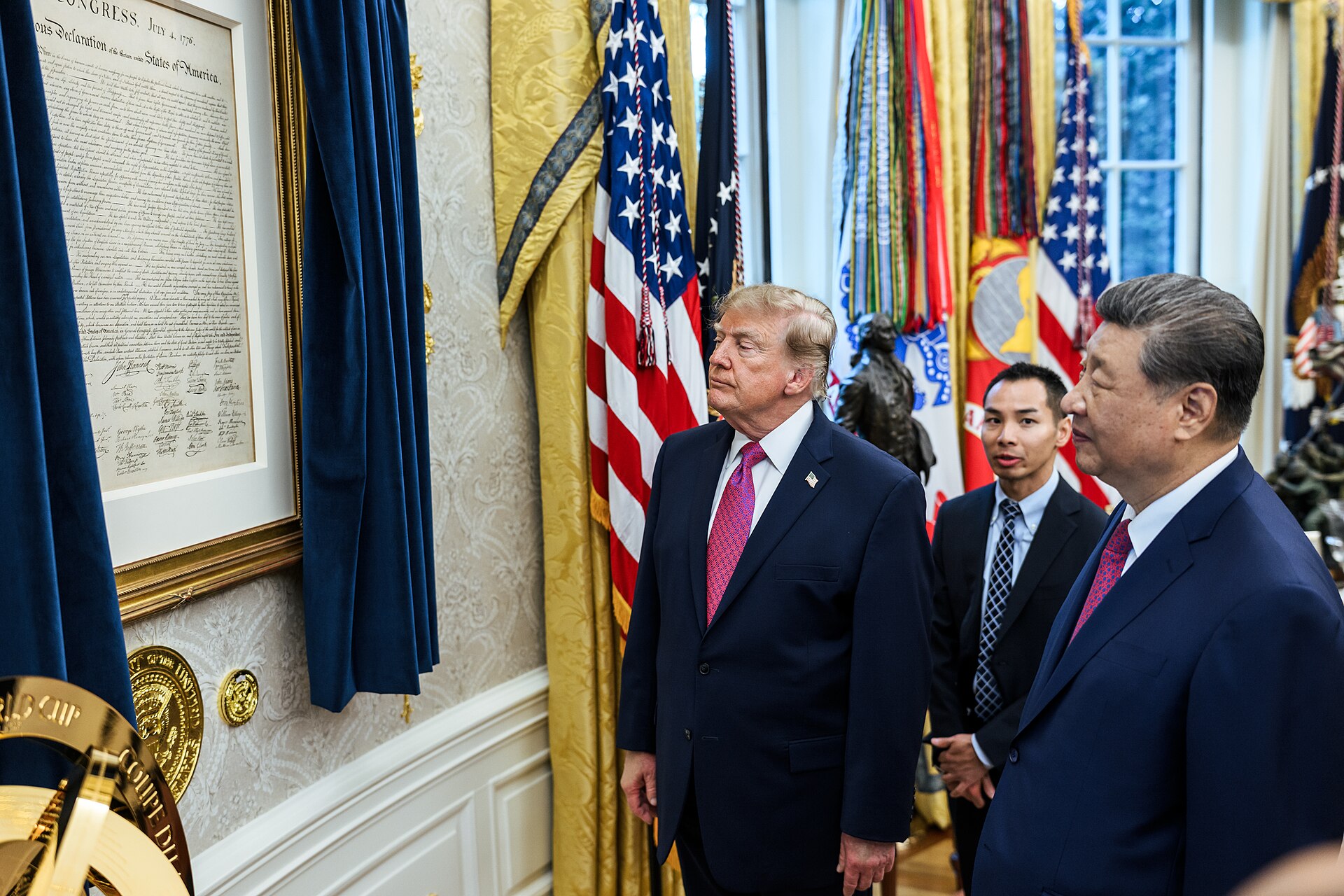
WEDNESDAY, OCTOBER 7, 2026 — At an Oct. 7 Oval Office press conference, Trump celebrated the completion of automatic enrollment of all children under 18 into Trump Accounts — about 70 million kids now covered, with over $4.5 billion deposited since July 4, the New York Post reported. But the headline number comes with a catch every parent needs to hear: no family sees a dime — no $1,000 federal seed, no outside contributions, no account control — until a parent or guardian claims the account through the Trump Accounts mobile app.
There were children in the Oval Office on Wednesday, holding a banner, posing with the president, collecting his challenge coins like Halloween candy. “You’re so good looking. Stay there. The press can admire you,” Trump told them, according to the New York Post. “That’s the way they used to look.” It was part policy rollout, part pageant — and behind the theater was a genuinely big number.
“Since launching in July, nearly 8 million accounts have been created in three months,” Trump said at the press conference. “With today’s announcement, we’re building on that success by 70 million accounts — or children across America — and they’ll all be enrolled into the Trump accounts. And since July 4th, over 4.5 billion dollars have been deposited in Trump accounts.”
Here’s the part that didn’t make the banner: enrollment and ownership are two different things. Automatic enrollment starts the account. It does not hand the child the government’s $1,000 seed contribution, and it does not hand the parents the keys. Until a parent or guardian steps forward, claims the account in the Trump Accounts mobile app, verifies their identity and relationship to the child, and accepts the terms, the Bank of New York Mellon simply acts as trustee. The money sits. Nobody can touch it, add to it, or direct it.

The PlumbingA group trust the size of a small country
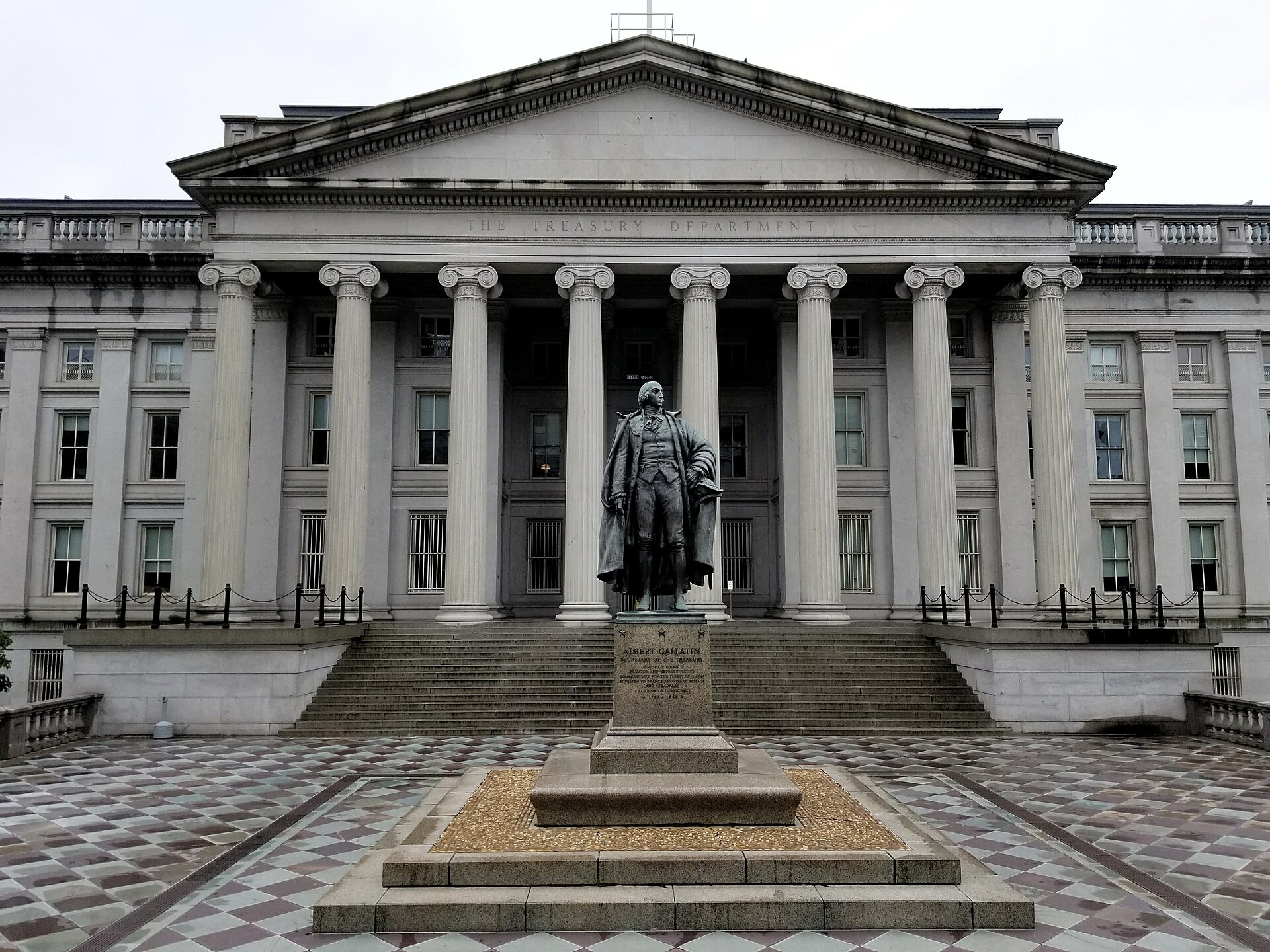
The mechanics are unusual by design. According to MarketWatch, the automatically generated accounts start life inside a massive “group trust,” where contributions are handled collectively. That structure let Treasury and the IRS stand up tens of millions of accounts without tripping over taxpayer-privacy concerns in day-to-day operations, MarketWatch reported. Contributions to the group trust — government and charitable money, including the $6.25 billion from Michael and Susan Dell that sends $250 to 25 million holders 10 and younger in certain areas — flow in from the top.
That’s also why the claim step can’t be skipped. The $1,000 federal seed is technically an election, tax attorney Amber Salotto of RSM’s Washington National Tax practice told MarketWatch, and Treasury officials can’t make that election on a family’s behalf. No claim, no seed — and as Salotto noted, family members and employers can’t put money into an account until it’s been claimed. Even so, the money is legally the child’s property. If parents never claim it, the child can claim it themselves when they’re older — generally at 18, when the balance rolls over into an IRA instead of another Trump account.
Treasury Secretary Scott Bessent said in a statement that the mass enrollment was a “transformative milestone” that could “give every American child the opportunity to build generational wealth and jump-start their financial future,” MarketWatch reported. That’s the pitch: a seeded, tax-advantaged account from birth, riding the stock market for 18 years. One McKinsey estimate suggests even the $1,000 alone — never topped up — could grow to roughly $5,000 by the time the child turns 18.
The SpecsWhat a Trump Account actually is
Stripped of the branding, the accounts are formally 530A accounts, open to children under 18 with a Social Security number, MarketWatch reported. The money must be invested in a low-cost index fund tracking U.S. equities. Contributions are capped at $5,000 a year, with employers allowed to put in up to $2,500 per employee’s child per year, and administrative fees are capped at 0.1% — genuinely low by the standards of retail savings products.
The $1,000 federal seed goes to babies born between 2025 and 2028, MarketWatch reported. Donors get no tax deduction for contributions, MarketWatch noted — an oddity that hasn’t slowed the philanthropy. IRS regulations released earlier this week even paved the way for future stock donations, and officials have been told several eligible donors are prepared to give appreciated stock “similar in magnitude” to the Dells’ $6.25 billion, according to MarketWatch. Employees, meanwhile, can put up to $2,500 of pre-tax money into their children’s accounts, which advisers say could be a smart strategy for workers who want to give.
The Gap8 million out of 70 million
The voluntary numbers help explain the urgency behind the auto-enrollment push. Nearly 8 million accounts in three months sounds like a lot until you learn, as the New York Post reported, that it covered about 10 percent of eligible children. Polling from the nonprofit Commonwealth found that while more than half of eligible families had heard of Trump accounts, just 5 percent of eligible parents with children 10 or under had actually opened one, MarketWatch reported. That’s the participation gap the Treasury move was built to close.
But the new numbers raise their own questions. Auto-enrollment solves the sign-up problem; it doesn’t solve the engagement problem. Melissa Elbert, a partner at the consulting firm Aon, told MarketWatch the auto-enrollment was a “significant expansion,” then added the line that matters: “But the parents are still going to need to do some work.” Downloading an app, proving who you are, proving the kid is yours, accepting terms — that’s a multi-step process, and MarketWatch noted the drop-off risk is real, especially for the families this program is supposedly built for.
One data point in the White House’s favor: about 80 percent of the accounts are linked to families earning under $200,000, according to a White House official cited in the press briefing coverage — suggesting the money is landing outside the households that least need help. Whether those households take the next step is the experiment now underway. Fox Business also covered the press conference and reported the same headline figures: 70 million accounts, $4.5 billion deposited. Seventy million accounts exist. What matters is how many get claimed.
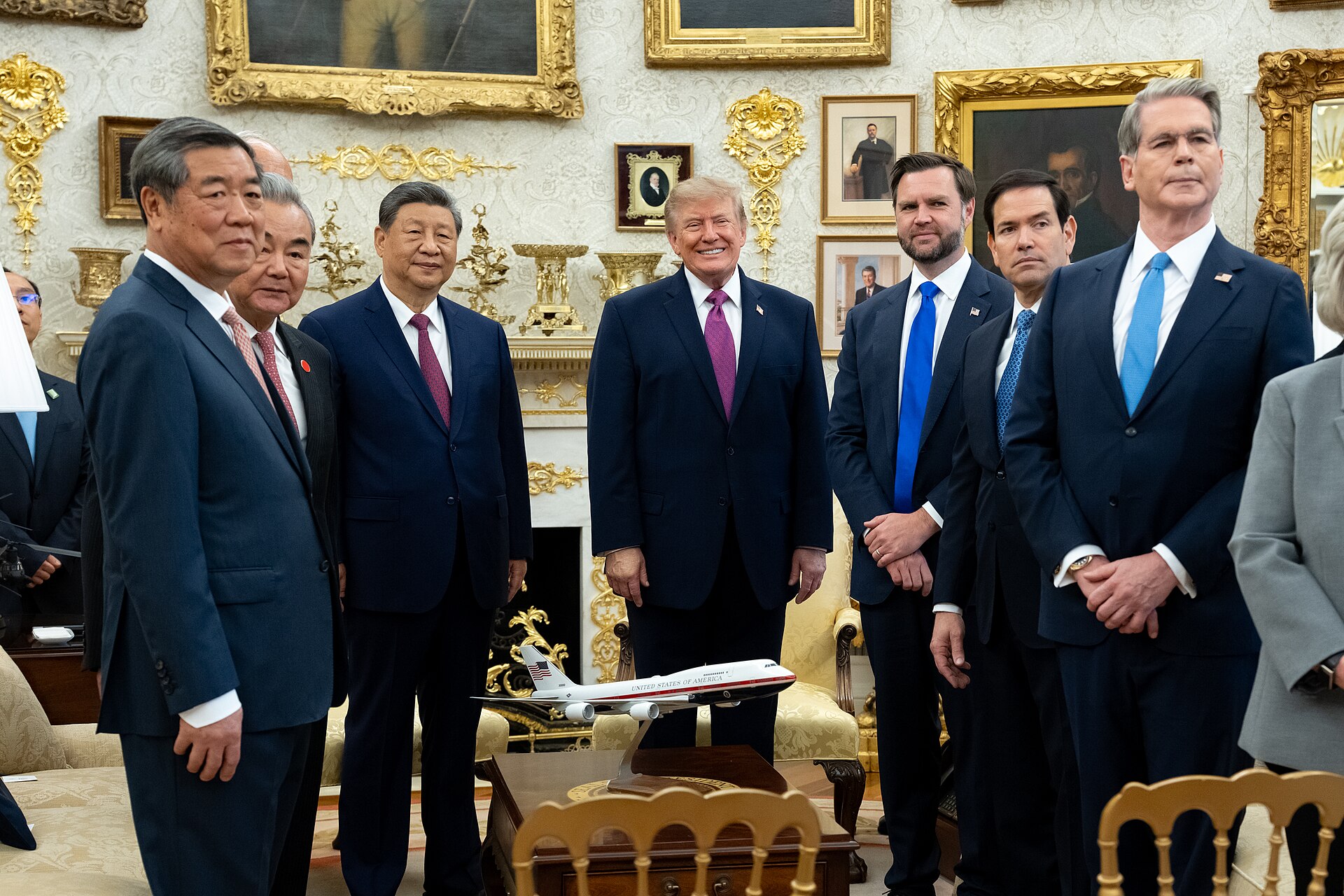
The president, for his part, was characteristically direct about what he thinks he’s built. “There are those that say this is one of the most important things that I will have done,” he said, according to the Post. That’s a legacy claim, and like the accounts themselves, it comes with fine print: what it’s worth depends entirely on what happens next — not in Washington, but on 60 million parents’ phones.