Pam Grier
Acting
Pamela Suzette Grier (born May 26, 1949) is an American actress. Described by director Quentin Tarantino as cinema's first female action star, she achieved fame for her starring roles in a string of 1970s…
About Pam
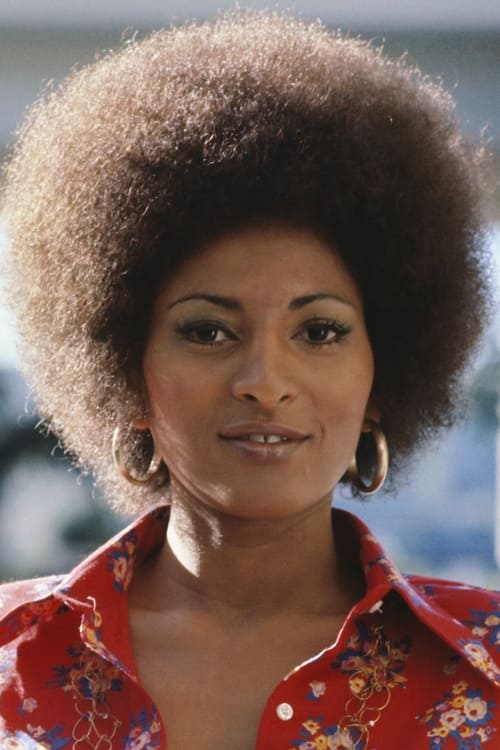
Pamela Suzette Grier (born May 26, 1949) is an American actress. Described by director Quentin Tarantino as cinema's first female action star, she achieved fame for her starring roles in a string of 1970s action, blaxploitation, and women-in-prison films for American International Pictures and New World Pictures. Her accolades include nominations for an Emmy Award, a Golden Globe Award, a Screen Actors Guild Award, a Satellite Award, and a Saturn Award.
Grier's story starts far from Hollywood. Born in Winston-Salem, North Carolina, she was raised in a military family, moving between bases and growing up partly in Denver. She came to Los Angeles in the late 1960s with ambitions in modeling, but the door that actually opened was behind a switchboard: she took a job as a receptionist at American International Pictures, the legendary B-movie studio of Roger Corman and Samuel Z. Arkoff. Corman noticed her, and by 1971 she was on screen in The Big Doll House and Women in Cages — the start of a women-in-prison run that also included The Big Bird Cage (1972) and Black Mama, White Mama (1973). The early films were exploitation in every sense, but Grier was already doing something the camera couldn't teach: projecting absolute, unhurried authority.
Then came the two films that made her immortal. Coffy (1973), directed by Jack Hill, cast her as a nurse waging a one-woman war on the drug dealers who destroyed her sister — the first time a Black woman had carried an action film on her own terms, and the movie that made her the biggest female star of the blaxploitation era. Foxy Brown (1974) cemented it: the afro, the attitude, the gun, the woman who doesn't need rescuing. Sheba, Baby (1975), Bucktown (1975), and Friday Foster (1975) followed, along with Scream Blacula Scream (1973) and The Arena (1974). For the rest of the decade, Pam Grier was the template — tough, funny, sexy, and always in control, never a victim, never a sidekick.
When the blaxploitation era ended, Grier did what icons do: she kept working, and waited for the culture to catch up. The 1980s and '90s brought Fort Apache the Bronx (1981), Something Wicked This Way Comes (1983), Above the Law (1988), Class of 1999 (1990), Posse (1993), Original Gangstas (1996), Mars Attacks! (1996), and Escape from L.A. (1996). She bought a ranch in Colorado and stepped back from the Hollywood grind — until Tarantino came calling with a part written specifically as a love letter to her: Jackie Brown (1997). As the middle-aged flight attendant outsmarting every man in the room, Grier gave the performance of her career and earned a Golden Globe nomination for Best Actress. A generation that had missed the revolution the first time finally got to see what the fuss was about.
Television gave her a second act. She played Eleanor Winthrop on Showtime's Linc's (1998–2000), earned praise for the animated series Happily Ever After: Fairy Tales for Every Child (1999), and then became Kate "Kit" Porter on Showtime's groundbreaking The L Word (2004–2009) — a role that introduced her to a new generation entirely. Later TV work included Amanda Waller on Smallville (2010–2011), Constance Terry on ABC's Bless This Mess (2019–2020), and appearances on This Is Us, alongside film roles in Just Wright (2010), Larry Crowne (2011), and Poms (2019).
In 2010 she published her memoir, Foxy: My Life in Three Acts, co-written with Andrea Cagan — a candid account of the fame, the relationships (with Kareem Abdul-Jabbar, Freddie Prinze, and Richard Pryor among the era's defining figures), the cancer diagnosis she survived in her thirties, and the industry that tried to put her in a box she refused to fit in. What remains, half a century on, is the legacy: every action heroine since — on screen and off — owes Pam Grier a debt. Foxy Brown walked so they could run.
The Previously take
Our read on Pam Grier.
Quentin Tarantino called her cinema's first female action star. He wasn't exaggerating. Pam Grier's 1970s run — Coffy (1973), Foxy Brown (1974), Sheba Baby (1975) — invented the template: the woman who doesn't need rescuing, played by an actress who didn't need permission. Before Coffy, no Black woman had ever carried an action film. After it, she was the biggest female star of the blaxploitation era, carrying those films on pure charisma — tough, funny, sexy, and always in control.
When the era ended, she kept working (Above the Law, Mars Attacks!), bought a ranch in Colorado, and waited for the culture to catch up. Then Tarantino wrote Jackie Brown (1997) as a love letter to her, earning her a Golden Globe nomination and introducing her to a generation that had missed the revolution the first time. Her 2010 memoir Foxy: My Life in Three Acts told the whole story — the fame, the survival, the industry that tried to box her in.
The L Word's Kit Porter brought her to prestige TV. The legacy brought her everywhere else: every action heroine since owes her a debt. Foxy Brown walked so they could run — and fifty years on, Pam Grier is still the standard.
Career highlights
The moments that made Pam.
- Coffy (1973) — Coffy. The blaxploitation landmark; the icon is born, and the first Black woman to carry an action film.
- Foxy Brown (1974) — Foxy Brown. The definitive Pam Grier vehicle; pure attitude, pure control.
- Jackie Brown (1997) — Jackie Brown. Tarantino's love letter; Golden Globe nomination for Best Actress.
- The L Word (2004–2009) — Kit Porter. Showtime's groundbreaking drama; a new generation's Grier.
- Sheba, Baby (1975) / Friday Foster (1975) — Sheba / Friday. The peak-era run that cemented the template.
- Smallville (2010–2011) — Amanda Waller. The DC power broker, played with steel.
Watch
Pam Grier on her iconic career, Richard Pryor, and more (Sway In The Morning).
Keep exploring
More people worth your time.
On screen
Selected career credits — verified via TMDB.
Law & Order: Special Victims Unit
Assistant US Attorney Claudia Williams
Smallville
Amanda Waller
Bob's Burgers
Evelyn (voice)
This Is Us
Grandma
The Love Boat
Cynthia Wilbur
Knots Landing
Lieutenant Guthrie
Miami Vice
Acting
Night Court
Benet Collins
The Cosby Show
Samantha
The Wild Thornberrys
Mother Springbok (voice)
The Great North
Neckbone (voice)
Martin
Pam Grier
The Fresh Prince of Bel-Air
Janice
The L Word
Kit Porter
Follow Pam
Official pages around the internet.