Results
The Story of Everton
Everton are English football's great constant. Founded in 1878 as St Domingo's, a church team from the Stanley Park area, they became Everton Football Club a year later and have been members of the Football League since its very first season in 1888 — missing just four top-flight campaigns in well over a century. Nine league titles, five FA Cups, a European trophy: this is one of the grand old institutions of the game, a club whose history is woven into the fabric of Liverpool itself. And after 133 years at Goodison Park, the Toffees have begun the most exciting chapter of their modern story: a spectacular new home on the banks of the Mersey, and a team finally looking up again.
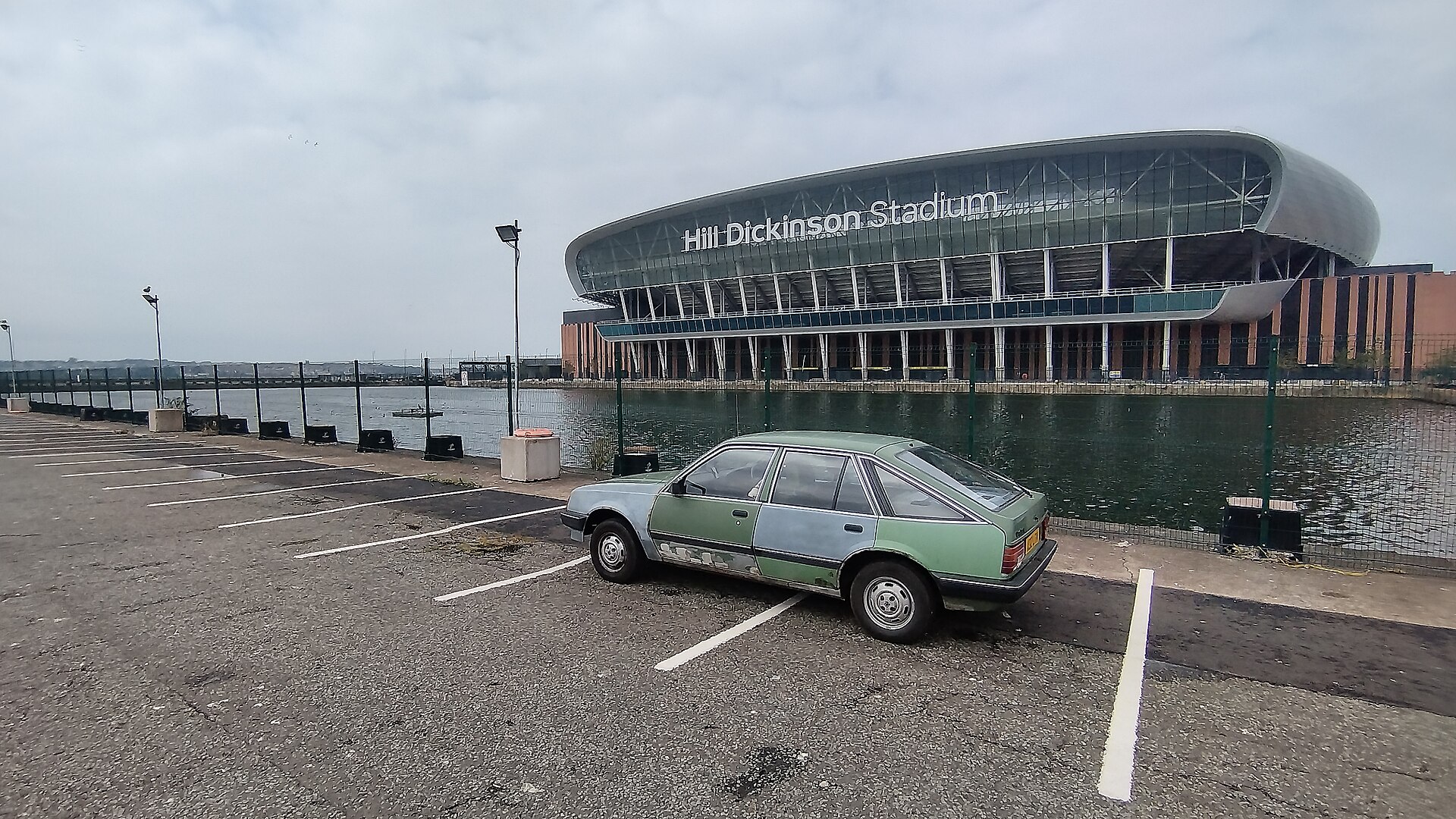
Goodison Park, the Grand Old Lady, hosted its last football in the summer of 2025. In its place stands the Hill Dickinson Stadium at Bramley-Moore Dock — a 52,769-capacity arena on the waterfront, steep stands, close to the pitch, designed to carry Goodison's famous noise into a new century. The first competitive game, a 2-0 win over Brighton in August 2025, felt like a statement: the future had arrived, and it was loud. For a club that spent its final Goodison years fighting relegation and counting PSR points deductions, the new ground is more than bricks and steel. It is permission to dream again.
The history demands dreaming. Everton's first golden age came between the wars: the great Dixie Dean, whose 60 league goals in the 1927-28 season remains the most untouchable record in English football, fired the title wins of 1928, 1932 and 1939. Then came the 1960s — the “School of Science” under Harry Catterick, champions in 1963 and 1970, playing football of rare elegance with Alan Ball, Colin Harvey and Howard Kendall in midfield. And then the pinnacle: Kendall, now the manager, built the finest Everton side of them all in the mid-1980s — league champions in 1985 and 1987, FA Cup winners in 1984, and European Cup Winners' Cup winners in 1985 after beating Rapid Vienna in Rotterdam, with Neville Southall, the greatest goalkeeper of his generation, behind a back four that conceded almost nothing.
The modern era has been harder. The 1995 FA Cup — Paul Rideout's goal beating Manchester United — remains the club's last major trophy, and the decades since have been a story of near misses and boardroom chaos. David Moyes' first spell (2002-13) brought stability and a fourth-place finish in 2005; the Farhad Moshiri years brought hundreds of millions spent and almost nothing to show for it; points deductions for breaching profit and sustainability rules in 2023-24 turned two seasons into relegation scraps; and Sean Dyche's pragmatism kept the club up while the takeover saga dragged on. The Friedkin Group's completed takeover in December 2024 finally brought order — and in January 2025, the most popular appointment imaginable: Moyes, home again.
Moyes' return has been transformative. The football is recognisably his — organised, aggressive, built on set-pieces and wide play — but the squad he inherited, refreshed by a clever summer of recruitment, has genuine quality. Jordan Pickford remains England's No. 1 and the loudest voice at the club; Jarrad Branthwaite, back from injury, is one of the finest young centre-backs in Europe alongside the warrior James Tarkowski. Kiernan Dewsbury-Hall, signed from Chelsea, is the box-to-box engine. And the attacking additions have been box office: Jack Grealish, on loan from Manchester City, has brought star quality and creativity to the left wing; Thierno Barry, the young French striker, leads the line with physicality; Tyler Dibling, the gifted teenager from Southampton, is the future of the club's creativity; and Brennan Johnson, arriving in the swap deal with Crystal Palace, adds proven Premier League pace and finishing.
The 2026-27 season could hardly have started better. Five games in, Everton are unbeaten on nine points: a 2-0 opening-day win at Crystal Palace, hard-earned draws at Bournemouth (1-1), at home to Manchester United (2-2) and at Tottenham (0-0), and a 1-0 victory over Ipswich on 19 September. The pattern is vintage Moyes — difficult to beat, ruthless at set-pieces, with Grealish providing the stardust — and the Hill Dickinson crowd has taken to it completely. There is a growing belief on the blue half of Merseyside that this is not just a good start but the beginning of something: a first sustained European push in years.
What happens next is the most intriguing question in the Premier League's upper mid-table. Can Moyes turn draws into wins without losing the defensive solidity? Can Barry and Dibling become the long-term attacking core? And when the first Merseyside derby arrives at the new stadium, will the Hill Dickinson roar carry Everton over the line the way Goodison so often did? The Friedkin project is still young, but the direction is clear: a modern Everton, financially stable, playing in a cathedral of a stadium, managed by the man who understands the club best. The School of Science has a new campus. It is time to open the books.
Key Players
Jordan Pickford
England's No. 1; a shot-stopping wall and vocal leader.
Jarrad Branthwaite
One of the best young centre-backs in Europe; composure and aerial power.
James Tarkowski
No-nonsense defensive general and Branthwaite's partner-in-crime.
Kiernan Dewsbury-Hall
Box-to-box engine who drives the team up the pitch.
Jack Grealish
Star winger on loan from Manchester City; the creative showpiece.
Brennan Johnson
Welsh forward signed in the Palace swap deal; pace and finishing.
Thierno Barry
Young striker leading the line with physicality and movement.
Tyler Dibling
Gifted young attacker; the future of Everton's creativity.
Club Legends
Dixie Dean
60 league goals in a season; the greatest English striker ever.
Alan Ball
World Cup winner and the heartbeat of the 1970 title side.
Neville Southall
Wales' giant in goal; the finest keeper of his generation.
Howard Kendall
Title-winning player, then the manager of the 1980s golden era.
Tim Cahill
Australia's hero; the late-arriving goals from midfield.