
Results
The Story of Nottingham Forest
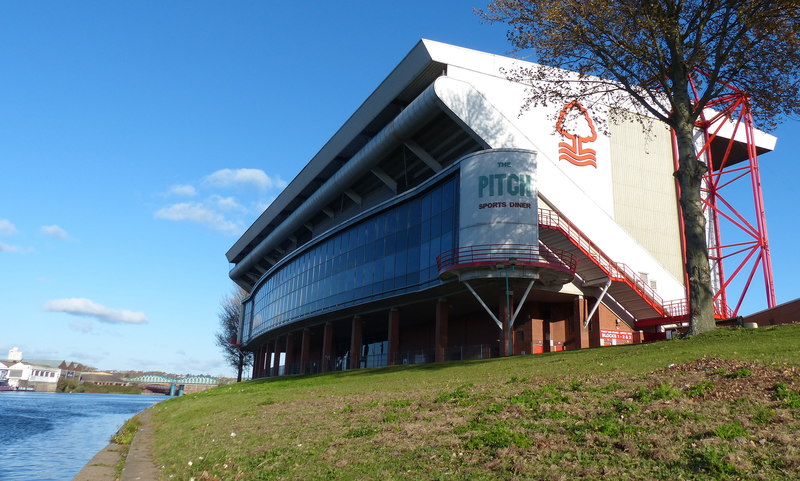
Founded in 1865 by a group of bandy and shinty players at the Forest Recreation Ground — the source of the club's name — Forest are one of England's oldest clubs. They donated the red kits that became Arsenal's famous colours in 1886, won the FA Cup in 1898, and moved to the City Ground on the banks of the River Trent the same year.
Everything changed when Brian Clough arrived in 1975. Clough took a struggling Second Division side, won promotion, then the league title, then back-to-back European Cups in 1979 and 1980 — the greatest overachievement in English football history. His 18-year reign made Forest European champions twice and defined the club forever.
After Clough's departure the club fell hard, spending 23 years outside the top flight — including three seasons in the third tier — before returning to the Premier League in 2022. The identity is the miracle: Garibaldi red, the tight, roaring City Ground, and a history so heavy it hangs over every home game. Glasner's arrival in 2026 is the latest attempt to turn heritage into a stable European-level future.
Founded in 1865 by a group of bandy and shinty players at the Forest Recreation Ground — the source of the club’s name — Forest are one of England’s oldest clubs, and their fingerprints are on the wider game: in 1886 they donated the red kits that became Arsenal’s famous colours. The club won the FA Cup in 1898 and moved the same year to the City Ground on the banks of the River Trent, where they have played ever since. But everything — absolutely everything — changed when Brian Clough walked through the door in January 1975. He inherited a struggling Second Division side. Within five years Forest were champions of England, and then champions of Europe, and then champions of Europe again: the 1978 league title, the 1979 European Cup won by Trevor Francis’s header — Britain’s first £1 million footballer scoring the winner — and the 1980 European Cup won by John Robertson’s strike, with Peter Shilton, England’s most-capped player, immovable behind them. It remains the greatest overachievement in English football history: a provincial second-tier club, European champions twice in a row, under the greatest English manager never to lead England. Clough’s eighteen-year reign defined the club forever — and, in truth, has haunted it ever since.
The fall was long and hard. After Clough’s departure the club slid down the divisions, spending 23 years outside the top flight — including three seasons in League One, the third tier, a humiliation for double European champions. The City Ground kept its roar, but the miracle faded into folklore. The return finally came in 2022, when Steve Cooper’s side beat Huddersfield in the play-off final and took Forest back to the Premier League after nearly a quarter of a century away. Survival followed, then consolidation, and then — astonishingly, beautifully — a run to the Europa League semi-finals in 2025-26, with Igor Jesus’s goals carrying the Tricky Trees through the knockout rounds. A club that once conquered Europe was dreaming continental dreams again, and the weight of the Garibaldi red felt a little lighter.
This summer brought the next chapter: Oliver Glasner, appointed head coach in 2026 after two years transforming Crystal Palace — and before that, the small matter of winning the Europa League with Eintracht Frankfurt in 2022. Glasner’s 3-4-2-1, all aggressive pressing and vertical transitions, is the system Xaver Schlager, the Austrian midfield engine, already knows inside out. The first win came in style: 2-1 at Aston Villa, Liam Delap — the £50 million England striker signed to lead the line — firing Forest ahead 45 seconds after half-time, and Igor Jesus latching onto Morgan Gibbs-White’s cutback in the 88th minute for the winner. It was Forest’s first victory at Villa Park since 1994, and it kept Glasner unbeaten in eight career meetings with Unai Emery. The start has been mixed — one win, two draws, two defeats, five points, a 2-2 draw with Liverpool at the end of August showing the ceiling, a defeat to Coventry in the cup showing the floor — but the direction of travel is unmistakable.
The team is built around its captain. Morgan Gibbs-White is the talisman, the creative force Forest build everything around — and in the summer the board slammed the door shut on interest from Tottenham, Manchester United and Bayern Munich, refusing to let the crown jewel go. Murillo, the Brazilian centre-back, is one of the most coveted young defenders in the league; Callum Hudson-Odoi has been revitalised into the big-game dribbler on the flank; Dan Ndoye brings Swiss pace and end product; Ola Aina is the tireless, reliable presence at full-back; Matz Sels’s heroics kept Villa out until the 88th minute at Villa Park. The summer’s big departure was Elliot Anderson, sold to Manchester City in one of the window’s biggest deals — the kind of sale that funds the project and tests the squad’s depth at once. James McAtee, arriving in midfield, is part of the answer.
The identity is the miracle, and the challenge is turning heritage into a stable European-level future without being crushed by it. The City Ground — tight, roaring, on the Trent — has to become a fortress again; the fans have to find the old roar for a team that is young and still learning Glasner’s demands. If the Villa win is the template — Delap’s power, Jesus’s timing, Gibbs-White pulling the strings — then Forest have the spine of something real. Clough’s shadow will always hang over the City Ground. The trick, as every Forest manager since has learned, is to play in its shade without freezing in it. Glasner, a European trophy-winner who has made a career of overachievement, might just be the man to try.
Key Players
Morgan Gibbs-White
Club captain and talisman; the creative force Forest build everything around.
Igor Jesus
Brazilian striker whose goals powered Forest's 2025-26 Europa League semi-final run.
Murillo
Brazilian centre-back and one of the most coveted young defenders in the league.
Callum Hudson-Odoi
Revitalised England winger; the big-game dribbler on the flank.
Dan Ndoye
Swiss winger with pace and end product; an early scorer in 2026-27.
Liam Delap
England striker signed to lead the line with old-school centre-forward power.
Ola Aina
Nigerian full-back; a tireless, reliable presence on either flank.
Xaver Schlager
Austrian midfield engine who knows Glasner's system inside out.
Club Legends
Brian Clough
The manager who won the league and two European Cups; the greatest English manager never to lead England.
Peter Shilton
England's most-capped player and the immovable wall behind the European Cup triumphs.
John Robertson
Scored the winner in the 1980 European Cup final; the quiet genius of Clough's great side.
Stuart Pearce
'Psycho' — the fearless left-back and captain who became the club's beating heart.
Trevor Francis
Britain's first £1m footballer; scored the goal that won Forest the 1979 European Cup.
Watch Nottingham Forest
More Forest Coverage
Full Squad
Every player, grouped by position. Tap any player for stats.
Goalkeepers 3
Defenders 9
Midfielders 6
Forwards 6
All-Time Greats
The legends who built this club. Tap for their story.