The Los Angeles Dodgers are baseball's glamour franchise with a soul — born in 1883 in Brooklyn as the Atlantics, nicknamed the "Trolley Dodgers" for the fans who dodged streetcars to get to the ballpark, and for 75 years the beating heart of Brooklyn. The Brooklyn years produced the game's most important moment: April 15, 1947, when Jackie Robinson broke baseball's color line at Ebbets Field, changing American sports forever. His number 42 is retired across all of baseball. The 1955 "Wait Till Next Year" team finally beat the Yankees for Brooklyn's only championship — and three years later, the team was gone, moved to Los Angeles in 1958.
What defines the Dodgers is sustained excellence at a scale no franchise can match. Since the move west: titles in 1959, 1963, 1965, 1981, 1988, 2020, 2024 and 2025 — nine championships total. The Koufax–Drysdale era of the 1960s. Fernandomania in 1981. Kirk Gibson's impossible home run in 1988. And the modern juggernaut: thirteen NL West titles in fourteen years from 2013 to 2026, the 2020 bubble championship, and the 2024 title — beating the Yankees in five games — that validated a decade of dominance, followed by the 2025 repeat. No team wins more regularly. The Dodgers treat the division title as the starting line.
The legends are the game's royalty. Robinson. Sandy Koufax — five straight ERA titles, four no-hitters, the greatest peak any pitcher has ever had. Don Drysdale. Duke Snider. Roy Campanella. Maury Wills. And the modern icons: Clayton Kershaw, the homegrown ace with three Cy Youngs and a curveball from heaven; Mookie Betts; Freddie Freeman; and Shohei Ohtani, whose arrival in 2024 produced the first 50-homer/50-steal season in baseball history and a World Series MVP-level October.
Dodger Stadium, opened in 1962 in Chavez Ravine, is the largest ballpark in baseball and one of its most beautiful — the pastel seats, the San Gabriel Mountains beyond the outfield, the sunset over the third-base line. Sixty-plus years in, it's a landmark.
The rivalry with the San Francisco Giants is the oldest and best in the sport — born in New York, carried west, still electric every single series. The Padres provide the divisional heat. The Dodgers' story is about the biggest stage in the National League: the stars, the money, the expectations — and, since 2024, the rings to match.
The 2026 season: 100 wins and a date with history. The Dodgers did what the Dodgers do: they won the National League West — the fifth straight division title, the 13th in 14 seasons — and they did it with 100 victories, the sixth 100-win campaign in the last ten years. An 18-7 September carried them to the No. 2 seed in the National League and a first-round bye, opening the Division Series at home on October 3 against the Atlanta Braves, who survived the Phillies in the wild-card round. The postseason berth was the franchise's 14th in a row, tying the Braves' 1991-2005 run for the longest streak in baseball history, and it extended their National League record to 16 consecutive winning seasons. The 2024 title — five games over the Yankees — and the 2025 championship made them back-to-back champions. Now comes the chase that defines legacies.
The three-peat. No National League team has ever won three straight World Series. No team in baseball has done it since the Yankees of 1998-2000 — twenty-six years ago. The Dodgers, two-time defending champions, need eleven October wins to join the most exclusive club in the sport. The skeptics point to a strange stat: Los Angeles went just 2-14 over its final 16 games against playoff teams and finished 38-37 against winning clubs overall. Max Muncy shrugged it off the way only a champion can: "In '22, we beat the Padres like 16 times in the regular season, and they beat us in the postseason. It just doesn't matter. In October, it really doesn't matter."
The deadline move that could decide it all was the acquisition of Tarik Skubal from Detroit — the 2024 Cy Young winner, pried loose from the Tigers for prospects at the deadline. Skubal went 8-7 with a 2.84 ERA and 153 strikeouts on the season, including a 5-2 mark with a 2.61 ERA in Dodger blue, and he slots into a rotation with no soft spots: Yoshinobu Yamamoto (14-9, 2.53 ERA, 182 strikeouts), Blake Snell (4-1, 1.90), Tyler Glasnow, Justin Wrobleski (12-5, 3.66) and Roki Sasaki, all healthy at the right time. The bullpen added Edwin Díaz and Tanners Scott to a group with Alex Vesia, Evan Phillips and a returning Edgardo Henriquez. When the Dodgers are whole — and for the first time all year, with Shohei Ohtani, Andy Pages and Sasaki all back from the injured list in the season's final week, they finally are — no staff in the National League runs deeper.
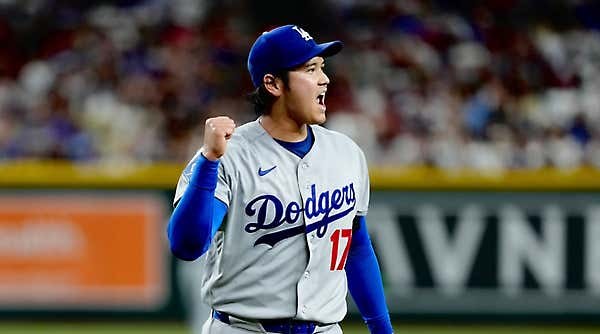
The lineup remains the sport's most star-studded. Ohtani hit .275 with 30 homers and 80 RBIs despite his injury-interrupted summer. Freddie Freeman (.288) is still the steadiest bat in the game. Mookie Betts reinvented himself at shortstop. Muncy launched 29 homers, Teoscar Hernández drove in 64, and Andy Pages broke out in center with 23 homers and 84 RBIs. Kyle Tucker, the big offseason prize, added 17 homers and 70 RBIs in right. Will Smith, Tommy Edman and Hyeseong Kim round out a lineup with no easy outs — and rookie Josue De Paula, up from Double-A just weeks ago, made the NLDS roster conversation for October.
What defines this era of Dodgers baseball is the expectation itself. The division title is the starting line; anything short of a parade is a failure. Dave Roberts' club has now won more regularly than any team in the sport's modern history, and with Andrew Friedman's machine restocking the roster every single winter — Skubal this year, Tucker last — the window never closes. Three straight World Series would put the 2024-26 Dodgers alongside the '98-'00 Yankees and settle every argument about this generation's dynasty. Eleven wins. That's all that stands between this team and immortality.