
For sixteen years, Creighton basketball was Greg McDermott — the steady hand, the offensive genius, the man who carried the Bluejays from the Missouri Valley into the Big East and turned Omaha into one of the great basketball towns in America. That era ended in the spring of 2026, when McDermott retired after 366 wins and ten NCAA Tournament appearances, coaching his final games in the College Basketball Crown in Las Vegas. But here’s the thing about how Creighton does transitions: there was no search firm, no drama, no rebuild. The successor had been sitting on the bench all season. Alan Huss — Bluejay player, McDermott assistant, High Point head coach, and the designated head-coach-in-waiting — was formally named the program’s 17th head coach on March 25 and took over after the Crown run ended. The 2026–27 season isn’t a new era so much as a passing of the torch, and the flame never went out.
McDermott’s legacy needs no embellishment. He took over in 2010, navigated the 2013 jump to the Big East, and built a perennial contender: ten NCAA trips in fifteen years, three Sweet 16s and an Elite Eight in 2023 over the final five seasons, a 2020 Big East regular-season title, and the 2013–14 campaign when his son Doug led the nation in scoring and became the face of the sport. The Jays sold out the 18,320-seat CHI Health Center Omaha year after year, ranking among the national attendance leaders, and produced pros like Doug McDermott, Kyle Korver and Marcus Zegarowski. When McDermott said in his farewell statement that he was “very proud of the young men that have proudly worn the Bluejay uniform,” the whole city nodded along. Sixteen years, 366 wins, and a program that went from Valley power to national brand.
Huss is the rare successor who needs no introduction in Omaha. He played center for the Bluejays from 1997 to 2001 under Dana Altman — teammates with Kyle Korver on three NCAA Tournament teams — then coached high school ball before returning as McDermott’s assistant from 2017 to 2023. In 2023 he took his first college head coaching job at High Point and won immediately: Big South regular-season and tournament titles, an NCAA Tournament berth in 2025, and two Big South Coach of the Year awards, going 56–15 overall. Before the 2025–26 season he came home as associate head coach with a handshake understanding that the job would be his when McDermott stepped aside. He didn’t have to wait long. Creighton has now had just three head coaches in 32 years — Altman, McDermott, Huss — and that continuity is the program’s superpower.
The roster Huss inherits is fascinating: last year’s team, and a nearly intact core. The 2025–26 Bluejays went 16–18 and finished fifth in the Big East, bowing out to Seton Hall in the conference tournament quarterfinals before a second-round exit in the College Basketball Crown — a down year by Creighton standards, but one that kept the machine running. And the cupboard is far from bare: the Jays return 46 percent of their minutes, the second-best mark in the Big East, with three full-time starters back plus a fourth who was a preseason All-Big East pick before injury.
The returners give Huss a real foundation. Graduate forward Jasen Green (10.5 points, 6.3 rebounds, 54.4 percent from the field, 35.1 percent from three) is the two-way glue. Junior guard Austin Swartz (10.9 points, 38.3 percent from deep) is a proven Big East scorer. Senior stretch big Isaac Traudt (37.5 percent from three at 6-foot-10) spaces the floor the way Creighton bigs always have. Sophomore Hudson Greer shot 40.4 percent from three as a freshman. And junior Jackson McAndrew — 6.8 points and 4.5 rebounds in just four games before a foot injury — was the preseason All-Big East selection; a healthy McAndrew changes the ceiling of this team. The system these players know is McDermott’s system, and Huss, who helped install it for six years, will run his own version of it from day one.
The departures are real: Josh Dix (13.2 points per game) graduated, Nik Graves and Fedor Zugic moved on, Blake Harper transferred to VCU, Owen Freeman to Auburn. But Huss attacked the portal with purpose. Wes Enis arrives from South Florida as a 6-foot-1 senior who averaged 16.4 points, 3.6 rebounds and 2.4 assists — an instant lead-guard candidate. Oswin Erhunmwunse comes from Providence, a 6-foot-10 junior who put up 6.9 points, 8.3 rebounds and 2.1 blocks while shooting 67.3 percent — the rim protection this roster lacked. BJ Davis transfers in from San Diego State (10.8 points, 37.4 percent from three), a battle-tested winner from a Final Four program. It’s a transfer class built for immediate contention, not a slow build.
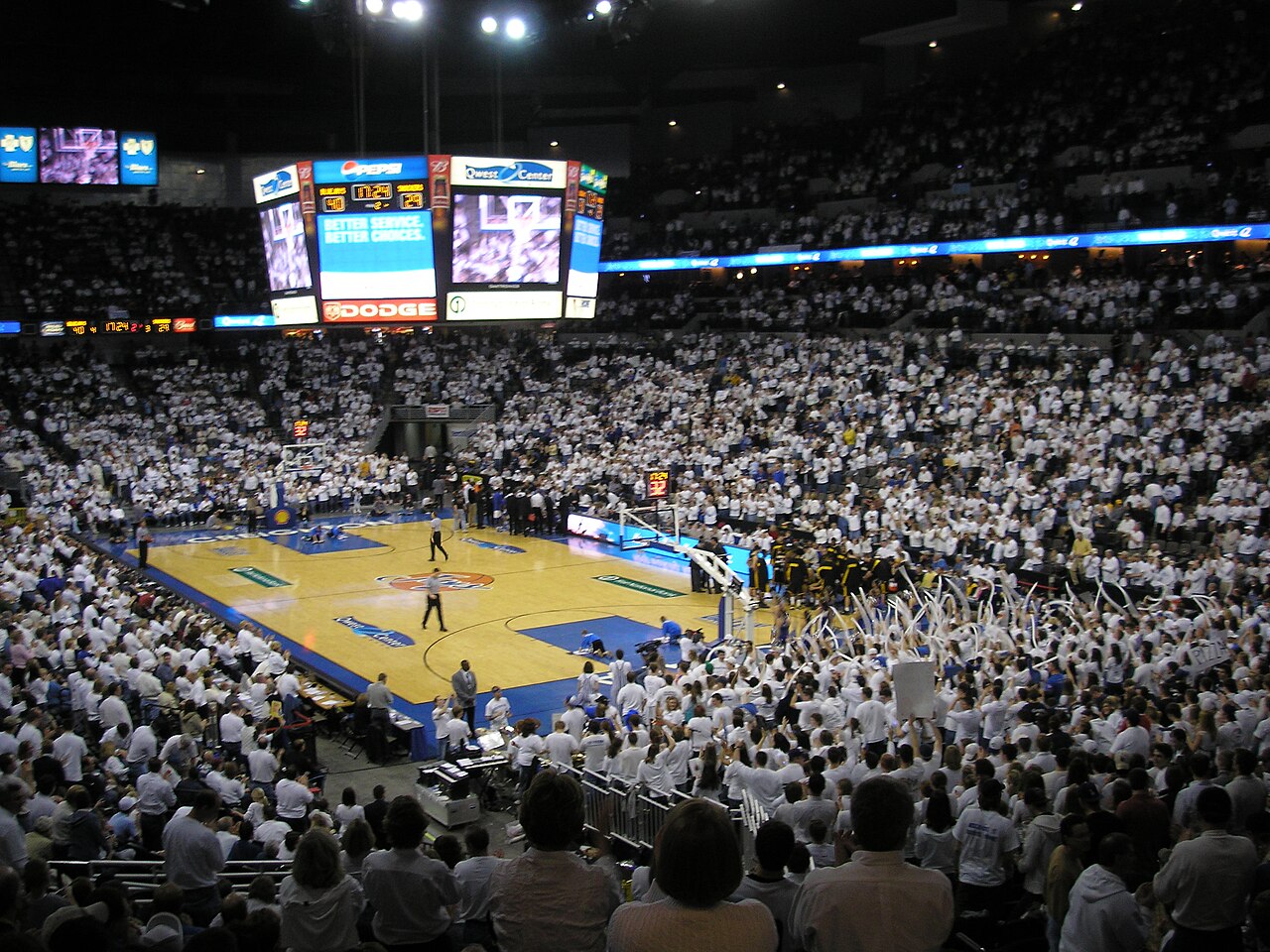
The Big East context is what it always is: a nightly bloodbath. UConn sits at the top of the sport, and the league’s middle is a tangle of NCAA Tournament-caliber teams. Preseason projections slot Creighton around seventh — respectful, and probably low if McAndrew is healthy and Enis translates. The Jays’ path is the same one that worked for a decade and a half: elite offense, five-out spacing, a veteran core that doesn’t beat itself, and a home crowd of 17,000-plus that makes the CHI a nightmare in February. The NIL gap with the league’s richest programs is real, and fundraising will be Huss’s quiet war — but the building, the brand and the system are all still here.
Program history runs deep in Omaha. The Bluejays have played since 1911–12, own a 1,721–1,100 all-time record, and their March highlights stretch from the 1941 Elite Eight to the Sweet 16s of 1962, 1964 and 1974 to the modern breakthroughs — the 2021 Sweet 16, the 2023 Elite Eight, the 2024 Sweet 16. The Missouri Valley dynasty years under Altman (conference titles in 1978, 1981, 1989, 1991, 1999, 2000, 2002, 2003, 2005, 2007, 2012, 2013) built the foundation; McDermott built the skyscraper. Now Huss gets the keys to both.
So the story of Creighton’s 2026–27 season is continuity disguised as change. A new voice that isn’t really new. A roster that knows the system because it never left. A fanbase that watched its beloved coach walk away and its chosen son pick up the whistle. The Bluejays aren’t rebuilding — they’re reloading, and they’ve done it this way before.


