The Drake Bulldogs are the mid-major that nearly toppled the sport’s greatest dynasty. In the 1969 Final Four national semifinal, Drake took Lew Alcindor’s UCLA to the absolute wire, falling by three points in a game that remains one of the most heroic near-misses in NCAA tournament history. That is the foundation of this program from Des Moines, Iowa: a Missouri Valley power that has spent the modern era proving the 1969 magic was not a fluke. As the 2026–27 season begins, the Bulldogs are in year two under head coach Eric Henderson, coming off a season that exposed real flaws — and a summer that set out to fix them.
The glory years start with Maury John. From 1958 to 1971, John built Drake into a national force, and the 1969 team — led by stars like Willie McCarter, Willie Wise and Dolph Pulliam — won 26 games and stood one defensive stop from playing for a national championship. The program remained excellent into the early 1970s under John before a long slide set in, decades in which the Bulldogs mostly watched March from the couch. Drake’s modern resurrection has been one of college basketball’s best sustained mid-major stories.
The latest chapters came in a burst. Darian DeVries (2018–24) restored the Bulldogs to the MVC’s elite, winning league titles and taking the program to the NCAA tournament in 2021, 2023 and 2024. Then came the fairy-tale season: Ben McCollum’s 2024–25 Bulldogs went 30-4, swept the Valley’s regular-season and tournament crowns, and beat Missouri in the NCAA tournament’s round of 64 before falling to Texas Tech. The engine was Bennett Stirtz, the MVC Player of the Year and one of the country’s best guards — who followed McCollum to Iowa, along with the coach, in the spring of 2025.
That is the world Henderson inherited: a program with championship expectations, a bare cupboard, and a fan base that had just watched its best team in decades walk out the door. Henderson arrived from South Dakota State, brought guard Owen Larson with him, and spent his first season — 2025–26 — learning hard lessons. He has been strikingly honest about it, telling the Des Moines Register this summer that he simply failed to get last year’s team connected enough to win the big moments. The numbers were ugly: Drake finished 250th nationally in defensive efficiency and second-to-last in the Valley, a stunning fall for a program built on winning ugly.
Year two is about physicality, and Henderson is not hiding from the diagnosis. “I’ve always been a little more conservative on the defensive end,” he admitted in July. “No more.” The plan is to increase ball pressure, dictate terms instead of reacting, and build a roster that fits the scheme — a roster he says complements each other far better than last year’s group did. Six returners stayed, including Larson, whose season did not begin until December while he recovered from a torn ACL; Eli Shetlar, Andrew Alia, Bryson Bahl, Griffen Goodbary and LJ Rush round out the core that chose to keep building.
The portal additions were targeted at winners. Gabe Oldham arrives as one of the Summit League’s best rebounders from Denver. Jon Carroll was an All-Ohio Valley performer for co-champion Morehead State. Dre Kindell led a 24-win Wichita State team in assists. Juco product Justin Burns adds toughness inside. And the freshman class brings five state championship trophies between them — the kind of winning pedigree Henderson believes changes a locker room.
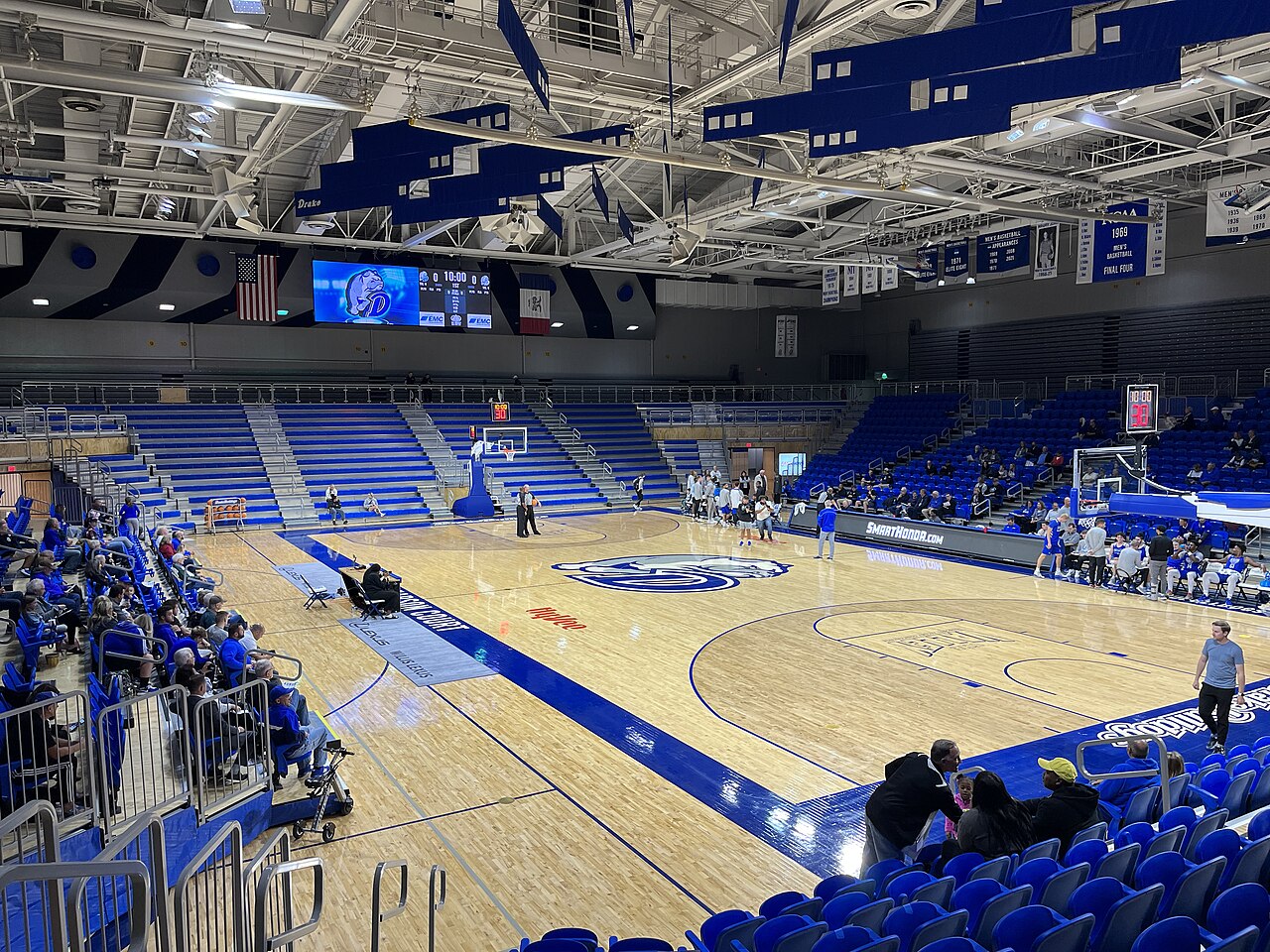
The Missouri Valley remains one of the country’s most unforgiving mid-major leagues: Bradley, Illinois State, Northern Iowa, Belmont and Indiana State all take turns ruining someone’s March. Knapp Center — Drake’s 1992 home in the heart of Des Moines — is the kind of intimate, deafening bandbox where Valley title races are decided in February. The Bulldogs’ identity under Henderson is being rebuilt in real time: pressure defense, shared scoring, and the swagger of a program that knows it belongs in the tournament conversation.
The stakes are clear. Drake does not rebuild in the Valley so much as reload — the fan base watched DeVries and McCollum win at a clip that made the NCAA tournament feel like an expectation, not a dream. Henderson’s second season is the test of whether last year was a blip or a trend. With a retooled roster, a defensive overhaul and a coach who has already owned his mistakes publicly, the Bulldogs have the ingredients for a Valley bounce-back. The 1969 ghosts approve of ambition. Now comes the winning.
The roster math, however, is only half the story. What Henderson is really rebuilding is an identity: the Bulldogs’ best teams have always been defined by defensive grit and a Des Moines crowd that treats every Valley Saturday like a tournament game. Knapp Center’s 6,400 seats sit close enough to hear the sneakers, and when Drake is winning, the building is one of the toughest outs in the mid-major ranks. The 2026–27 schedule will test the new defense early, with the usual Valley round-robin meaning there are no nights off — a top-four finish requires surviving road trips to Cedar Falls, Peoria and Terre Haute, where the Bulldogs have historically had to earn everything.