The FIU Panthers have been to the NCAA Tournament exactly once. It was 1995, they were a No. 16 seed, and they drew eventual national champion UCLA in the first round in Boise — a 92–56 loss that remains the program’s lone March memory. Thirty-one years later, as the 2026–27 season opens, FIU is starting over again: new head coach, new roster, new hope that this time the climb actually leads somewhere. If you want to understand mid-major basketball — the churn, the almosts, the stubborn belief — you could do worse than study the Panthers.
The program’s history reads like a tour of college basketball’s most fascinating characters. Bob Weltlich coached that 1995 team to the TAAC tournament title and the automatic bid, then resigned — delivering the immortal postgame line, “If anyone knows of any openings out there, my number is…” before walking away. Isiah Thomas, the Hall of Fame point guard, coached FIU from 2009 to 2012, going 26–65 but putting the program on television. Richard Pitino spent one season, 2012–13, going 18–14 before Minnesota came calling. The names were big. The wins were not.
Jeremy Ballard’s eight-year run, from 2018 to 2026, was the steadiest stretch in program history — and it still ended in a firing. Ballard won 20 games in his first season and 19 in his second, then settled into the grind of Conference USA’s middle class: never higher than sixth in the league, never more than eight conference wins. Yet he became just the second coach in FIU history to reach 100 wins, and on February 4, 2026, an 88–84 overtime win at Middle Tennessee — the program’s first win in Murfreesboro since 2021 — made him FIU’s all-time wins leader with 113, passing Rich Walker. It wasn’t enough. After a 15–17 season (8–12 in C-USA) ended with a first-round conference tournament loss to Missouri State, FIU announced on March 11, 2026, that Ballard would not return.
The NBA lineage is real, though. Carlos Arroyo — the Puerto Rican national team legend — starred at FIU before a long NBA career. Raja Bell, one of the great defensive guards of the 2000s, is a Panther. The talent has always been in Miami. Keeping it home has been the eternal challenge, with the Hurricanes up the road and every power program in America recruiting South Florida.
Enter Joey Cantens. Hired on March 20, 2026, Cantens arrives from Daytona State College, where he built a junior-college winner, and becomes the tenth head coach in FIU’s 45-season history. It’s his first Division I head coaching job — a bet on energy, recruiting chops, and a fresh voice. His task is total: install a system, rebuild a roster through the portal, and convince Miami’s talent that the fastest path to the pros runs through the Ocean Bank Convocation Center.
The 2026–27 Panthers will be defined by newness. The Ballard era’s veterans are gone, and Cantens’ first roster is a patchwork of returners, transfers and freshmen learning each other on the fly — the classic year-one rebuild. Expect growing pains, especially on the road, where FIU has historically struggled. But there’s opportunity in the reset: Conference USA remains wide open beyond its top tier, and a team that defends and shares the ball can climb quickly in this league.
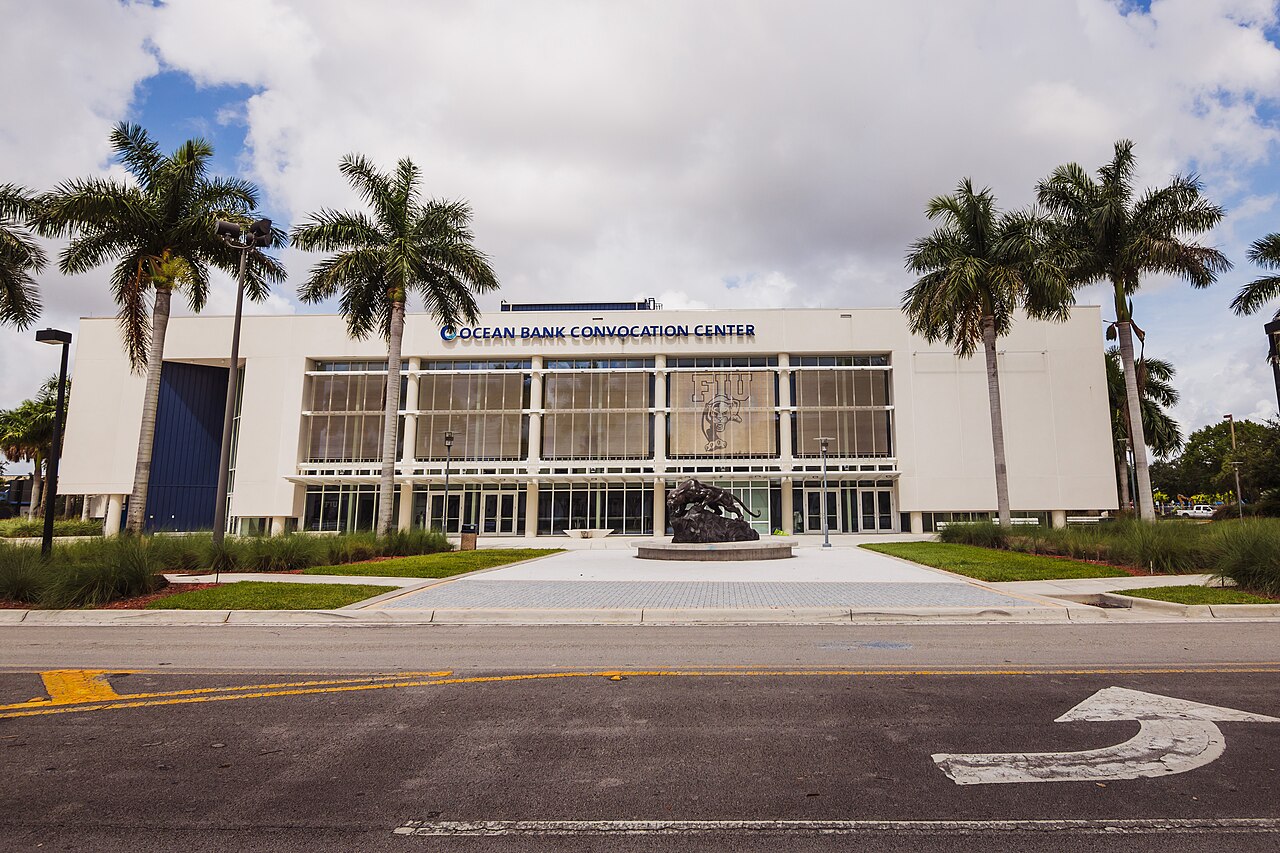
The building itself is part of the story. The Ocean Bank Convocation Center — the “OCC” — opened in 1986 and seats about 4,700, an intimate on-campus barn where a good crowd can make life miserable for visitors. When FIU is rolling, the student section brings genuine Miami energy. The program needs more nights like that.
The goal hasn’t changed in three decades: win Conference USA, cut down the nets, and get back to the NCAA Tournament for the first time since 1995. It’s the longest drought of its kind in Florida, and ending it would be one of the great stories in recent mid-major history. Cantens didn’t come to FIU to go 15–17. He came to end the wait. Year one is about laying the foundation — the wins will tell us how sturdy it is.
Cantens’ résumé suggests he understands the assignment. At Daytona State he won by identifying overlooked talent and developing it fast — exactly the skill set a program like FIU needs, where the roster turns over and the margin for error is thin. The early returns on the recruiting trail have been encouraging: South Florida guards who grew up watching big-time college basketball are listening, and the pitch writes itself — immediate playing time, a wide-open rotation, and a coach building something from scratch. If the Panthers can steal a few wins in non-conference play and protect home court at the OCC, the conversation around this program changes quickly.
The broader Conference USA picture helps, too. The league has been defined by parity in recent years — the last back-to-back champion was years ago, and any given week produces an upset. For a rebuilding team, that chaos is an invitation: get hot in late February, win three games in three days, and a season of growing pains becomes a championship story. It has happened before in this league. FIU has waited since 1995 for it to happen to them.