The most interesting hire in the Big Sky didn't come from the college ranks at all. On April 3, 2026, Weber State named Kaleb Canales — 18-year NBA assistant, interim head coach of the Portland Trail Blazers, associate head coach of Mexico's national team — as the 11th head coach in program history. The 47-year-old Laredo, Texas native replaces Eric Duft, who moved into a front-office role after four seasons, and he arrives with a mandate as clear as the Wasatch Front: end a decade-long NCAA tournament drought and restore Weber State to the top of the Big Sky.
Canales's résumé is unlike anything in the conference. He started as a video intern with the Trail Blazers in 2005, worked his way to assistant coach by 2009, and in March 2012 — when Nate McMillan was fired — became the youngest active head coach in the NBA and the first Mexican-American head coach in league history, running Portland for the final 23 games of the season. From there: five seasons with the Dallas Mavericks, two with the New York Knicks, one with the Indiana Pacers, a G League associate head coach job with the Texas Legends, a head coaching stint with the Calgary Surge in Canada, and associate head coach of Mexico's national team since 2021. Last season he was the associate head coach at Troy under Scott Cross, where the Trojans went 22-12, swept the Sun Belt regular-season and tournament titles, and reached the NCAA tournament.
The connection that made it happen is pure basketball poetry. Damian Lillard — Weber State legend, class of 2012, No. 6 overall pick, and now the general manager of the Wildcats' program — overlapped with Canales in Portland during Lillard's rookie season. That relationship, forged fourteen years ago, is part of why Canales is in Ogden now. When your GM is one of the greatest players in school history and he vouches for your head coach, the fan base listens. "We will build a culture that is connected on both ends of the floor, connected in the classroom, and connected to the community," Canales said at his introduction. "This is a program with a proud tradition."
The job he inherits is a full rebuild. Duft went 66-65 over four seasons, including 16-16 (10-8 Big Sky) last year, and the program hasn't been to the NCAA tournament since 2016. The top seven scorers from last season are gone. Canales's first roster is a blank canvas with intriguing pieces: senior forward Nigel Burris (6-7, Archbishop Mitty), juniors Tyler Christensen, Tijan Saine Jr., Brady Smith, Jace Whiting and Viljami Vartiainen, sophomores Trevor Hennig and Declan Cutler, freshmen ArDarius Grayson, Anthony Moore, Duce Paschal, Bourgeois Tshilobo and David Hansen — plus former Tennessee center Handje Tamba, a 6-foot-10 presence from the Democratic Republic of Congo who gives the frontcourt immediate size. It's a roster of unknowns, which means Canales gets to install his culture from day one with no entrenched habits to break.
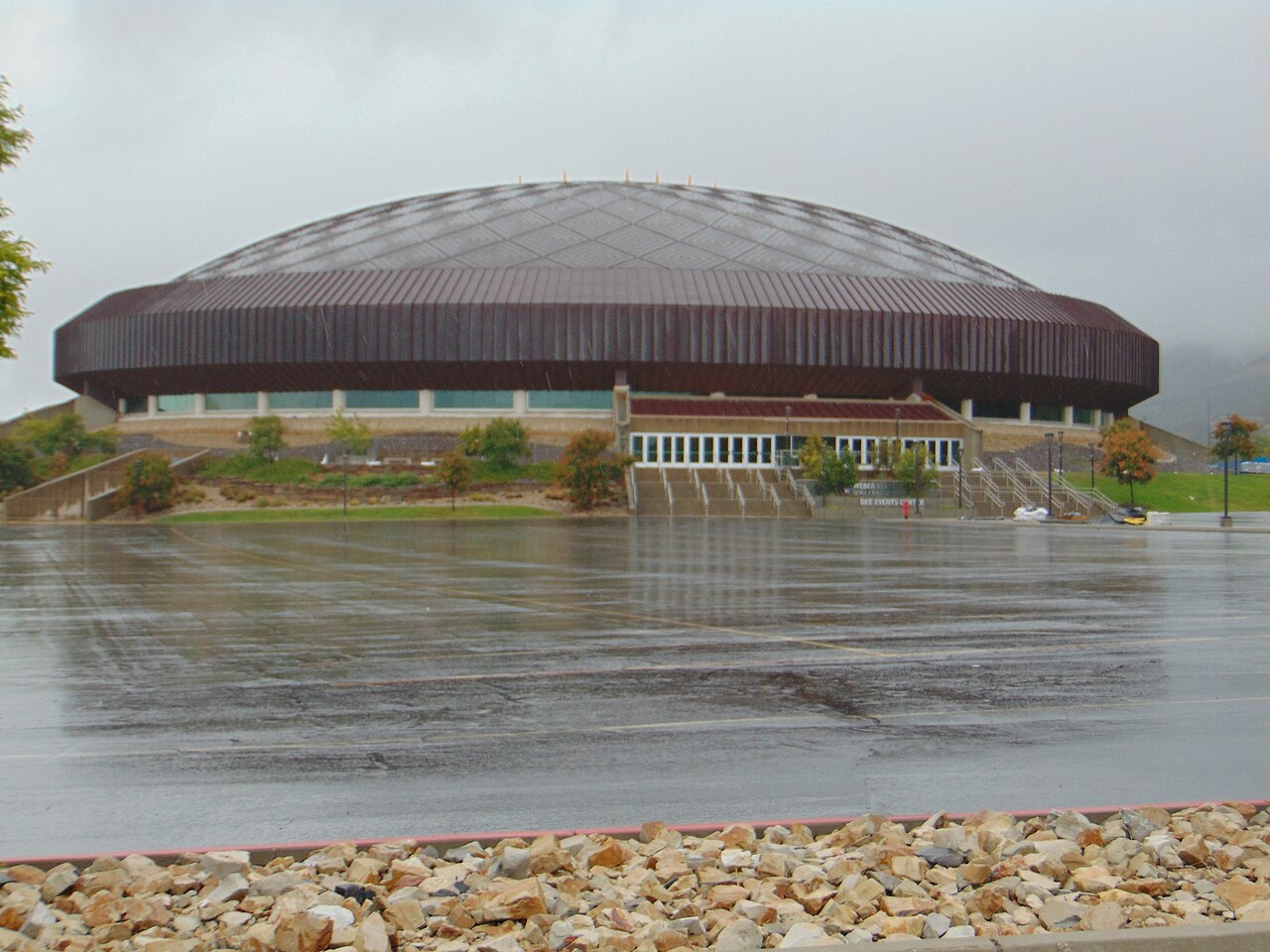
The tradition he's stewarding is one of the Big Sky's proudest. Weber State owns two of the most famous upsets in NCAA tournament history: the 1995 stunner over No. 3 seed Michigan State, and the 1999 shocker over No. 3 North Carolina, when Harold "The Show" Arceneaux dropped 36 points in one of the great individual March performances ever. The program has 16 NCAA appearances, a pile of Big Sky championships, and the Lillard legacy — the two-time All-NBA guard who put Ogden on the map and never left it behind. Randy Rahe, who coached from 2006 to 2022, won more games than anyone in school history. The Dee Events Center, opened in 1977, has seen all of it: the purple-clad crowds, the "Weber State" chants, the March magic.
The Big Sky in 2026-27 is wide open, and that's Canales's opening. Montana and Montana State remain the league's standard-bearers, Northern Arizona and Eastern Washington have been frisky, and the conference's new-look membership keeps the race unpredictable. Weber State's non-conference slate includes the in-state measuring stick — a November 18 date with Utah State — and the kind of road tests that will tell Canales exactly what he has before league play. In a one-bid league, January and February are about seeding; March is about three days in Boise and a ticket to the Dance.
The rivalries write themselves. Montana and Montana State are the historic foes — the Big Sky's version of blood feuds, played in packed gyms with genuine dislike. Utah State is the in-state big brother the Wildcats love to humble. And every program in the league now circles the Canales hire: nobody in the Big Sky has a head coach with 18 years of NBA experience and a GM named Damian Lillard. Weber State just became the conference's most fascinating experiment.
What defines the 2026-27 Wildcats is the unknown — and that's the fun of it. Canales has never been a college head coach. His roster turned over almost completely. The program hasn't danced in a decade. But the ingredients are real: an NBA-caliber tactician, a legend in the front office, a proud tradition, and a fan base starved for March. "His infectious energy will resonate deeply with our fans," athletic director Tim Crompton said. In Ogden, the belief is that the Canales era is the one that finally brings Weber State back to where Harold Arceneaux and Damian Lillard took it. The Big Sky should be watching.