Silo
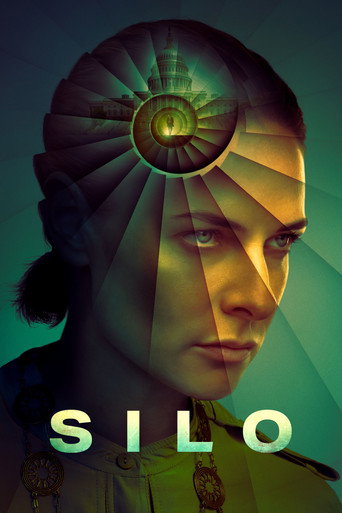
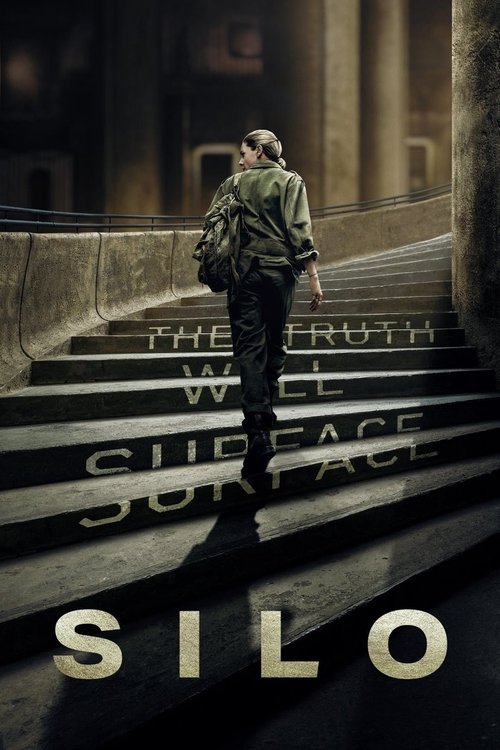
In a ruined and toxic future, thousands live in a giant silo deep underground. After its sheriff breaks a cardinal rule and residents die mysteriously, engineer Juliette starts to uncover shocking secrets and the truth about the silo.
Ten thousand people. One giant underground silo. A toxic, ruined world outside that may or may not be real. In that silo, after the sheriff breaks a cardinal rule and residents start dying mysteriously, engineer Juliette begins uncovering shocking secrets — and the truth about the silo itself. This is the mystery-box show that actually kept its promises, and Juliette digging toward the light is prestige television at its most compulsive.
What works is the totality of the worldbuilding. The silo is not a setting; it is a thesis — about class, about control, about what people will accept as long as the lights stay on. Depth is hierarchy here, literally: the further down you live, the less you matter. The production design tells that story in every rivet — the 144-level spiral staircase that is the structure's spine, the grimy Mechanical levels at the bottom, the comparatively polished upper echelons — and the show is smart enough to let the place do half the acting. Juliette as protagonist is the other masterstroke — an engineer, a fixer, someone whose instinct is to take things apart until they make sense. Rebecca Ferguson, who also executive-produces, plays her with a mechanic's impatience for lies: Juliette doesn't speechify about the truth, she diagnoses its absence the way she'd diagnose a failing generator.
The premise comes from Hugh Howey's bestselling trilogy — Wool, Shift, and Dust, collected under the Silo name — which began life as a self-published novella and became a genuine publishing phenomenon. Developed for Apple TV by Graham Yost, the veteran showrunner behind Justified and The Pacific, the adaptation understands that the books' power was never the twist (readers have known the outside truth for a decade) but the system: a society engineered to police itself, where the most dangerous thing you can own is a question. Around Ferguson, the casting is prestige-grade: Tim Robbins as Bernard Holland, the head of IT whose soft-spoken menace makes him one of TV's great bureaucratic villains; Common as Robert Sims, Judicial's enforcer; Harriet Walter as Martha Walker, the down-deep fixer with a spine of iron; Chinaza Uche, Avi Nash, and — in a second season that expanded the world — Steve Zahn as Solo, the feral survivor of another silo, Silo 17.
What does not always work is the pace. There are tunnels in the middle where the show is clearly managing its mysteries rather than advancing them — the classic prestige-TV tax — and the mystery-box format carries its original sin: every answer risks being smaller than the question. To its credit, Silo's answers have mostly been worth the digging, which is more than can be said for most of its predecessors. The third season, which premiered July 3, 2026 and ran ten episodes through September 4, made the show's boldest structural move yet: splitting the narrative between the present — Juliette surviving her forced "cleaning" and returning with memory loss as the silo reels from rebellion — and the "Before Times," centuries earlier, where journalist Helen Drew (Jessica Henwick) and Congressman Daniel Keene (Ashley Zukerman) uncover the conspiracy that built the silos. It's a prequel and a sequel at once, and it reframes everything the first two seasons established about how the project began some 140 years before Juliette's story.
The show has also proven willing to diverge from the books when the drama demands it. The most talked-about departure: Bernard Holland dies in Howey's novels, but Yost kept him alive. "We thought, 'No,'" the showrunner explained. "We wanted to see what happens when the bad guy becomes part of the resistance." Robbins' burned, belief-shattered Bernard — his entire ideology collapsed — became one of season three's most compelling threads, the rare case of an adaptation improving on its source by refusing the easy exit.
Culturally, Silo is the show that proved the Big Question drama was not dead — it just needed better locks. Arriving in the streaming era's glut of content, it cut through by doing the old things well: patience, scale, a central mystery worth protecting. Alongside Severance, it forms the twin pillars of Apple TV's prestige sci-fi identity: two shows about systems that lie to their workers, both trusting the audience to sit with discomfort. The production itself is a monument to the form — seasons three and four were filmed back-to-back at Hoddesdon Studios in Hertfordshire, England, a converted cold-storage warehouse with over 200,000 square feet of sets, and the fourth season wrapped in March 2026 with an expected summer 2027 premiere. Four seasons to tell the whole trilogy: no stretching, no filler years, a complete story with a planned ending. An 8.2 audience rating is the number of a show that earned its audience the slow way, one revelation at a time. The lesson for the industry: trust the viewers to keep digging, and dig somewhere worth going.