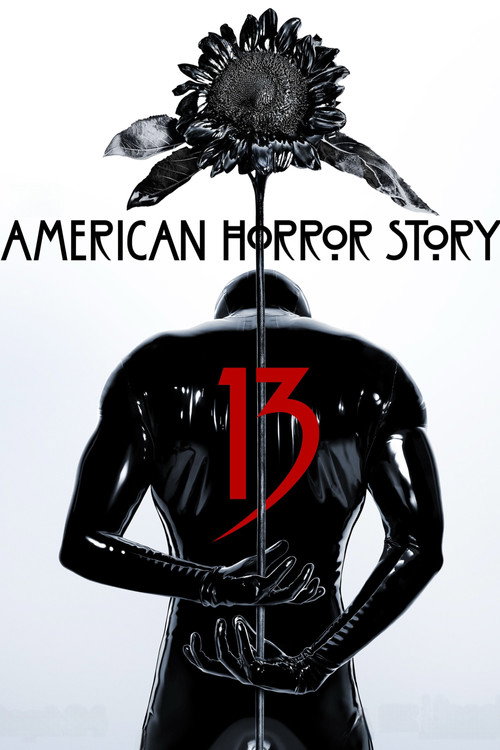
American Horror Story (2011)
An anthology horror drama series centering on different characters and locations, including a house with a murderous past, an asylum, a witch coven, a freak show, a hotel, a farmhouse in Roanoke, a cult, the apocalypse and a summer camp.
Vivian’s take
Fifteen years in, the anthology that ate horror television is still standing: a murder house, an asylum, a witch coven, a freak show, a hotel, a cult, the apocalypse, a summer camp. American Horror Story did not just anthologize horror — it turned the genre into appointment television, and the medium has never quite recovered.
01The Hook
Fifteen years in, the anthology that ate horror television is still standing: a murder house, an asylum, a witch coven, a freak show, a hotel, a cult, the apocalypse, a summer camp, a double feature, New York City, a delicate pregnancy — and now, a thirteenth season that gathers them all under one roof. American Horror Story, created by Ryan Murphy and Brad Falchuk for FX, premiered October 5, 2011, and reinvented what a TV series could be: a repertory company of actors returning each year in new roles, new eras, new nightmares, with only the title and the dread carrying over. It turned the anthology — a format television had left for dead — into appointment viewing, and it made October belong to FX the way December belongs to the Hallmark Channel.
The formula was radical in its simplicity. Each season is a self-contained story, which meant the show could kill its darlings, burn down its sets, and start over every fall. Jessica Lange, the show's founding grande dame, played a Southern-belle neighbor in Murder House, a sadistic nun in Asylum, a fading movie star in Freak Show, and the Supreme witch Fiona Goode in Coven — winning two Emmys along the way. Sarah Paulson became the company's MVP, shape-shifting from medium to reporter to Supreme to junkie ghost. Evan Peters went from tortured ghost-teen Tate Langdon to cult leader to, memorably, playing multiple roles at once. The repertory system created a fandom fluent in the actors' range: you didn't just watch AHS, you watched Paulson become someone new, and the internet kept score.
02The Seasons
The run is a map of 2010s horror. Murder House (2011) set the template: the Harmon family, a haunted Los Angeles mansion, and a finale that trapped its ghosts together forever. Asylum (2012–13) went bigger and stranger — a 1960s Catholic asylum, aliens, Nazis, demonic possession — and earned James Cromwell an Emmy. Coven (2013–14) became the cultural phenomenon, a New Orleans witch academy that gave the show its most quotable season ("Surprise, bitch"), its most iconic villain-heroine in Lange's Fiona, and Emmys for Lange and Kathy Bates. Freak Show (2014–15) was the ratings peak, a 1950s Florida carnival that drew the series' biggest audience. Hotel (2015–16) brought Lady Gaga as the vampiric Countess — she won a Golden Globe — and some of the show's most baroque imagery. Roanoke (2016) reinvented the format mid-season as a true-crime mockumentary. Cult (2017) weaponized post-election anxiety with killer clowns. Apocalypse (2018) staged the first crossover, reuniting Murder House and Coven. 1984 (2019) did slashers. Double Feature (2021) split itself in two. NYC (2022) went dark and queer and mournful. Delicate (2023–24), adapted from Danielle Valentine's novel, starred Emma Roberts and Kim Kardashian.
And then came 13. Premiering September 24, 2026 on FX (streaming on Hulu and Disney+), the thirteenth season is the show's Avengers: Endgame — Murphy's own comparison. Set largely at The Apollyon, an eerie New York residential building, it follows Ben DeSoto (Joey Pollari), a hospice caretaker with triskaidekaphobia, into a convergence of characters from every season past. Lange returned — Murphy has said there might not have been a season 13 without her — playing all four of her signature roles. Paulson plays six or seven characters; Peters takes on five. Angela Bassett is back as Marie Laveau, Bates as Madame LaLaurie, Roberts as Madison Montgomery, plus Billie Lourd, Gabourey Sidibe, Leslie Grossman, Frances Conroy, Jamie Brewer, John Carroll Lynch, Mena Suvari, and Mat Fraser. Thirteen episodes run through October 29, 2026 — a Halloween finale, as tradition demands. (Ariana Grande was once attached and exited; the season didn't need her.)
03The Legacy
The honest accounting: American Horror Story has been uneven for a decade. The middle seasons chased shock over story; the later years sometimes felt like the repertory company doing improv with a fog machine. The show's grade on this page is a C+ for a reason — at its worst, it's camp without craft, provocation without point. But the peaks remain peaks, and the show's cultural footprint is undeniable. It revived the anthology format and spawned a generation of imitators. It made TV horror a prestige lane, paving the way for everything from The Haunting of Hill House to the current horror-TV renaissance. It launched Murphy's FX empire — American Crime Story, Feud, Pose, Monster — and with it, the modern Ryan Murphy industrial complex. It gave us the spinoff American Horror Stories (2021), a weekly anthology-within-the-anthology. And it embedded itself in the language: "Supreme" as an identity, the Coven girl-group Halloween costume as a perennial, the annual October discourse about which season was actually the best.
Season 13 is best understood as the show writing its own eulogy while it's still alive to enjoy it. Bringing every era's characters under one roof is fan service, yes — but it's fan service with a thesis: that this strange, lurid, excessive series mattered, that its monsters and witches and ghosts added up to something. Whether the finale sticks the landing or not, the gesture is right. Fifteen years, thirteen seasons, one repertory company, and a permanent claim on the spookiest month of the year. Television doesn't do runs like this anymore. It barely did then.
Verdict: C+. The anthology that ate horror TV — uneven for a decade, untouchable at its peak, and still the only show that owns October.