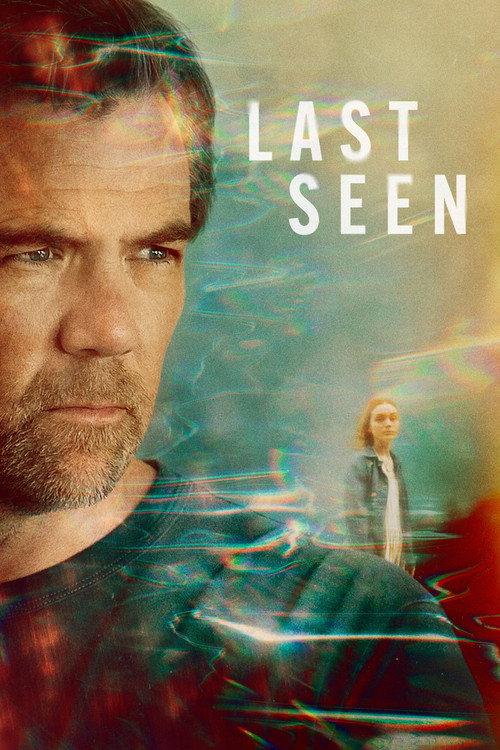
About the series
Previously’s series guide: the facts on Last Seen — the premise, the cast, the season, and why it matters.
The show
Last Seen is a six-episode Australian thriller miniseries streaming on Apple TV+. It premiered on September 9, 2026 with its first two episodes, releasing one new episode every Wednesday through October 7. The series was created and adapted for the screen by Kris Mrksa (The Murders at White House Farm) from Ryan David Jahn’s 2011 novel The Dispatcher, which won the Crime Writers’ Association’s John Creasey Dagger Award. Emmy-nominated filmmaker Christian Schwochow (The Crown, Bad Banks) directs and executive-produces; the series was set and filmed on location in Victoria, Australia, and is produced by 60Forty Films and Werner Film Productions, with music by Isobel Waller-Bridge. Executive producers include Joanna Werner, Christian Schwochow, Kris Mrksa, Jamie Laurenson, and Hakan Kousetta.
The premise
Ian Ridley (Patrick Brammall) is an alcoholic former police detective whose life collapsed eleven years ago when his young daughter, Maggie, vanished without a trace. Now working as a police dispatcher, the one thing keeping him going is his refusal to accept that she might be gone forever. That conviction is put to the test when he receives a distress call from a teenage girl he is certain is Maggie — and he will stop at nothing to find her and reunite his broken family, whatever the cost. It is a hook with teeth: the man who answers everyone else’s emergencies finally gets his own. Jahn has said the novel was inspired by the real kidnapping of Jaycee Dugard, though the series is a work of fiction — a distinction that matters, given how the missing-girl thriller can so easily turn a child’s loss into plot fuel.
The cast
- Patrick Brammall — Ian Ridley
- Maxine Peake — Jenna Reid
- Brendan Cowell — Henry Reid
- Daniel Henshall — Donald Reid
- Jessica Wren — Debbie Mcguire
- Zahra Newman — Isabel “Izzy” Pena
- Chloe Jean Lourdes — series newcomer
- Felix Cameron — Tommy Brenton
- Bert La Bonté — Bill McCracken
- Colin Friels — supporting ensemble
Reception and cultural context
The series premiered to positive reviews from critics and carries a strong audience rating on TMDB. It joins a growing Apple TV+ thriller slate that includes the psychological thriller Cape Fear and the CIA drama Disavowed, and it extends Australia’s remarkable run as prestige-TV territory — a Victoria-shot production with a cast drawn from the country’s deep bench (Colin from Accounts, Say Nothing, Black Mirror, Dune: Prophecy, Plum). Culturally, it is part of the control-room thriller’s moment: the dispatch-center procedural has become one of television’s most reliable tension machines, and Last Seen pushes the form to its emotional extreme by collapsing the professional distance entirely — the dispatcher’s own loss is the case. In an era of true-crime saturation, a fictional thriller that treats its central wound with gravity rather than appetite reads like a small, welcome correction.
The full story
The Previously desk on Last Seen — premise, cast, season guide, reception, and why this one matters.
The premise
Last Seen is a six-episode Australian crime thriller on Apple TV+ that treats the missing-child procedural as a study of the long aftermath rather than a race against the clock. The series premiered on September 9, 2026, with new episodes arriving weekly through the finale on October 7. It is based on Ryan David Jahn’s 2011 novel The Dispatcher — Jahn once named Stephen King among his five biggest influences, a detail that would come full circle when King himself became one of the show’s most prominent champions — and was adapted for television by Australian writer Kris Mrksa, transposing the novel’s East Texas setting to Australia, where it was filmed in Victoria.
Patrick Brammall stars as Ian Ridley, a former detective now working as a 000 emergency dispatcher, still reeling from the disappearance of his young daughter Maggie eleven years earlier. Separated from his wife, six months sober, Ian has never truly accepted that Maggie — who vanished at the age of three — is gone forever, though he has managed a fragile stability. That stability shatters twice in the premiere, “The Dispatcher”: first, when the remains of a young girl are unearthed by a storm — remains that could very well be Maggie’s — and then, at the end of the second episode, “The Call,” when a phone call suggests his daughter might still be alive. The trail leads Ian to a reclusive couple, Henry (Brendan Cowell) and Jenna Reid (Maxine Peake), and their teenage daughter Sarah (Chloe Jean Lourdes) — a girl Ian becomes increasingly certain is Maggie, living under a new identity.
What follows is less a whodunit than a portrait of obsession: Ian’s determination is understandable, his methods quickly become invasive and unprofessional, and the show is clear-eyed about the social cost of a father who will not let the case rest — the strained marriage to his ex-wife Debbie (Jessica Wren), now pregnant and moved on with her patrolman partner Bill; the colleagues, led by Detective Isabella Pena, who are reluctant to let him near the investigation; the sobriety meetings where his confessions double as accusations. By episode four, “The Truth,” Ian is pushing police toward the Reids’ isolated property, and the bureaucratic friction, half-truths, and protective walls around the family turn the season’s back half into a pressure cooker.
The cast
Brammall carries the series with a raw, vulnerable performance that reviewers have uniformly singled out as its anchor — a long way from his beloved comic turn as Gordon in Colin from Accounts, and a reminder of his dramatic range from Evil (as Andy Bouchard), the supernatural series Glitch (Sergeant James Hayes), and even The Devil Wears Prada 2. Jessica Wren plays Debbie McGuire, Ian’s former wife and Maggie’s mother, whose own grief has taken the opposite shape: moving forward, until Ian’s phone call drags her back. Brendan Cowell — Captain Mick Scoresby in the Avatar films, Harrag in Game of Thrones — plays Henry Reid, the secretive patriarch of the isolated farm, with Maxine Peake as his wife Jenna and newcomer Chloe Jean Lourdes as Sarah, the teenager at the center of the mystery.
The season
The six episodes — “The Dispatcher,” “The Call,” “The Lie,” “The Truth,” and two more through the October 7 finale — form a complete, self-contained adaptation of Jahn’s novel. Apple TV+ had not announced a second season as of early October 2026, and the story’s closed-loop structure doesn’t obviously demand one: this is a miniseries-shaped object, built to answer its own central question.
One structural choice has divided viewers: the show telegraphs the Reid household’s importance early — some recappers felt the big reveal was effectively made by the end of the premiere — which shifts the season’s engine from what happened to who knew what, when, and how it stayed hidden for eleven years. It’s a gamble that pays off if you buy what the show is selling: that the mystery was never the point, and the emotional devastation was.
Critical reception
Last Seen has been one of Apple TV+’s quiet success stories of the fall — the kind of show that arrives without fanfare and gets passed hand to hand. The most famous hand belongs to Stephen King, whose glowing review framed it as the underseen thriller worth your weekend, and the critics have largely agreed. Ready Steady Cut gave the premiere 3.5 out of 5, praising Brammall’s performance as a strong emotional anchor while worrying the mystery had been given away too soon — then conceding that maybe the point isn’t the twists but their emotional impact. We Have Issues called episode four, “The Truth,” the best of the season so far: sustained tension, emotional devastation, and character-driven thriller storytelling that delivers on every promise the early episodes made. Fiction Horizon’s recaps praised the show’s commitment to the human scale of the story — missing-child narratives are plentiful; few treat the long aftermath, the sobriety, the strained relationships, the capacity for self-sabotage, with this degree of detail.
The show holds an 8.0 on TMDB — a strong number for a series with a fraction of the marketing muscle behind Apple’s bigger swings — and the consensus is remarkably consistent: this is a serious, naturalistic drama that happens to be a gripping crime thriller, elevated by performances that keep you invested even when the protagonist’s choices make you wince.
Cultural impact
Last Seen belongs to the wave of Australian crime drama that has become one of streaming’s most reliable exports — proof, alongside the show’s Victoria-shot naturalism, that the genre’s center of gravity has permanently shifted south. Its real contribution, though, is tonal: in a landscape crowded with missing-person thrillers engineered around twists, Last Seen is engineered around grief — the eleven years after the amber alert fades, the sobriety chips, the ex-wife who has rebuilt a life and the ex-husband who can’t. That it found its audience the old-fashioned way — a King recommendation, strong word of mouth, critics catching up to a show the algorithm didn’t push — feels appropriate for a series about the things that surface long after everyone has stopped looking.