The full story
The premise
America’s most beloved vigilante is back — and this time, the resurrection is literal. Dexter: Resurrection, which premiered July 11, 2025 on Paramount+ with Showtime, is the third chapter of the modern Dexter saga: a sequel to both the original Showtime series (2006–2013) and Dexter: New Blood (2021), developed and showrun by Clyde Phillips — the showrunner behind the original series’ classic first four seasons. Michael C. Hall reprises his career-defining role as Dexter Morgan, the blood-spatter analyst turned serial killer of serial killers, in a ten-episode season of 45- to 66-minute installments.
The season opens with Dexter awakening from a coma — surviving the apparent ending of New Blood — to find his son Harrison (Jack Alcott) gone without a trace. Realizing the weight of what he put his son through, Dexter sets out for New York City, determined to find him and make things right. But closure won’t come easy: when Miami Metro’s Angel Batista (David Zayas) arrives with questions, Dexter realizes his past is catching up to him fast. As father and son navigate their own darkness in the city that never sleeps, they find themselves drawn into something deeper than either imagined — including a cabal of wealthy killers convened by the sinister Leon Prater, and the fixer who keeps his secrets, Charley Brown.
The cast
Hall anchors an ensemble that mixes franchise legacy with heavyweight new blood. Jack Alcott returns as Harrison Morgan, now pursuing his own dark inheritance of justice alongside — and sometimes against — his father. David Zayas is back as Angel Batista, the dogged Miami detective whose arrival in New York puts Dexter’s new life on a collision course with his old one. James Remar returns as Harry Morgan, Dexter’s late father and eternal moral chorus, and Desmond Harrington reprises his role as Joey Quinn. Ntare Guma Mbaho Mwine, Kadia Saraf, and Dominic Fumusa round out the series-regular core.
The new faces are the season’s headline grabbers: Uma Thurman as Charley Brown, Peter Dinklage as the killer-collector Leon Prater, and Krysten Ritter as Mia LaPierre — a.k.a. Lady Vengeance — with Neil Patrick Harris in a key guest role and Brian Cox appearing as well. Behind the camera, Phillips leads a producing team that includes Scott Reynolds, Marcos Siega, Tony Hernandez, Lilly Burns, John Goldwyn, Sara Colleton, and Hall himself, with Pat Irwin composing the score. The production companies are Clyde Phillips Productions, Sal Centric, Counterpart Studios, and Paramount Television Studios.
The seasons
Season one’s ten episodes ran through the summer and fall of 2025, and the verdict was swift: the show became a genuine ratings and critical darling, the rare franchise revival that satisfied both the faithful and the skeptics. Paramount+ renewed it in October 2025 — barely three months after premiere — and the second season is now dated: Dexter: Resurrection returns Friday, October 30, 2026, on Paramount+ (Premium plan), with the official trailer and key art unveiled in early October under the tagline “He’s back and sharper than ever.”
The season two logline, via Variety, promises escalation on every axis: Dexter finds himself “caught between two killers — one notorious and the other terrorizing New York in ways no one ever anticipated — all while battling his greatest enemy yet: a midlife crisis. Harrison continues his own pursuit of justice as father and son face their darkest chapter.” The returning cast — Hall, Thurman, Alcott, Mwine, Saraf, Fumusa, Harrington, Remar — is joined by an intimidating bench of newcomers in series-regular roles: Dan Stevens, Emmy winner Bokeem Woodbine, Nona Parker Johnson, and Emmy, Olivier, and Golden Globe winner Brian Cox, with Krysten Ritter returning as a guest star and Gabriel Luna joining as a guest star. Ten new episodes are confirmed; whether they premiere all at once or weekly had not been announced as of early October.
Critical reception
Resurrection accomplished what two previous attempts at continuing the franchise couldn’t quite: it made Dexter feel essential again. Where the original series’ 2013 finale remains one of television’s most debated endings and New Blood (2021) split the fanbase, the 2025 revival was received as a confident course correction — Phillips back at the helm, Hall fully re-inhabiting the role, and a New York setting that gave the show’s ritual kill-room grammar a fresh canvas. Entertainment press dubbed it a ratings and critical darling within weeks of premiere, and the October 2025 renewal — unusually fast for a prestige drama — confirmed Paramount’s confidence.
The season two trailer, released in early October 2026, leaned into the show’s winking self-awareness: it opens on Dexter at an eye exam, a technician adjusting the phoropter and asking “Better before or better now?” — as Dexter strains to read the only thing that matters: the October 30 premiere date. It’s the franchise in miniature: arch, bloody, and completely sure of what its audience wants.
Cultural impact
Dexter: Resurrection is the culmination of one of television’s strangest second acts. The original Dexter defined the antihero era’s moral gray zone; its finale became a cautionary tale about sticking the landing; New Blood tested whether the character could survive his own ending; the Original Sin prequel tested whether the mythology could survive without Hall. Resurrection answers both questions at once — and its success has made the franchise Paramount’s prestige-crime anchor, a universe now spanning four series and counting.
There’s a deeper resonance to the season two logline’s joke — Dexter Morgan, serial killer, battling a midlife crisis — that explains why this character endures. Twenty years after he first appeared, Dexter remains pop culture’s most durable thought experiment about justice, vigilantism, and the performance of normalcy. Resurrection works because it understands that the experiment was never really about the killing. It was about the code — and what happens when the man who wrote it has to live under it, in the city that never sleeps, with his son watching.
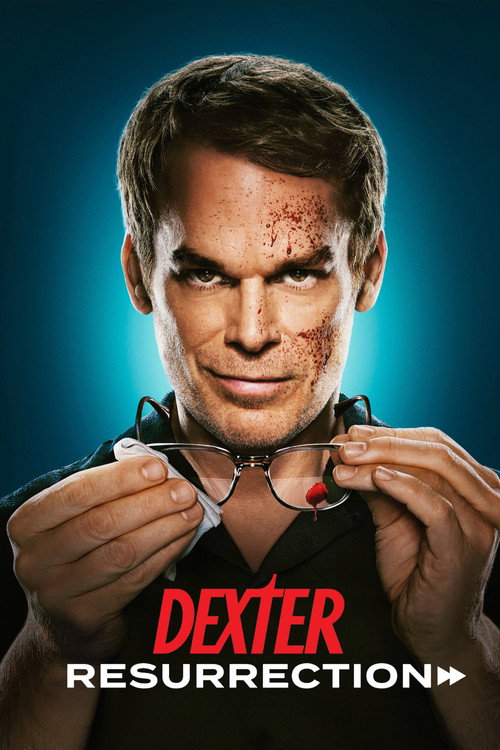
Dexter: Resurrection (2025)
Dexter Morgan awakens from a coma to find Harrison gone without a trace. Realizing the weight of what he put his son through, Dexter sets out for New York City, determined to find him and make things right. But closure won't come easy. When Miami Metro's Angel Batista arrives with questions, Dexter realizes his past is catching up to him fast. As father and son navigate their own darkness in the city that never sleeps, they soon find themselves deeper than they ever imagined - and that the…
Vivian's Take
Dexter does what Dexter does — and this time the body count includes the franchise's own past.
He is back. Again. Dexter Morgan wakes from a coma to find Harrison gone without a trace, and the weight of what he put his son through sends him to New York City to make it right. But closure does not come easy — Miami Metro's Angel Batista arrives with questions, the past is catching up fast, and father and son are soon navigating their own darkness deeper than ever. Dexter: Resurrection is the latest chapter in television's most unkillable franchise, and the 8.5 rating says the audience is still riding.
The father-son engine is the show's smartest move. Dexter as a dad trying to atone — or at least to understand what he made — gives the character something he has not had in years: an emotional problem his code cannot solve. New York is a strong choice too; the city swallows serial killers differently than Miami did, and the show uses the density and anonymity well. Batista's arrival is the season's real tension wire — the past literally showing up with a badge and questions, and every scene with him crackles with the history the audience carries.
The franchise math is the ceiling. This is a character who has died, been rebooted, and been resurrected — the title is not subtle about it — and each return raises the question of what new thing there is to say about a man and his dark passenger. Some of the mystery mechanics feel like the show running its greatest hits: the close calls, the near-discoveries, the bodies stacking up in patterns only the audience sees coming. But the execution remains a cut above the genre average, and the show's willingness to let Dexter actually face consequences — Harrison as living consequence — keeps it from coasting.
Culturally, Dexter is the case study in IP that refuses to die — and the audience's forgiveness is the real story. The original series' ending is one of the most debated in TV history, and every revival since has been a negotiation with that legacy. Resurrection works because it stops apologizing and starts building: the show that once asked whether a monster could be a hero is now asking whether a monster can be a father, and that is a better question. In the era of the endless franchise, this is the rare resurrection with something to say.
Verdict: B+ — Dexter does what Dexter does — and this time the body count includes the franchise's own past.