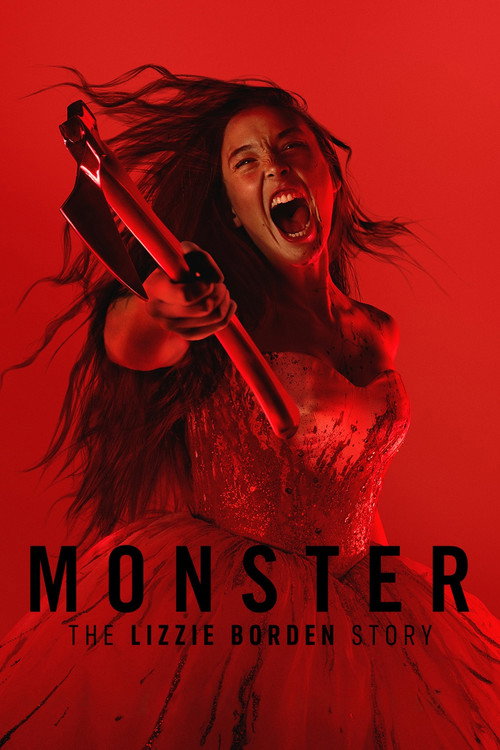
Monster: The Lizzie Borden Story (2026)
The fourth season of Ryan Murphy and Ian Brennan’s true-crime anthology turns to the most infamous axe murders in American history: Lizzie Borden (Ella Beatty), tried and acquitted of the 1892 killings of her father and stepmother in Fall River, Massachusetts. All eight episodes premiered September 17, 2026, on Netflix.
Vivian’s take
“Lizzie Borden took an axe” — the rhyme every American kid knows, the case nobody can stop retelling. For its fourth season, Ryan Murphy and Ian Brennan’s Monster anthology turns its unblinking eye on the most infamous axe murders in American history — and the question this time is not whodunit. It is what the house did to her first. Ella Beatty (yes, daughter of Warren Beatty and Annette Bening) gives the breakout performance of her young career as a suffocated Victorian daughter in a household that treats women as decorative furniture, and the season is at its best when it sits inside that suffocation.
01The Hook
On August 4, 1892, Andrew Borden and his wife Abby were hacked to death with a hatchet in their Fall River, Massachusetts home — Andrew struck ten or eleven times while napping on the couch; Abby some nineteen times. Their thirty-two-year-old daughter Lizzie was tried for the murders and acquitted after just over an hour of jury deliberation, though the court of public opinion never quite let her off. She remains one of true crime’s great maybe-monsters, which makes her a fascinating choice for an anthology that previously examined Jeffrey Dahmer, the Menendez brothers, and Ed Gein.
This season is the anthology’s biggest departure: Lizzie Borden is the first woman to headline Monster, the first subject who walked free, and the first whose story predates the 20th century. Brennan — showrunner here, writing all eight episodes — leans hard into that novelty: the season plays partly as dark comedy and partly as fever-dream gothic horror, with Lizzie’s stifling world of corsets, curfews, and paternal control rendered as a pressure cooker that can only end one way. All eight episodes dropped at once on Netflix on September 17, 2026, making it the season’s biggest binge proposition.
02The Cast
Ella Beatty carries this entire season, and she’s up to it. She plays Lizzie not as a cold-blooded psycho but as a trapped, twitchy, increasingly unhinged young woman — part victim, part menace, fully magnetic. It’s the kind of debut-star-making role that changes a career; the Hollywood-royalty footnote (Warren Beatty and Annette Bening’s daughter) will fade, the performance won’t.
The ensemble around her is stacked. Vicky Krieps (Corsage, Phantom Thread) plays Bridget Sullivan, the Bordens’ Irish maid and the season’s grounded witness to the household’s rot. Charlie Hunnam is a chilling Andrew Borden, the miserly patriarch whose control over the family purse is its own form of violence. Rebecca Hall plays Abby Borden, the stepmother Lizzie refuses to call “mother.” Jessica Barden, Joey Pollari, and Billie Lourd round out the supporting cast — and then there’s Sarah Paulson, the anthology’s returning secret weapon, as Aileen Wuornos in 2002, appearing in a recurring role from Florida’s death row as a framing device that connects the two women across a century of misogyny.
03The Craft
Filmed from September 2025 through March 2026, this is the most visually lush season of Monster yet. The production design is immaculate — the Borden house is a museum of Victorian repression, all dark wood and ticking clocks — and the costumes do real narrative work, with Lizzie’s silhouette slowly transforming as her psychology deteriorates. Critics who were cool on the season’s storytelling still praised how it looks; on pure atmosphere, this is prestige horror at its most confident.

Tonally, it’s the weirdest Monster yet, and that’s deliberate. Brennan mixes genuine dread with black-comic absurdity — the Borden household’s petty humiliations played for laughs right up until they curdle into something horrifying. It won’t work for everyone; some viewers will find the whiplash disrespectful to the real dead. But it’s the first season of this anthology that feels like it has a point of view about its subject rather than just a lurid fascination with her.
04The Reception
The reception was the anthology’s most divided since Dahmer. Reviews landed mixed-to-negative overall, but the split was instructive: nearly everyone praised the performances — Beatty’s breakout turn, Paulson’s haunting Wuornos, Krieps’ quiet devastation — and the production design, while many critics took issue with the season’s historical liberties and its tonal swings. The complaint, in essence: the show is so busy being stylish and provocative about gender that it sometimes loses the actual horror of what happened in that house in August 1892.
That’s a fair critique, and it’s also the show’s thesis working as intended. Monster has always been less interested in forensic accuracy than in cultural autopsy — what a society’s monsters reveal about the society — and this season makes that explicit by putting two accused women a century apart in conversation with each other. Whether you find that illuminating or exploitative will determine your grade.
05Cultural Context
Whatever its flaws, this is the most culturally interesting season of Monster since the show redefined the true-crime boom. The Dahmer season was criticized for re-traumatizing victims’ families; the Menendez season sparked genuine legal discourse; the Gein season pushed the anthology into pure horror. The Borden season is the first to center a woman — and the first to ask whether the word “monster” has always been applied unevenly, reserved for the powerless while the powerful get euphemisms.
It also marks a turning point for the anthology itself: with a fifth season already in development, Monster is Netflix’s most durable true-crime franchise, and the Borden experiment — period setting, female subject, acquittal ending, dark-comedy register — suggests Murphy and Brennan are willing to keep reinventing the format rather than repeating the Dahmer playbook. The rhyme will outlive us all. This season, for all its messiness, gives it new teeth.
Verdict: B-. Gothic, grisly, and compulsively watchable — Beatty’s star-making turn and Paulson’s spectral Wuornos carry a bold experiment that doesn’t always land. Some stories are sharper than any telling.