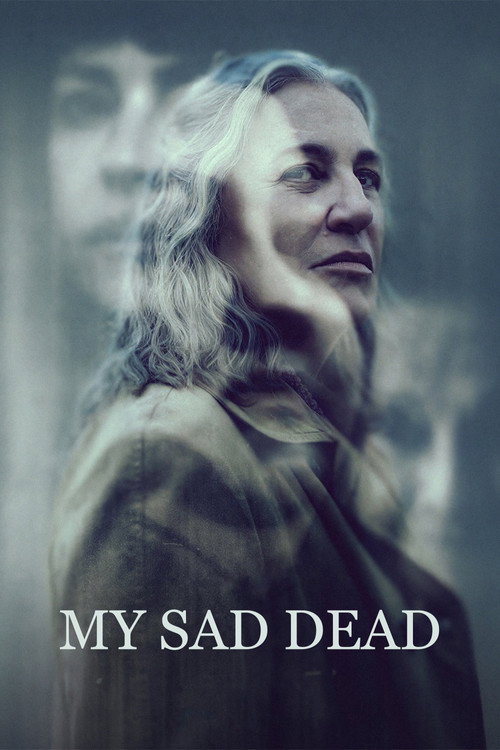
My Sad Dead
Emma can see the dead. But when her niece arrives, thousands of lives are shaken.
Vivian's Take
There's a special kind of cruelty in a premise as good as this one's. My Sad Dead hands its heroine, Emma, the ability to see the dead — and then, instead of turning it into a crime-solving gimmick like every network procedural already has, it sends her niece to live with her and lets the whole thing detonate. Thousands of lives shaken, says the logline, and for once a logline isn't lying: this show understands that the dead don't come to you for exposition. They come to you because nobody else will listen, and grief is a long, loud, unfinished conversation.
The deep cut
What works here is the domestic scale. Emma isn't a medium with a hotline and a logo; she's a woman with a niece on her couch and a gift that functions exactly like the worst kind of inheritance — it costs you everything and you can't sell it. The show is smartest when it treats the supernatural as an extension of family obligation rather than a plot device: the dead arrive the way relatives arrive, uninvited, at the worst hour, needing something from you. When the series commits to that register, it has a queasy, melancholic power that most supernatural dramas reach for and miss.
What doesn't work is the arithmetic of escalation. A 6.2 TMDB score is a verdict in itself, and you can feel the audience's shrug in the pacing: the show keeps widening the frame — more dead, bigger stakes, thousands of lives — when the material wants to stay small. The niece is both the show's best idea and its clunkiest lever; every time the writing uses her as a plot key instead of a person, the spell breaks. And the sci-fi tag on the genre list is doing some extremely generous lifting — this is a drama wearing one borrowed piece of science-fiction jewelry.
Who it's for: viewers who came up on Medium and Ghost Whisperer and have been waiting for a version that treats grief as something heavier than a weekly case. If you need clean answers and tidy hauntings, walk past.
Where it sits
The supernatural family drama is one of television's most reliable machines and one of its hardest to keep honest. The genre's dirty secret is that ghosts are easy — it's the living people that trip writers up. My Sad Dead arrives in a moment when prestige TV has trained audiences to expect the afterlife to mean something (The Leftovers, Severance's spiritual cousins, all of prestige horror), and its instinct to go inward is correct. The show just keeps flinching toward the big mythology when it should be holding the close-up.
It's also worth noting how many 2026 series are reaching for this exact lane — quiet speculative drama about ordinary people carrying impossible things. The bar for 'woman with a terrible gift' is higher than it's ever been. This one clears it about half the time, which in this economy is not nothing.
The verdict
A premise with genuine ache, sabotaged by its own appetite for scale. Watch the first stretch for the family scenes — the ones where the dead are just more people at the table — and you'll find the show it wanted to be. The mythology stuff around it is fog. The feeling underneath it is real, and that's rarer than it sounds.
The verdict: C+ — A ghost story with real ache underneath the fog; half of it is a small, sad miracle, and the other half is noise.
The full story
PREMISE · CAST · SEASONS · RECEPTION · IMPACT
The premise
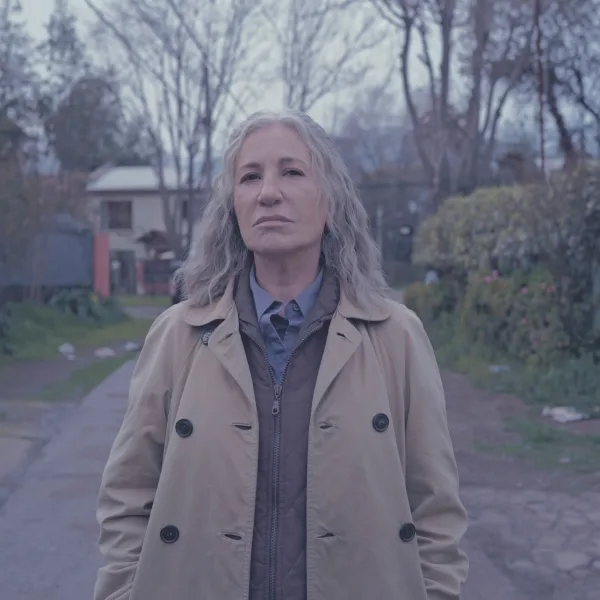
Ema is a doctor who works the night shift at a hospital on the outskirts of Buenos Aires — and at night, she can see the dead. They come to her for the one thing they couldn’t get in life: answers. When her estranged daughter Julie returns with a strange, spectral companion of her own, Ema is pulled into an investigation that bridges the living and the dead: a series of disappearances among young women, a grieving mother’s search, and a darkness at the edge of the city that feeds on the vulnerable. Adapted by Pablo Larraín from the stories of Mariana Enríquez — Argentina’s reigning voice of literary horror — My Sad Dead (Mis muertos tristes) plays its supernatural engine almost entirely as social realism: the ghosts are symptoms of a city, a country, and a generation of women the living failed.
The cast
Mercedes Morán, one of the great faces of Argentine cinema (The Summit, The Distinguished Citizen), stars as Ema, the exhausted doctor-medium at the story’s center. Dolores Fonzi — who appeared in Larraín’s Ema (2019) and has become one of Argentina’s most vital screen presences — plays Julie, the daughter whose return detonates the family’s buried grief. The supporting cast includes a strong ensemble of Argentine talent in the hospital, the police, and the spectral world orbiting the two women. Larraín himself is the draw behind the camera: the Chilean auteur of No, Jackie, Spencer, and El Conde making his long-form television debut with a project that merges his political hauntedness with Enríquez’s feminist horror.
Seasons
The series is a four-part limited miniseries, conceived as a single closed story. It premiered out of competition at the 73rd San Sebastián International Film Festival in September 2026 before launching globally on Netflix on September 24, 2026 — the platform’s highest-profile Spanish-language horror project of the year. Four episodes, no cliffhanger architecture: the format is a deliberate choice that mirrors Enríquez’s own fiction, where the horror lands because it ends.
Critical reception
The San Sebastián premiere positioned My Sad Dead as prestige horror, and critics have largely met it there — praise clustering around Morán’s performance, Larraín’s command of dread without jump-scares, and the way the series refuses to separate its ghosts from Argentina’s real-world violence against women. The reservations, where they exist, concern pacing: a four-hour slow burn that sometimes luxuriates in its own fog at the expense of narrative propulsion. The consensus forming around it is that of a genuine auteur object — imperfect, atmospheric, and anchored by a lead performance that makes the supernatural feel like a medical condition.
Cultural impact
My Sad Dead arrives at the crest of a wave: Latin American horror — Enríquez’s fiction, the films of Demián Rugna, the global appetite for elevated genre — is having its definitive moment, and a Larraín-Enríquez joint production is the wave’s prestige crest. It also marks a shift in how streaming platforms treat Spanish-language genre: not as local content but as global event television, premiered at a major festival and released worldwide in a single day. For Netflix, it’s a statement that horror can be auteur-driven and political at once; for Argentine television, it’s proof that the country’s literary horror — long its best-kept secret — has finally found the screen it deserves.