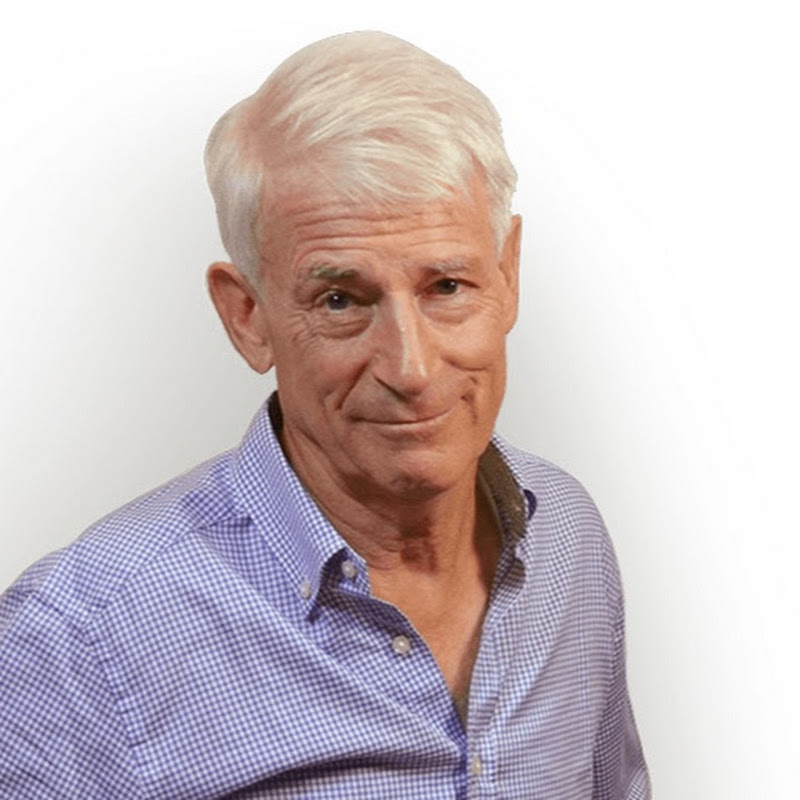
Sean Carroll
Creator · Verified
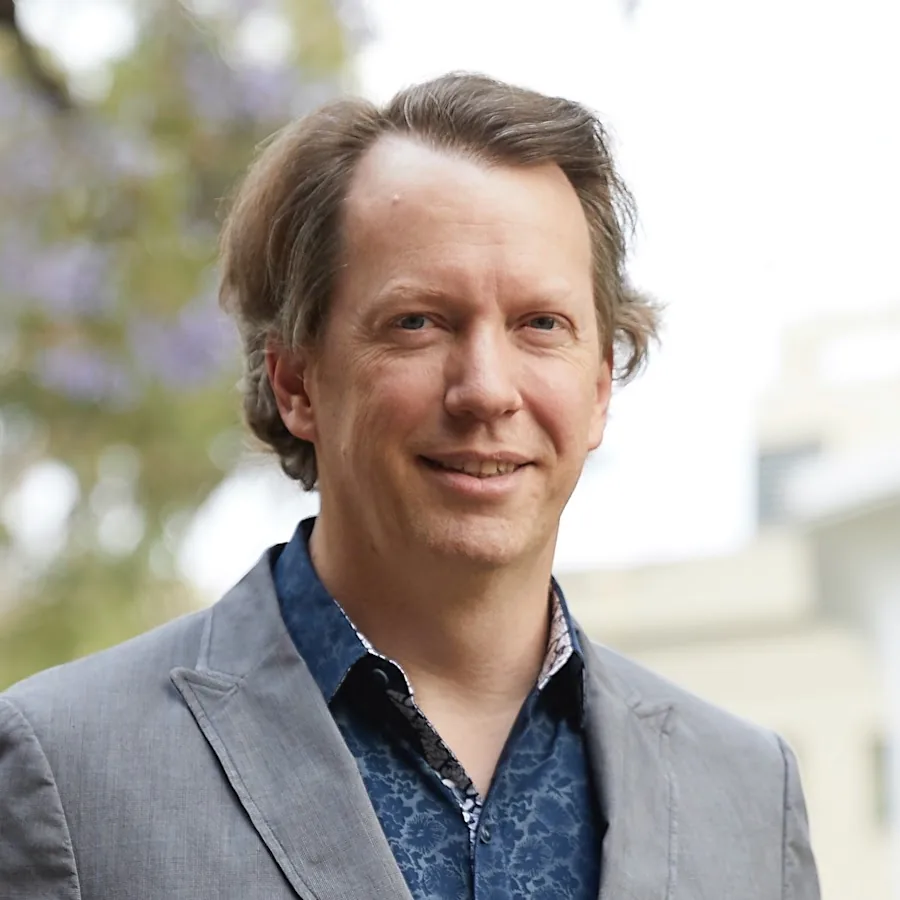
Sean Carroll is the theoretical physicist at Johns Hopkins who makes the universe make sense: author of The Big Picture and Something Deeply Hidden, and host of the weekly Mindscape podcast — episode 369 and counting.
About Sean Carroll
Sean Carroll is the theoretical physicist at Johns Hopkins who makes the universe make sense: author of The Big Picture and Something Deeply Hidden, and host of the weekly Mindscape podcast — episode 369 and counting.
About this creator
Sean Carroll is the physicist who makes the universe make sense. The theoretical cosmologist — formerly of Caltech, now at Johns Hopkins — has spent his career on the deepest questions in science, and his gift is explaining them without dumbing them down. The Mindscape podcast is the flagship. Weekly long-form conversations with physicists, philosophers,…
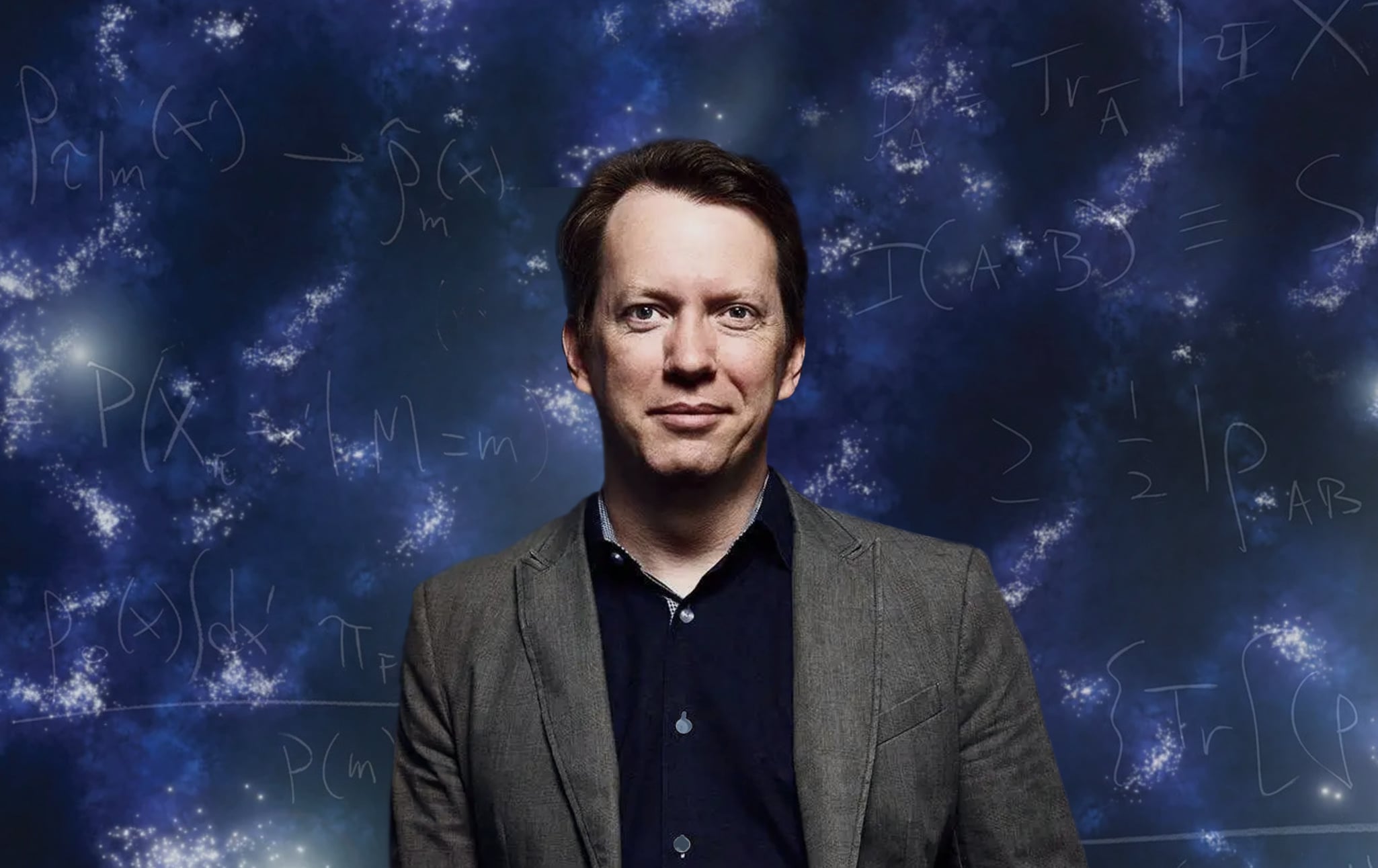
Sean Carroll is the physicist who makes the universe make sense. The theoretical cosmologist — formerly of Caltech, now at Johns Hopkins — has spent his career on the deepest questions in science, and his gift is explaining them without dumbing them down.
The Mindscape podcast is the flagship. Weekly long-form conversations with physicists, philosophers, biologists, and artists — the kind of deep, unhurried discussions that treat the audience like adults. It's become essential listening for anyone who likes thinking hard.
"Something Deeply Hidden" was the breakthrough. His 2019 book made the case for the many-worlds interpretation of quantum mechanics — the idea that every quantum event splits reality — with a clarity that converted skeptics and delighted fans. The follow-up debates are still raging.
"The Big Picture" went bigger. The 2016 book attempted nothing less than a complete worldview: poetic naturalism, the arrow of time, the meaning of life — all grounded in physics. Ambitious, elegant, and surprisingly moving.
The arrow of time is his obsession. Why does time flow forward? Why was the early universe so orderly? Carroll's work on entropy and cosmology tackles the questions most physicists politely avoid.
He's also the debater. Famous exchanges with theologians and philosophers — always civil, always rigorous — have made him one of science's most effective public advocates for naturalism.
In an era of quantum hype and multiverse sensationalism, Carroll is the steady hand: the guy who'll tell you what's actually known, what's speculation, and why the distinction matters.
Previously covers Sean Carroll because the universe deserves a good explainer. Check out Sabine Hossenfelder for the no-nonsense counterpoint.
The lectures are the bonus. Public talks and university courses preserved online — the arrow of time, the multiverse, the big picture — free education from one of the best minds alive.
The road to that authority ran through the whole of American physics. Born October 5, 1966, Carroll took his B.S. in astronomy, astrophysics, and philosophy from Villanova University in 1988, then a PhD in astronomy from Harvard in 1993 under George Field — a dissertation on cosmological consequences of topological phenomena in field theories. Postdoctoral stints at MIT and the Kavli Institute for Theoretical Physics at UC Santa Barbara followed, then an assistant professorship at the University of Chicago that ended, famously, with a tenure denial in 2006.
Caltech was the long chapter. From 2006 to 2022 he was a research professor in the Walter Burke Institute for Theoretical Physics, doing the work that made his reputation: dark energy and cosmic acceleration, the arrow of time, the foundations of quantum mechanics. In 2022 he moved east as the Homewood Professor of Natural Philosophy at Johns Hopkins University — a joint appointment in philosophy and physics & astronomy — while keeping a foot in the desert as fractal faculty at the Santa Fe Institute.
The books are the curriculum. From Eternity to Here (2010) took on the arrow of time — why the past differs from the future. The Particle at the End of the Universe (2012) told the story of the Higgs boson and the Large Hadron Collider. The Big Picture (2016) went further: a complete worldview called poetic naturalism, grounding meaning and morality in physics. Something Deeply Hidden (2019) made the case for the many-worlds interpretation of quantum mechanics with unusual clarity. And the Biggest Ideas in the Universe series — Space, Time, and Motion (2022), Quanta and Fields (2024) — grew out of his lecture series into a genuine physics course in book form.
Mindscape is the flagship and the habit. Launched in 2018, the weekly podcast brings physicists, philosophers, biologists, artists, and writers into long, unhurried conversations — plus regular "Ask Me Anything" episodes where Carroll fields listener questions for hours. It's become essential listening for anyone who likes thinking hard, and the rare science show that treats its audience like grown-ups.
He's also the public face of naturalism. Carroll's debates with theologians and philosophers — civil, rigorous, and widely watched — have made him one of science's most effective advocates for the view that the natural world is all there is. It's a stance argued with unusual grace: steelman the other side, then dismantle it politely.
The screen career is the bonus round. Appearances on The Colbert Report, Through the Wormhole with Morgan Freeman, the History Channel's The Universe, and PBS's Closer to Truth; consulting work on Avengers: Endgame and Thor: The Dark World; even a voice-acting turn in Earth to Echo. He's also the author of Spacetime and Geometry, the graduate-level general relativity textbook, and recorded lecture courses on cosmology, time, and the Higgs boson.
The honors stack up accordingly: fellow of the American Physical Society (2010), the Andrew Gemant Award from the American Institute of Physics (2014), a Guggenheim Fellowship (2015), plus prizes and fellowships from the National Science Foundation, NASA, the Sloan and Packard foundations, the Royal Society of London, and the American Association for the Advancement of Science.
What makes him matter isn't the résumé — it's the posture. In an era of quantum hype and multiverse sensationalism, Carroll is the steady hand: the explainer who'll tell you what's actually known, what's speculation, and why the distinction matters. The universe is strange enough without the exaggeration.
Previously covers Sean Carroll because the deepest questions deserve the clearest voice. Whether it's the arrow of time, the emergence of spacetime, or what it all means — he's the guide who never talks down and never oversells. The Mindscape feed is the syllabus; the books are the deep dives. Class is in session.
Previously covers Sean Carroll because the big questions deserve big answers. The universe is calling — pick up.
What’s happening now (October 2026): episode 369 and counting. Mindscape is still weekly and still unhurried: the September 28, 2026 episode (No. 369) brought philosopher Gregg Caruso in to discuss living well without free will, and the monthly Patreon-funded Ask Me Anything episodes keep fielding listener questions for hours at a stretch. On the research side, Carroll published a new paper in June 2026 with N. Diachenko and S. Dulani — “Toward a Phenomenologically Acceptable Quantum Cyclic Universe” — pushing his long-running investigation of time, entropy, and cosmic beginnings. The books, the podcast, the papers: the syllabus keeps growing.
Platforms + audience
Every count stamped with its source and date — real numbers only.
Follow Sean Carroll
Official links — we send you to Sean Carroll, we don’t pretend to host it.
More on Previously
Sean Carroll is one of the education creators the hub tracks. Here is where that world continues on Previously.
More like Sean Carroll
Same lane — education creators from the hub.

Live reminders are part of Previously accounts — on the full site, signing in turns this on and you’ll get a ping the moment Sean Carroll goes live.