Game
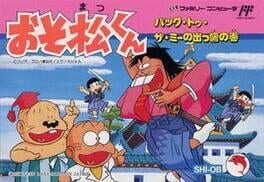
Osomatsu-kun: Back to the Me no Deppa no Maki
About this game
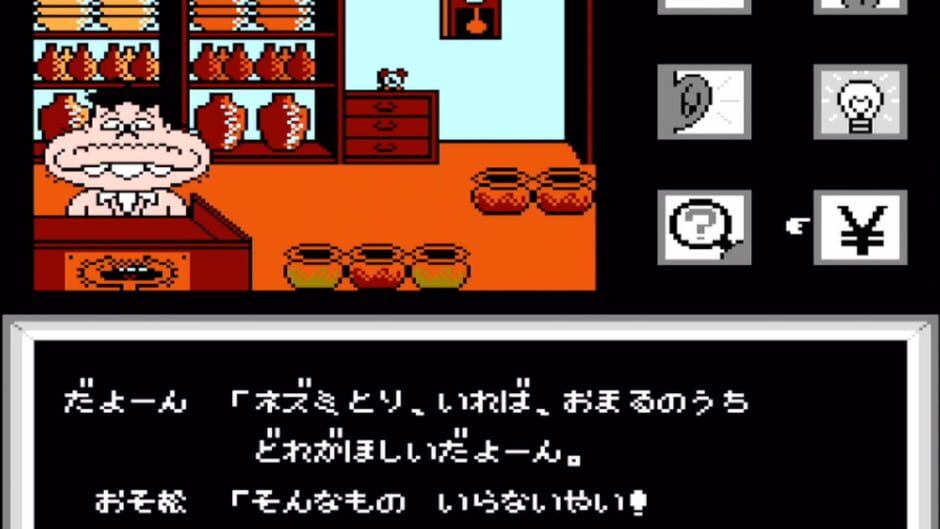
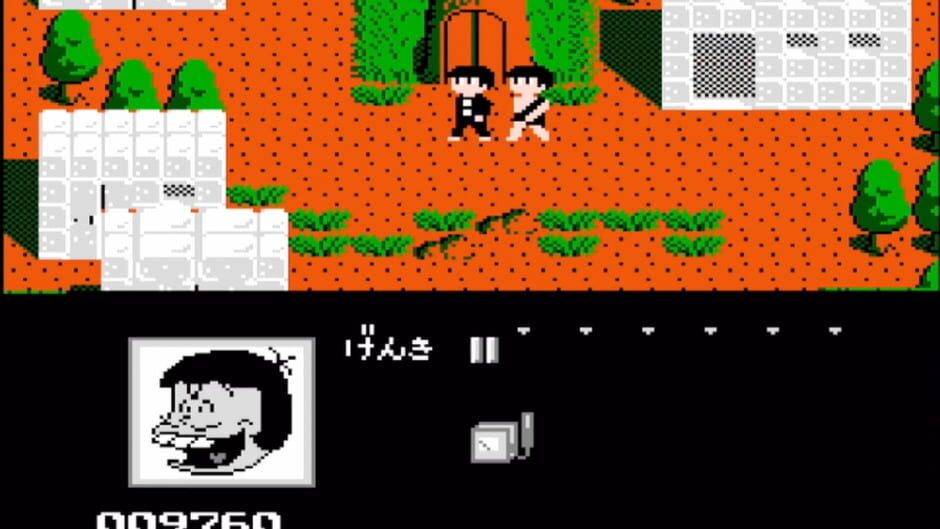
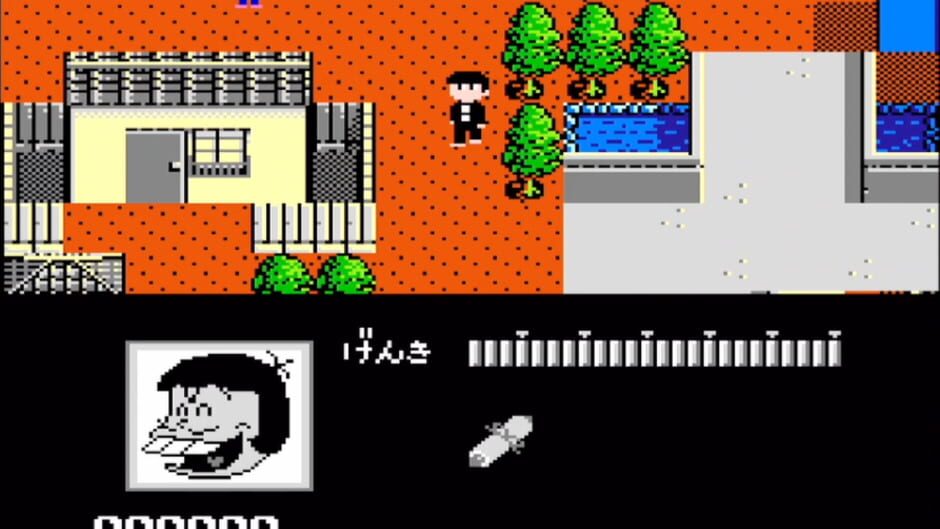
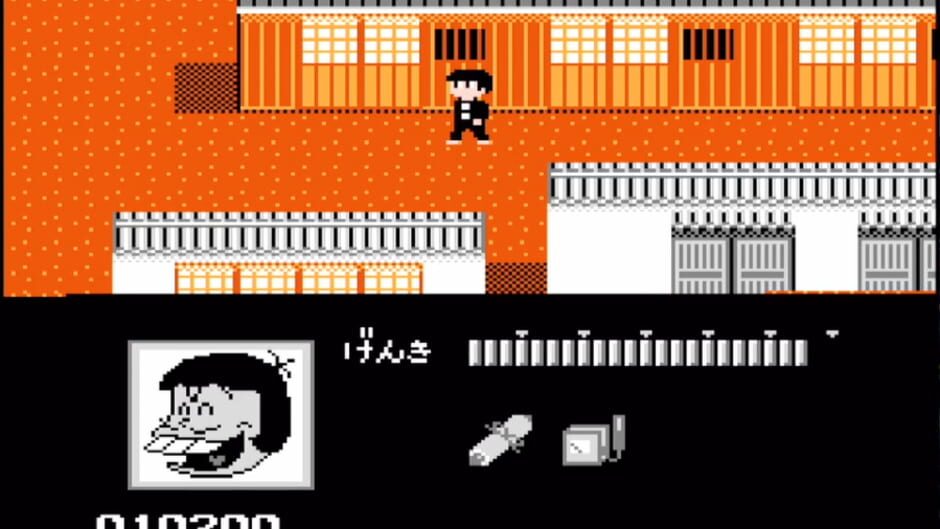
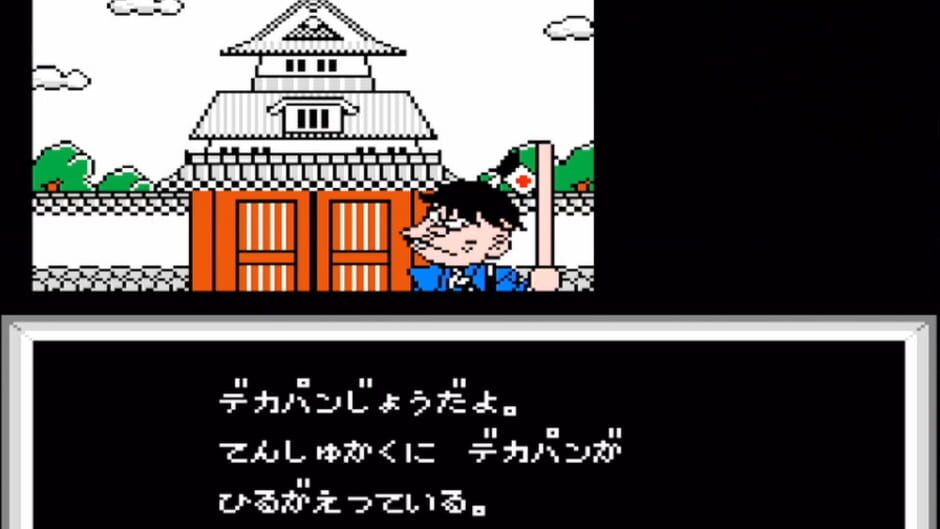
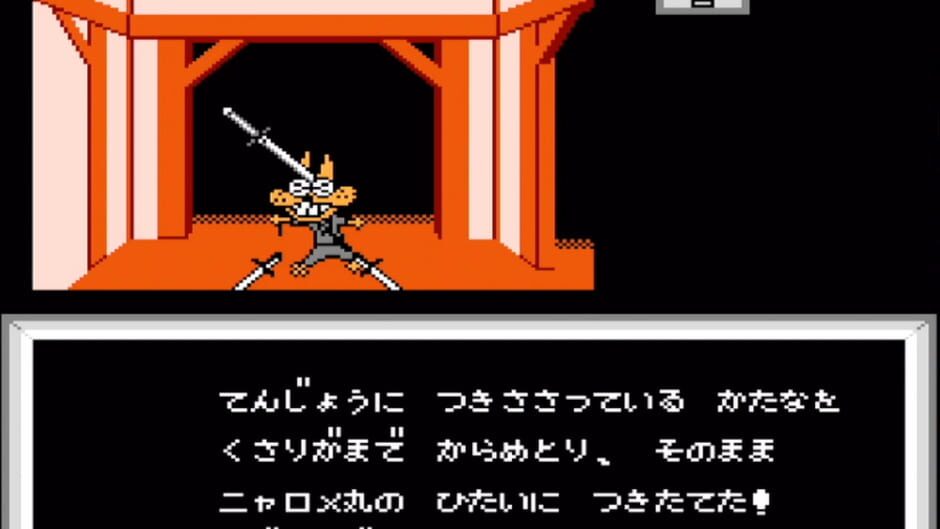
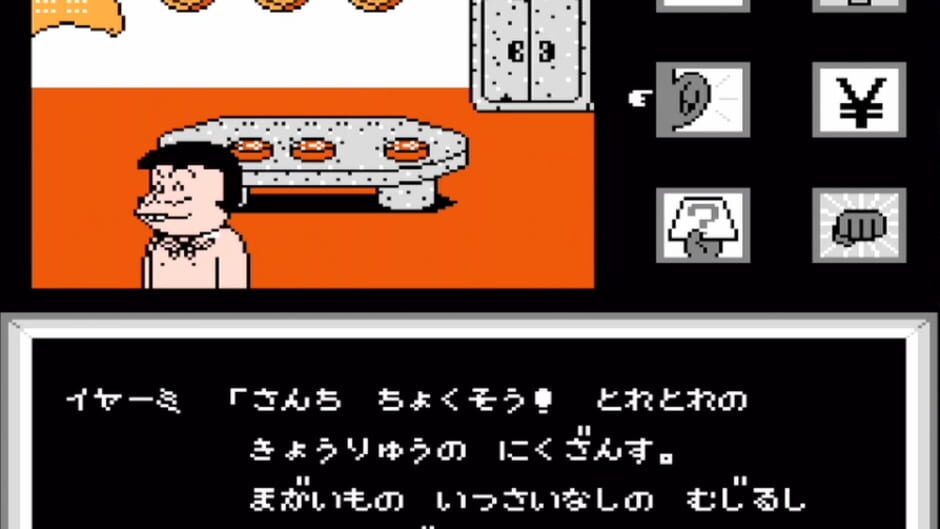
The second game based on the Osomatsu-kun anime and manga, released in 1989 for Famicom. Osomatsu-kun: Back to the Me no Deppa no Maki is an Adventure game, developed by TOSE and published by Bandai Shinsei, which was released in Japan in 1989.
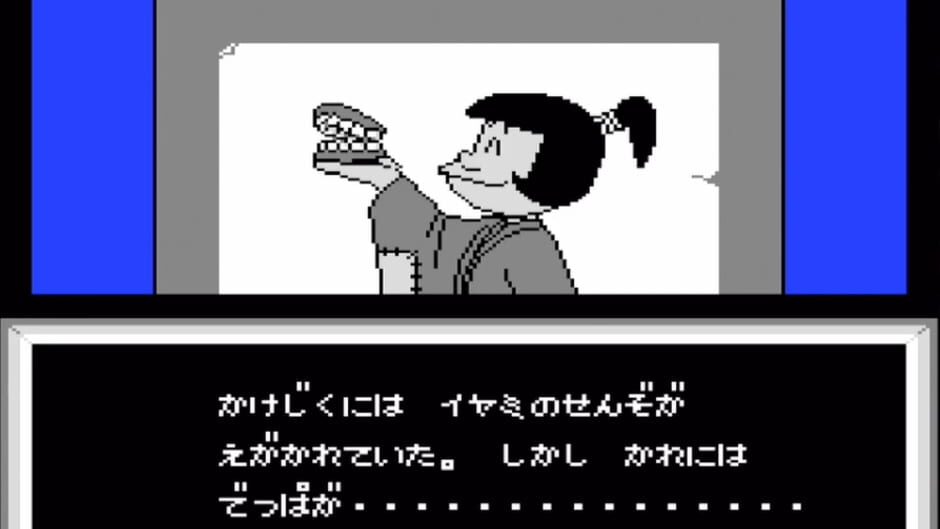
One day, Iyami found a hanging scroll in his home that had been handed down from his ancestors. When Iyami looked at the contents, he found that it was a portrait of a samurai who seemed to be his ancestor, raising his dentures. But Iyami was very surprised. "SYEEEEEEE!" He was very surprised because the samurai who looked like his ancestor did not have bucktooths. Iyami wondered. "My father told me that Iyami's family has had bucktooth for generations," he said. Then Osomatsu, the protagonist of the story, came to visit. Iyami quickly hid the scroll, but Osomatsu snatched it away and looked at its contents. Osomatsu's gut instinct, without any evidence to support it, told him that the dentures depicted on the scroll must be highly valuable treasures. Osomatsu took the stolen scroll to the Dekapan Laboratory, where it was dated and found to have been painted in the Edo period. Osomatsu volunteered to be a test pilot for a time machine that had just been completed and was in the experimental stage at the Dekapan Laboratory, and began to travel back in time to obtain the treasure.
Screenshots
Game facts
Release date
Dec 8, 1989
Developer
Tose
Publisher
Bandai
Platforms
Family Computer
Genres
Adventure
Themes
Historical, Comedy
Franchise
Osomatsu-kun
Perspective
Bird view / Isometric
More in this series

More from Tose





More games to explore
 The Legend of Zelda: Tears of the Kingdom - Nintendo Switch 2 Edition2025 · Adventure
 Grand Theft Auto V2022 · Adventure
 Grand Theft Auto V Enhanced2025 · Adventure
 Batman: Arkham Collection2018 · Adventure
 Elden Ring: Shadow of the Erdtree Edition2024 · Adventure
 The Legend of Zelda: Breath of the Wild - Nintendo Switch 2 Edition2025 · Adventure
Game data and artwork via IGDB.