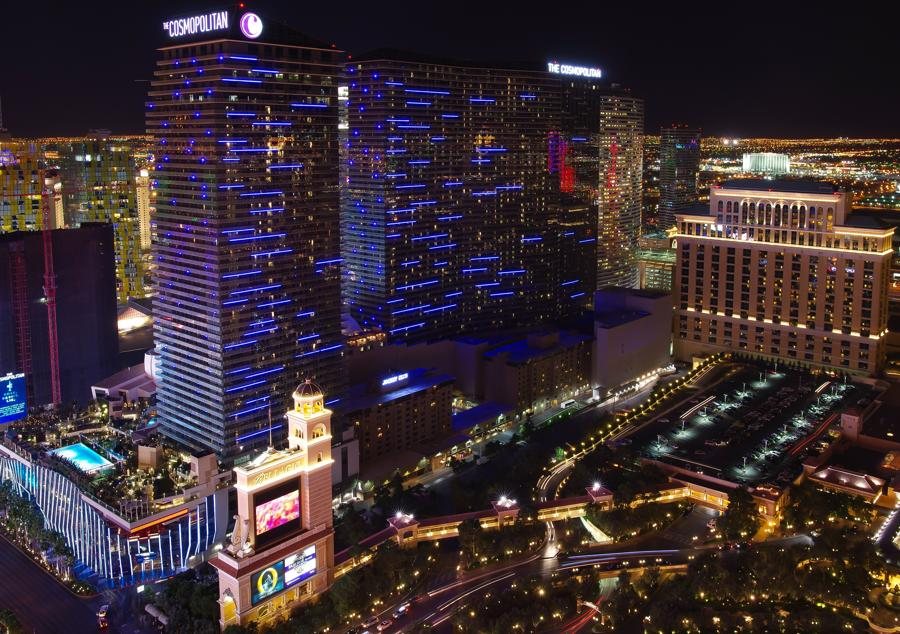
LAS VEGAS — Ashford Hospitality Trust has sold the Embassy Suites Las Vegas for $43.5 million in cash, closing the deal on September 25, 2026 — and investors liked what they saw. The hotel REIT’s stock gained 2.53% on Monday, trading at €2.03 on Lang & Schwarz at 3:36 p.m. CEST against a prior close of €1.98.
The transaction covers the 220-room property and was disclosed in a Form 8-K dated October 1, 2026. According to the filing, the seller was Ashford Las Vegas LP, an indirect wholly owned subsidiary of the REIT, and the buyer was 4315 Hospitality LLC, working under a purchase agreement signed August 27, 2026.
The filing lays out where the money went with unusual clarity. Ashford paid $41.20 million to the mortgage lender and reported $42.70 million of cash consideration net of selling expenses, according to StockTitan’s account of the 8-K. Read that twice: the gross check was $43.5 million, but after selling expenses and the lender’s cut, this was mostly a debt-paydown story, not a cash windfall. That distinction matters, because the gross sale amount and the cash retained after selling expenses describe two very different effects on the company’s liquidity.
That is the frame that matters here. Ashford is a hotel REIT selling assets while managing hotel-level and corporate obligations, and the Las Vegas sale reads as part of that discipline: a property goes, a chunk of mortgage debt goes with it, and the balance sheet gets a little lighter. As ad-hoc-news.de noted in its report on the deal, the comparison that counts is between the gross sale amount and the cash retained after selling expenses — they describe different effects on liquidity, and only one of them is money the company can actually use.
For the uninitiated, the mechanics are straightforward. A hotel REIT like Ashford owns the buildings and lets operators run them; when debt piles up, selling a property is the fastest way to shrink it. The trade-off is that you also give up the future income that property would have produced — which is why investors watch the sale price against the debt attached to it. Here, the lender took the lion’s share, and that tells you this was about deleveraging first and proceeds second.
The broader financial picture adds context. Investing.com reported second-quarter 2026 revenue of $273.24 million, up from $267.53 million the prior quarter — a 2.14% increase — while net income swung from a $63.77 million loss to $127.99 million of income over the same periods. At the June 30 quarter-end, Ashford reported $2.33 billion in total assets and $72.51 million in cash, though operating cash flow was negative $7.40 million for the quarter. It is a company with real assets, real revenue growth, and a cash-flow statement that still needs work — which is exactly why it is selling hotels.
It is also worth noting the timing. The purchase agreement was signed in late August, the deal closed September 25, and the 8-K landed October 1 — a clean, quick close by commercial real estate standards, with no drama attached. In a market where hotel deals can drag on for months, that counts for something, and the 2.5% pop in the stock suggests investors read it the same way: a clean sale, a disclosed price, a lender paid.
Hotel REITs live and die by two numbers: what the rooms earn and what the debt costs. Selling a 220-room hotel removes both a revenue stream and a liability, and the market’s job is to decide whether the trade was worth it. A 2.53% gain on the day the 8-K circulated is the market’s way of saying the price looked fair and the balance sheet is pointed in the right direction — a modest cheer, but a cheer.
Zoom out and this is the oldest playbook in the REIT world: prune the portfolio, pay down the mortgage, live to fight another quarter. Ashford has been running that playbook for a while now, and the Las Vegas exit fits it neatly — a non-core property converted into a smaller debt balance. The trade the company is making is deliberate: give up tomorrow’s room revenue from 220 rooms in exchange for a balance sheet that breathes a little easier today.
The buyer, 4315 Hospitality LLC, now holds a 220-room foothold in one of the most competitive hotel markets in the country. For Ashford, the question is what goes next — and whether the next sale leaves more cash behind than this one did. Both sides of this deal can honestly call it a win, which is more than you can say for most commercial transactions. For the wider market backdrop, see Previously’s market coverage from this morning and the Nvidia $150 billion buyback story that has been moving the tape.
Reporting this story is based on
- Ashford sells Las Vegas hotel and Ashford Hospitality Trust stock gains 2.53 percent
ad-hoc-news.de — Oct. 5, 2026 - Ashford Hospitality Trust Sells Embassy Suites Las Vegas for $43.5 Million
Minichart — Oct. 1, 2026