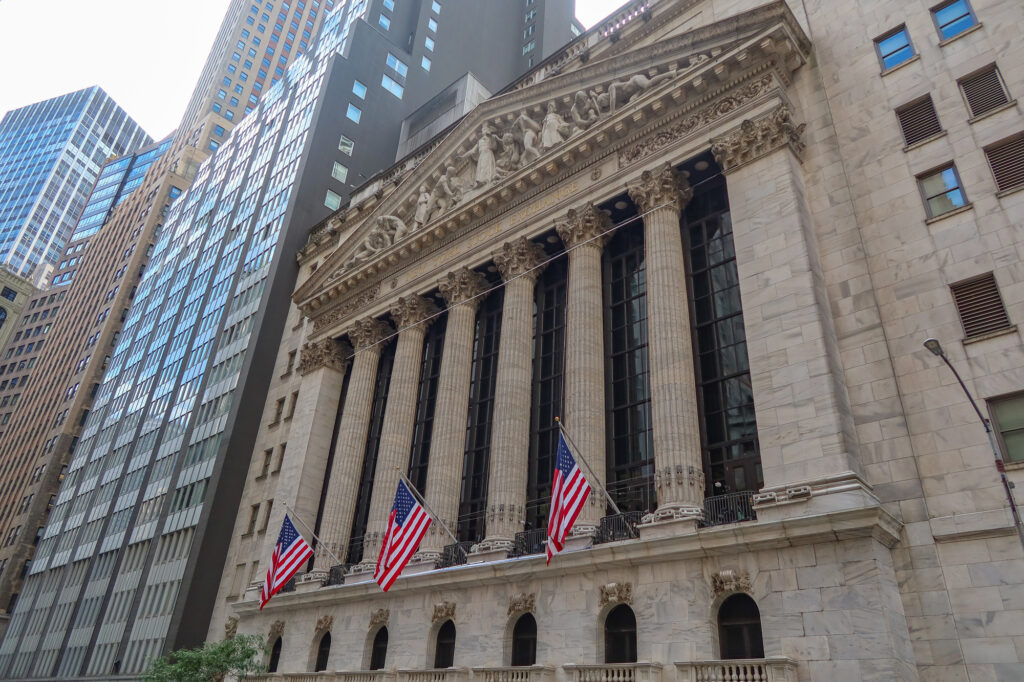
MONDAY, OCTOBER 5, 2026 — Wall Street's October test began with a whimper: stock futures were flat Monday morning as fading rate-hike fears took hold after September's weak jobs report, while Nvidia's record run kept rolling — the chipmaker up another 0.5% in premarket trading, on pace for a fourth straight winning session. Dow and S&P 500 futures were near unchanged and Nasdaq 100 futures were down about 0.2% as the first full week of October got underway, with traders pricing an 82% chance the Fed holds rates steady at its October 28 meeting, per CME FedWatch data reported by Barron's.
That is the delicate alchemy October demanded. A jobs report hot enough to scare the Fed would have set off alarm bells; a report cold enough to signal recession would have done the same. Friday delivered the Goldilocks read — weak, but not alarming — and the market treated it as permission to keep running. The Nasdaq touched an all-time high Friday and finished the week with a gain, even as the Dow and S&P 500 lost ground on the week, a split that tells you exactly which stocks carried the day.
The jobs report that changed the conversation
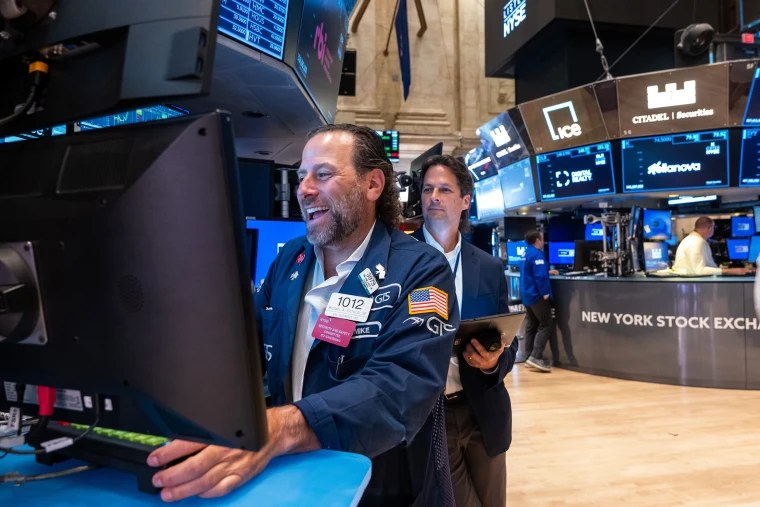
The September employment report landed with a thud the bulls chose to love. The U.S. added just 29,000 new payrolls, against a forecast of about 84,000 cited by Swingfolio's morning brief — a miss of roughly two-thirds. The unemployment rate ticked up to 4.2%, and wage growth pulled back alongside it. In the old playbook, that combination would read as a warning. In this market, it read as relief.
The logic runs like this: softer hiring with cooling wages means the labor market is no longer adding to inflationary pressure, which means the Federal Reserve has less reason to reach for the rate lever. Kathleen Brooks, research director at XTB, said in Barron's live coverage: "The uptick in the unemployment rate and the pullback in wage growth could set the tone for financial markets in the coming weeks, as the U.S. labour market data is not adding to inflationary concerns."
The repricing in rate expectations was swift and dramatic. Traders are now pricing in an 82% chance the Fed holds borrowing costs steady at its October 28 meeting, per CME FedWatch data reported by Barron's — up from just 29% a week ago. That is one of the sharpest one-week swings in Fed-watch sentiment this cycle, and it explains Friday's split screen: rate-sensitive growth names powered the Nasdaq to a record while the broader indexes, heavier on banks and cyclicals, lagged.
All eyes on the Fed's next move — and its last one
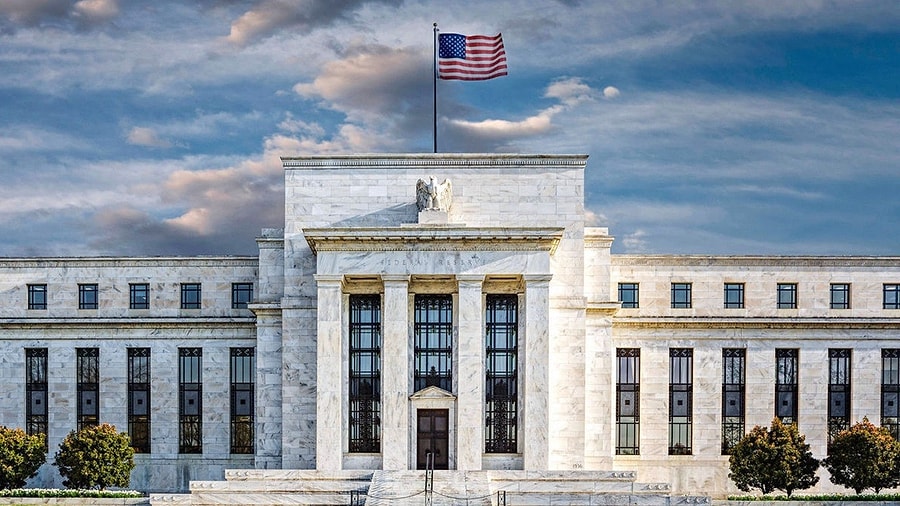
Context matters here. The Fed raised its target range to 3.75%–4.00% just three weeks ago, a move that put a rate-hike bias on the table heading into the fall. The September jobs data argues against a follow-up, and the market is now betting, loudly, that October 28 passes without another move. The 10-year Treasury yield was little changed around 5.28% in Monday morning action, suggesting the bond market agrees with the equities desk for once: steady as she goes.
The next real signal comes Wednesday, when the Fed releases the minutes from that September meeting. Investors will comb the document for how much weight officials put on inflation versus labor-market softness — and for any hint of how the 3.75%–4.00% decision split the committee. In a month where one jobs report moved rate odds by more than 50 percentage points, a few candid sentences from September's meeting could move them again.
Nvidia's record run, bitcoin's resurgence
The stock of the year, in a manner of speaking, remains Nvidia. The chipmaker hit a new all-time high Friday, trading up to $237.88 and breaking out past a cup-with-handle entry at $234.76 — an early trigger at $233.21 had already flashed, per Investor's Business Daily's market coverage. In premarket trading Monday, Nvidia was up another 0.5%, on pace for a fourth straight winning session, and the shares are up roughly 20% over the last three months. The AI trade, for all the hand-wringing about valuations, keeps finding buyers. (Our coverage of Nvidia's historic $150 billion stock buyback — the largest in U.S. corporate history — has more on what management is doing with all that cash.)

Bitcoin, meanwhile, is writing its own quiet comeback. The cryptocurrency traded around $86,200 in Monday premarket action, per Investopedia, and was up about 1.3% over the prior 24 hours to $86,222, per Barron's — putting it near a nine-month high. The rally is pulling the crypto-adjacent equities along: Coinbase was up 2.3% premarket, Robinhood gained 1.4%, and Strategy rose 3%, according to Barron's stock-movers reporting. Crypto winter feels like a distant memory when the token is knocking on its highest levels since the start of the year.
Deals and single-stock drama
The morning's biggest corporate move belonged to the software sector. Schneider Electric agreed to buy industrial-software maker PTC for $205 a share in cash — a $22.6 billion all-cash deal that Barron's notes carries a 42% premium. PTC surged about 35% to $194.56 in premarket trading. In a year when software stocks have been under the microscope, a deal of this size at that premium is a loud vote of confidence in the sector's real assets.
Qualcomm advanced 3.8% in premarket trading after announcing a multi-year patent license agreement with Huawei, including cross licenses across 5G, compute, AI, and networking patent portfolios, per Barron's. In a chip industry sliced up by geopolitics, a long-term licensing pact between a top U.S. chip designer and China's telecom giant is the kind of détente shareholders love.
Intel moved the other way, slipping roughly 3.2% to 4% after Elon Musk confirmed talks between his Terafab chip venture and Taiwan Semiconductor Manufacturing Company (TSMC), per Barron's and Swingfolio. The sting: Intel is itself a Terafab partner, which makes Musk's courtship of TSMC read, at least to Monday morning's sellers, like a hedge against the American partnership.

Energy, metals, and the currency chessboard
Commodities were the morning's reminder that the economy still runs on physical things. WTI crude futures fell about 0.8% to $90.40 a barrel, per Investopedia — pressured after G7 nations agreed Friday to release 100 million barrels of crude and diesel from stockpiles — while Brent crude was up 0.2% to 0.4% around $102.50 to $102.69. The divergence is the market weighing strategic supply against a tightening physical market, and the Strait of Hormuz backdrop is never far away (see our coverage of the resurgent attacks on Hormuz shipping for why the region stays on traders' radar).
Gold futures rose 0.5% to 0.7% to between $4,180 and $4,190 an ounce — the classic hedge bid on a morning when nobody is quite sure what the next Fed minutes will say. The 10-year Treasury yield sat little changed near 5.28%. And in foreign exchange, the euro touched its lowest level against the dollar since May 2025 — a 17-month low — amid French debt concerns and Spain's snap election call, while the dollar index rose 0.3% to 102.23, per Investopedia's live market reporting.
For the energy geopolitics behind the stockpile move, our story on the Lukoil sale and the latest Ukraine talks has the diplomatic layer of the oil story.
The week ahead: earnings season warms up
If Monday is about digestion, the rest of the week is about proof. Earnings season's opening acts arrive this week: Delta Air Lines reports early Friday as the season's traditional lead-off, with PepsiCo and Levi Strauss also on the calendar, per Investopedia. The midweek features Neogen late Tuesday and AngioDynamics early Thursday, and the heavy artillery — Goldman Sachs and JPMorgan — follows the next week.
That earnings tape will test the soft-data optimism that carried Friday. Corporate America has never been this upbeat about future profits, as our newsroom reported — but optimism is cheap before the numbers land. If Delta and PepsiCo confirm the resilience story, October's opening act keeps its momentum. If they wobble, the 82% will start to feel like a crowded trade.
Watch three things Monday: whether Nvidia's fourth straight session materializes into a meaningful breakout or just more of the same drift; whether bitcoin holds its nine-month-high perch through U.S. hours; and whether the flat futures give way to real conviction once the opening bell rings. October has a reputation for drama. So far, this one is starting with the kind of quiet that usually precedes something.
Sources
- 5 Things to Know Before the Stock Market Opens on Monday, October 5, 2026 Investopedia · Oct 5, 2026
- Stock Market Today: Dow Jones, S&P 500 Investopedia · Oct 5, 2026
- US Morning Brief — October 5, 2026 Swingfolio · Oct 5, 2026
- Stock Futures Rise With Fed Rates in Focus Barron's Live Coverage · Oct 5, 2026
- Stock Movers Barron's · Oct 5, 2026
- Stock Market Today: Dow Jones, S&P 500, Nasdaq, Treasury Yields, Nvidia Stock Investor's Business Daily · Oct 5, 2026


