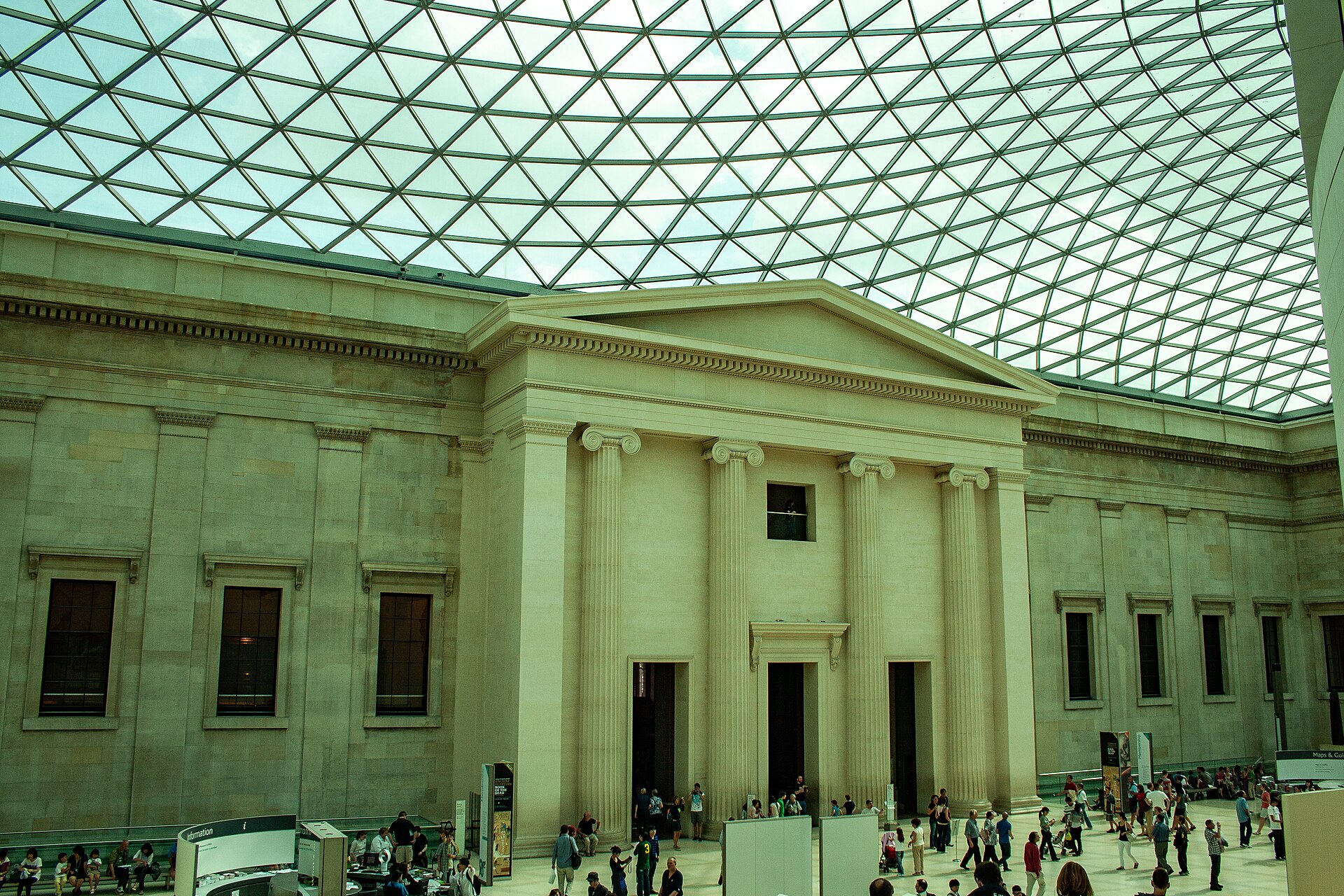
MONDAY, OCTOBER 5, 2026 — The smartest thing the British Museum’s new Korean art exhibition does is not pretend the Netflix film doesn’t exist. Korea, which opened October 1 in the museum’s Joseph Hotung Great Court Gallery and runs through January 31, 2027, is a 2,000-year survey of Korean art — Silla gold, gilt-bronze bodhisattvas, the jade-green ceramics of the Goryeo dynasty, Joseon folk painting and contemporary Korean work. But curator Sang-ah Kim is under no illusions about what will get a generation of young Brits through the door. “Most people, especially young people in the UK … know about Korea through its popular culture,” she told Reuters. “They may not know Korea has a long history, over 2,000 years of creativity, resilience and technical skill.”
This is the first major special presentation of Korean art at the British Museum in more than 40 years, and it’s a big one: about 100 works spanning the early Iron Age — objects dating back to around 400 BC — to the present day. Ten National Treasures and 13 Treasures of Korea are on the wall, and more than 20 of the pieces are being shown outside Korea for the first time. The museum is calling it the most comprehensive chronological survey of Korean visual and material culture seen in Europe in over four decades, and the early reviews are the kind institutions dream of: The Standard’s “a dazzling, soulful trip,” the Financial Times’ “mouthwatering — a gem of a show,” the Observer’s “a journey into the heart of Korea,” all quoted on the museum’s own exhibition page.
The collection behind it
The exhibition is drawn from the collection of the late Samsung chairman Lee Kun-hee — who died in 2020 — and his family. It is a genuinely extraordinary reservoir to draw on: in 2021, the Lee family gave more than 23,000 works to the Korean state as a national bequest, and this exhibition pulls its masterpieces from that holding. It is organized by the British Museum together with the National Museum of Korea and the National Museum of Modern and Contemporary Art, Korea, with most works arriving on loan from those two institutions.
London is the European stop of what’s become a rolling international tour for the collection. The show has already been seen at the Smithsonian’s National Museum of Asian Art in Washington D.C. and the Art Institute of Chicago. The British Museum marked the opening with a gala on September 30, where Samsung Electronics executive chairman Jay Y. Lee told the audience he hoped the exhibition would let visitors see Korea “a little differently — for its beauty, its depth and its resilience,” reflecting on his family’s multigenerational commitment to preserving Korean cultural heritage, according to Samsung’s own report on the evening.
The demon hunters at the door
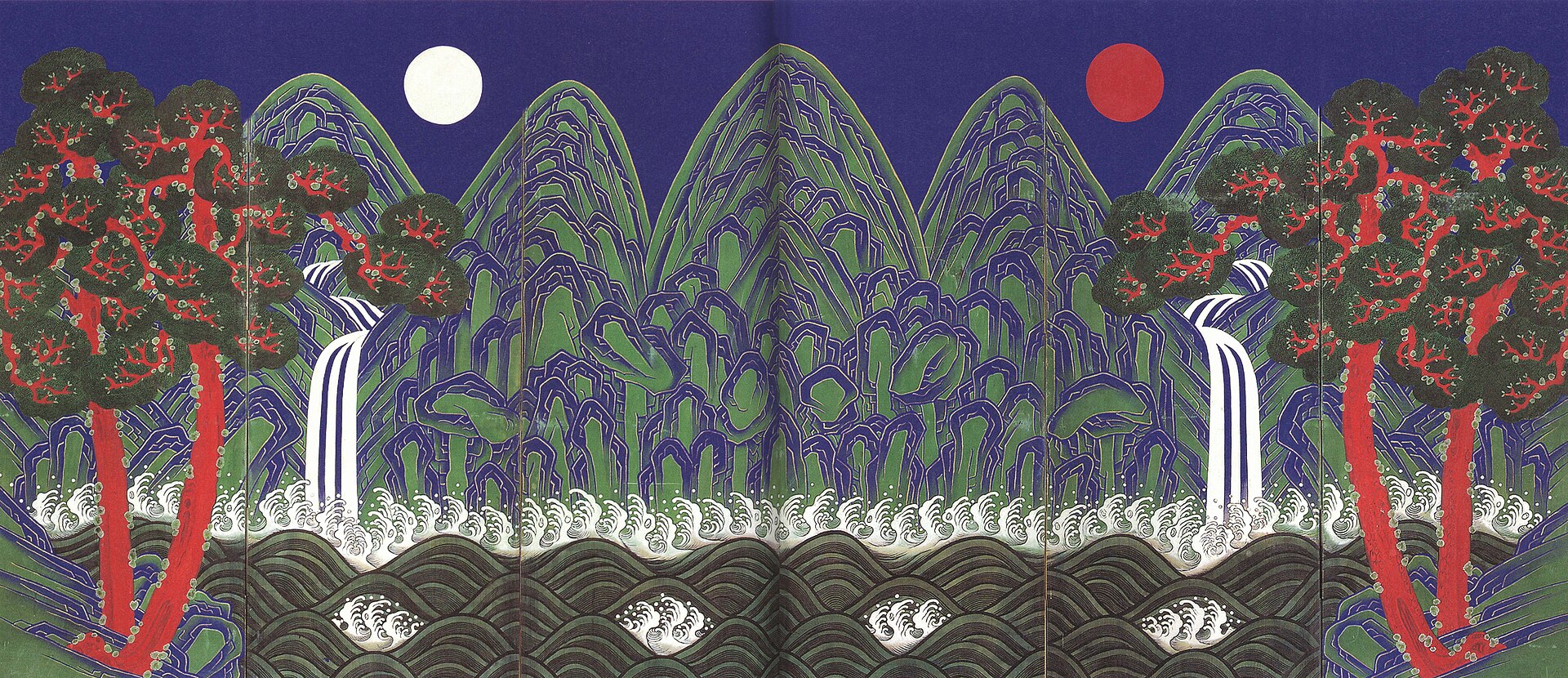
Here’s the part that makes this exhibition feel genuinely 2026: the show leans into KPop Demon Hunters. If you watched the 2025 Netflix animated film — which became the platform’s most-watched movie — you’ll recognize two of the exhibition’s folk-painting motifs. The tiger-and-magpie paintings (the kkachi horangi tradition) inspired the film’s supernatural duo Derpy the Tiger and Sussie the Magpie — a connection the film’s co-director Maggie Kang has confirmed, noting she based the pair on the famous Korean folk painting. And the group HUNTR/X performs in the film in front of a digital interpretation of a “Sun, Moon and Five Peaks” folding screen — the same royal iconography the museum has hanging in the gallery.
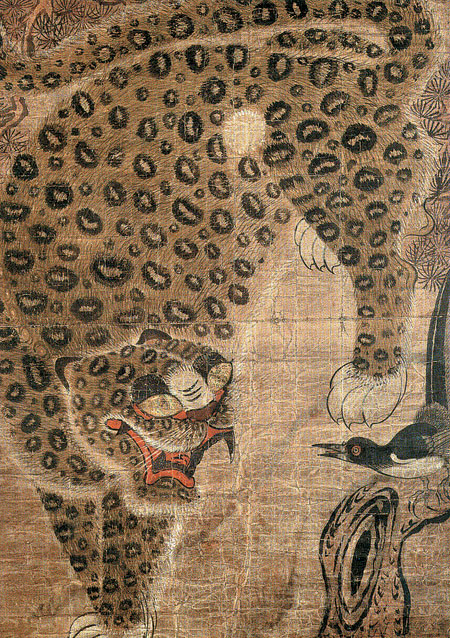
“People, especially young audiences … may get a lovely surprise when they see the ‘Tiger and Magpie’ or ‘Sun, Moon and Five Peaks’ if they watched KPop Demon Hunters,” Kim told Reuters. She’s right to bank on it. There’s a whole generation whose entire visual vocabulary of Korean art begins with that film — and walking them from Derpy to a 19th-century minhwa tiger, from a fictional girl group’s stage backdrop to an actual Joseon-dynasty six-panel screen, is exactly what a smart blockbuster should do. The painting above, the leopard-spotted tiger mid-pounce while the magpie watches from a pine branch, is the folk original; the museum’s version arrives via Seoul.
What’s actually in the rooms
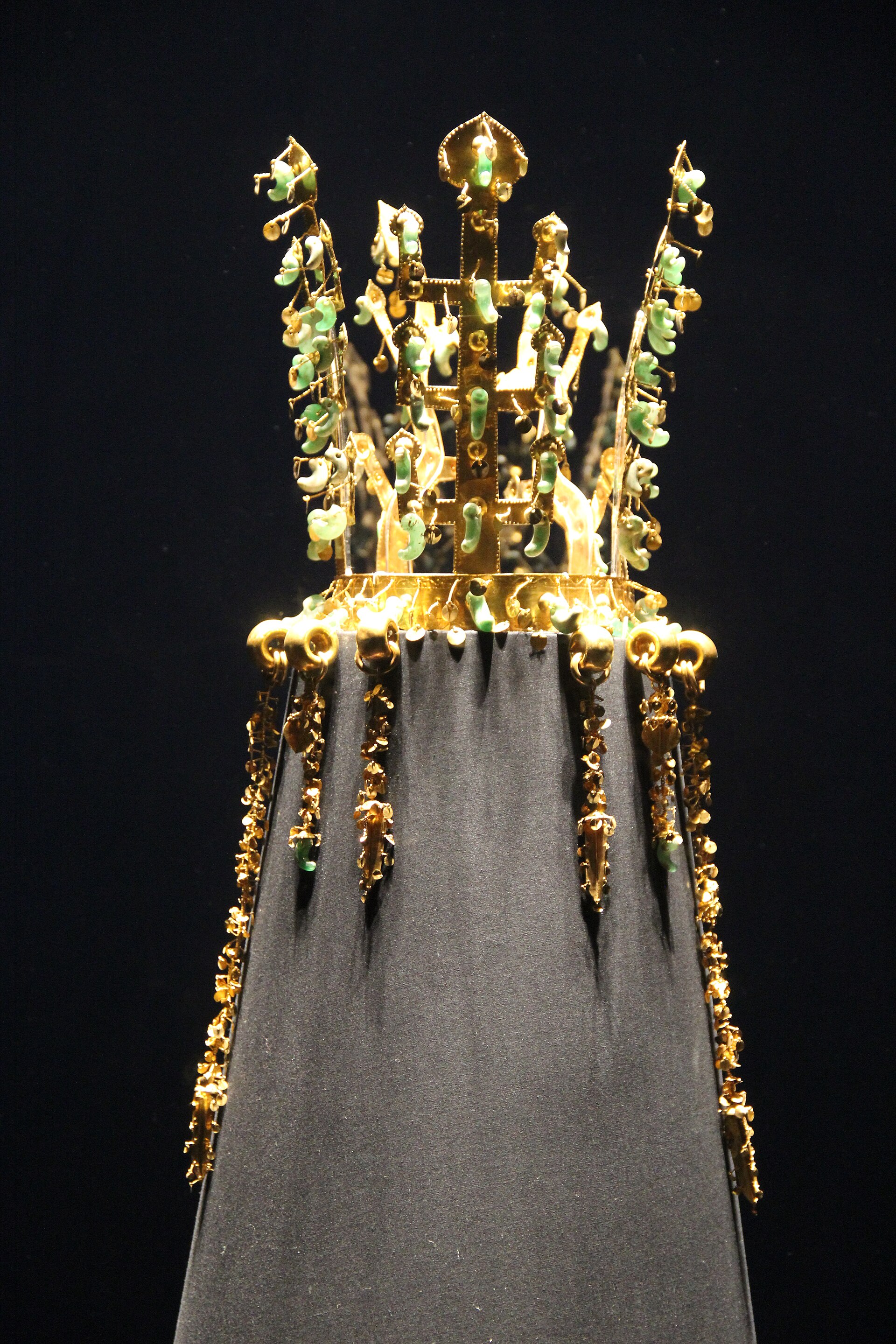
Start at the deep end. The earliest objects — bronze daggers, spearheads and ritual rattles from the Korean Bronze Age — give way to the glitter of the Three Kingdoms period: gold crowns and body ornaments of the kind Silla royalty were buried with, and gilt-bronze Buddhist sculpture from the centuries after Buddhism’s arrival on the peninsula. This is the stuff of royal tombs and temple treasuries, and some of it simply hasn’t been seen outside Korea before.
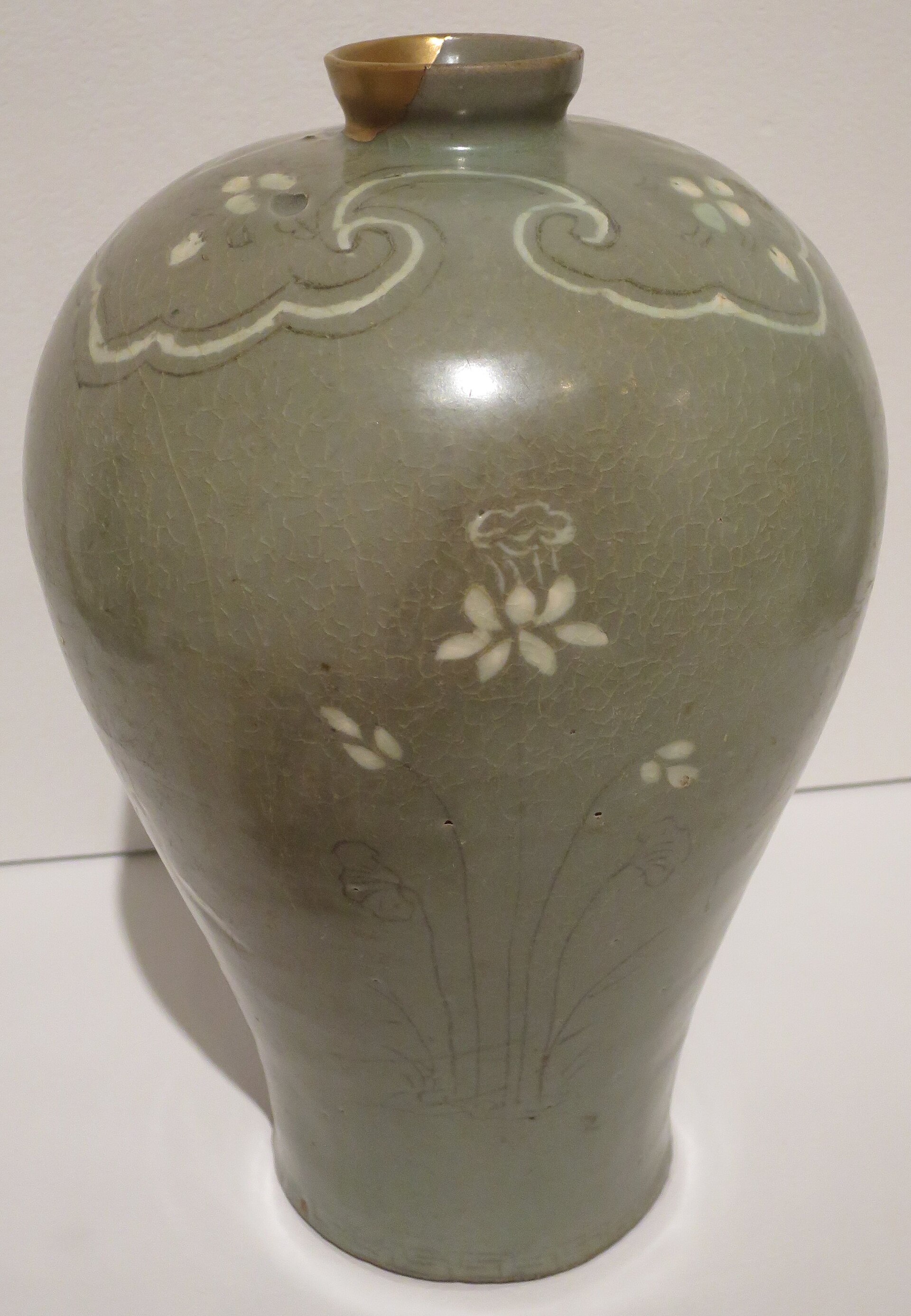
Then the ceramics, which are honestly the quiet showstoppers. Goryeo-dynasty celadon — 12th- and 13th-century stoneware with that unmistakable jade-green glaze — has a cult following among collectors for a reason, and the exhibition has a strong run of it: inlaid maebyong vases, bowls with cloud-and-crane designs, bottles with bird-and-tree motifs. If you’ve never stood in front of a piece of good Goryeo celadon, the thing that hits you is the color — it doesn’t photograph. The 12th century made this stuff for royal courts. It still looks like it came from another planet.
The exhibition also makes room for the 20th century’s turbulence. One contemporary highlight, confirmed by Reuters, is a piece from Yeesookyung’s “Translated Vase” series — sculptures assembled from shards discarded by potters, finished in 24-karat gold seams, built around the beauty of imperfection. Also confirmed: Suh Do Ho’s thread drawing Self-Portrait, a meditation on home, migration and belonging rendered in sewn thread, and the cigarette-foil etchings of Lee Jung-seop — who was separated from his family during the Korean War and etched images into the foil lining of cigarette packets when he couldn’t afford paint or canvas. That last detail lands harder the longer you sit with it: an artist in wartime, drawing on trash because trash was what he had.
The personal thread
The quote that will travel with this exhibition isn’t the pop-culture one, though. It’s the longer statement Kim gave for the show’s press materials, quoted in museum coverage this week: “By diving deep into the circumstances under which objects were made, this exhibition offers insight into makers and patrons across the centuries. A sutra inscribed by a deposed queen, an ink landscape of a mountain in Seoul, a painting of quasi-nude figures ambling through an imagined paradise, and sketches inscribed on cigarette foil: these images not only illuminate Korea’s history but also carry personal messages that resonate across time and cultures.” That’s the whole pitch, really — not just masterpieces, but the hands and lives behind them.
And that’s what makes the KPop Demon Hunters framing smarter than it looks. It’s not a gimmick pasted onto a serious show; it’s an acknowledgement that culture doesn’t travel in a straight line from museum to audience anymore. A kid who knows Derpy and Sussie is a kid who already knows the tiger-and-magpie painting — she just doesn’t know it yet. The museum’s job is to hand her the original and watch the recognition click. If that’s the on-ramp, fine. The exit runs through Silla gold, and that’s worth the traffic.
If you go
The practicals, straight from the British Museum’s listing: tickets are £18, with a £9 ticket after noon on Mondays; advance booking is strongly recommended. An official audio tour, voiced by actors Lee Byung-hun and Yerin Ha, runs over 45 minutes and costs £4. One planning note: the exhibition will close for two days, December 1–2, while staff rotate the light-sensitive works for conservation substitutes mid-run. Under-16s go free with a paying adult, and there are 2-for-1 student tickets on Fridays. A companion book, Korea: 2,000 Years of Creativity, edited by curator Sang-ah Kim, is out this month from British Museum Press.
For more on how pop culture keeps rewriting the rulebook on what counts as art, see our culture desk on Dawn Richard’s Creole futurism and the “funflation” era piece on the stay-at-home spending boom — or the internet’s “kinda chic” debate on what cool even means now.
Sources
- British Museum’s ‘Korea’ exhibition presents country’s heritage beyond pop culture Reuters · Sep 29, 2026
- Korea exhibition British Museum · official listing
- Lee Kun-Hee Collection Expands to Europe With Opening of ‘Korea’ Exhibition at the British Museum Samsung Global Newsroom · Sep 30, 2026
- British Museum: new exhibition on Korean art and culture blooloop
- A stunning new exhibition celebrating 2,000 years of Korean art and culture has opened in London Secret London
- British Museum brings 2,000 years of Korean art to London with Samsung-backed Korea exhibition The Luxe Review · Oct 1, 2026
- Korea: 2,000 Years of Creativity Comes to the British Museum Londontopia