
WILLCOX, Arizona
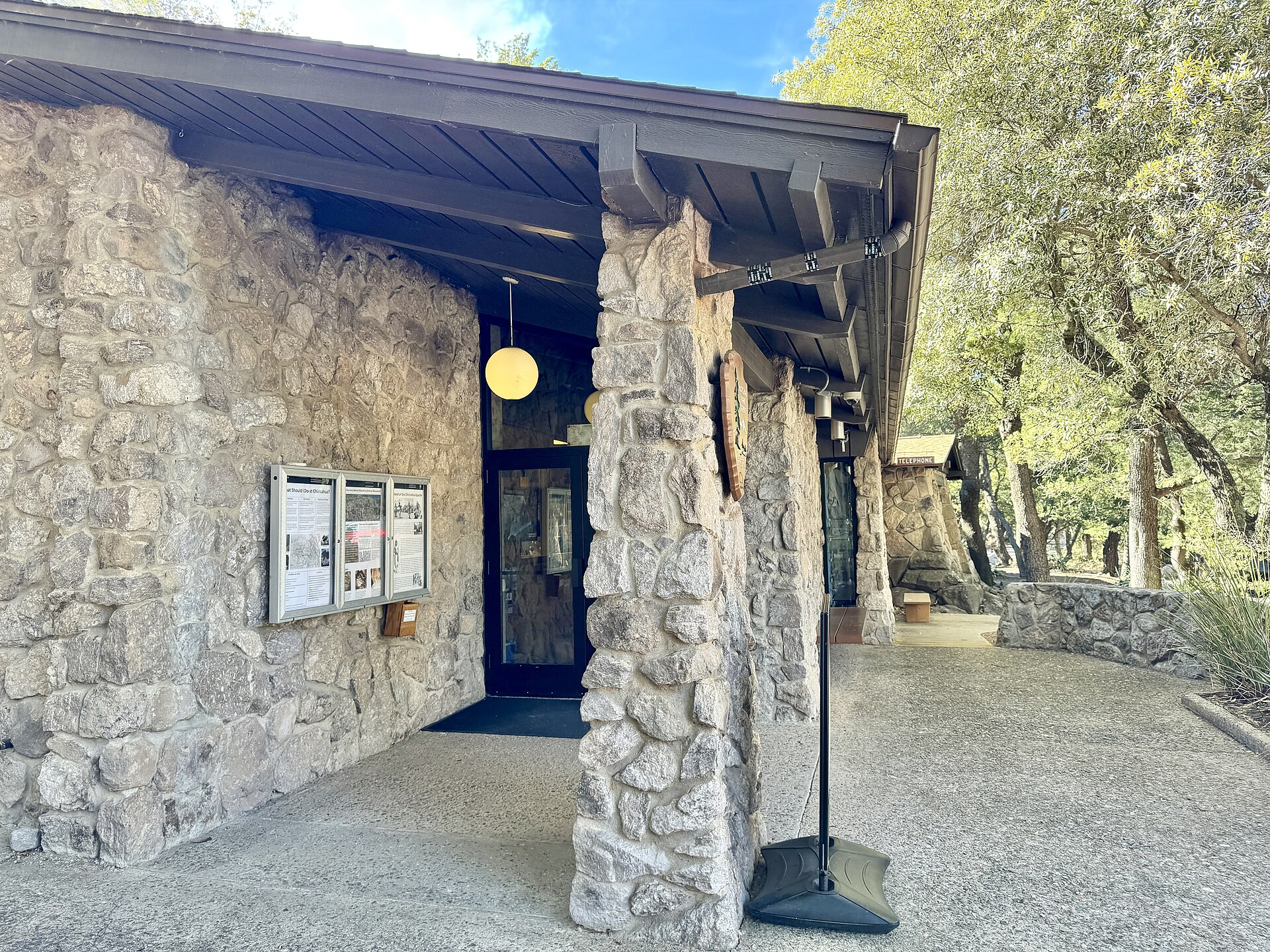
A forest of standing stone in Arizona's far southeast corner has a new title. President Donald Trump signed the Chiricahua National Park Act into law on Tuesday, October 20, redesignating Chiricahua National Monument as Chiricahua National Park — Arizona's fourth national park, the 64th in the United States, and the first new national park in the country in six years, 102 years after President Calvin Coolidge first protected the place as a monument in 1924.
The White House confirmed the signing on Tuesday, in a batch of bills that also included the Romance Scam Prevention Act and the Enhancing Detection of Human Trafficking Act. The Chiricahua act had cleared the Senate on September 30 by unanimous consent, ending a redesignation campaign that Arizona's congressional delegation, a rare bipartisan team of Republicans and Democrats, had pushed in various forms for years.
A bipartisan bill, a decade in the making
The House bill was introduced by Representative Juan Ciscomani, a Republican from Arizona's 6th district, and Representative Greg Stanton, a Democrat from the 4th district. In the Senate, the act was introduced by Senators Mark Kelly and Ruben Gallego, both Democrats, and Kelly had championed the redesignation since 2021. Earlier versions of the idea had stalled repeatedly since 2016. This time, the House passed the legislation in March 2026, Senate committee action followed in July, and the full Senate approved it on September 30.
The reaction in Arizona crossed party lines in the same way the bill did. "Making Chiricahua Arizona's fourth national park is a huge win for our state," Stanton told The Arizona Republic. "This designation will preserve one of Arizona's greatest natural treasures and draw visitors from around the world, bringing new economic opportunity to Southern Arizona." Kelly called the signing a historic day for Arizona. "A bipartisan effort from the start, this is a win for the communities in southeastern Arizona and for everyone who worked to protect this extraordinary place so our kids and our grandkids can enjoy it," he said. Camilla Simon, executive director of HECHO, the Hispanic conservation organization that campaigned for the designation, said Republicans and Democrats had united to give Chiricahua the recognition it deserves, and that public lands remain a place where a divided country can find common ground.
The land of standing-up rocks
What Congress has elevated is a 12,000-acre mountain landscape in Cochise County, about 120 miles east of Tucson, near the town of Willcox. Chiricahua is famous for its rhyolite rocks: towers, spires, hoodoos and improbably balanced boulders formed from volcanic ash laid down roughly 27 million years ago and sculpted ever since by wind and water. The Apache name for the place translates as the Land of Standing-Up Rocks, and local boosters have long called it the Wonderland of Rocks. It has lately picked up a modern kind of fame as well, recommended by travel writers as a quieter alternative to Utah's Bryce Canyon, whose hoodoos its formations resemble.
The park is one of Arizona's sky islands, an isolated mountain range rising above desert and grassland, and it blends four distinct ecoregions — Sonoran and Chihuahuan desert country below, Rocky Mountain and Sierra Madre highlands above — into a single compressed landscape. Visitors drive an eight-mile scenic road to Massai Point for views across the rock formations, hike 17 miles of trails including the easy Bonita Creek Loop, and watch for whitetail deer and the Mexican bird species that reach the northern end of their range here. Chiricahua is also classified as a Dark Sky Place by the International Dark-Sky Association, a designation that makes it a destination for stargazers willing to make the drive. The writer Sylvia Dekker, describing a honeymoon hike through the Heart of Rocks Loop for Outside magazine, wrote of being dwarfed by stacked rock and balanced boulders splashed with lichen, in a landscape where habitats shift from cactus meadow to pine forest within a single walk.
What changes, and what the region expects
A redesignation is not an expansion. The new law keeps the park's existing boundaries and protections, and the ground visitors will find this fall is the same ground the monument held last week: the same trails, the same campground at Bonita Canyon, the same Faraway Ranch homestead, where Lillian Erickson and Edward Riggs mounted a bid for national park status back in 1923 and settled for the monument Coolidge created the following year. A century later, their wish is the law.
What changes is the gravity of the name. National park status is the strongest brand in American public lands, and gateway communities plan around it. In 2024, Chiricahua drew about 71,400 visitors who spent an estimated 5.1 million dollars in nearby communities, according to figures cited by HECHO. Willcox Mayor Greg Hancock has pointed to the pattern at other newly redesignated parks, where visitation has historically risen by roughly a fifth, which in a small city like Willcox could mean dozens or hundreds of extra visitors on a given day, spread across its motels, restaurants, wineries and birding seasons. Conservation groups add a condition to the celebration: the designation brings a responsibility to make sure Chiricahua, and the park system behind it, have the resources for long-term stewardship as the crowds grow.
Chiricahua now takes its place in a quartet that defines Arizona to the world: the Grand Canyon, Petrified Forest and Saguaro. It is the smallest and by far the least visited of the four, tucked against the state's southeastern corner far from the interstates that feed the others. That remoteness is precisely what its champions intend to keep. The rocks have stood for millions of years and the monument protected them for a century. As of Tuesday, they do it under the title Arizona spent a decade asking for. Readers planning a Southwest trip can follow more regional coverage in Previously's news file.
Sources · 5 sources
- The Arizona Republic via AZCentral — Arizona hidden gem officially named state's 4th national park
- Outside — Chiricahua National Park hiking guide: America's newest national park
- HECHO — Chiricahua becomes Arizona's fourth national park following signing of bipartisan legislation
- The White House — Congressional bills signed into law, October 20, 2026
- HECHO — Chiricahua National Park campaign history