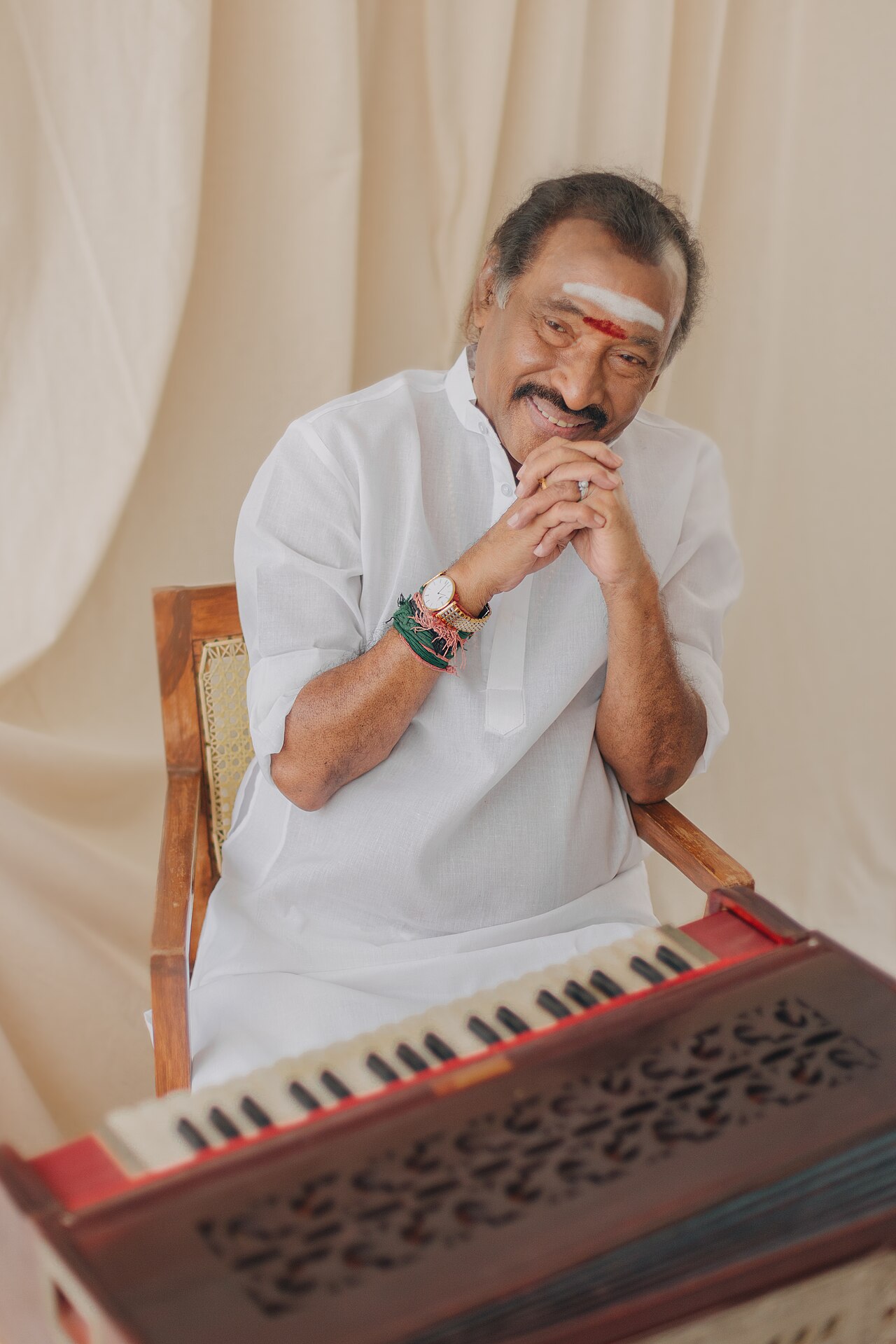

Deva, the 'King of Gaana' who scored more than 400 films and composed the famous 'Super Star Rajni' title-card music that announced Rajinikanth's name in the 1992 film Annamalai, died on Saturday, October 17, 2026, in Chennai. He was 75. Some sounds are so woven into a culture that you stop hearing them as music and start hearing them as memory — and in Tamil Nadu, that Annamalai fanfare is one of those sounds.
According to reports by Pinkvilla, Deva died reportedly following a heart attack. Pinkvilla's report, citing Sun News, said the composer was admitted to a private hospital in Kodambakkam at around 8:30 AM. Filmibeat and Cinema Express also reported his death on Saturday, as did The Daily Jagran, in coverage that spread quickly across the Indian film industry as colleagues and fans absorbed the news. Deva was born Devanesan Chokkalingam on November 20, 1950, and with his passing, Indian cinema loses one of the most prolific and distinctive composers it has ever produced.
Thenisai Thendral: The King of Gaana
Deva carried two titles that tell you almost everything about his place in the culture. He was known as Thenisai Thendral — a name that evokes a musical breeze — and, more famously still, as the 'King of Gaana'. Gaana, the raw, rhythmic, street-born music of north Chennai, existed long before Deva. But it was Deva who took its pulse — the pounding beats, the call-and-response energy, the unvarnished joy of it — and carried it into the mainstream of Tamil film music, where it became a defining sound of the 1990s.
That achievement is harder than it sounds. Film music establishments rarely welcome the street inside. Deva did not sand the edges off gaana to make it presentable; he built hit after hit on its own terms, and audiences who had never heard their own neighborhoods in a theater suddenly heard them booming through cinema speakers. Pinkvilla, Filmibeat, and Cinema Express, in their reports on his death, all returned to that legacy — a composer who did not just score films, but shifted what Tamil film music was allowed to sound like.
400 Films, Four Languages, One Unmistakable Sound
The numbers alone tell the story. Since his debut with the 1986 film Maattukara Mannaru, Deva composed for more than 400 films — not only in Tamil, but across Telugu, Malayalam, and Kannada cinema as well. Four hundred films is not a filmography; it is an era. For long stretches of the 1990s, it was close to impossible to follow South Indian cinema without hearing Deva, week after week, star after star.
And what stars. Deva's music accompanied some of the biggest names in Indian cinema: he worked with Rajinikanth, Kamal Haasan, Vijay, and Ajith Kumar in Tamil cinema, and with Pawan Kalyan in Telugu cinema, among many others. Composers who last that long, with that many leading men, usually do it by becoming invisible — by bending to whatever each production needs. Deva lasted while remaining unmistakable. You knew a Deva score when you heard one.
Nothing proves the point like Annamalai. The 1992 Rajinikanth film's title-card music — the surging fanfare behind the words 'Super Star Rajni' — became arguably the most famous few seconds of music in Tamil cinema, a sound that still raises theater roofs more than three decades later whenever it is reprised or referenced. Composers write songs that live for years. Deva wrote a few seconds that became permanent.
'Absolutely Devastated': The Tributes
The tributes began arriving within hours. Actor Khushbu Sundar posted on X that she was, in her words as reported in coverage of her post, 'absolutely devastated' by the news — adding, per those reports, that she had seen Deva just 10 days earlier and that he had seemed healthy. It is the detail in her post that captures the shock of a sudden loss: a man seen, healthy and present, days ago, gone on a Saturday morning.
Actor Sibi Sathyaraj also paid tribute to Deva on X, joining a wave of messages from across the film fraternity as the news travelled through the day. Reports also said that Rajinikanth — the superstar whose on-screen identity Deva's music helped to define — attended the composer's funeral. There is a symmetry in that which no one in Tamil cinema will miss: the star came to say goodbye to the man who gave his name its sound.
Coverage of the tributes in Pinkvilla, Cinema Express, and The Daily Jagran painted the same picture from different angles — an industry not just mourning a colleague, but reckoning with the loss of a whole sound-world. For more of our entertainment coverage, visit our news section.
The Music Stays
There is a particular cruelty in a heart attack taking a man whose life's work was rhythm — whose music was, for millions of listeners, the sound of celebration itself. Gaana is wedding music, festival music, street-corner music, the music of ordinary joy turned up loud. Deva's gift was understanding that joy as a serious musical language, and spending nearly four decades, from Maattukara Mannaru in 1986 through more than 400 films, proving the establishment wrong about it.
He is gone at 75, in the Chennai that made him and that he, in turn, gave a soundtrack. But somewhere tonight, in a theater or on a phone screen or pouring out of a celebration on a Chennai street, those title-card notes will hit — 'Super Star Rajni' — and a crowd will feel exactly what they felt in 1992. That is not a bad definition of immortality for a composer. It might be the best one there is. Previously extends its condolences to Deva's family, his collaborators, and his millions of listeners. Read more obituaries and entertainment news in Previously News.
Sources · 4 sources
- Pinkvilla — obituary report, citing Sun News, October 17, 2026
- Filmibeat — obituary report, October 17, 2026
- Cinema Express — obituary report, October 17, 2026
- The Daily Jagran — obituary report, October 17, 2026