Netflix drops all seven episodes of East of Eden today, October 1, and the most interesting thing about the series may be its episode count. Seven. Not eight, not ten, not the thirteen-episode order that used to be the default setting of prestige television the way laugh tracks used to be the default setting of comedy. Seven episodes to cover Steinbeck's multi-generational saga of the Trasks and the Hamiltons in California's Salinas Valley in the early 1900s — the Cain and Abel story, retold with farmland.
The adaptation comes from Zoe Kazan, which is the kind of detail that sounds like a trivia question until you remember whose granddaughter she is: Elia Kazan directed the 1955 film version, the one with James Dean, which means this story has now been interpreted by two generations of the same family, seventy years apart. (There is a writers'-room joke in here about notes from the ultimate showrunner — your grandfather — but I will leave it alone. Mostly.)
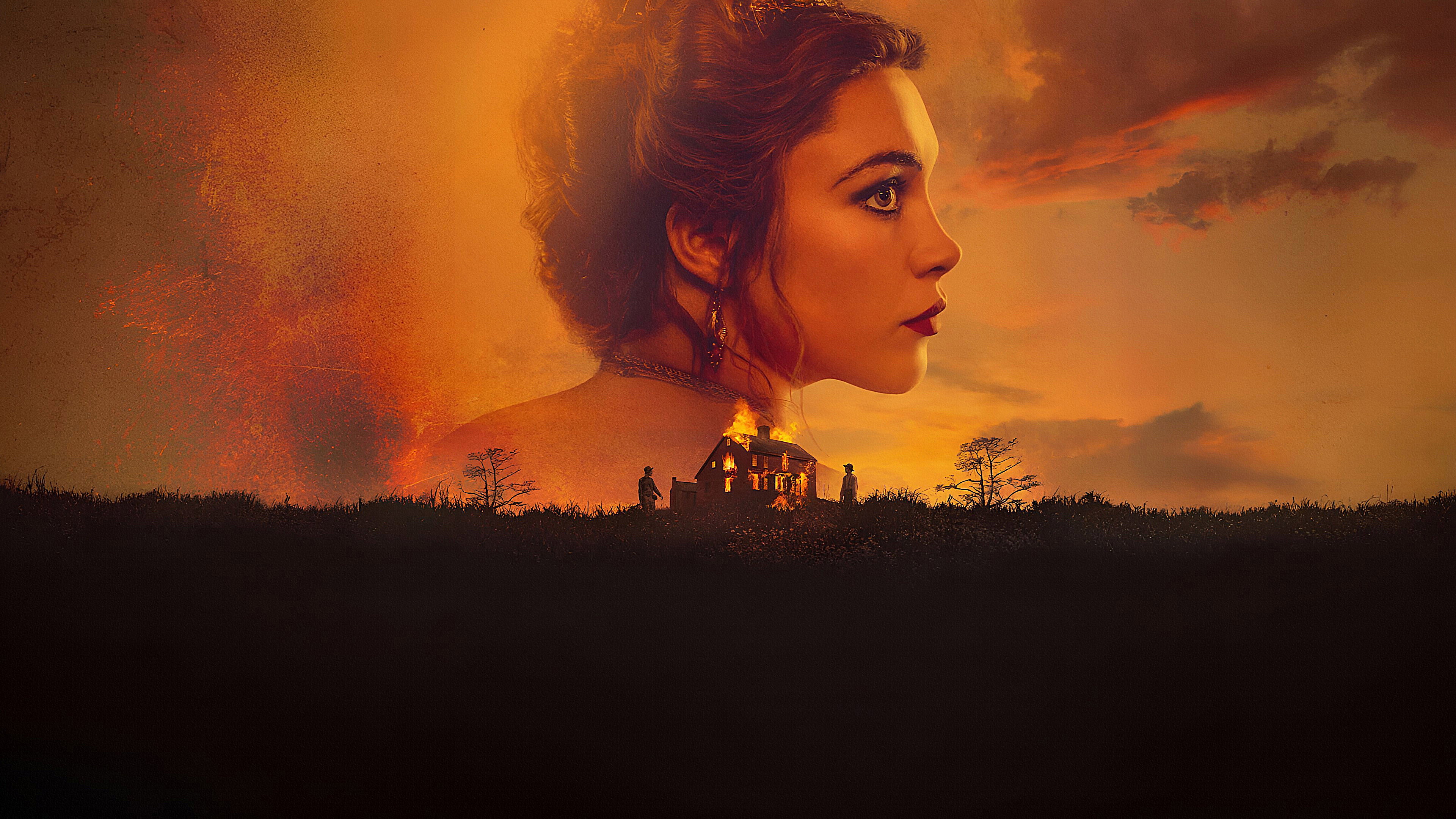
Florence Pugh plays Cathy, the fiercely independent woman who marries into the Trask family and drives a rift between two brothers, which is the engine of the whole saga. Casting Pugh is the series' first real structural decision and its best one: Cathy is the character the story cannot survive being boring, and Pugh has never once been boring on screen, including the times the screen arguably deserved it.
Now, the format question, which is the only question I actually care about. The limited series is television's most honest form right now — a beginning, a middle, and an end, announced in advance, which in the current era qualifies as a radical act. The 'eight-hour movie' people will tell you that episode breaks are arbitrary, that a season is just a long film with bathroom breaks built in. (They are wrong, and they are usually defending a season that should have been six episodes.) An episode is an inning: it has its own shape, its own stakes, its own reason to exist. Seven innings, a complete game, everybody goes home. Steinbeck wrote an ending. The least television can do is film it.
Whether Kazan's version earns its seven episodes is a question for the watching, and I will not pretend to have an answer before the premiere — anyone who reviews all seven episodes on day one watched them at double speed or is lying. But the shape of the thing is right: a closed book, a closed story, a star who can carry it, and a number that suggests someone, somewhere, counted. In 2026, that counts for a lot.
Now the part the seven-episode framing undersells: this is, by the people who made it, a reframing, not a cover version. Kazan — writing with Alexander Chee, who took episode five — moved Cathy Ames to the narrative center of the story, a deliberate departure from the novel's broader ensemble. The backstory of Lee, Adam Trask's Chinese-American confidant, has been expanded; large stretches of the Hamilton family material were trimmed to fit the seven-hour canvas. That's a choice with teeth: the 1955 Elia Kazan film only ever tackled the back half of the novel (the Cain-and-Abel standoff between Cal and Aron, with James Dean's Cal becoming the icon), while this version gets to tell the whole multi-generational sweep from late-19th-century Connecticut through World War I — provided it can keep a 600-page novel from bursting out of seven 51-to-68-minute installments. Early responses suggest the production values are doing heavy lifting: reviewers consistently praise the Salinas Valley evocation in the design and cinematography, even as many note the irony that the shoot was moved to New Zealand as a cost decision, and single out Hoon Lee's quietly powerful turn alongside Pugh.
The machine behind it is formidable on paper. Zoe Kazan created the series and co-runs it with Jeb Stuart; Garth Davis and Laure de Clermont-Tonnerre directed; Laura Karpman — fresh off major awards-season work — composed the score; Anonymous Content, Fifth Season, and Collab Productions produced. Pugh is also an executive producer, and per Men's Journal, Kazan has said she never had a Plan B for the darkest role in American literature — Pugh or nothing. It's easy to see why: the Cathy Ames the story cannot survive being boring, and Pugh, coming off Oppenheimer and Dune: Part Two and established as Marvel's Yelena Belova, has made a career of electrifying parts the screen arguably didn't deserve. Alongside her, Christopher Abbott plays Adam Trask, Mike Faist plays Charles, with Ciarán Hinds, Hoon Lee, Joseph Zada, and Joe Anders in support. All seven episodes — "Brothers," "Cathy," "In the Valley," "Kate," "Departure," "The Great Try," and "Timshel," the final title being Steinbeck's own Hebrew for "thou mayest" — arrived at once, rated TV-MA, complete story, no cliffhanger engineered for a follow-up season. Whether the critics' early grumbles about slow pacing and structural compression hold will be decided the old-fashioned way: by watching. Seven innings, complete game. For more on Pugh's year, see her page, and for another giant literary adaptation on the way, our look at HBO's Harry Potter series.
Key facts
Reporting this story is based on
- 8 Shows to Stream in October 2026
Loud and Clear Reviews — 2026-10-01 - September 2026 TV Premieres: Scrubs, AHS, SNL And More
CinemaBlend — 2026-09 - Two shows with potential: 'Brothers' on Apple TV, 'A Different World'
Beacon Journal — 2026-09-28
Men's Journal — 2026-10-01
Parade — 2026-10-02
Premiere date, episode count, and casting via October 2026 streaming coverage; production detail via Men's Journal.