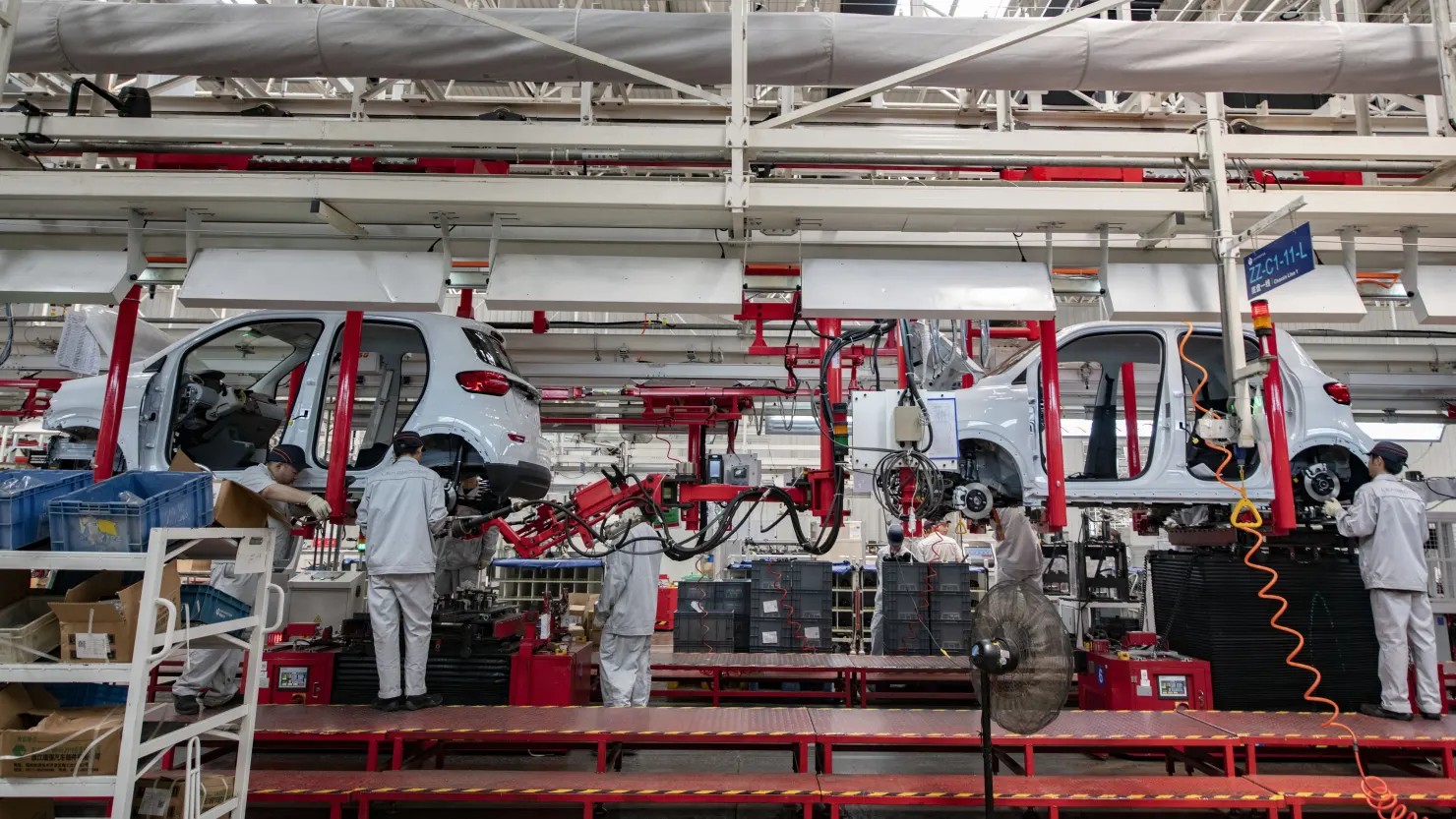
SATURDAY, OCTOBER 10, 2026 — For the first time in years, the EU-China trade war just went into reverse. Trade Commissioner Maroš Šefčovič stood in Beijing on Friday and announced that China has agreed to halve its exports of hybrid electric vehicles to Europe — the plug-in and conventional hybrids that have been flooding EU showrooms at a pace that terrified European automakers. In exchange, Beijing promised better market access for EU companies in China and an easing of rare-earth export licensing. European car stocks jumped. After years of tariffs, probes and retaliation, Brussels finally has something it can call a win.
The numbers explain why this mattered so much. Chinese hybrid imports into the EU went from 3,800 vehicles in October 2024 to 50,000 in July 2026, according to the Financial Times — a thirteen-fold surge in under two years. That's not competition, that's a flood, and it landed on an industry that was already drowning: European automakers have spent the last three years watching Chinese EVs undercut them on price while Brussels scrambled to respond with tariffs and anti-subsidy probes.
What China agreed to
The headline commitment is the export cut: halving HEV and PHEV shipments to the EU. But the package has two other pieces that may matter more in the long run. First, improved market access for EU firms operating in China — the perennial European complaint is that the playing field tilts hard toward domestic champions. Second, and potentially most consequential, an easing of rare-earth export licensing.
The rare-earths piece is the less-noticed but potentially most significant part of the deal. China dominates the refining and processing of the rare-earth minerals that go into EV motors, batteries and electronics, and Beijing has used export licensing as leverage before — to memorable effect. An easing there doesn't just help automakers; it de-risks supply chains across European manufacturing. If it holds, it's worth more than the hybrid cap.
Why now
Both sides had reasons to deal. For Brussels, the math was getting ugly: a trade deficit with China running above €1 billion a day, a domestic auto industry shedding jobs and market share, and tariff tools that were inflicting as much pain on European consumers as on Chinese exporters. The EU's EV tariffs bought time; they didn't buy a strategy.
For Beijing, the calculus is equally clear. China's export machine needs the European market — it's the richest open market for Chinese EVs outside China itself. A negotiated cap beats a tariff wall, and offering concessions on market access and rare earths costs Beijing less than a full-blown trade war that pushes Europe permanently into Washington's camp on China policy. This is classic Chinese trade diplomacy: give enough to keep the market open, keep the structural advantages.
The skepticism is earned
Brussels has heard promises from Beijing before. The European Parliament's trade committee chair, Bernd Lange, welcomed the announcement but added the line that will define the next six months: words must now be followed by action. He's right to hedge. Enforcement is everything — how the halving is measured, over what baseline, on what timeline, and what happens if the numbers don't move.
There's also the question of what “halve” means in practice. Halve relative to what — the July peak of 50,000 a month, or some earlier baseline? Does the cap cover all hybrids or just plug-ins? What stops Chinese automakers from shifting to full EVs, or from routing through third countries? The announcement is a framework, not a treaty, and frameworks have a way of dissolving on contact with creative exporters.
And then there's the rare-earth question. “Easing” licensing is not the same as removing it, and Beijing has learned that export controls are most useful as a dial, not a switch. Europe would be wise to treat any relief as temporary — welcome, bankable, but temporary — and keep building the alternative supply chains it should have started a decade ago.
It's also worth noting who Šefčovič was sitting across from: Commerce Minister Wang Wentao, a veteran of China's trade apparatus who has negotiated these exact kinds of managed-trade arrangements before. The Chinese readout emphasized “mutual benefit” and dialogue — standard language, but the substance underneath it is a Beijing that would rather manage its exports than watch Brussels manage them with tariffs. Managed trade is back as the EU-China operating system, whether anyone admits it or not.
What Thursday's summit decides
EU leaders take up the arrangement at Thursday's summit, where the debate will be whether this is a model or a mirage. The hawks will argue — not unreasonably — that a voluntary export cap is what you accept when you can't win the underlying competition, and that Europe's auto industry needs industrial policy, not just breathing room. The pragmatists will counter that breathing room is exactly what an industry in transition needs, and that a negotiated outcome beats a trade war Europe would lose.
Both can be true. The deal is real progress — the first meaningful EU-China trade thaw in years, with genuine concessions on both sides. It's also an admission: Europe couldn't out-compete the flood, so it negotiated the flood down. Whether that buys time for a European auto renaissance or just delays the reckoning is the question Thursday's summit has to answer. The carmakers' share prices say the market believes, for now. Markets have believed before.