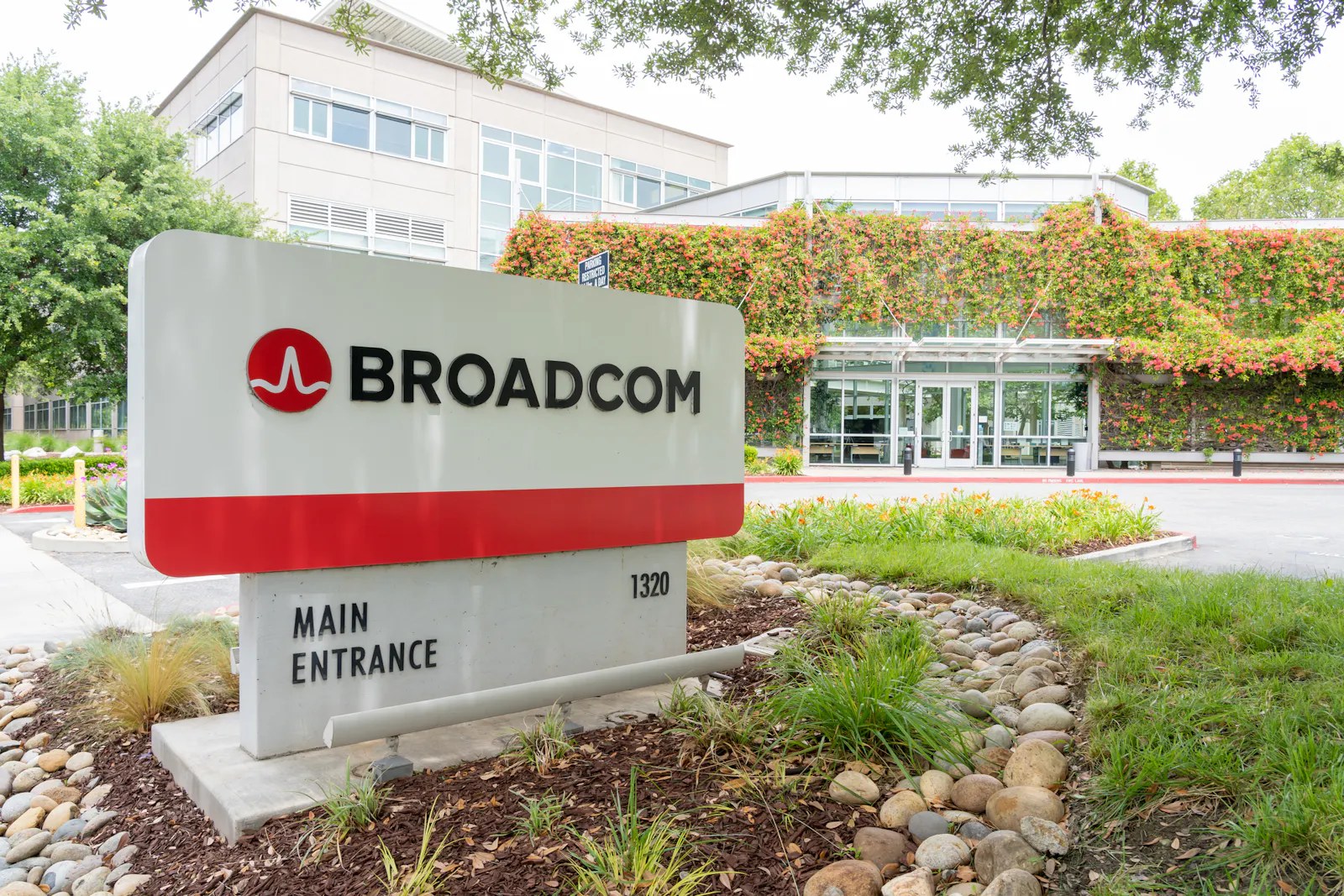
THURSDAY, OCTOBER 8, 2026 — Here is the number to hold in your head today: fifty billion dollars. That is the sum Broadcom is working to line up — in debt — to finance a custom AI chip it is developing with OpenAI, according to the Wall Street Journal. Read that again. Broadcom would be borrowing tens of billions so its customer can afford to buy its chips. If your first instinct is that this sounds a little circular, Wall Street agrees with you.
02 The $50 Billion Ask
The Journal reported Wednesday that Broadcom has spent recent weeks working to arrange more than $50 billion in financing for the OpenAI chip, citing people familiar with the matter, with Apollo Global Management and Blackstone among the lenders it has approached. The talks are early, the size could change — and Bloomberg independently confirmed the Journal’s reporting — but the outlines are staggering: a deal could close before year-end and cover several gigawatts of OpenAI chip capacity.
None of this comes out of nowhere. About a year ago, Broadcom and OpenAI announced a partnership to jointly develop 10 gigawatts of OpenAI’s custom chips using Broadcom’s networking technology, with deployment running from the second half of 2026 through the end of 2029. OpenAI’s internal chip program even has its own pepper-themed naming scheme: the first- and second-generation chips are called Jalapeño and Serrano. The ambition was always enormous. What is new is the bill coming due — and who might be asked to pay it.
03 Everyone Else Is Doing It Too
Broadcom is the headline, but the pattern is the story. Oracle is in discussions with Apollo and Goldman Sachs about funding a large chip purchase — and the structure under discussion tells you everything about this moment. Rather than Oracle borrowing the money itself, a separate entity would buy the chips and lease them to Oracle, bridging the gap between paying for the hardware now and collecting cloud revenue later. Oracle also hopes to finalize something this year, and the entire point of the structure is to avoid loading more debt onto Oracle’s own balance sheet.
Then there is SpaceX. The Financial Times reported Tuesday that the company has spoken with lenders about roughly $40 billion in financing tied to Nvidia chips — and Reuters sharpened the picture Thursday morning: SpaceX is planning about $30 billion in investment-grade debt plus $10 billion in loans to buy chips from Nvidia, which is itself a major shareholder in SpaceX. Credit default insurance on SpaceX has jumped to record highs while its shares and bonds have lost ground, which is the market’s way of saying the bill for all of this is starting to feel real.
And per Reuters, Broadcom and Anthropic are discussing debt financing on a similar scale. Add it up — Broadcom financing OpenAI, Oracle’s buy-and-lease vehicle, SpaceX’s Nvidia tab, Broadcom financing Anthropic — and you have most of the industry’s biggest names borrowing, directly or indirectly, to put chips in racks. Earlier today Tencent moved to raise its own war chest, a $5 billion bond sale to fund its AI infrastructure, and that one almost looks conventional by comparison.
04 The Loop Nobody Wants to Say Out Loud
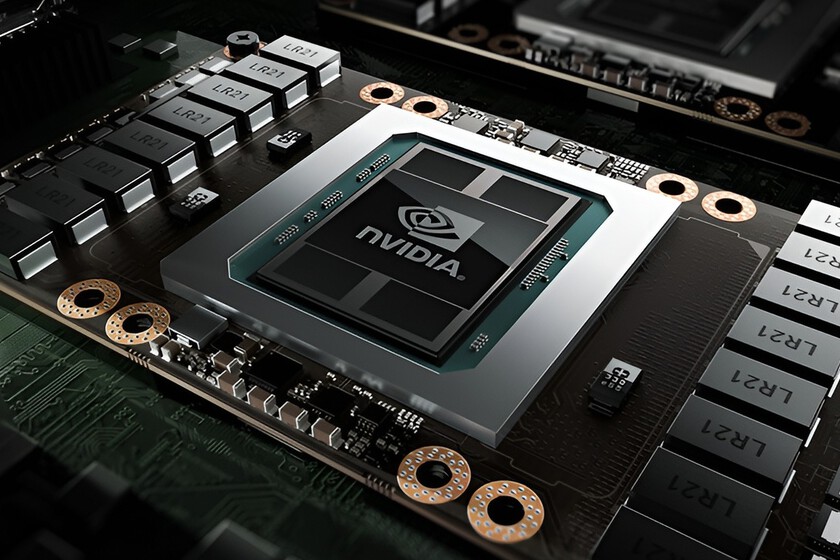
This is the part that has people like Nigel Green, the CEO of deVere Group, raising an eyebrow. Nvidia bankrolling the very customers who buy its products — the chipmaker helping finance the people who are financing purchases of its own hardware. Reuters’ Open Interest commentary called it what appears to some like “vendor financing,” which is one of those phrases that sounds polite right up until you think about what it describes.
Green said it more plainly: “The AI build out started on cash. It’s increasingly running on credit, and credit changes the risk profile entirely.”
He is not wrong about the shift. For years, the largest cloud companies paid for servers and chips mostly out of cash flow — the money was there, so they spent it. That is no longer sufficient given the scale of the AI buildout, and the industry has responded the way industries always do: with borrowing. Cloud providers have issued hundreds of billions of dollars in bonds for AI infrastructure, and the newest, hungriest buyers — OpenAI, Anthropic — do not have the balance sheets to buy this hardware outright. Reuters puts a useful number on the absurdity: the Nvidia chips for a single 1-gigawatt data center would cost tens of billions of dollars. One gigawatt. Tens of billions. And the industry needs dozens of gigawatts.
05 The Market’s Verdict
Markets did not need the loop spelled out. Thursday’s mood, per Reuters, was set by fear that massive debt issuance by technology companies could intensify competition for capital — too many borrowers chasing the same lenders. Wall Street futures slid. In premarket trading, Nvidia dipped 0.6 percent, Broadcom eased 1.4 percent, and Micron fell 1.2 percent. The message from traders was unambiguous: this many tens of billions, all at once, is a lot of paper for the bond market to swallow.
The tell might be Samsung. The company forecast a record $80.2 billion quarterly profit — a number that would have started a parade in any other era — and its shares closed marginally lower, which Reuters said highlighted doubts about the AI boom. When a record quarter reads as a disappointment, the market is telling you the story it cares about is not earnings. It is leverage. (Previously covered Samsung’s record quarter and the market’s shrug earlier today.)
The bond market told the rest. The 10-year Treasury yield hit 24-year highs at 5.34 percent, and the New York Fed’s term-premium model sits at its highest since 2014 — which is the formal way of saying investors want to be paid more for tying their money up long. Asia set the tone overnight: the Nikkei fell 0.9 percent, the KOSPI lost 0.6 percent, and MSCI’s Asia-Pacific index outside Japan slipped 0.1 percent.
This is the same debt-market squeeze Previously covered in this morning’s oil-and-yields piece, and it is colliding with a chip sector we have been tracking all week. The AI boom is not slowing down. But the financing for it is getting creative, and Wall Street has started asking the question that ends every credit cycle: at some point, who is actually paying?
Sources
- Reuters — Wall Street futures slide on rising oil, yields: futures slide, premarket moves in Nvidia, Broadcom and Micron, Samsung’s record forecast and the market shrug, 10-year yield at 24-year highs, Asia markets. Reuters · Oct 8, 2026
- Reuters Open Interest — Global markets view: USA: SpaceX’s $30B debt plus $10B loans for Nvidia chips, record credit default insurance, Broadcom–Anthropic debt talks, the “vendor financing” dynamic, 1-gigawatt data center chip costs. Reuters · Oct 8, 2026
- Reuters — Global markets: Asia session — Nikkei, KOSPI and MSCI Asia-Pacific ex-Japan moves; SpaceX financing details. Reuters · Oct 8, 2026
- StockTwits — Broadcom, Oracle and SpaceX tap private credit for AI hardware: WSJ report summary — Apollo and Blackstone approached, early talks, year-end target; Oracle’s Apollo and Goldman Sachs discussions. StockTwits · Oct 8, 2026
- RuntimeWire — Broadcom–OpenAI $50 billion chip financing: Bloomberg’s confirmation of the WSJ report, Jalapeño and Serrano chip codenames, the 10-gigawatt partnership terms. RuntimeWire · Oct 8, 2026
- InvestingLive — WSJ: Broadcom seeks over $50 billion for OpenAI chips: Oracle’s separate-entity buy-and-lease structure with Apollo and Goldman Sachs. InvestingLive · Oct 8, 2026