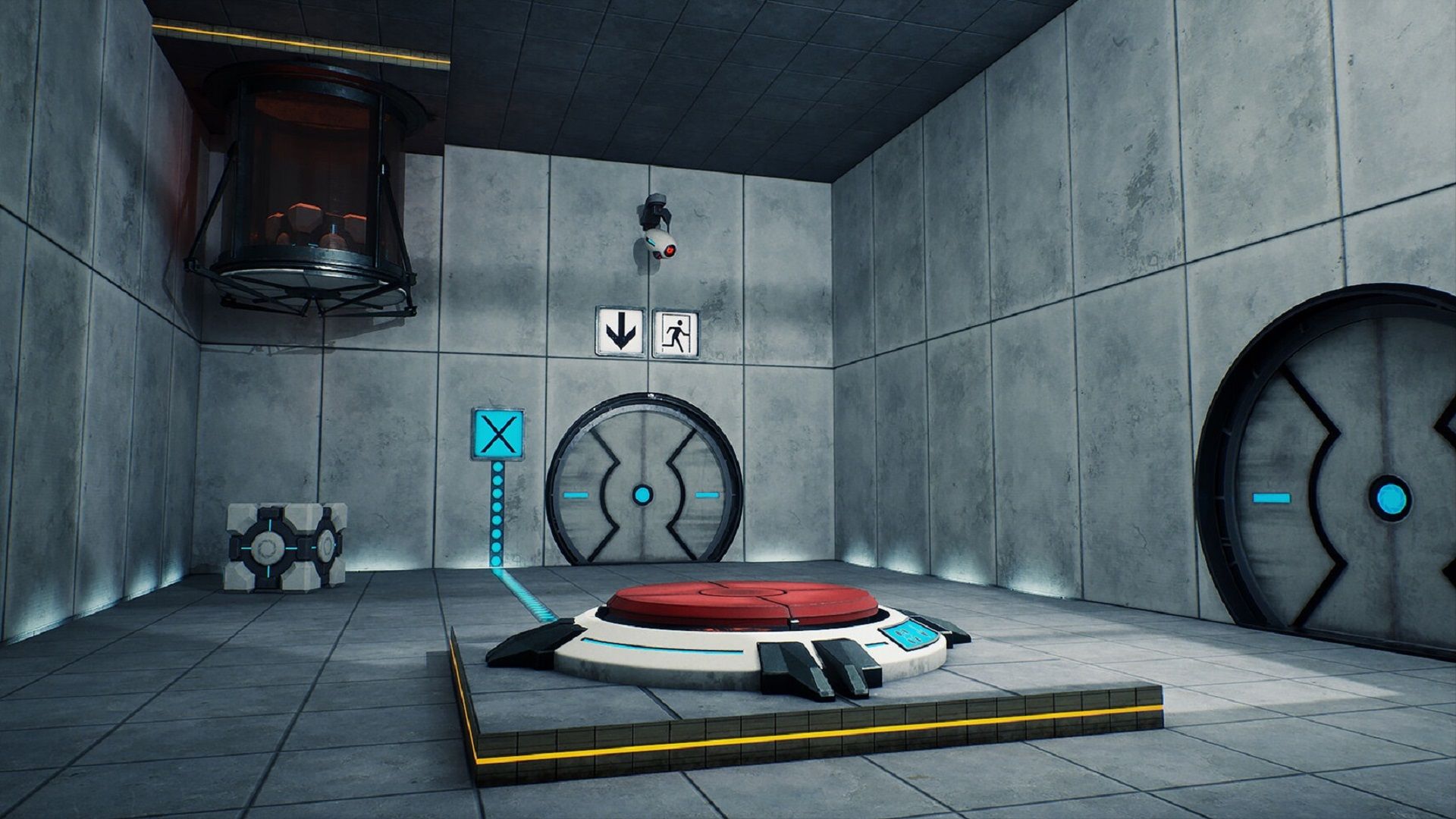
For nineteen years, F-Stop was a story people told about Portal. A prequel Valve built in 2007, showed to almost nobody outside the building, and then put away. You could read about its camera. You could watch the one sanctioned demonstration of how it worked. You could not play it.
According to Kotaku's reporting, you can now — or close enough that the difference is a few missing textures. Members of the Valve Cut Content community have assembled a playable build of F-Stop out of three separate leaks, and players who have run it describe a game that is, in Kotaku's words, "essentially 99 percent complete." Full playthroughs are already on YouTube. The Verge reports the campaign in those videos runs under an hour.
One thing needs saying before any of the rest of it: Valve has confirmed none of this. The company has not commented in any of the coverage — not Kotaku's, not Engadget's, not PC Gamer's — and there is no official release, no Steam page, nothing to buy. Everything below rests on reporting by those outlets and on the community that handled the files. That is the nature of a leak story, and it is worth keeping in view, because the details are good enough that they deserve to be labelled honestly.
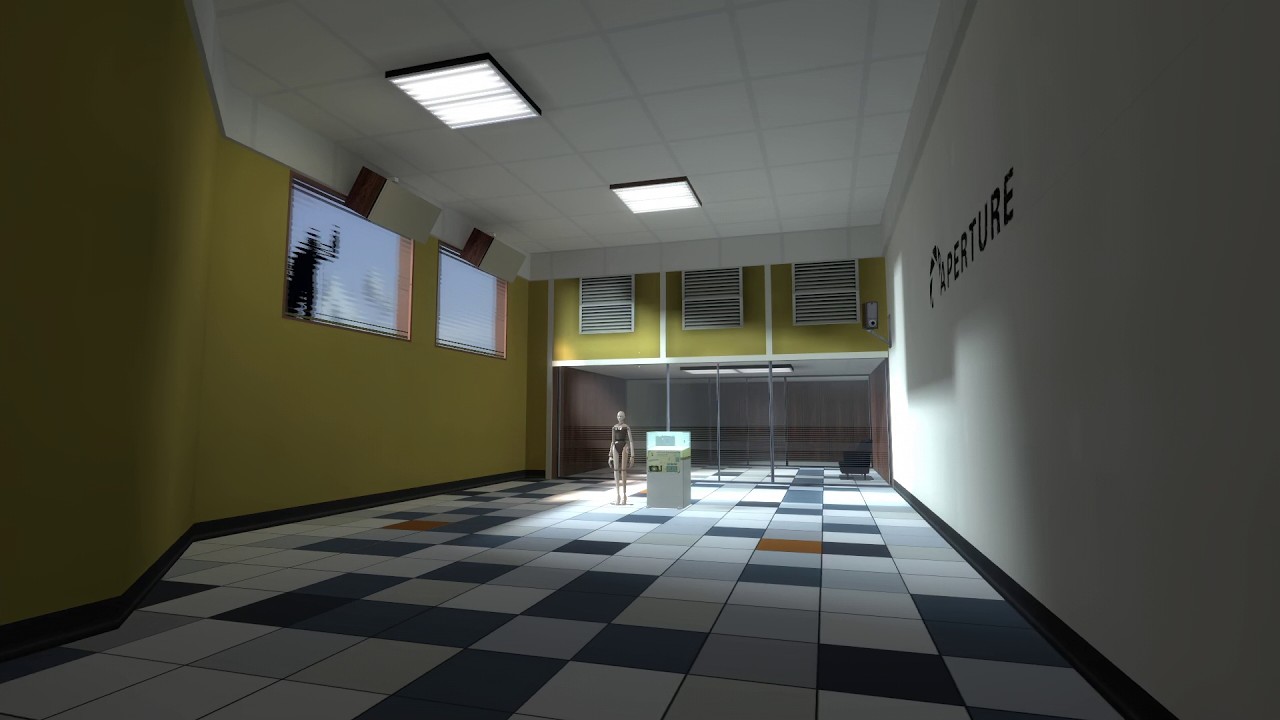
F-Stop came out of a strange three months in 2007. Kotaku reports that Gabe Newell shut down normal production for what he later called the Directed Design Experiments: Valve split into five teams, each building a game experiment, and the fifth became F-Stop, a prequel set in Aperture Science's earlier years. There was no portal gun. In its place, according to Rock Paper Shotgun's account of the rebuilt game, was an Aperture camera: photograph an object and it vanishes into the picture, then put it back into the world somewhere else, bigger or smaller, until the room gives way. PC Guide's coverage quotes the game's own introduction, delivered by a younger Cave Johnson, explaining that the camera "imprisons an object's soul 'til you're good and ready to free it."
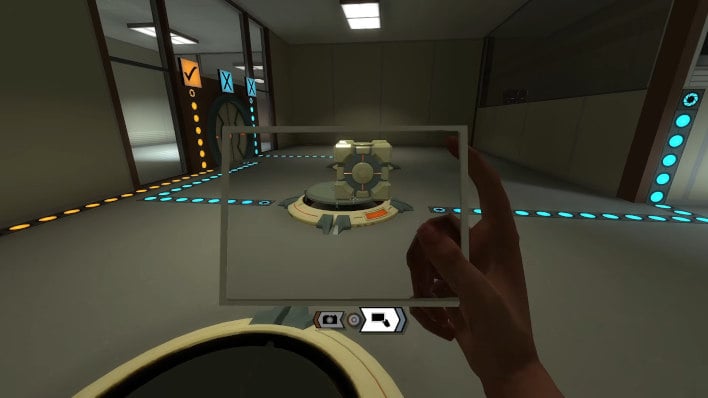
It sounds like a gimmick until you watch it bend a test chamber. A cube photographed small is a cube you can carry past a barrier and return at full size on the other side. Scale stops being a property of the object and becomes a decision the player makes. Games that would later build whole reputations on that idea — Superliminal, Viewfinder — were more than a decade away.
Kotaku reports that Newell was taken with it. Playtesters were not. GamesRadar, citing the Portal 2: The Final Hours account of the period, says testers kept asking the obvious question: why does the Portal follow-up not have portals? Valve shelved the experiment, and pieces of it — characters, dialogue, mechanics — were reworked into Portal 2, according to Kotaku. For years the only public look at how the camera actually played was Exposure, a 2020 video series by LunchHouse Software made with Valve's permission, as Eurogamer has reported. A demonstration, not a game.
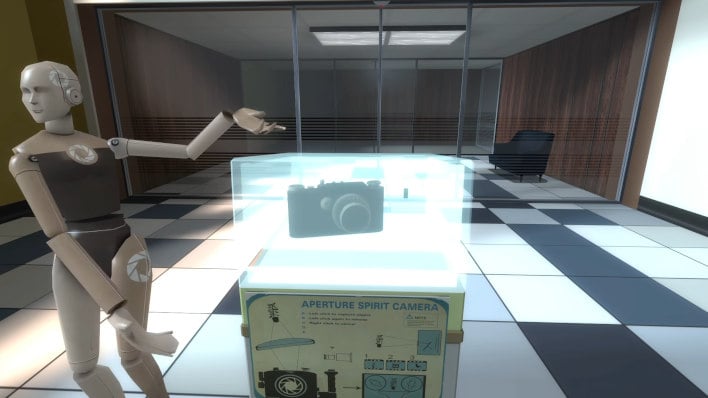
What changed was the size of the internet's memory. In late August, a huge dump of legacy Steam depot data surfaced — the leak the community calls Steam2. Here the outlets genuinely disagree on the number, so take both: Kotaku put it at roughly 13 terabytes of depot data spanning 2003 to 2013, while Engadget and GamesRadar reported more than 12 terabytes. Either way, buried in it were most of F-Stop's art and audio assets. An archive, not a game — the build had no source code and no map files, and without those, nothing runs.
The rest arrived through a Discord server. According to Kotaku, the source code and the mapsrc data — Valve's folder of map source files — were leaked through the Valve Cut Content project's Discord in the 48 hours before its November 1 report, and ShiftDelete dates the final map files to October 31, when the Valve leaks account Gabe Follower posted that, combined with everything before it, F-Stop was fully playable. Kotaku reports that, according to the server's moderators, the person holding the map files first asked for $1,000 and then gave them away for free. The Valve Cut Content team verified the map files as authentic — a community check, done by preservationists who know Valve's file formats well, and not a word from Valve itself.
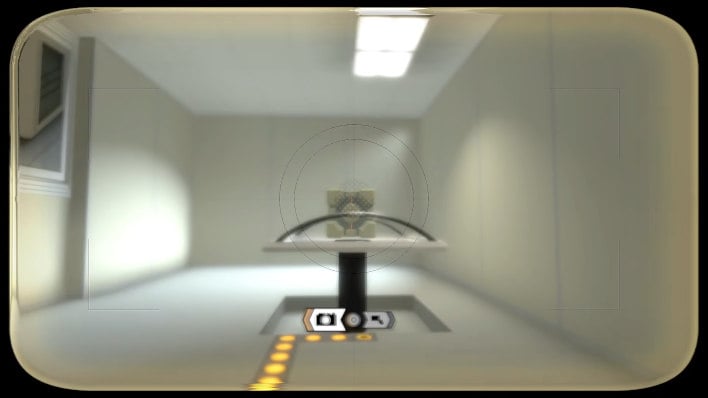
What players got is short, rough at the edges, and unmistakably a real game. Engadget notes the build is missing textures and dialogue in places but looks largely stable in playthrough footage. That roughness is part of the record, not a flaw in it: this was a three-month experiment, and an hour of it is roughly what three months buys. PC Gamer reports the Cut Content Discord has since gone invite-only under the attention, which tells you something about how fast a preservation project becomes a spectacle.
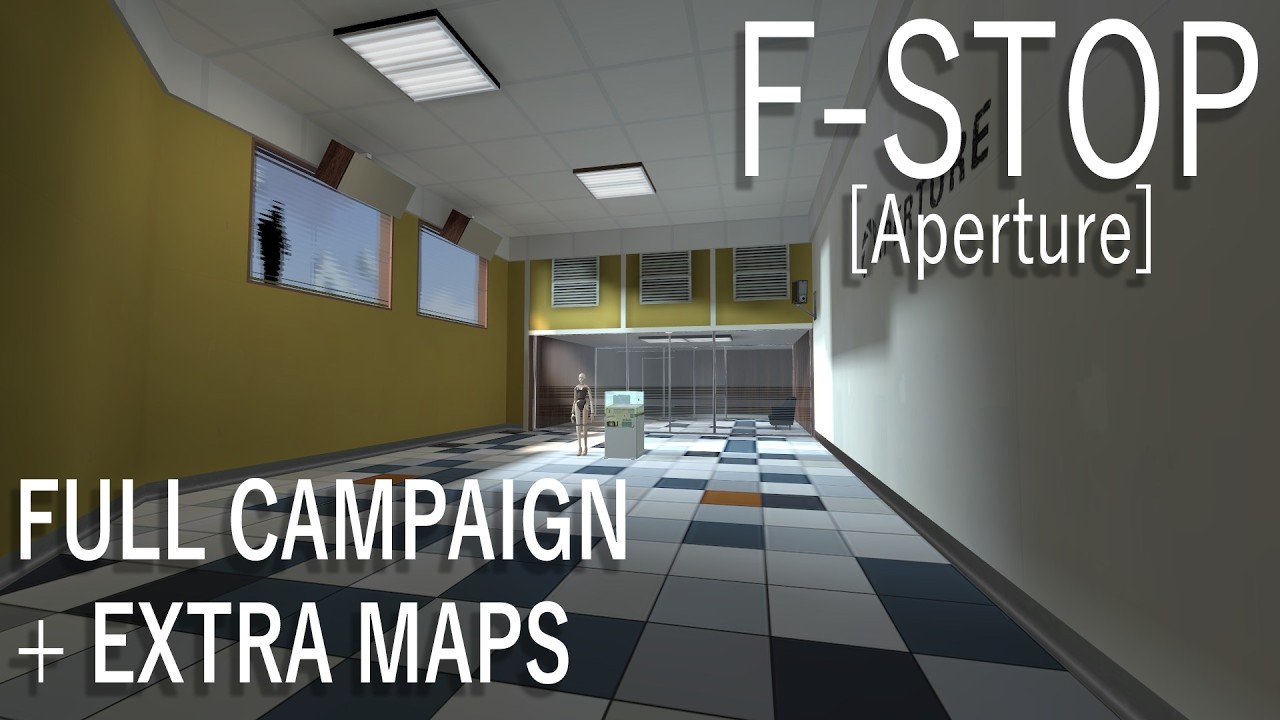
Nineteen years ago a room full of playtesters asked where the portal gun was, and that was the end of F-Stop. The question that killed it turned out to be temporary. The camera waited in an archive until the archive itself leaked, three times, and strangers who had never met each other put the pieces in the same place. Valve still has not said a word. The game is running anyway.
Reporting note: No official Valve source exists for this story, and Valve has not commented in any coverage reviewed. Facts above are attributed in the text to Kotaku (Nov. 1, 2026), Engadget (Nov. 1, 2026), PC Gamer (Nov. 1, 2026), The Verge (Nov. 1, 2026), Rock Paper Shotgun (Nov. 1, 2026), GamesRadar, PC Guide, ShiftDelete and Eurogamer. Where outlets disagree — the August leak is ~13 TB in Kotaku's reporting and 12+ TB in Engadget's and GamesRadar's — the disagreement is carried in the copy rather than resolved.
Sources · 8 sources
- Kotaku — F-Stop reporting, November 1, 2026 (playable build assembled from three leaks; ~13 TB Steam2 depot figure; $1,000 asked then given free)
- Engadget — F-Stop coverage, November 1, 2026 (12+ TB figure; build state)
- PC Gamer — F-Stop coverage, November 1, 2026 (Cut Content Discord gone invite-only)
- The Verge — F-Stop campaign runs under an hour, November 1, 2026
- GamesRadar — F-Stop report, November 1, 2026 (playtesters asked for the portal gun, citing Portal 2: The Final Hours)
- Rock Paper Shotgun — The Aperture Camera mechanic, as reported November 1, 2026
- ShiftDelete — Final map files dated October 31, 2026; Gabe Follower post
- Eurogamer — Exposure (2020), LunchHouse Software's sanctioned demonstration, made with Valve's permission