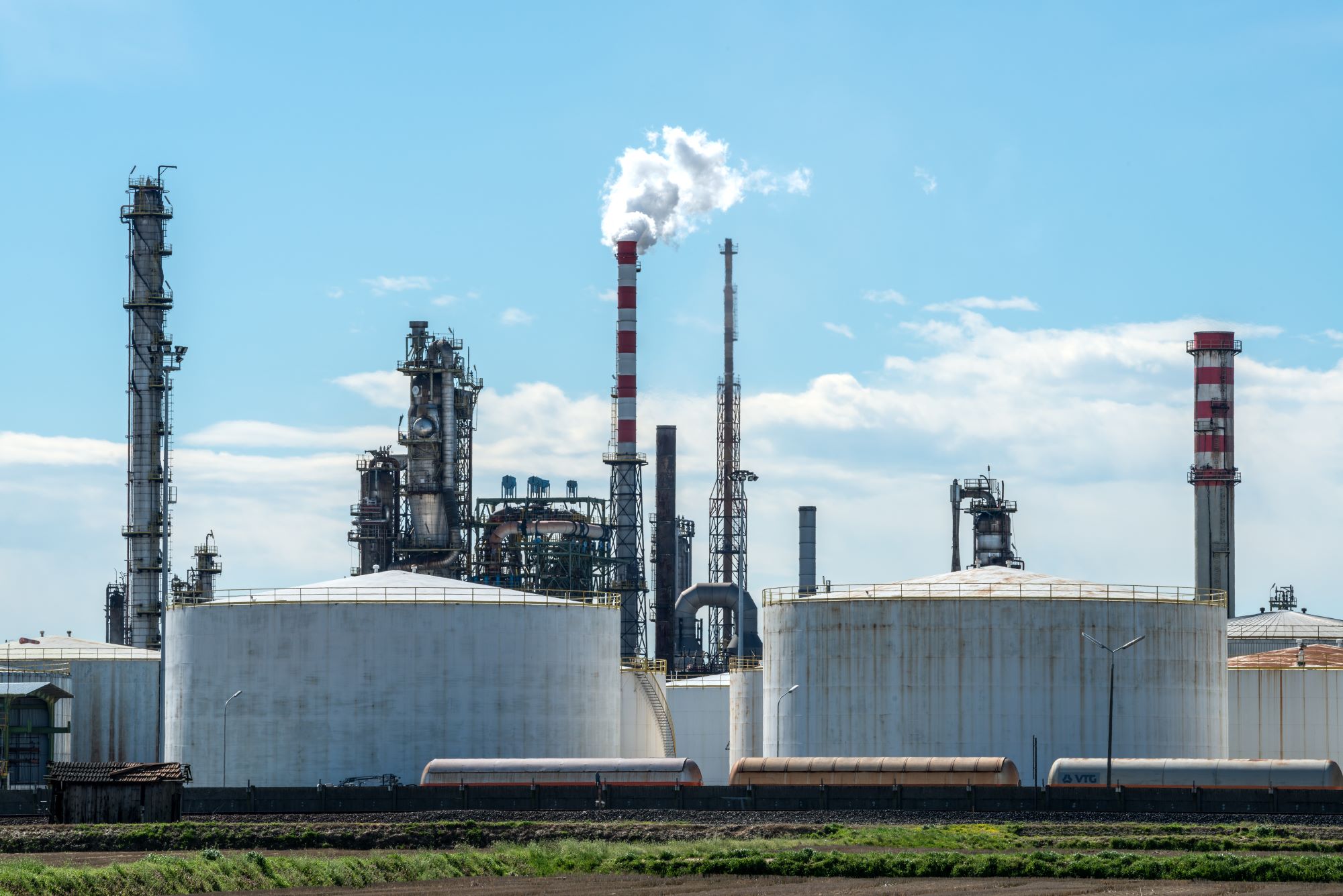
SUNDAY, OCTOBER 4, 2026 — The Group of Seven's emergency oil release is officially on the clock. Forty-eight hours after G7 leaders agreed Friday to push up to 100 million barrels of crude and diesel from emergency reserves into the market over four months — starting immediately, with diesel front-loaded into the first 20 days — the first verdict arrived from the only judge that counts: the market. And for drivers wondering what happens to prices next, the market's answer, delivered at Friday's closing bell, was a shrug with a stumble.
U.S. benchmark West Texas Intermediate settled Friday at $91.11 a barrel, down $1.76, or 1.9 percent, after trading as low as $89 during the session, according to Reuters-tracked settlement data reported by EnergyNow. Brent, the global benchmark, finished at $102.25 — down just six cents on the day, essentially flat, and still firmly above the $100 line that has defined this autumn — and the timeline for relief is measured in weeks, not days. (A note on timing: U.S. markets are closed on Sunday, so every price in this article is Friday's close.)
The sharpest reaction came where the crisis is actually sharpest: diesel. European gasoil futures — the pricing benchmark for diesel — fell about 5 percent on Friday to $1,380.50 a metric ton, according to Economies.com, as word of the release talks eased fears of tight global supplies. That matters more than the crude numbers. This was never really a crude crisis. It is a refined-products crisis — and diesel is its epicenter.
"The market is taking stock of a distinctly mixed set of signals this week," Tim Waterer, chief market analyst at KCM Trade, told Reuters on Friday, describing traders as "simply taking a breather." His read on the tug-of-war: "A healthier Saudi export picture is being offset by reports of another U.S. aircraft carrier heading toward the Persian Gulf and China's decision to curb refined product exports."
The timeline: when the barrels actually move
So what happens now, and when? The G7 statement said the release would run through the International Energy Agency beginning "immediately" and spread over four months, "including a frontloaded substantial diesel release within the first 20 days by G7 members and partners." In practice, that means the fuel that moves trucks, trains, tractors, and heating systems goes first — the next three weeks are the diesel window.
The mechanics are worth understanding, because "the G7 released oil" suggests a single tap being turned. There is no single G7 vault. Each country holds its own strategic stocks under its own rules — in the United States, the Strategic Petroleum Reserve is controlled by the Department of Energy; Japan, Germany, France, and the others run their own systems. The IEA coordinates the collective action, monitors implementation, and — according to Argus Media's reporting on the talks — has been asked to report back within 20 days on how the release is progressing. Think of the IEA less as a bank and more as a conductor: the barrels belong to the member countries; the IEA keeps everyone playing the same tempo.
The exact country-by-country split has not been published. What has surfaced: Reuters reported Friday that European governments discussed a French proposal under which European countries would release 50 million barrels of diesel while other IEA members released 50 million barrels of crude. That asymmetry — diesel from Europe, crude from everyone else — tells you precisely where the pain sits. Europe is diesel country.
For scale, the arithmetic is sobering. One hundred million barrels spread over roughly 120 days works out to a little more than 800,000 barrels a day of additional near-term supply — meaningful, but modest next to a world that burns well over 100 million barrels a day. This is rented time, not new production. It bridges a gap; it does not close one.
What drivers will actually pay
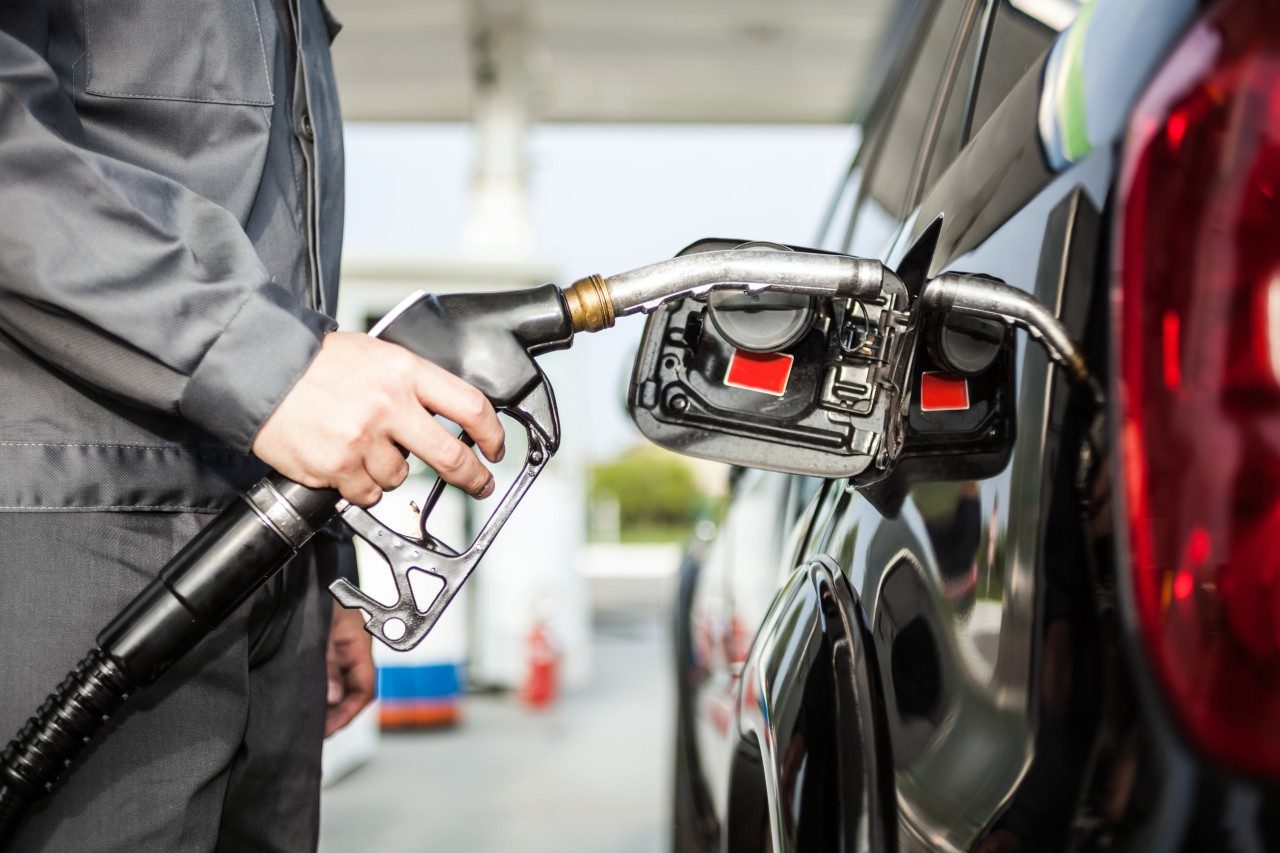
For American drivers, the only number that matters is the pump. AAA's national average as of October 1 stood at $4.41 for regular gasoline and $6.39 for diesel. Diesel set its all-time record of $6.53 a gallon on September 22. A year ago those figures were $3.16 and $3.71. A month ago they were $4.10 and $5.63. In California, diesel averaged $8.27 a gallon. The pain is not evenly distributed, and it is not close to over.
Will the release bring those numbers down? Slowly, partially — and not this week. Pump prices lag wholesale moves by days to weeks: the gasoline in your tank was bought, refined, shipped, and taxed long before Friday's futures print. Before the announcement, analysts were still warning of higher prices, not lower. GasBuddy's Patrick De Haan wrote Wednesday that "we may set a new 2026 high for average gas prices by the weekend," with diesel "at $6.315/gal and climbing" and possibly hitting $6.50 within 48 hours. Tom Kloza, chief energy adviser for Gulf Oil, wrote on X that there could be "staggering increases at the pump for both gasoline & diesel" within the next 24 hours. The release may cap the climb; it will not reverse the bill drivers already face.
There are small cushions at the state level. Indiana governor Mike Braun's suspension of the state gas tax — extended through October 6 — helped hold Indiana's regular average to $3.99 a gallon against a national average north of $4.40, according to the Indianapolis Star's review of AAA and EIA data. But tax holidays end; the underlying price does not.
How we got here: the pressure campaign
The release did not emerge from nowhere. For weeks the Trump administration pressed allies to open their stockpiles, and the pressure had a sharp edge: a threatened 90-day American ban on diesel exports. Treasury Secretary Scott Bessent wrote on X that "our European partners should accelerate delivery on their existing commitments," adding that "America is doing its part" — the U.S. provided nearly half of the 400-million-barrel March release, unlocking a final 40-million-barrel tranche on Tuesday, according to Le Monde. After Friday's deal, President Trump wrote on Truth Social that "Europe has just agreed to release a massive amount of their heavily stocked Diesel Oil." President Emmanuel Macron, who chaired the emergency videoconference, confirmed the other half of the bargain: "We have agreed that there will be no ban or restrictions on exports between G7 members." Hours after the agreement was announced, Trump said the U.S. would not impose the export ban, the Wall Street Journal reported.
The backdrop is eight months of war. Fuel prices have climbed more than 40 percent since the U.S.-Iran conflict began in February, with the Strait of Hormuz choked and shipments slowed, USA Today reported. Europe's exposure deepened as Russian supply vanished — France alone consumes about 600,000 barrels of diesel a day and imports half of it, NPR's Eleanor Beardsley reported from Paris. Voters are keeping score: an NBC News poll found 55 percent say Trump's policies have hurt the economy, against 26 percent who say they have helped. Read our original report on Friday's agreement for the full chronology.
The energy angle behind the diplomacy
Oil is also the quiet currency of the diplomacy surrounding the war. The New York Times reported that Russian President Vladimir Putin pitched a roughly $20 billion sale of Lukoil's international oil assets to Trump's envoys Steve Witkoff and Jared Kushner at a September 5 Kremlin meeting — a proposal that has since entered the Ukraine negotiations, with a rival bid led by Todd Boehly. Energy assets are now bargaining chips at both tables: the G7's and the Kremlin's. Our report on the Lukoil talks has the details.

The risks: what could send prices right back up
The hardest question is whether 100 million barrels is enough — and the honest answer is that nobody knows, because the market has watched this movie before. The IEA's March release was 400 million barrels, the largest ever; it steadied prices briefly, and then they climbed again. Strategic stocks are finite. Estimates cited by Mint from U.S. Energy Information Administration data put America's strategic inventory at about 321 million barrels in the second quarter of 2026, and Japan's at 187 million. Every barrel released today is a barrel that is not there tomorrow, and this is the second draw on the same crisis.
Then there is OPEC+. The producer group's ministers meet November 1 to set December output levels — and a Western stock release is exactly the kind of move that invites a counter-move, whether through slower output increases or sharper rhetoric. The Wall Street Journal reports the Middle East conflict is already testing the group's cohesion, as producers eye raising output once regional flows normalize.
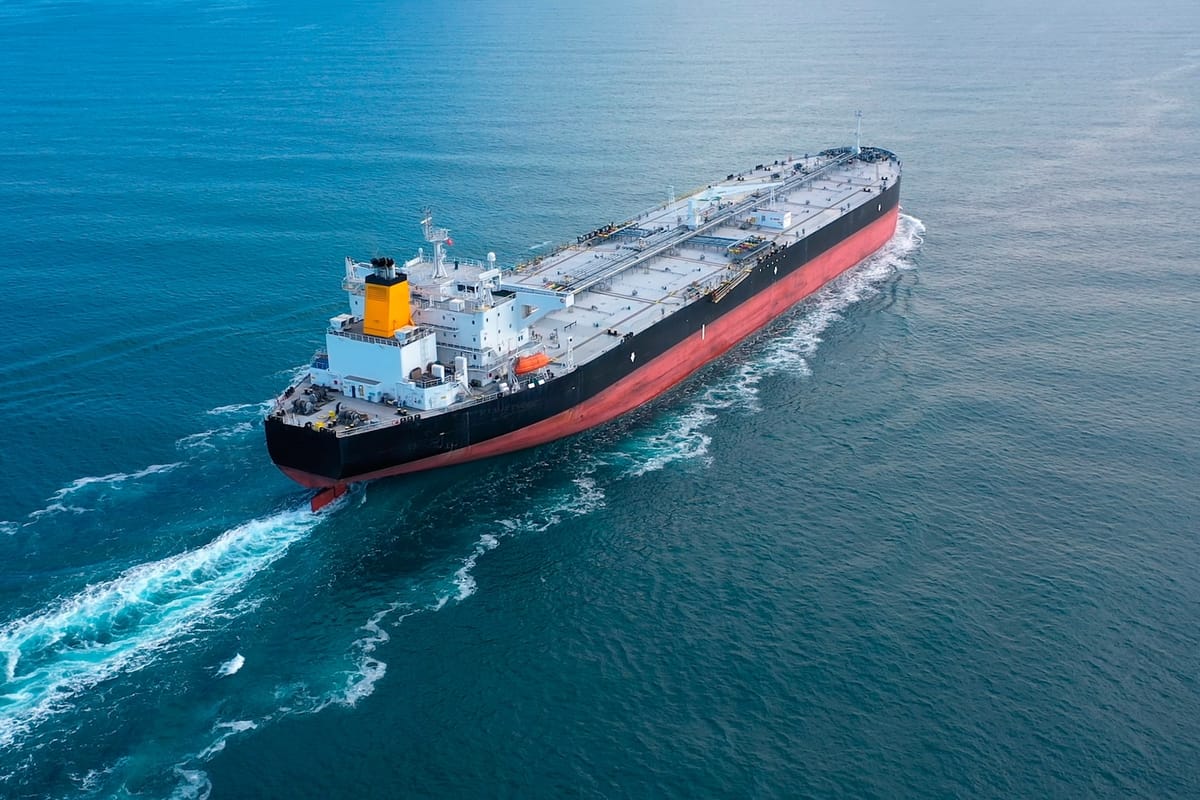
And the war itself keeps escalating underneath the diplomacy. The Pentagon is sending a third aircraft-carrier strike group and a Marine expeditionary unit — 9,000 to 10,000 additional troops — to the region by the end of November, the Journal reported. The U.K. Maritime Trade Operations has logged several tanker attacks in the Strait of Hormuz in recent weeks. China suspended refined-product exports for October to preserve domestic inventories. Ukrainian strikes have knocked out Russian refining capacity. Against that, there is genuine relief on the supply side: Saudi Aramco has raised flows on its East-West Pipeline — the Hormuz bypass — to nearly 6 million barrels a day, more than 80 percent of capacity, a wartime high; Gulf crude exports averaged about 15.5 million barrels a day in September, more than 80 percent of pre-war levels. As Barclays analysts said in a note Friday: "The gradual recovery in oil flows through the Middle East Gulf, including pipeline bypass routes, has accelerated recently."
What to watch next
Three dates will decide whether this release lands. First, the IEA's 20-day progress report in late October — the first hard data on whether the diesel is actually moving. Second, OPEC+'s November 1 meeting, which will show whether the producers' club answers barrels with barrels. And third, November 3: the U.S. midterm elections, where the price at the pump will be on every ballot. Until then, the release is a promise measured in tankers — and the tankers are still getting hit.
Sources
- Under pressure from Donald Trump, G7 releases 100 million barrels of oil Le Monde · Oct 3, 2026
- The G7 will release 100 million reserve barrels of diesel fuel over the next 4 months NPR · Oct 2, 2026
- OPEC, Allies Hold Oil Output Steady Amid Middle East Tensions The Wall Street Journal · Oct 2026
- Oil Ends Volatile Week Mixed as Emergency Reserve Release Knocks WTI Lower but Brent Holds Above $102 EnergyNow · Oct 2, 2026
- WTI falls nearly 4% below $90 as talks focus on diesel reserve releases Economies.com · Oct 2, 2026
- Markets News, Oct. 2, 2026 Investopedia · Oct 2, 2026
- AAA Fuel Prices — national averages AAA · as of Oct 1, 2026
- Gas and diesel prices set to spike again, analysts warn Washington Examiner · Sep 2026
- Indiana gas prices near $4 a gallon for regular, and $6 for diesel Indianapolis Star · Sep 18, 2026
- High prices are killing date night – and GOP's midterm hopes USA Today · Sep 23, 2026
- Global Crude Oil Prices Today (citing Reuters) RoydadNaft · Oct 2, 2026
- Brent Oil Rebounds Above $102 After Midweek Fall Below $100 WeNews English · Oct 2026
- G7 Releases 100 Million Barrels. But Tankers Are Still Getting Hit. (citing Argus Media) Geopolitics Unplugged · Oct 3, 2026
- G7 To Release 100 Million Barrels: Who Owns Emergency Reserves (citing Mint/EIA) Jagran Josh · Oct 2026
- G7 agrees to release 100 million barrels of oil, including diesel Reporter World News · Oct 2, 2026