SUNDAY, OCTOBER 4, 2026 — Federal agents arrested a Southern California businessman Thursday on charges that he built a $300 million pipeline for smuggling American AI servers into China — buying export-controlled hardware at home, mislabeling where it was going, and routing it through Malaysia and Singapore to mask the final destination. Greg Lui, 38, of San Gabriel — also known as Yiu Kong Lui — was indicted by a federal grand jury in Los Angeles on Sept. 29 and arrested Oct. 1, the Justice Department announced. He was arraigned and made his initial appearance the same day. He is presumed innocent, and the indictment is an accusation, not a conviction.
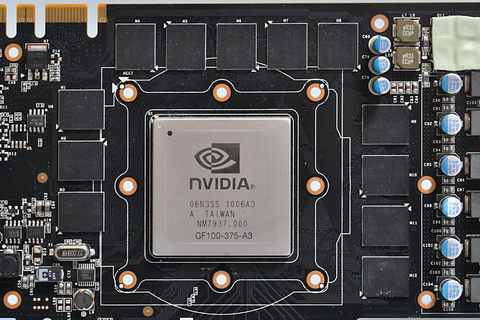
According to prosecutors, Lui owns Earthmade Computer Inc., a server reseller based in the City of Industry, California. The government alleges that Lui and unnamed co-conspirators used the company to purchase high-end servers containing U.S.-made graphics processing units — hardware identified by Bloomberg as Nvidia's A100 and H100 chips, the workhorses of large-scale AI computing — without obtaining the Commerce Department licenses required to export them. The shipments, prosecutors say, were presented on paperwork as destined for buyers in Malaysia and Singapore, countries that did not require the same export licenses for the hardware. From there, freight-forwarding companies allegedly moved the servers onward to China.
"This defendant allegedly used false paperwork and shipments through third countries to smuggle more than $300 million in export-controlled computer servers to China," said First Assistant U.S. Attorney Bill Essayli for the Central District of California. "We will aggressively prosecute those who put our national security at risk for profit."
The paper trail
The indictment is unusually specific about how the alleged scheme worked. One purchase order cited by prosecutors covered 27 servers containing Nvidia H100 GPUs, bought from an unidentified U.S. manufacturer for approximately $7,614,000 and shipped from Los Angeles County to Kuala Lumpur in January 2024. Prosecutors allege a Malaysian co-conspirator later told a Malaysian government official that all 27 servers had been transshipped on to a Chinese customer — a detail the government says exposes the paperwork as fiction.
Another alleged chain moved 92 export-controlled servers through Singapore to Malaysia and then to Hong Kong, with the hardware ultimately reaching a Chinese firm based in Hangzhou. A 2024 email discussing an order for 70 servers with export-restricted GPUs, fraudulently described as destined for Malaysia, is cited as key evidence. Bank records from accounts at Bank of America and JPMorgan Chase, along with documentation that prosecutors say misidentified the buyer as "Jackie Lui," are also part of the case. And the money moved fast: between January and October of 2024, prosecutors say Earthmade received more than $176 million from two Malaysia-based shipping companies tied to the alleged scheme — the volume that pushed the total value of the diverted hardware past $300 million. Prosecutors describe the alleged scheme as beginning in October 2023.
The export-control regime
The hardware at issue is not random computer gear. The United States began restricting exports of Nvidia's most advanced AI chips to China in 2022 and has expanded those controls since, requiring Commerce Department licenses for shipments that could accelerate China's AI — and by extension military — capabilities. Neither the A100 nor the H100 is Nvidia's newest chip, but both remain capable of processing massive datasets and training demanding AI systems. The Register's reporting on the case notes the hardware list also included GeForce RTX 4090 and RTX 5090 cards. "SI is the defining technology of the era," said John A. Eisenberg, the assistant attorney general for national security. "The National Security Division will protect the American advantage in the chips that power this technology, a product of our unparalleled innovation and hard work, from illegal diversion by our economic and military adversaries."
The Justice Department's public release describes U.S.-manufactured graphics processors without naming their manufacturer; the identification of the hardware as Nvidia's came from Bloomberg's reporting, cited by outlets including The Mac Observer. Nvidia has not been accused of wrongdoing — the allegation is that Lui and his co-conspirators deceived the manufacturers with paperwork naming permissible buyers and destinations.
The transshipment playbook
The Malaysia-and-Singapore routing alleged here is not an isolated trick. Both countries sit outside the Commerce Department's licensing regime for the top-tier AI chips, making them natural waypoints for anyone trying to obscure a shipment's true destination — and enforcement officials have been flagging the third-country transshipment pattern for years. In this case, prosecutors allege the paperwork consistently presented the hardware as stopping in Malaysia or Singapore, while freight-forwarders quietly moved it on to Chinese buyers, including — according to one account of the Justice Department's announcement — the Chinese government itself.

An escalating crackdown
The Lui arrest lands amid a visibly accelerating enforcement campaign. In August, Taiwanese authorities indicted nine people — including employees of Nvidia and Super Micro Computer — over allegations of illegally exporting high-end AI servers to mainland China, a case with obvious parallels. The Lui investigation itself was a joint effort by the FBI, the Commerce Department's Bureau of Industry and Security Office of Export Enforcement, and the Defense Criminal Investigative Service — the kind of multi-agency team Washington assembles when it treats a case as a national-security priority rather than a paperwork violation. Governments beyond the U.S. are tightening the screws on AI at the same time: Romania just rewrote its child-exploitation law to close an AI loophole (see our coverage), a reminder that the race to regulate artificial intelligence is running on parallel tracks — the hardware supply chain and the software itself.
Charged, not convicted
Lui faces one count of conspiracy to violate the Export Control Reform Act and the Export Administration Regulations, one count of outbound smuggling, and one count of conspiracy to commit money laundering. The Justice Department says a conviction on all three counts could bring up to 20 years in prison; the individual counts carry statutory maximums of 20 years each for the two conspiracy charges and 10 years for smuggling. None of that has been proven. The indictment is the government's opening claim, and Lui — like every criminal defendant — is presumed innocent unless and until a jury or judge finds otherwise. What the case does establish, regardless of outcome, is the scale of the alleged operation: more than $300 million in restricted hardware, moved through at least three countries, on paperwork prosecutors say was designed from the start to lie about where it was going.