
MUMBAI, INDIA, SUNDAY, OCTOBER 4, 2026 — Twelve years is a long time to keep a wallet closed. Apple Pay — live in the United States since September 2014 and in dozens of countries since — has finally arrived in India, launching this week with Axis Bank as its first and only banking partner.
In an official newsroom statement dated Sept. 30, reported by the Wall Street Journal, TechCrunch and the Press Trust of India, Apple said: "Starting today, Apple Pay is available for users in India across iPhone, iPad, and Apple Watch." Jennifer Bailey, Apple's vice president of Apple Pay and Apple Wallet, said in the statement: "India is home to a dynamic and digitally savvy population that continues to embrace a cashless future while expecting the highest standards of security and privacy, and we're so excited to bring Apple Pay to users in India today."
How it works will be familiar to anyone who has used it elsewhere: customers with Axis Bank-issued Visa and Mastercard credit cards can add their cards to Apple Wallet and tap to pay in stores or check out online. "Apple Pay makes everyday payments with a card easy, secure, and private — from simply tapping to pay in stores without an extra app, PIN, or OTP to checking out online without repeatedly entering payment information," Bailey said in the statement. Under the hood, Mastercard's tokenization technology protects each transaction with "a unique, cryptographically secured token, keeping card details hidden from merchants," as Gautam Aggarwal, Mastercard's president for India and South Asia, put it.
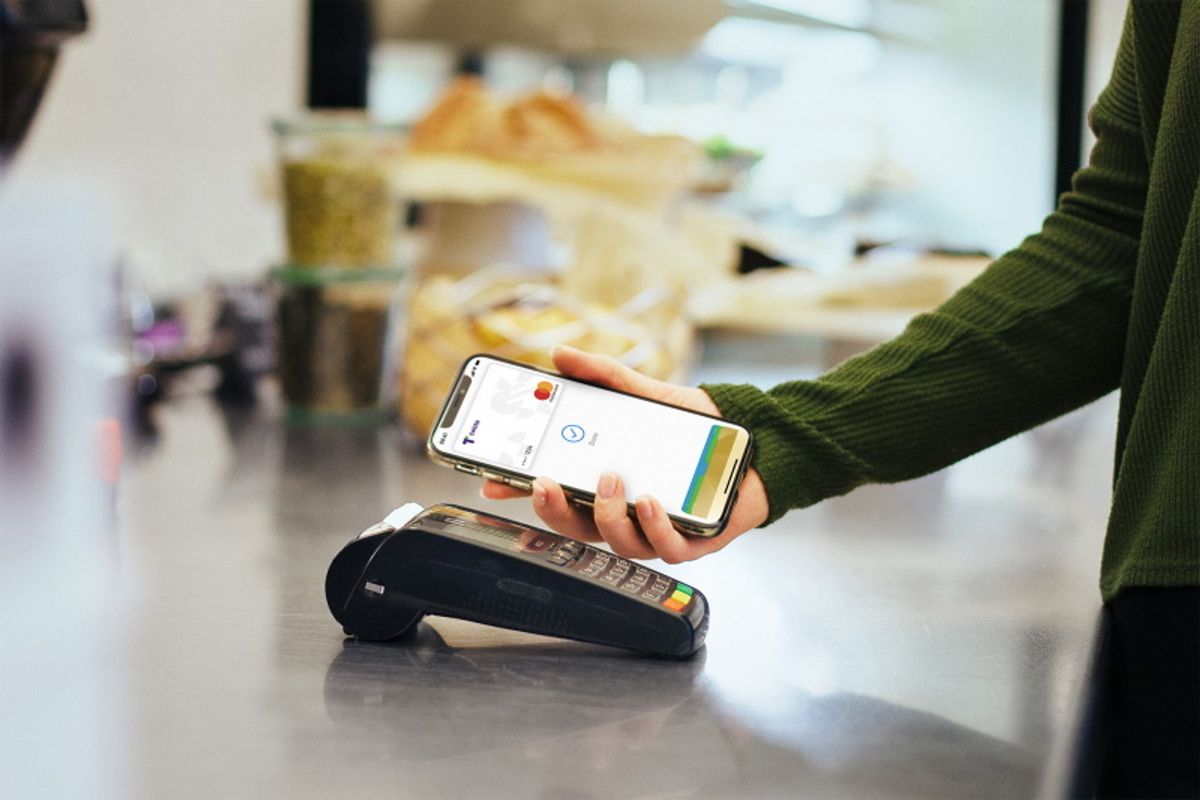
The UPI-sized hole in the story
Here is what Apple Pay in India does not do: it does not touch UPI. There is no UPI integration, no RuPay support — not even for RuPay cards issued by Axis Bank itself — and no debit cards at launch. For now, Apple Pay is focused on card-based payments through Visa and Mastercard.
That is a genuinely big caveat in a market where UPI — India's instant, phone-number-based payments rail — accounts for more than 80 percent of digital-payment volume, according to Forbes India's analysis. PhonePe and Google Pay sit atop the UPI duopoly, with Paytm in the mix; the Wall Street Journal noted that UPI accounted for nearly 49 percent of global real-time payment volume as of 2025. In other words, Apple Pay has launched in the world's most advanced instant-payments market while sitting out the rail that defines it.
Analysts read that as deliberate. "Axis Bank is a meaningful starting point for Apple as it is India's fourth-largest credit-card issuer with 16.23 million active cards," said Prabhu Ram, vice president of the Industry Research Group at CyberMedia Research, in Forbes India. "With India's credit-card base now above 122 million and contactless payments gaining traction, Apple Pay has a growing card ecosystem to tap into — even as UPI continues to underpin everyday payment." Ram added: "In a market where UPI accounts for more than 80 percent of digital-payment volume, Apple Pay completes the Apple ecosystem experience."
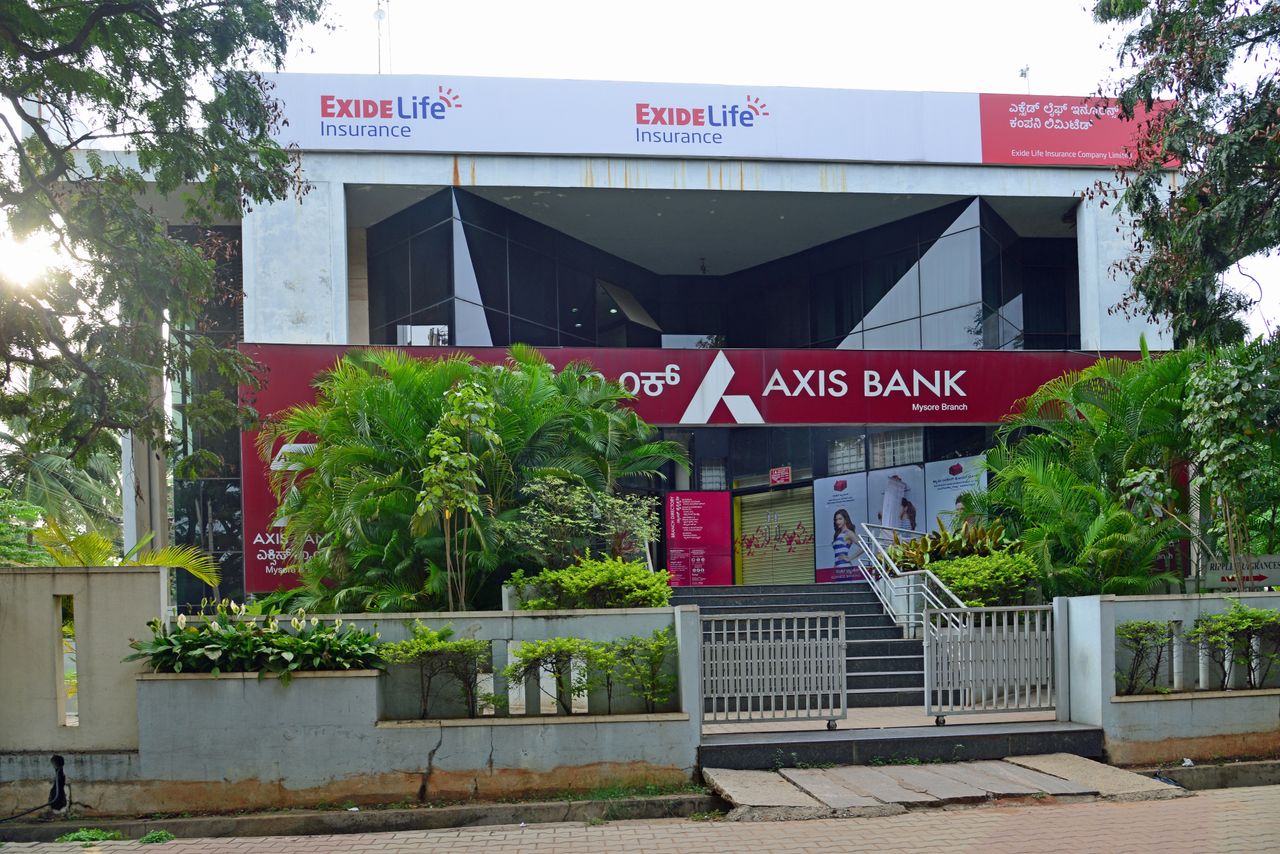
One bank, for now
Axis Bank's exclusivity is the other half of the story. HDFC Bank, ICICI Bank and SBI Card — three of the biggest names in Indian credit cards — are not supporting Apple Pay at launch, with PTI reporting that negotiations over commercial terms continue and more lenders expected by year-end. Apple has run this playbook before: launch with one anchor partner, prove the plumbing, then bring the rest of the industry along.
Amitabh Chaudhry, Axis Bank's managing director and CEO, called the moment "a significant inflection point in payments, where technology, intelligent security and changing customer expectations are reshaping how people transact." In the bank's official statement, he said its aspiration is "to remain at the forefront of this transformation by building payment experiences that are progressive, trusted and deeply relevant to our customers," adding that Apple Pay brings "greater choice and flexibility to our Credit Card customers, with support across the Mastercard and Visa networks."
The economics explain the queue: TechCrunch's reporting notes Apple monetizes Apple Pay through transaction fees, and with India's credit-card base above 122 million cards and contactless acceptance spreading fast, even a single-bank beachhead is a real business — before the rest of the industry joins.
Why India couldn't wait
The deeper story is how central India has become to Apple's future. Apple accounted for 28 percent of India's smartphone market by value in 2025, up from 23 percent a year earlier, per Counterpoint Research cited by TechCrunch — a remarkable figure in a price-sensitive market where Apple sells at a premium. Roughly one in four iPhones is now made in India, which has become Apple's second iPhone production base alongside China. Bloomberg reporting put Apple's annual retail revenue in India at a record $10 billion. And the runway is long: India's consumer market is set to grow 46 percent by 2030 to $4.3 trillion, per IBEF figures cited by the Journal.
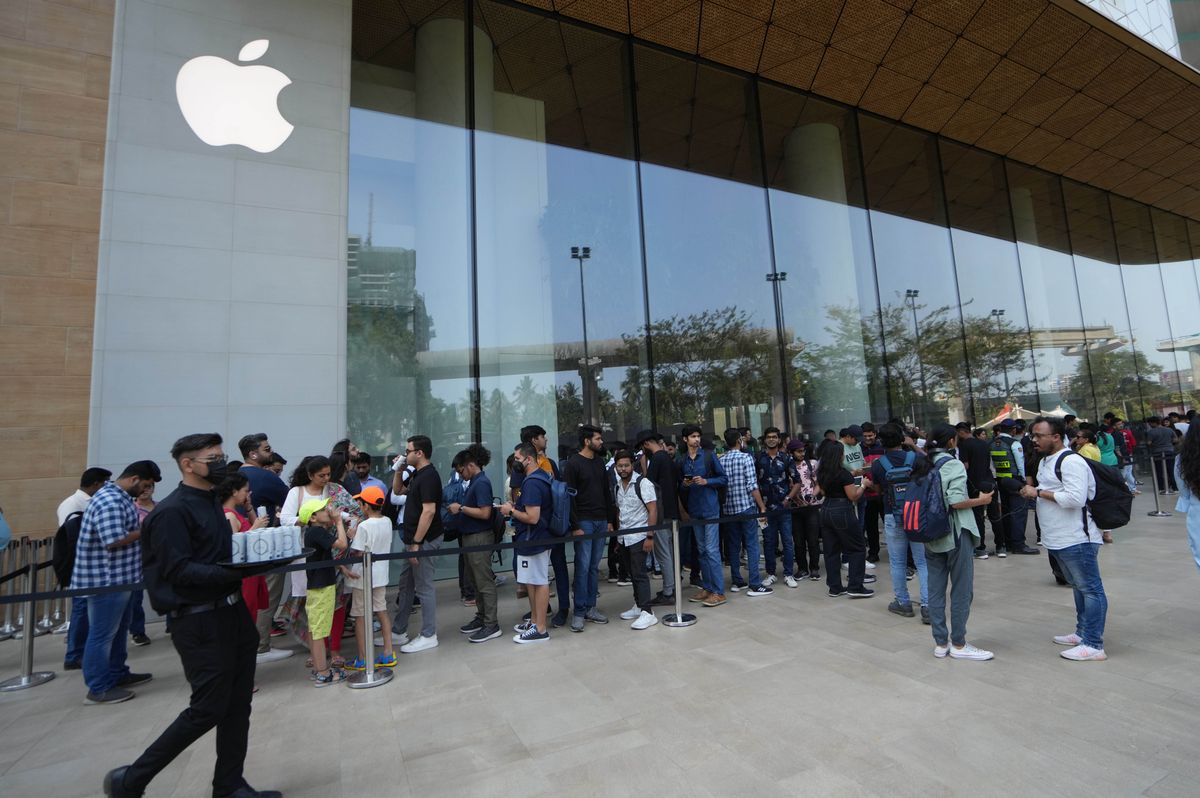
The momentum is visible on the ground. The iPhone 18 Pro and Pro Max are seeing up to 28 percent year-on-year initial-demand uptick in India, per IANS reporting in late September, and Apple is pushing to break its India sales record again this fiscal year — expanding its retail footprint and financing options to capture surging demand, including new stores beyond the flagship Mumbai and Delhi locations that drew crowds at their 2023 openings.
What changes, and what doesn't
For India's premium iPhone owners, the change is immediate and practical: no more reaching for the physical card or a separate app at the tap-to-pay terminal, and online checkouts without re-entering card details. For the industry, Apple Pay's arrival is a validation of India's card-tokenization rails — and a warning shot. The UPI giants own everyday payments; Apple now owns the premium checkout, and it did so without asking UPI's permission.
Whether that wedge widens depends on two things: how fast HDFC, ICICI, SBI Card and the rest come aboard, and whether Apple ever bridges to UPI — the rail that moves four-fifths of the country's digital money. Apple has shown no sign of doing so. For now, in the world's most UPI-obsessed market, the most famous wallet on earth is betting that the card still has a future. Given 122 million credit cards and counting, that may be the safest bet Cupertino has made in India yet.

Our Apple desk has more on the October 13 event, and the newsroom is tracking everything else in tech this morning.
Sources
- Apple Pay Launches in India Apple Newsroom India · Sept 30, 2026
- Apple Launches Mobile Payment Services in India Wall Street Journal · Sept 30, 2026
- Apple Pay Finally Launches in India After Years on the Sidelines TechCrunch · Sept 29, 2026
- Apple Pay Enters India: Here's All You Need to Know Forbes India · Oct 2026
- Apple Pay Launches in India With Axis Bank; More Banks Expected PTI (via Reporter World News) · Oct 1, 2026
- Apple Pay Launches in India in Collaboration With Axis Bank PTI (via HDFC Sky) · Oct 2026
- Apple Pay India Launch: Axis Bank First Partner, How to Use Gadgets360 · Oct 2026
- Apple Pay Launches in India Electronic Payments International · Oct 2026
- Apple Pay Launches in India With Axis Bank Credit Cards — and No UPI Support tech-ish · Sept 30, 2026
- Apple Pay Launches in India: Axis Bank, UPI and RuPay Explained Apple Scoop · Oct 2026
- Apple Pay Live in India With Axis Bank as Card Partner Cryptopolitan · Oct 2026
- Apple Pay Set to Launch in India With Axis Bank: What It Means, How to Use Jagran Josh · Oct 2026