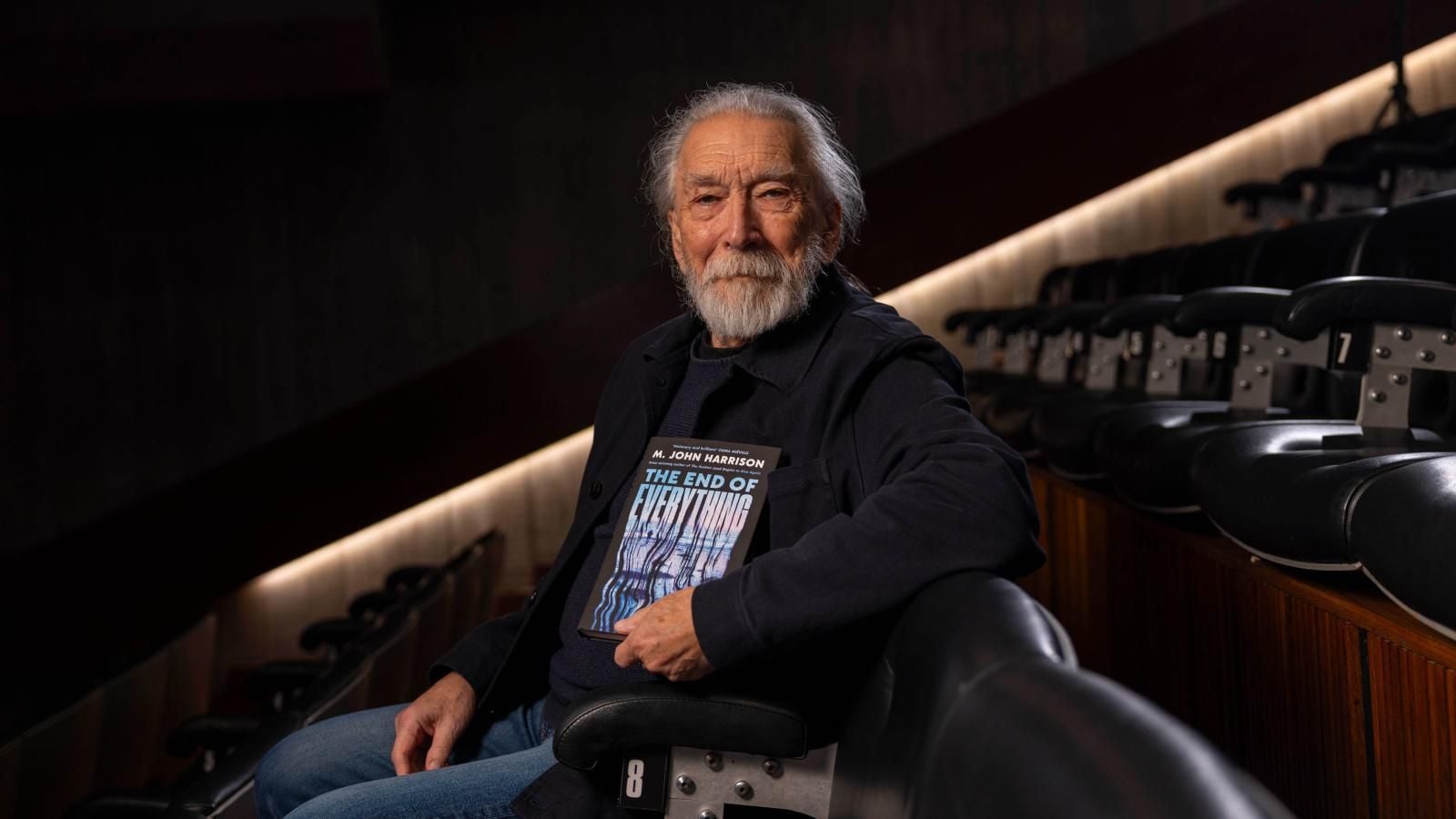
M. John Harrison has won the 2026 Booker Prize for The End of Everything. At 81, he is the oldest winner in the prize's history, and this was his first nomination. The award carries £50,000.
The result was announced on Monday night, November 9, at Old Billingsgate in London. Last year's winner, David Szalay, presented the trophy. The judges, chaired by classicist Mary Beard, spent a full day debating the six shortlisted novels before landing on Harrison's unanimously. "It's a book that turns you upside down, raises a wry smile — and surprisingly, given the subject matter, leaves you with a twinge of optimism," Beard said.
The age record had belonged to Margaret Atwood, who was 79 when she shared the prize in 2019 for The Testaments. Harrison passes her with his thirteenth novel. He has been publishing since the 1960s. The Booker had simply never called his name before — not a longlisting, not a shortlisting, until the year he turned 81.
The novel is set on the south coast of England a few decades from now, some years after a catastrophe nobody can explain. Phillip Tennent makes his living at the tideline, collecting artefacts that wash up from the Channel, and lives with his elderly aunt Marnie. The invaders, if that is what they are, are called the iGhetti — the "i" hinting at something digital, though nobody in the book can be sure. Social norms have worn away, vigilantes handle law and order, and there may be a crashed plane in your garden. People hold children's parties anyway. They get their morning coffee at the seaside café anyway. Then Tennent hauls an "item" out of the water — a blob of jelly that grows, develops speech, and starts telling its human minders what to do. Beard's point about the book is that the apocalypse, when it comes, will not explain itself. The old rules stop mattering, and everyone left has to muddle through regardless.
That refusal to explain is the reading experience, too. The judges described the novel as a thriller, a mystery, a satire, a dystopia, a road novel and a work of realism at once — "whatever the reader is looking for can be found here, albeit told at a slant and with a twist." At 198 pages it was the shortest book on the shortlist. The humour is subtle, surreal and sly; the judges said there were moments they found themselves laughing aloud in the middle of the bleakness.
Harrison traces the book to the 2008 financial crisis. He told BBC Radio 4's Front Row that his first prompt was the crash, and that he "wanted to write a novel about the failure of explanation in society. A disaster was a good starting point for that jump off." The setting came from the art towns of the East Coast — "all the way round from Hastings to the Thames — even up into Suffolk." Talking to The Telegraph, he put the book's human situation plainly: in a real catastrophe, "it wouldn't be a question of survival — the point is the world doesn't work the way it used to. Your entire philosophy, your entire epistemology, is based on what you know. And suddenly you don't know anything."
None of this makes Harrison a discovery. He sold his first story in 1965 and joined the staff of the speculative-fiction magazine New Worlds in 1969, editing its books pages until 1978. Climbers won the Boardman Tasker Prize in 1989. Nova Swing won the Arthur C. Clarke Award in 2007. The Sunken Land Begins to Rise Again won the Goldsmiths Prize in 2020. He has reviewed fiction for the TLS, the Telegraph, the Guardian and the New York Times, and in 2022 he sat on the other side of this exact process as a Booker judge. Writers including Olivia Laing, Robert Macfarlane and Neil Gaiman have hailed him as one of the finest prose stylists alive. The Booker has now caught up with that verdict in public.
The field he beat was not soft. The prize drew 163 submissions, cut to a 13-book longlist in July and a six-book shortlist in September. Two of the other finalists were former winners — Marlon James, with The Disappearers, and Douglas Stuart, with John of John — and they went into the night as the betting market's favourites. The shortlist was completed by Luke Kennard's Black Bag, Rebecca Perry's May We Feed the King and Elizabeth Strout's The Things We Never Say. Beard's panel was poet Raymond Antrobus, musician Jarvis Cocker, critic Rebecca Liu and novelist Patricia Lockwood.
The win is a first for the publisher, too. Serpent's Tail, an imprint of the independent house Profile Books, had been nominated four times before — including shortlistings for Esi Edugyan's Washington Black and Half Blood Blues — without taking the prize home.
The critics who read the book early landed where the judges did. Catherine Taylor in the Financial Times called it "a formidable book: dusky, casually horrifying, unexpectedly compassionate." Helen Macdonald, in The Observer, wrote that she did not expect to read a better book this year, "perhaps decade." Simon Ings in The Telegraph said reading Harrison feels "not so much reading as dreaming."
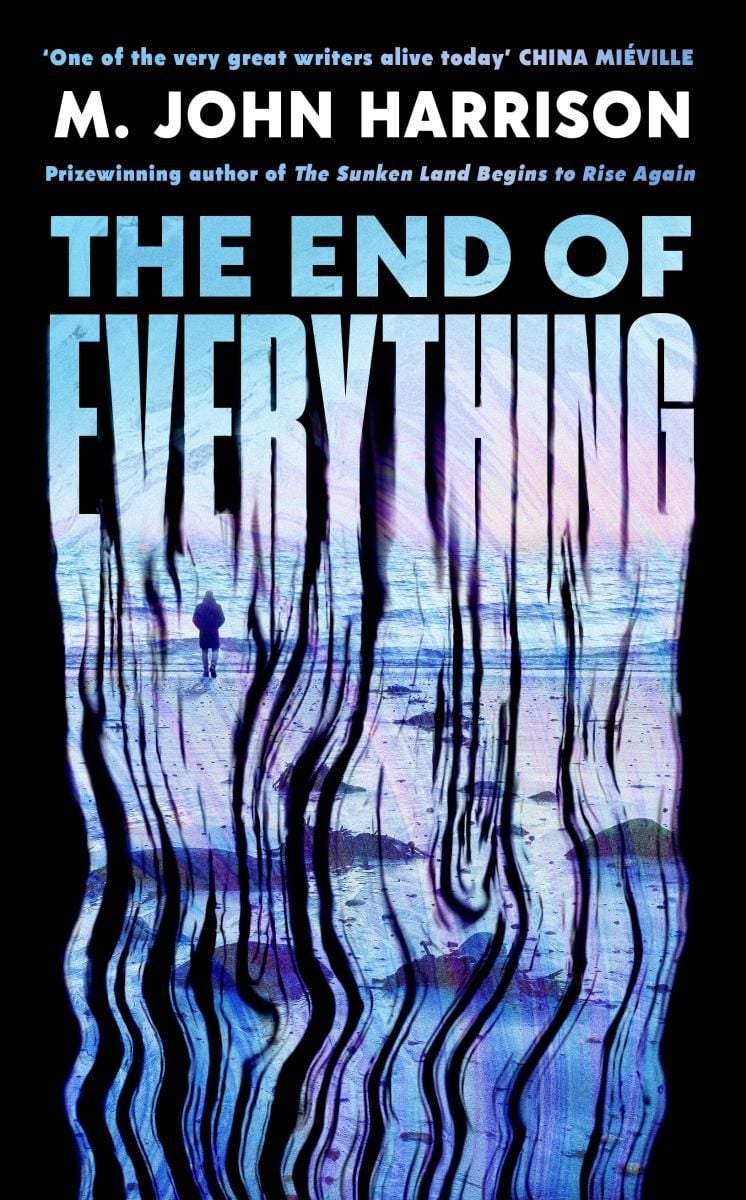
Serpent's Tail published The End of Everything on June 18 (£16.99). For anyone deciding whether a Booker winner this strange is for them, the Booker site carries an extract from the first chapter, a reading guide, and a filmed reading of the book by actor Kathryn Hunter — that reading is embedded below. It is a better test than the trophy. This is not a prize winner that meets the reader halfway, and everything about how it won suggests that is precisely why it won.
Sources · 7 sources
- The Booker Prizes — official winner feature (thebookerprizes.com, November 9, 2026): the win, the judges' unanimity after a full day's debate, Mary Beard's quotes, the plot (Tennent, Marnie, the iGhetti, the "item"), Harrison's biography and career record, Serpent's Tail's first win on its fifth nomination, the critics' verdicts, and Harrison's own account via Front Row and The Telegraph
- CNN (November 9, 2026): the ceremony at Old Billingsgate, the £50,000 prize, the panel of five judges, 163 submissions cut to a 13-book longlist and a six-book shortlist, and the beaten former winners Marlon James and Douglas Stuart going in as the betting favourites
- Associated Press via NPR (November 9, 2026): the trophy presented by the previous year's winner, David Szalay
- Wikipedia, 2026 Booker Prize: longlist July 28, shortlist September 22 (Southbank Centre), winner November 9, 2026
- The Times (November 9, 2026): 198 pages — the shortest book on the shortlist, per the organizers (the publisher lists 224 pages); £16.99
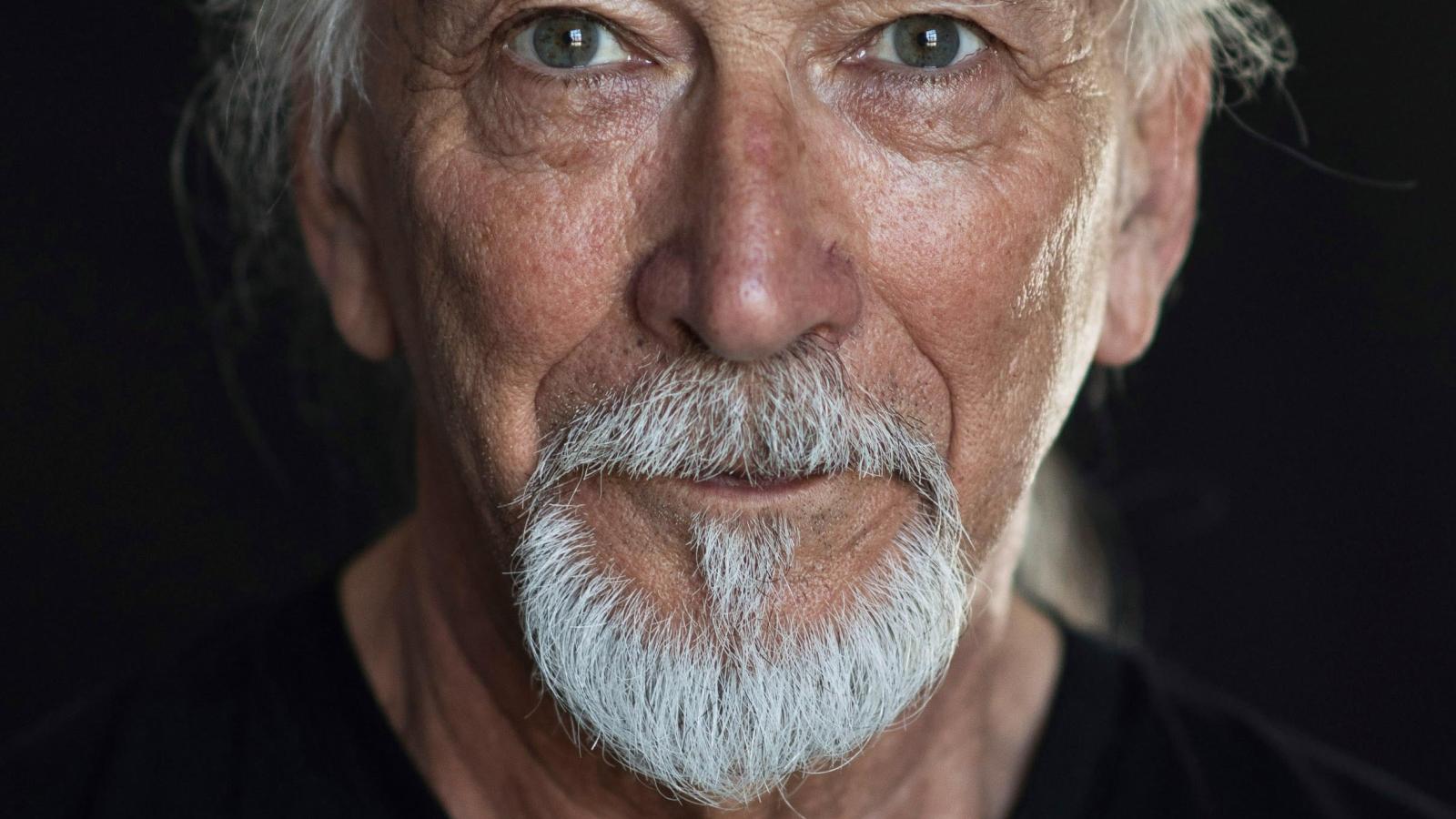
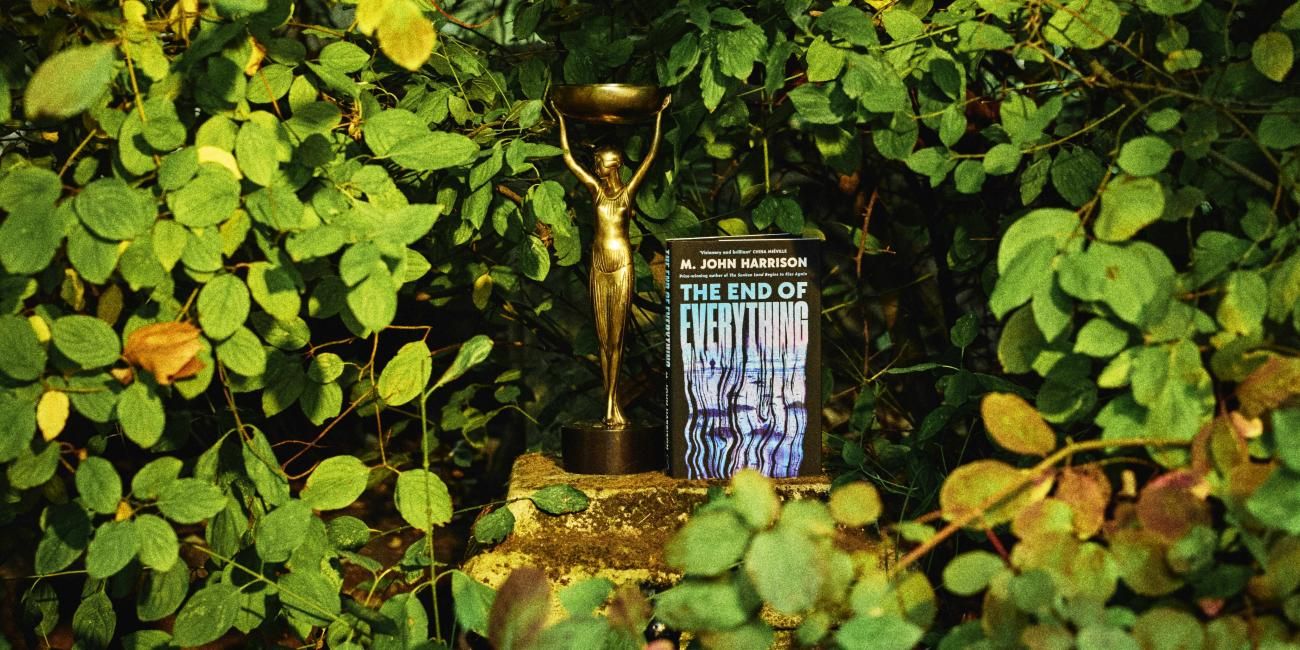
- Photo credits: hero © David Parry for Booker Prize Foundation — Harrison at the shortlist readings, Southbank Centre, November 8, 2026, the day before the win (no ceremony photograph is used; none was available). Portrait © Hugo Glendinning. Jacket and trophy still life via The Booker Prizes
- Video: "Kathryn Hunter reads from The End of Everything" — The Booker Prizes, official YouTube channel (embed verified at publication)