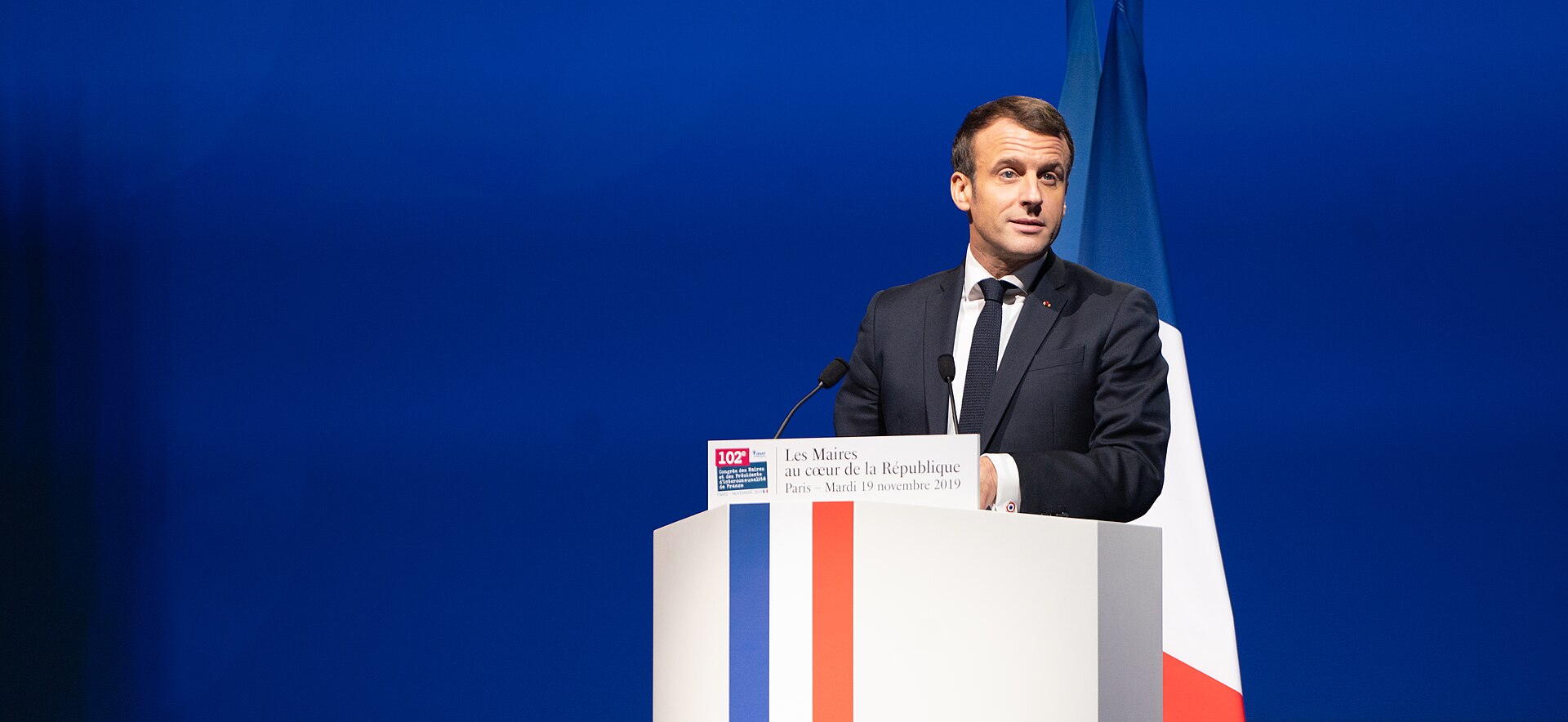

President Emmanuel Macron has refused the resignation of his interior minister, Laurent Nuñez, keeping the man in charge of France's police in his post as Paris and the country count the cost of its worst outbreak of unrest in years. The Élysée announced the decision on Monday, two days after nationwide protests over the cost of living and the state of public services drew more than half a million people into the streets and, in several cities, tipped into arson, looting and clashes with police.
Nuñez had offered to resign after acknowledging a lack of anticipation in the way police were deployed for Saturday's demonstrations, according to reporting by Le Monde carried in live coverage on Monday. Macron instead instructed him to stay and to implement new strategies against the rioters the government calls casseurs — breakers. Prime Minister Sébastien Lecornu was due to chair a crisis meeting on the damage, insurance questions and the judicial follow-up to the weekend.
The decision means Macron begins the week backing his interior minister rather than replacing him, at a moment when the government is trying to separate two things it insists are different: a vast, mostly peaceful protest movement with grievances the president himself has called legitimate, and the violent fringe that used the marches as cover to attack public buildings and shops.
How the weekend unfolded
Saturday's mobilisation marked the convergence of a month-long student movement — begun over school conditions, resources and teacher shortages — with broader anger over rising living costs and declining public services. Students, trade unions and Yellow Vest activists marched together in dozens of cities. The Interior Ministry put turnout at about 550,000 people nationwide, including some 110,000 in Paris; the CGT union estimated the national figure at about 800,000.
Most of those people demonstrated peacefully. But in several cities the day ended in destruction. Fire severely damaged the 19th-century town hall in Limoges, where the clock tower collapsed in the blaze — an image that revived memories of the 2019 fire at Notre-Dame Cathedral. Limoges Mayor Guillaume Guerin told Reuters there had been, in his words, a clear and premeditated intention to burn the building, said the people inside had feared for their lives, and complained that too few national police officers had been deployed to his city. He threatened to resign if Limoges did not receive the funds needed to repair the town hall.
Elsewhere, masked groups forced their way into city halls in Marseille and Lille, a tourism office was set ablaze in Lyon, and a masked mob invaded the residence of the local prefect in Bordeaux. Luxury boutiques and supermarkets were looted in Paris and other cities. French retailer Carrefour's chief executive, Alexandre Bompard, told broadcaster BFMTV that 50 of the company's shops had been damaged, including 20 that were looted, with losses running into tens of millions of euros.
The human toll mounted through Sunday. Police made about 2,400 arrests across France, and nearly 1,000 police officers and gendarmes were injured, Nuñez said. One protester died on Saturday after suffering a cardiac arrest during demonstrations in Paris. Fresh clashes broke out again on Sunday afternoon at Place de la République in Paris, where police fired tear gas and protesters set fire to piles of bicycles; a Reuters witness estimated several hundred protesters in the area. A Dutch visitor, Tije De Boer, described evacuating his hotel at the square with his children and called the scene around it “like a war zone.”
Macron's address, and the politics around it
Macron had already addressed the nation on television on Sunday evening, in the most solemn format a French president owns. “Looking at these images, we have all asked ourselves: What was going through their minds? How can French people do this to France?” he said. “Nothing justifies it, nothing explains it, nothing excuses it. Tonight, we all feel anger and shame.” He promised a review of how authorities had prepared for the protests and said those who attacked prefectures, businesses and town halls would be prosecuted and punished — a message he had first posted on X late on Saturday.
At the same time, Macron was careful to say that peaceful protesters had legitimate grievances and should not be confused with those seeking to wreak havoc. He stopped short of declaring a state of emergency, as some right-wing politicians had demanded, but said the government would take steps allowing prefects to ban protests where necessary to protect public buildings and local businesses. Economy Minister Roland Lescure pledged support for business owners who suffered losses, saying those who broke things would pay, repair the damage and be held accountable.
The opposition pulled in opposite directions. Marine Le Pen of the National Rally, the frontrunner ahead of next year's presidential campaign, called for calm, saying France must not become accustomed to images of the country being battered and ransacked. “Violence is not an opinion. Destruction is not a form of expression. And chaos cannot serve as a project for France,” she said in a video address. Jean-Luc Mélenchon, the hard-left France Unbowed presidential candidate, argued instead that Macron needed to respond to the demands of the protesting secondary-school students — the movement where the unrest began.
Why this is hard to fix quickly
The grievances underneath the weekend are financial as much as political. France's public debt reached approximately €3.6 trillion, or 119 percent of GDP, in the second quarter, with this year's deficit projected at 5.4 percent of GDP, and the minority government is attempting to deliver some €54 billion of fiscal savings in its 2027 budget. High fuel and energy prices are intensifying public anger at precisely the moment rising borrowing costs — French 10-year yields have approached 5 percent — make additional government support harder to finance. That arithmetic is why a protest that started in schools could grow, within a month, into a national argument about wages, pensions, fuel and the condition of public services.
Macron is due to leave office in 2027 after a decade in power increasingly defined by social discontent, a weak economy and mounting debt. Saturday's turnout — comparable in spirit, if not yet in duration, to the Yellow Vest protests of 2018 and 2019 — suggests the discontent has found a new vehicle just months before a presidential campaign begins in earnest.
For now, the government's week starts with clean-up crews in cities from Lille in the north to Marseille in the south and from Strasbourg in the east to Bordeaux in the south-west, an interior minister kept in post on the president's orders, and a crisis meeting charged with pricing the damage. Whether keeping Nuñez steadies the response or simply attaches the government's name more firmly to Saturday's failures is the question French politics will argue over next — and the students whose school protests started all of this have yet to say whether they consider any of it an answer.
More from Previously: news coverage and sports coverage.
Sources · 5 sources
- Reuters via The Business Standard — Macron urges calm as France counts cost of worst unrest in years
- JAM Radio — France protests live: Macron rejects Nuñez resignation
- France in English — France grapples with widespread violent protests over rising living costs
- Associated Press reporting via Daily Caller — half a million flood the streets of France
- DailyForex — Forex Today 19/10: French debt and unrest weigh on euro