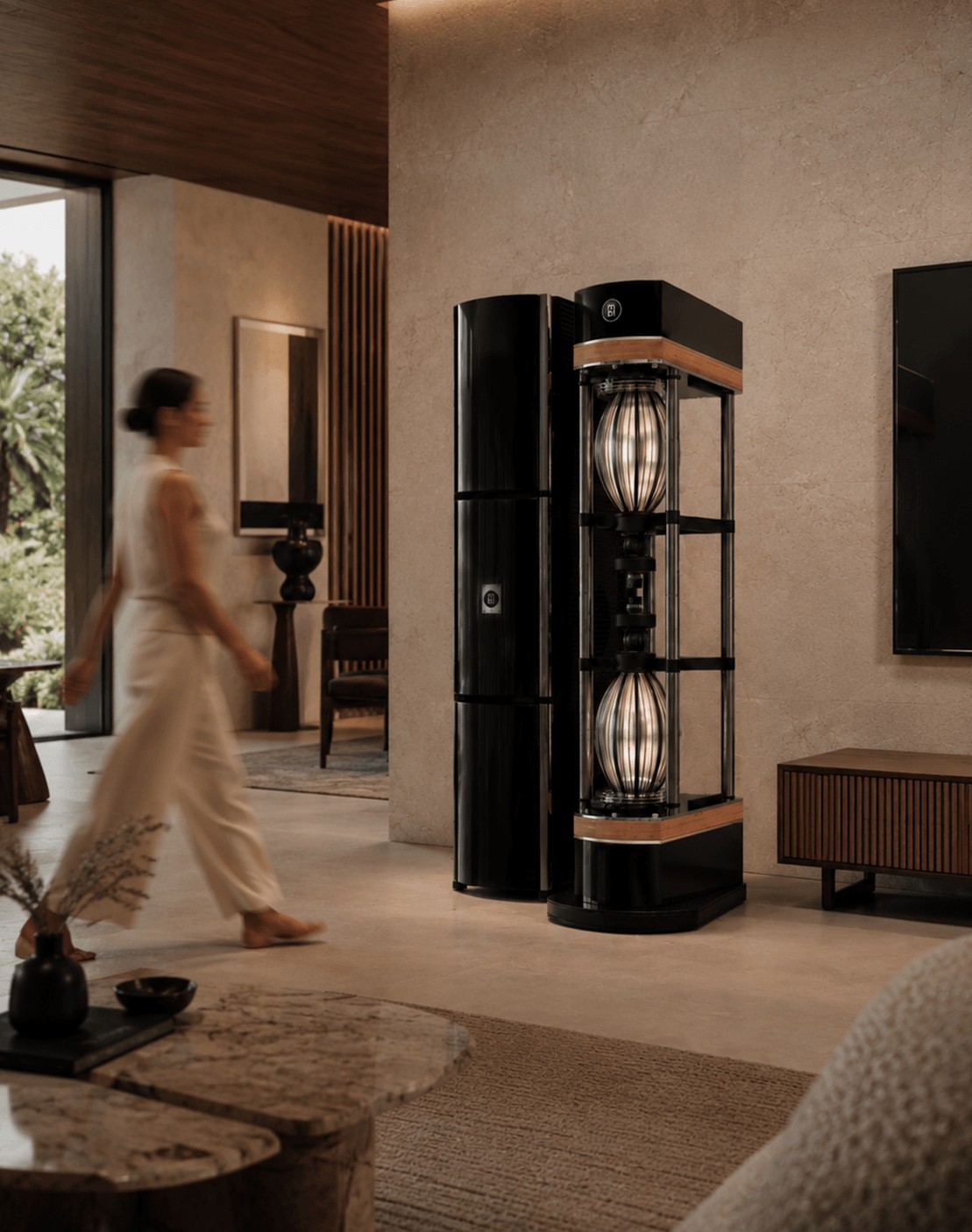
There is no front to an MBL. Walk around the 101 X-Treme MKIII while it plays and the music never turns its back on you — the strings stay where they were, the room stays lit, and the sweet spot turns out to be everywhere you happen to be standing. That has been Berlin’s most expensive argument in audio since 1979, and the MKIII, unveiled this year at HIGH END Vienna, is its third and strongest draft: $444,900 a pair at LMC Home Entertainment, the maker’s dealer in Scottsdale, against MBL’s own 2026 list price of €385,000 a pair in piano black. The Absolute Sound’s Vienna report, which rounded the figure to $400k, named it the Best Soundstage of the show.
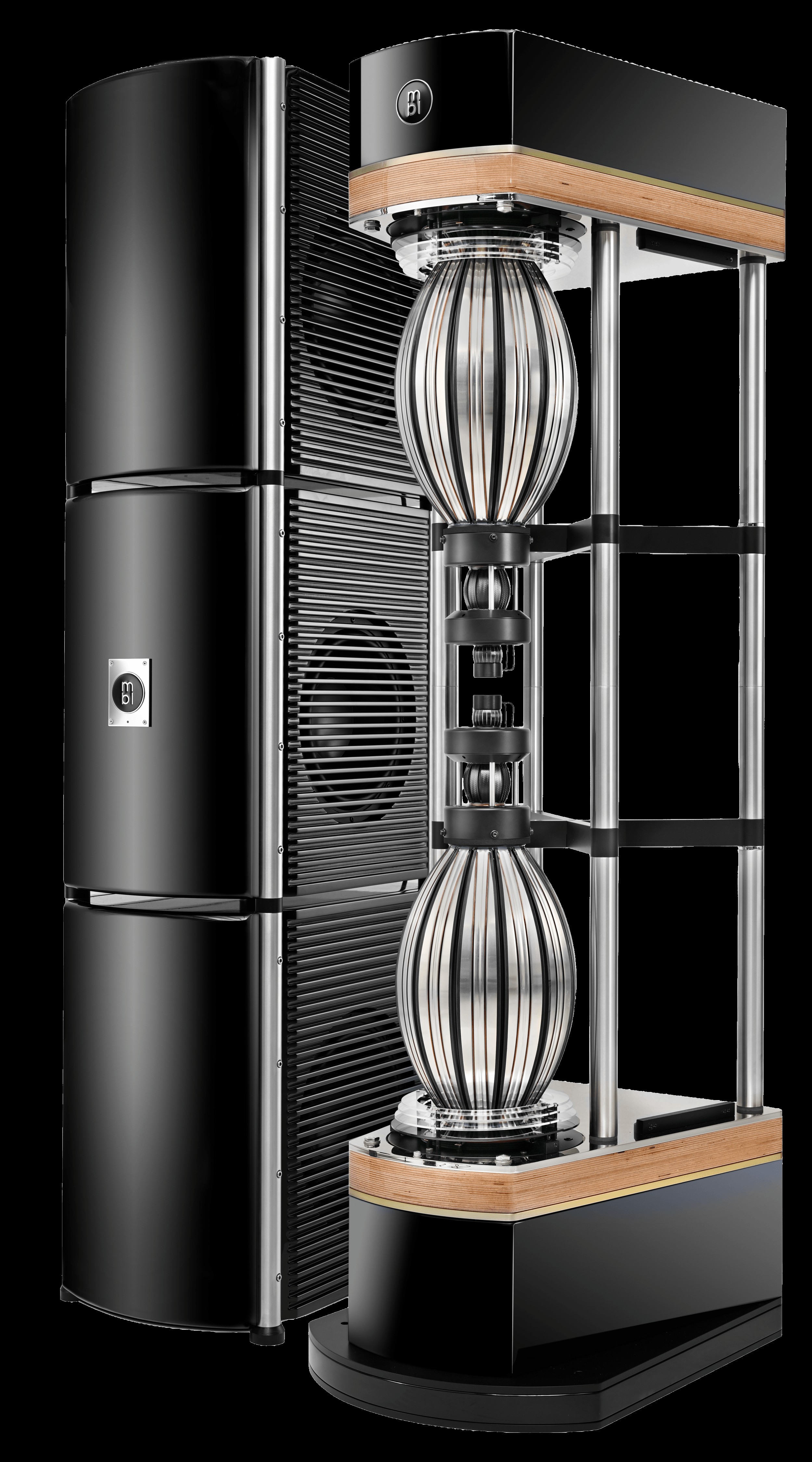
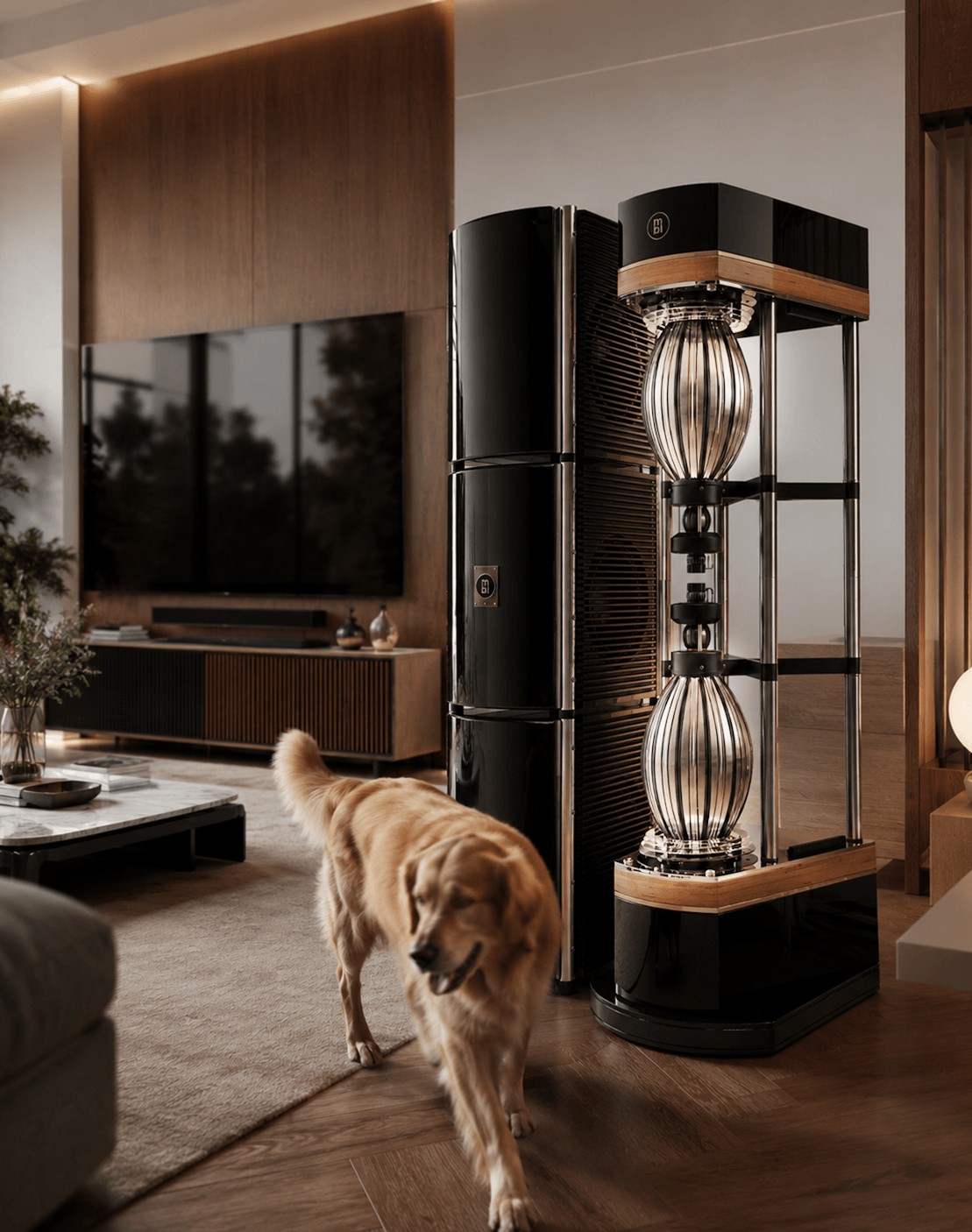
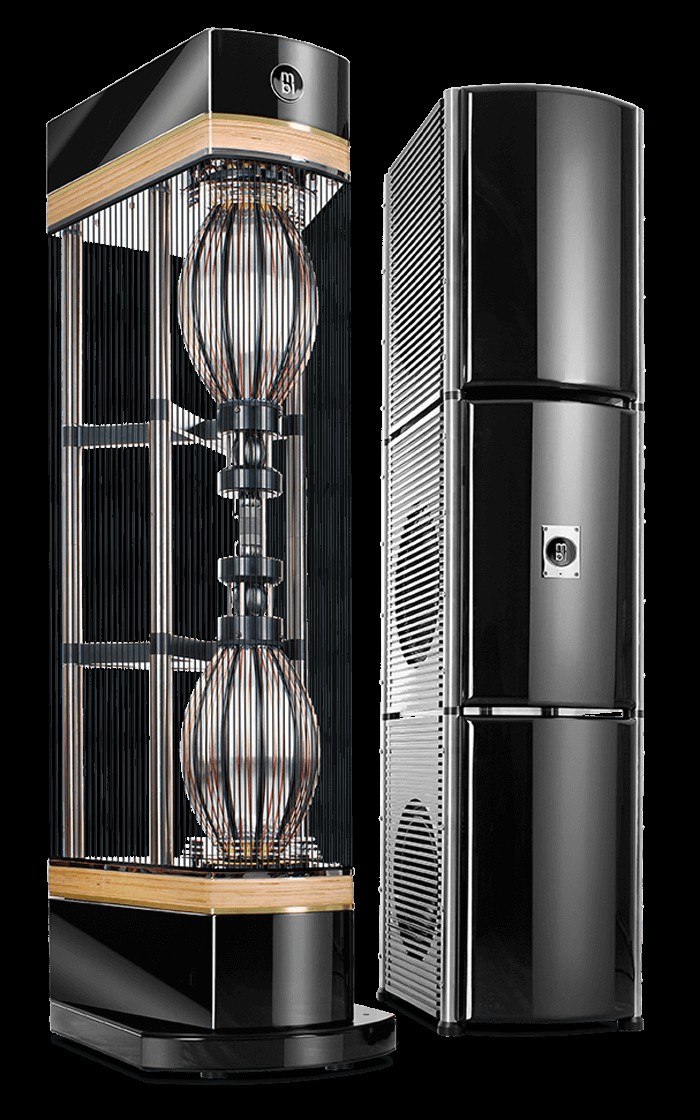
Four towers make a system. Two of them carry the Radialstrahler drivers — the glowing metal melons that made MBL famous — and two are active subwoofer columns standing beside them. The whole arrangement stands a little over six feet tall and weighs 984 kilograms: 2,170 pounds of loudspeaker, before you have played a single note.
A speaker with no front
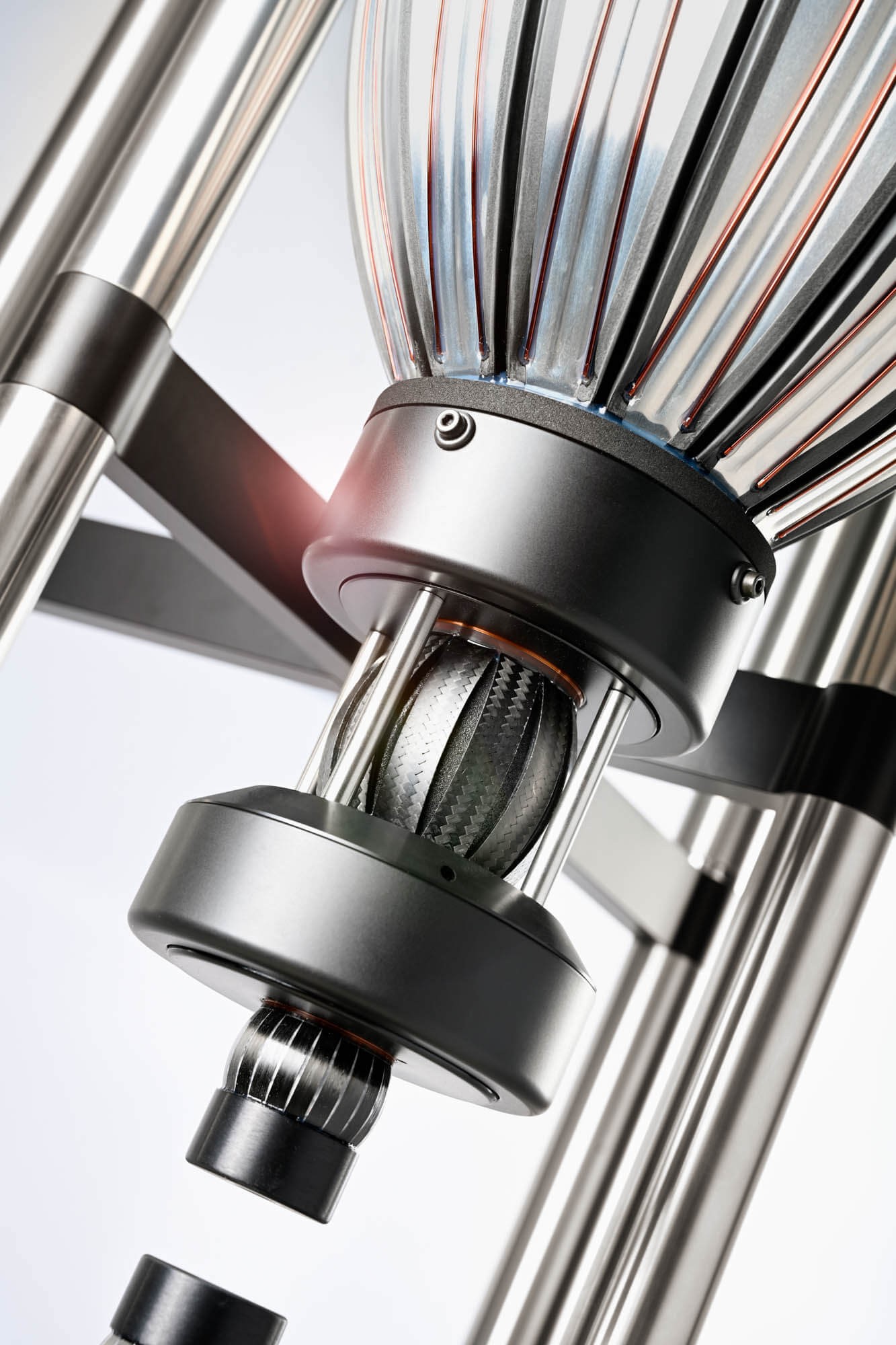
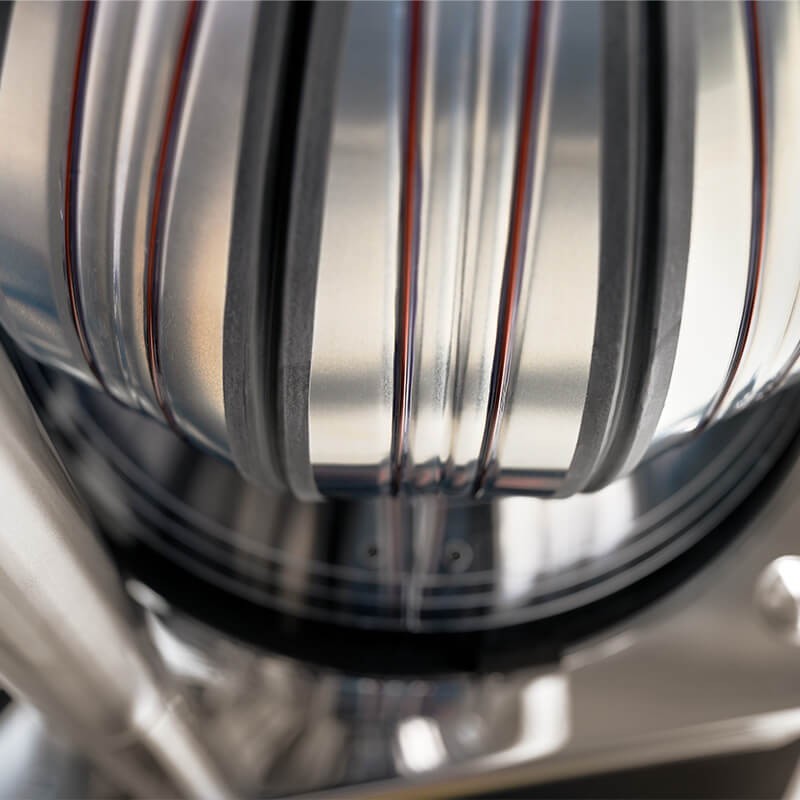
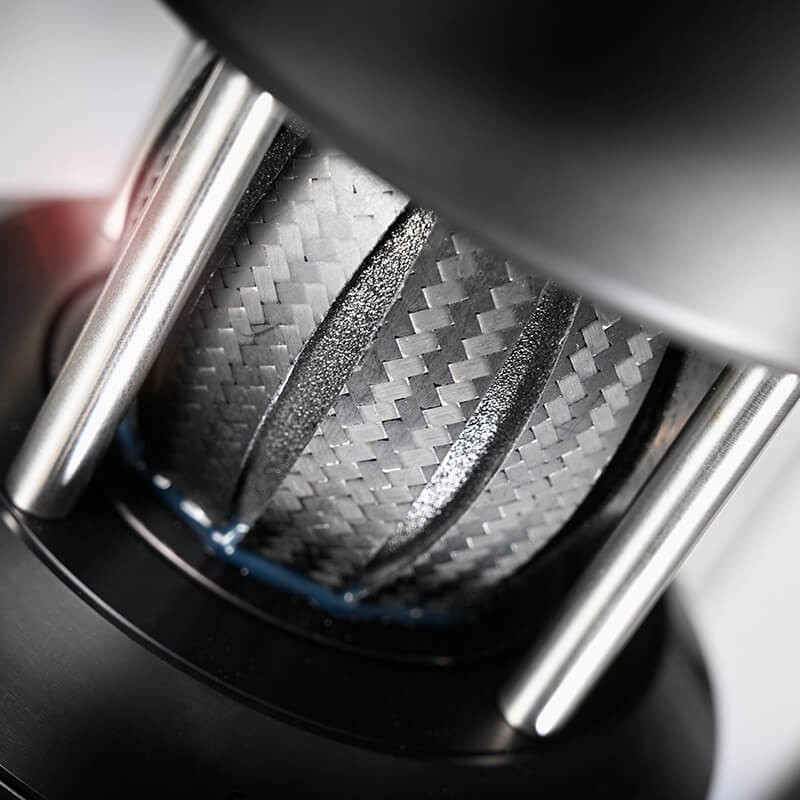
A conventional driver is a piston in a box, and it beams sound the way a flashlight beams light — bright in one seat, dim in every other. MBL’s answer, invented by co-founder Wolfgang Meletzky, throws the box away. Each Radialstrahler driver is a sphere of thin petals — carbon fiber for the HT37 tweeter, woven carbon fiber for the MT50 midrange, a copper-aluminum-magnesium alloy for the TT100 woofer — driven from its base so the petals flex outward and push sound in a full 360 degrees, the way a real instrument fills a room.
Each tower carries two complete sets of those drivers, stacked in a mirror array with an ambience tweeter riding on top, so the sound launches from a tall, even column instead of a point. Nothing about it is hidden: the melons sit exposed in an open frame of polished posts, part instrument, part sculpture, and entirely unlike anything else on a showroom floor.
What the money buys
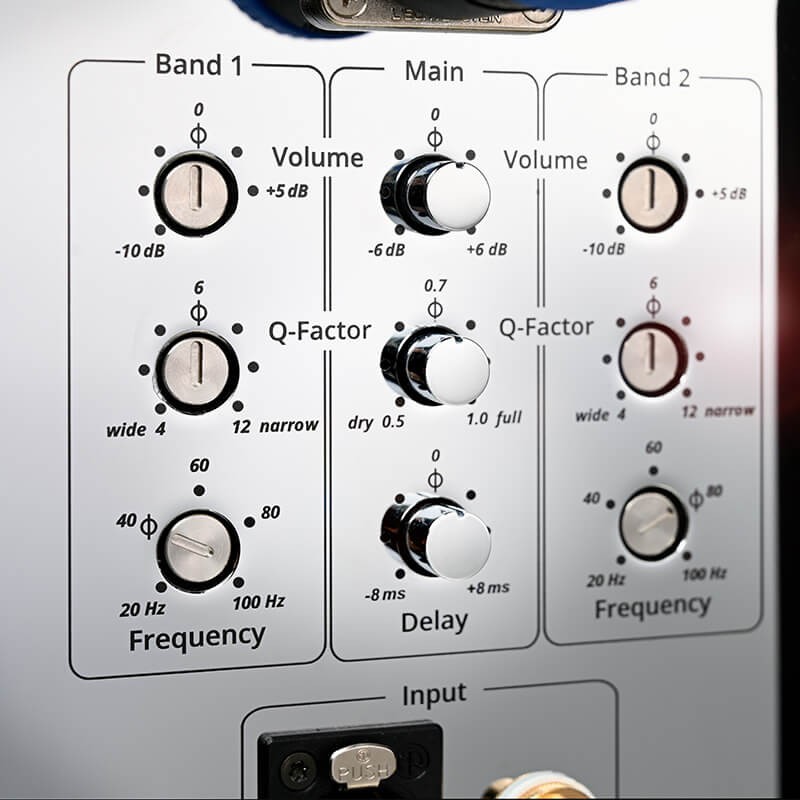
Start with the bass, because that is what changed. Each subwoofer tower packs six 12-inch aluminum-cone drivers in a push-push arrangement across three cabinets, driven by its own built-in amplifier — and the MKIII’s headline upgrade is a newly developed amplifier module for those towers: lower idle power draw, lower distortion, a better signal-to-noise ratio, and a parametric equalizer to tune the bottom end to whatever room the system lands in. The result plays down to 17 Hz, below the lowest note most music ever asks for.
Then there is the making of it. MBL employs about fifty people; the offices are in Berlin and the works sit in Eberswalde, thirty miles out, where the towers are built and finished by hand. Piano black with chrome is the standard finish at €385,000; piano white runs €395,000. Each channel is rated to handle 2 x 900 watts, and the full ceremonial setup — four of MBL’s 9011 monoblock amplifiers doing the driving — pushes a complete system, as Hi-Fi+ put it after hearing the X-Treme in London, to “north of half a million in any currency.”
What it sounds like
The reference verdict came in Vienna, where the MKIII debuted: The Absolute Sound wrote that it “literally blends the acoustic of your room with the acoustic of the room in which the recording was made,” and gave it the show’s Best Soundstage honor. That is a family trait by now. Reviewing the MKII in Munich, the magazine called it Best of Show — “the best in the deep bass, the most boxlessly open in staging, the most delicate in the treble, the most three dimensional in imaging” — and signed off with a line no rival has managed to take back: “The winner and still champion.” The magazine’s editor, Robert Harley, hearing the same system a year earlier, called it “truly a one-of-a-kind transducer” that “does everything spectacularly well.”
What those sentences describe, in plain terms, is a speaker that does not sound like a speaker. There is no box to hear and no beam to sit in — just a room that behaves as if the musicians had been booked into it.
Since 1979
The initials are the founders: Meletzky, Beinecke, Lehnhardt — three Berlin engineers who started the company in 1979 with Meletzky’s radial design as the founding product. For more than forty years the chief engineer was Jürgen Reis, who refined the Radialstrahler into the X-Treme line: the original 101 X-Treme arrived in 2007, and the MKII followed in 2022 with powered, DSP-controlled subwoofer towers, taking The Absolute Sound’s Overall Product of the Year for 2023. Reis has since left the company, which makes the MKIII the first flagship of whatever MBL becomes next. Judging by Vienna, the hand is steady.
Who buys a system like this? People with a room built for listening and the patience for a 2,170-pound installation — collectors for whom the system is the room’s centerpiece, not its furniture. At $444,900 a pair in the United States and €385,000 on the maker’s own list, the 101 X-Treme MKIII is not really competing with other speakers. It is competing with boats, watches and second cars — and it makes its case the moment the first note arrives from everywhere at once.
Sources · 7 sources
- MBL — Radialstrahler System 101 X-Treme MKIII: manufacturer specifications and Suggested Retail Price List 2026 (mbl.de)
- LMC Home Entertainment — MBL 101 X-Treme MKIII product listing, $444,900 (lmche.com)
- The Absolute Sound — HIGH END Vienna 2026 show report; High End Munich loudspeaker reports, 2024–2025
- Hi-Fi+ — MBL 101 X-Treme review, KJ West One, London
- Aria Audio — MBL 101 X-Treme MKIII technical specifications (aria-audio.com)
- Stereo Times — “An Interview with MBL’s Christian Hermeling”
- Positive Feedback — MBL company profile: Berlin offices and the Eberswalde factory (Issue 73)