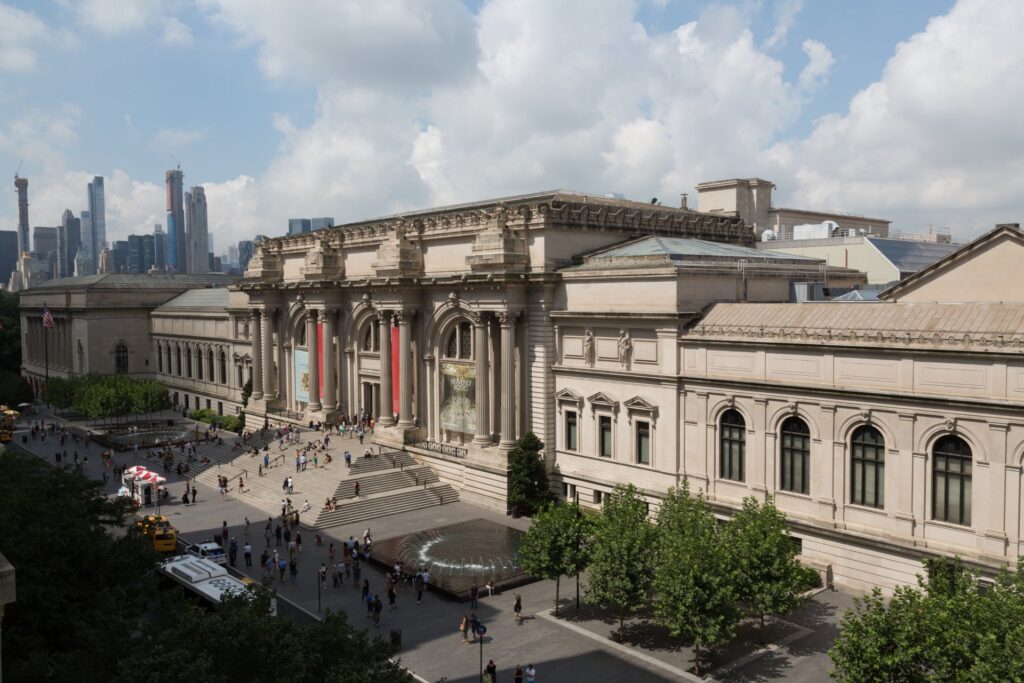
MONDAY, OCTOBER 5, 2026 — The most important word in the show that opened at the Met on Sunday is the first one. Krasner and Pollock: Past Continuous — which opened October 4 at the Met Fifth Avenue and runs through January 31, 2027 — gives Lee Krasner top billing, and that ordering is the entire thesis. After decades of being introduced as Jackson Pollock’s wife, Krasner is finally getting the equal-billing retrospective, at the biggest museum in America, with her work traced across a full career and her name on the door first.
The scale alone makes this an event: more than 120 paintings, works on paper, and ephemera drawn from over 80 U.S. and international lenders. It is the first major New York presentation devoted to either artist in more than 20 years — and the first at the Met itself. The dates are confirmed by the Pollock-Krasner Foundation, and the announcement carries the weight of the museum’s full institutional push: the exhibition is made possible by Kenneth C. Griffin and Griffin Catalyst, Marina Kellen French, and the Barrie A. and Deedee Wigmore Foundation.
Parallel lives, separate artists
Here’s what the show is, and what it pointedly isn’t. The exhibition charts the full arc of both careers in parallel, examining the distinct yet connected practices of two artists who were peers and life partners — but it does not present them as a single artistic identity. The lazy version of this story would have been the couple-who-changed-art narrative, with Krasner as the supporting player in Pollock’s legend. The Met is explicitly refusing that version. Instead, the parallel format reassesses their related yet separate approaches, each considered on their own terms.
The biographical facts are what they are, and the museum states them plainly: Krasner (1908–1984) and Pollock (1912–1956) were emerging artists in New York when they met on the occasion of a 1942 exhibition organized by the artist John Graham. They married in 1945 and moved to Springs, Long Island, where they remained entwined personally, artistically, and professionally until Pollock’s death in 1956. Pollock’s life’s work had secured his legacy by then — while the nearly three decades Krasner survived him marked some of the most transformative years of her career. That second fact is the one the exhibition is built to correct: the years after Pollock’s death weren’t a coda. They were some of her best work.
The subtitle itself belongs to Krasner: Past Continuous is the title of a 1976 painting by her, and the exhibition traces parallel lives and practices — first forged by lived experience, then shadowed by memory. In a statement quoted in the announcement, Met director Max Hollein said, “By considering each artist on their own terms while also foregrounding their consequential relationship, the exhibition situates Krasner’s and Pollock’s work within a broader cultural and artistic context.” The rest of Hollein’s statement is the kicker — it affirms them as artists whose work, he said, “continues to shape and inspire future generations.” Plural. Equal.
Why now, why this matters
The art world has been moving toward this for years, and the numbers tell the story. Krasner scholarship has surged; her market has surged with it; and a generation of viewers has grown up knowing her as a major abstract expressionist rather than a footnote. But the museum world moves slowly, and a major New York survey of either artist hadn’t happened in over two decades. Introducing their work to a new generation — the museum’s stated goal — means introducing them correctly: not as a legend and his widow, but as two distinct practices that happened to run alongside each other, with exchanges between them that the show examines rather than mythologizes.
For visitors, there’s a direct line from the temporary exhibition to the museum’s permanent holdings: the Met’s collection includes Pollock’s Autumn Rhythm: Number 30, 1950, one of the canonical drip paintings, so the show’s account of Pollock’s practice can be checked against the museum’s own walls. That connection — the blockbuster and the collection talking to each other — is one of the Met’s quiet strengths, and it’s on full display this season.
The Gilded Age, drawn
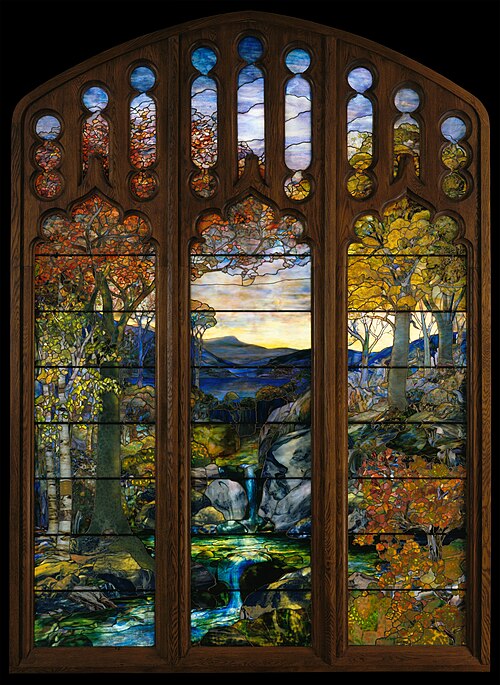
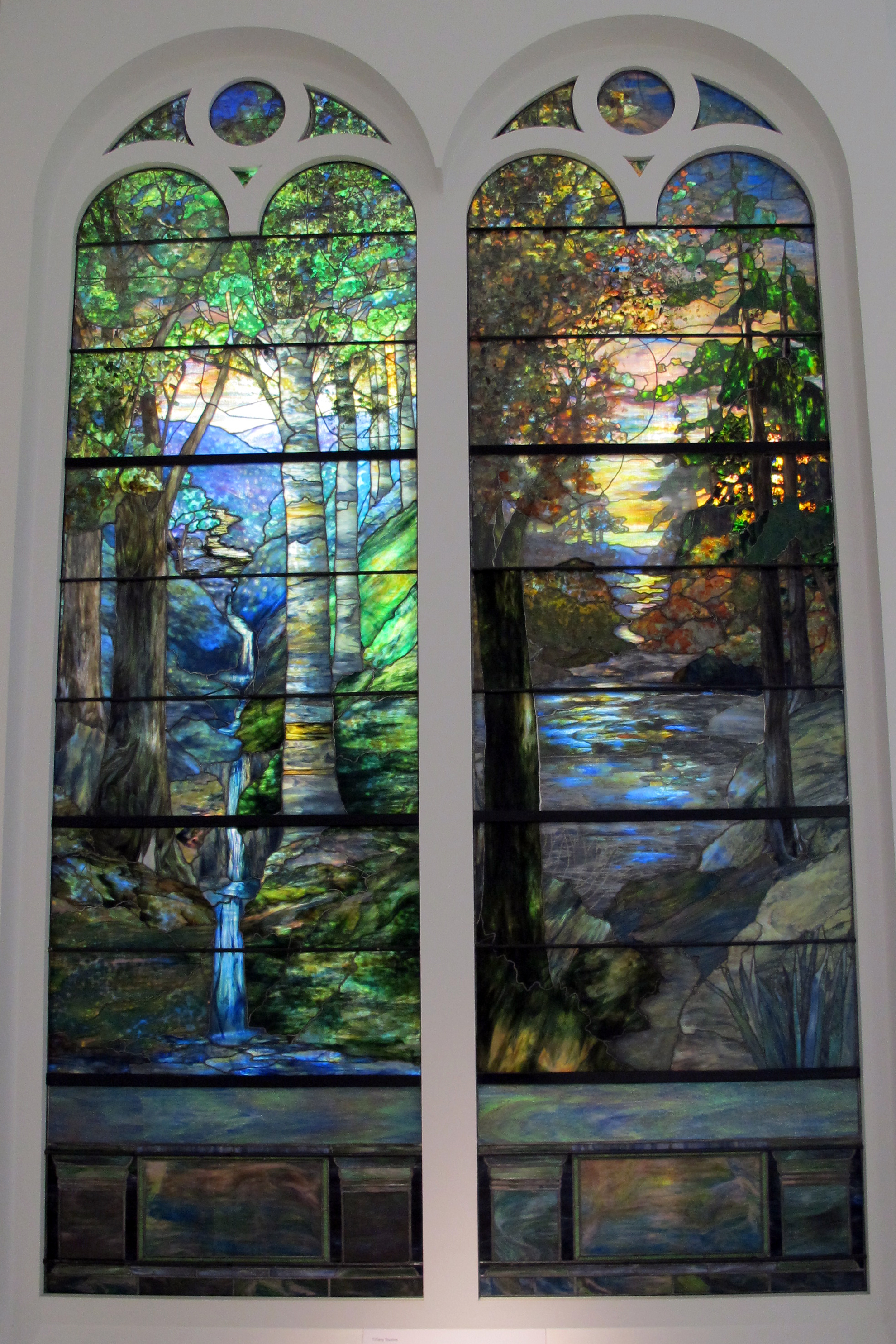
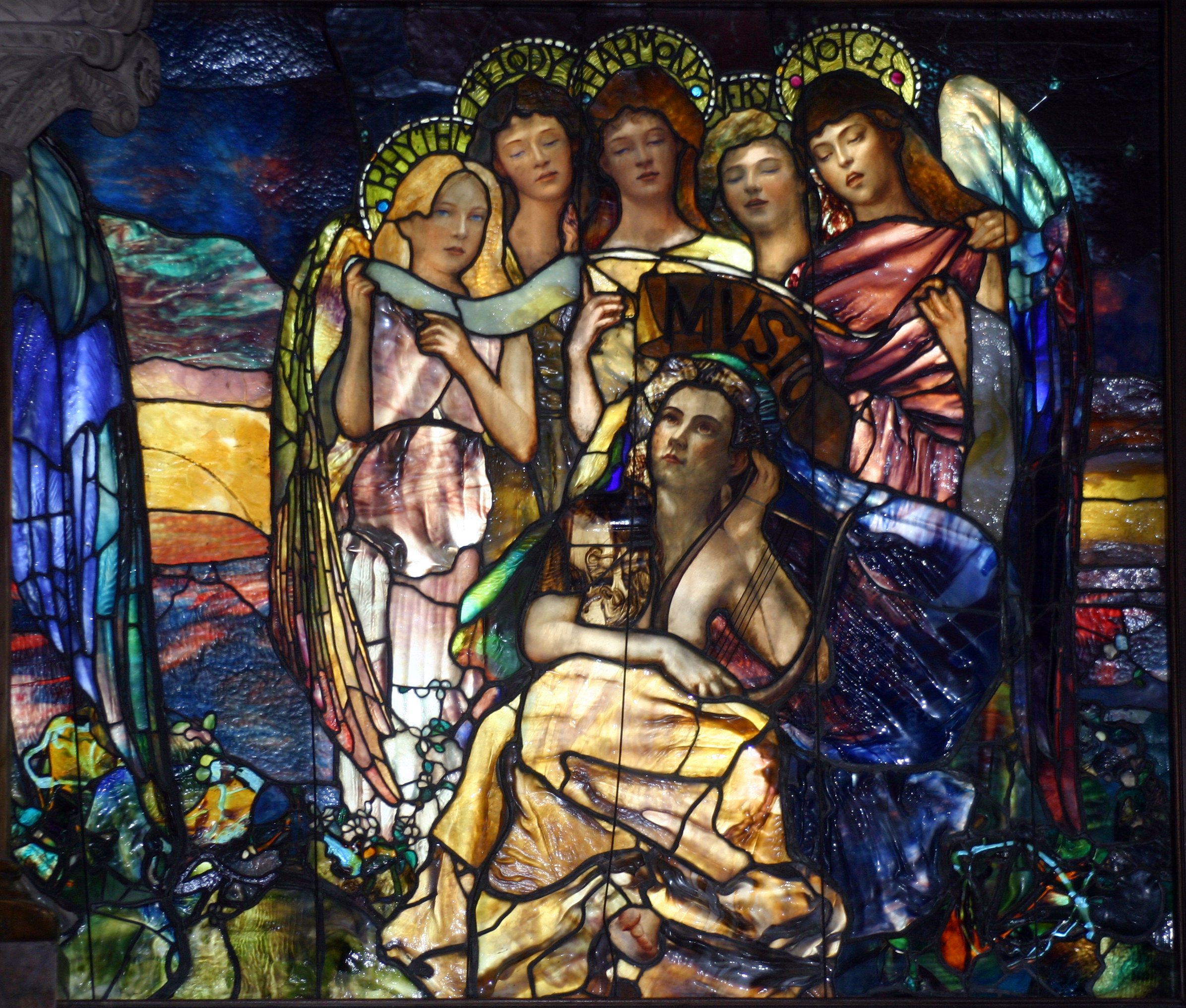
And if abstract expressionism isn’t your October, the Met has the other end of the American century coming. On October 22, Designing the Gilded Age: Drawings from the Studios of Louis C. Tiffany opens at the Met Fifth Avenue, running through February 7, 2027 — the first major exhibition devoted specifically to the design drawings behind Louis Comfort Tiffany’s celebrated creations.
Nearly 120 works, drawn primarily from the Met’s own collection with select key loans, examine how some of the most famous works of American decorative art actually got made — the fragile drawings behind the glowing glass. The centerpiece story is a detective story: a major loan from the Chrysler Museum of Art reunites its monumental stained-glass window Woman in a Pergola with Wisteria (1911) with the original wisteria transoms designed for it. The transoms were recently discovered in a private home in Arizona, making possible the ensemble’s first presentation together in at least half a century. The show is made possible by Tiffany & Co. — a sentence that would make a wonderful exhibit label all by itself.
What links the two shows is an institutional point of view: both take a craft usually treated as secondary — the parallel career of the wife, the preparatory drawings of the glassmaker — and put it at the center of the story. That’s not an accident. It’s a museum deciding what counts as the main event.
Two exhibitions, two different centuries of American art, one season. The Met’s fall is doing something genuinely interesting: looking at the things art history pushed to the margins — the woman’s career, the designer’s sketchbook — and saying these were the story all along. For a museum founded in 1870 with 5,000 years of art in its care, that’s not a small move. For Lee Krasner, whose name is finally first on the door, it’s about fifty years overdue.
For more culture coverage, see our ComplexCon 10th anniversary wrap-up and the fall festivals verdict.
Sources
- The Metropolitan Museum To Present Jackson Pollock and Lee Krasner Exhibit The Silo (Met press release) · Jul 2026
- Major Lee Krasner and Jackson Pollock show to open at the Met Artsy
- Metropolitan Museum of Art opens Krasner and Pollock show on 4 October ad-hoc-news · Oct 2026
- designboom radar: exhibitions to see around the world this october designboom
- The Met to Present the First Major Exhibition Dedicated to the Design Drawings for Louis C. Tiffany’s Celebrated Gilded Age Creations The Metropolitan Museum of Art · Jul 28, 2026