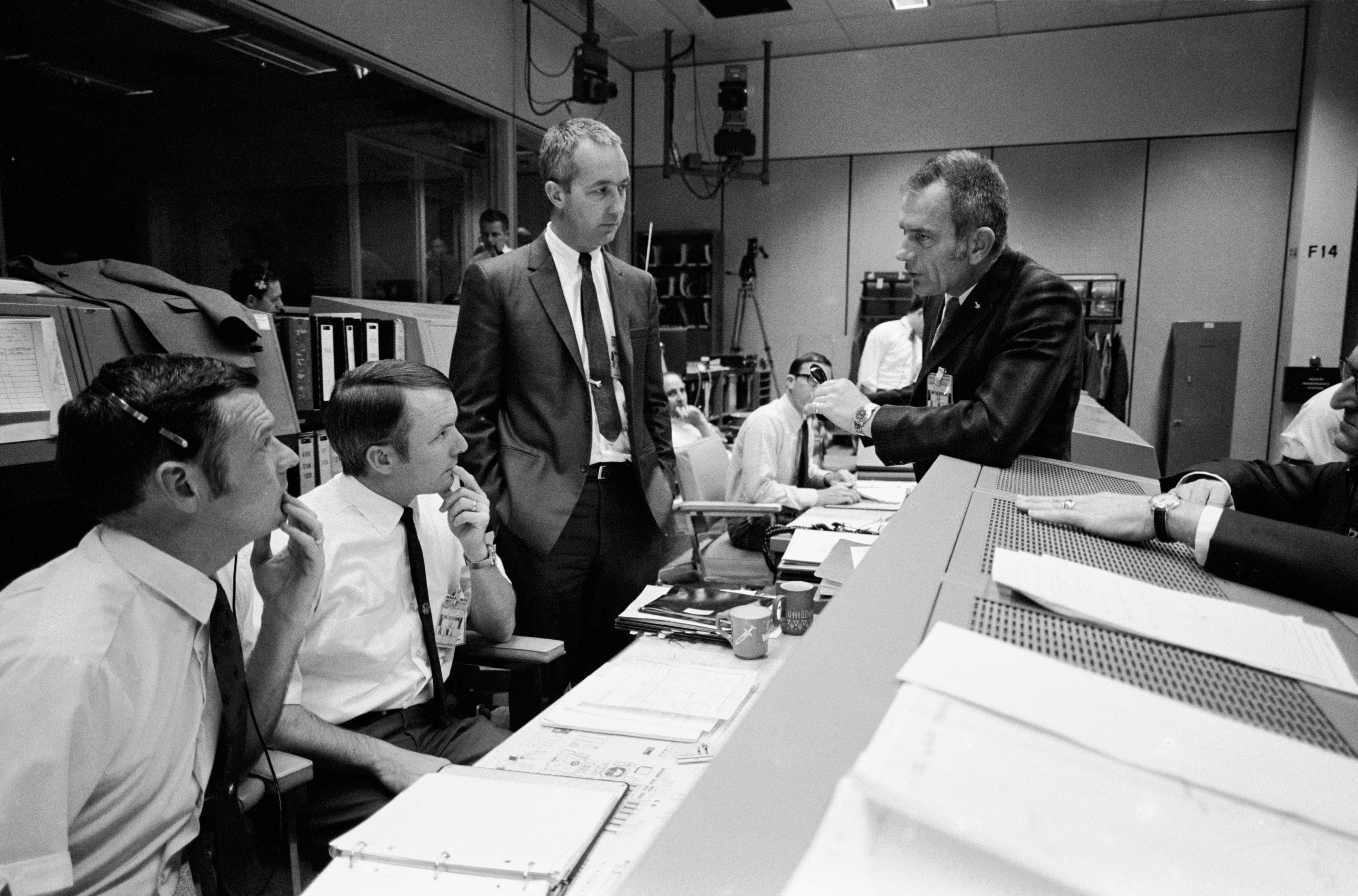
Sunday, October 4, 2026 — Milton “Milt” Windler, one of the four leaders of Mission Control who directed the round-the-clock effort to bring the Apollo 13 astronauts home in 1970, died Thursday at 94, surrounded by his family. He was “Maroon Flight” — the calm voice on the third shift the night America first sent humans beyond Earth orbit, and one of the steadiest hands in the room during NASA’s finest hour.
The week the world held its breath
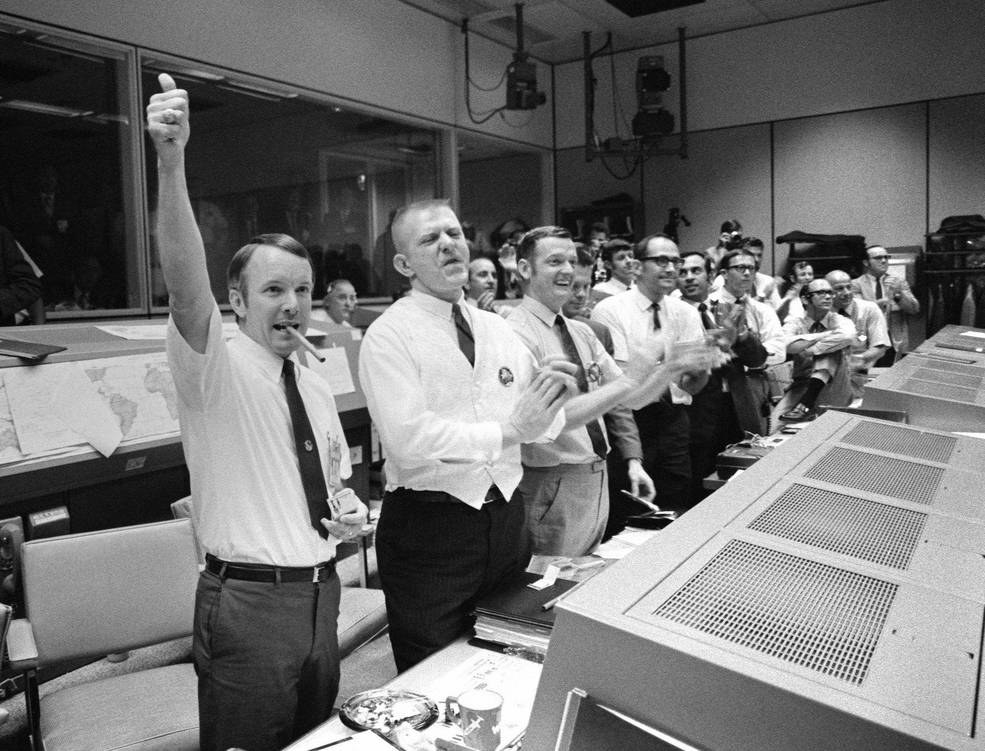
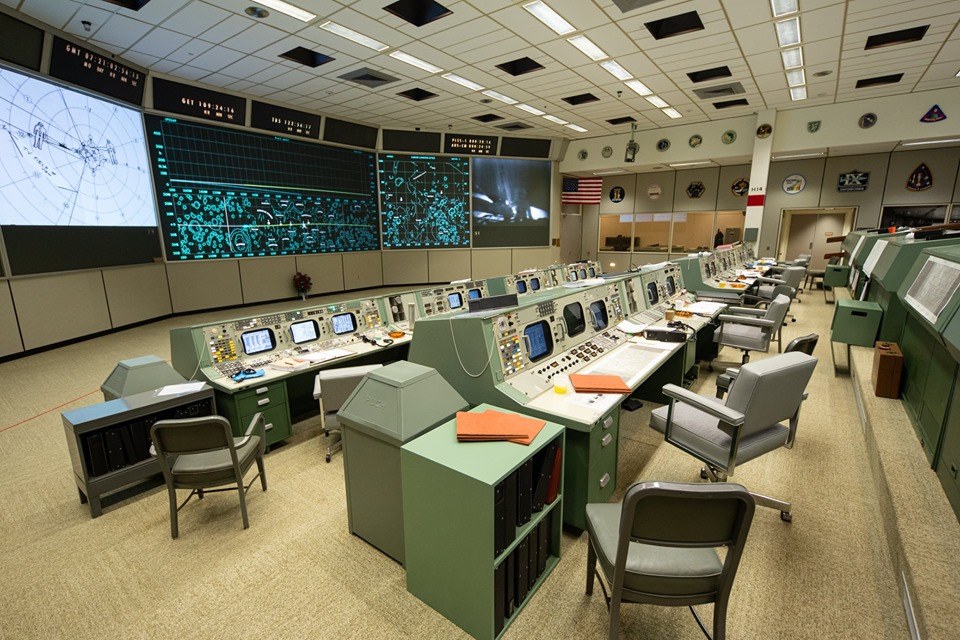
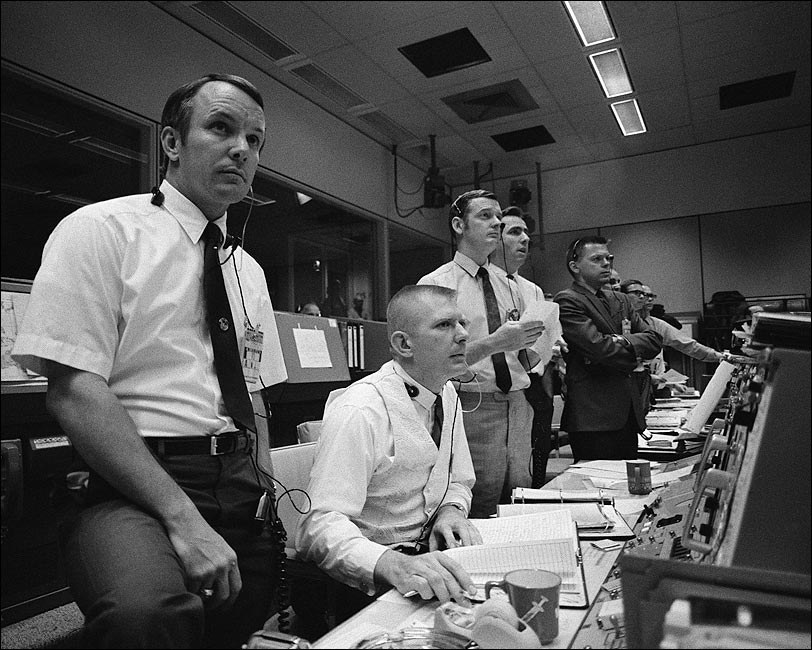
In April 1970, an oxygen tank exploded aboard Apollo 13 two days into the mission, crippling the service module and turning a routine lunar flight into a life-or-death improvisation 200,000 miles from Earth. What followed was four days of around-the-clock problem-solving inside Houston’s Mission Operations Control Room. Windler was one of the four flight directors — alongside Gene Kranz, Glynn Lunney and Gerry Griffin — who led the rotating shifts of controllers that re-engineered the spacecraft on the fly: the carbon-dioxide “mailbox” cobbled from spare parts, the improvised power-up sequence, the manual course corrections that threaded the crew home.
On April 17, the crew splashed down safely in the Pacific. Days later, President Richard M. Nixon presented all four flight directors with the Presidential Medal of Freedom — the nation’s highest civilian honor — for bringing the astronauts back alive. It remains the defining rescue in the history of human spaceflight, and Windler was in the room for all of it.
From Hampton to Houston
Windler was born Jan. 10, 1932, in Hampton, Virginia. He graduated from Virginia Tech in 1954 with a degree in aeronautical engineering, served in the Air Force after ROTC, and worked for the National Advisory Committee for Aeronautics at Langley — NASA’s predecessor — before joining NASA itself in 1959, during Project Mercury. He worked in the recovery division through the Mercury and Gemini programs, the unglamorous end of the business: getting crews home.
In the months after the Apollo 1 fire, flight operations chief Chris Kraft promoted him to flight director to support Eugene Kranz, who had taken on expanded responsibilities. Windler became the seventh person ever appointed to the role — and one of the first two selected from outside the flight operations team. Each flight director chose a team name, and for a while they were simply colors. His was Maroon Flight.
The third shift that made history
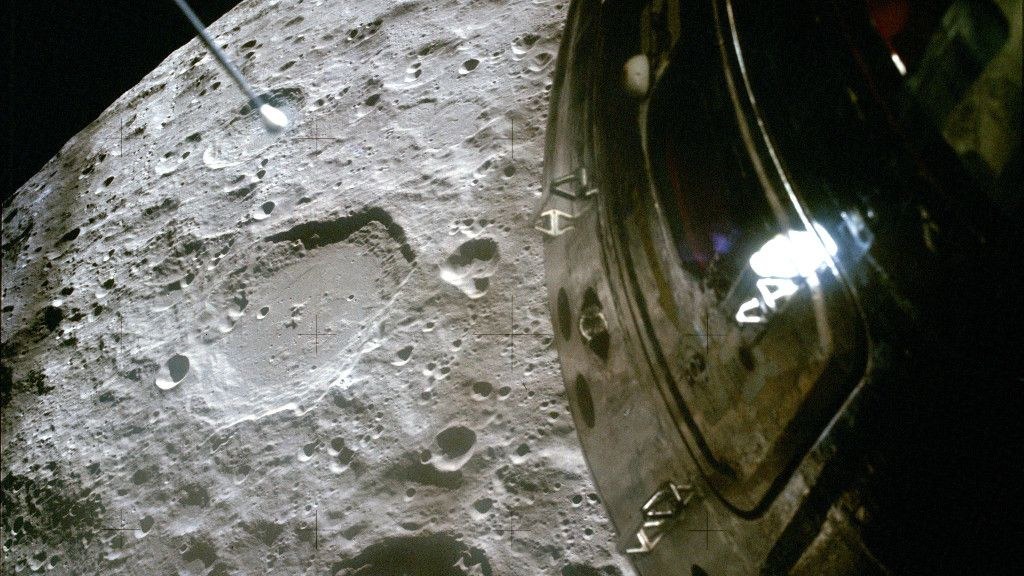
On his first mission at the flight director’s console, Windler drew the third shift — which put him in charge of the control room at the moment Apollo 8’s trans-lunar injection burn fired, sending Frank Borman, Bill Anders and Jim Lovell beyond Earth orbit. They were the first humans to leave it. The burn put the United States ahead of the Soviet Union in the race to circle the moon, and it made Christmas Eve 1968 — when the crew read from Genesis while the gray lunar surface rolled past their window — one of the most-watched broadcasts in history. Windler was 36 years old, and he was running the room.
A résumé written across the program
What followed was a career that reads like a table of contents for the Space Race. Windler served as a flight director for Apollo 8’s first circumlunar flight, Apollo 10’s lunar landing dress rehearsal, the Apollo 11 moon landing, and the Apollo 14 and 15 landings — as well as all three crewed missions to Skylab, America’s first space station. After Apollo, he worked in the Space Shuttle Project Office on Remote Manipulator Systems operations until 1978, and later consulted in private industry on the operations side of what would become the International Space Station. He was a recipient of NASA’s Exceptional Service Medal.
It is hard to overstate the pace. In the span of a few years, the same small group of flight directors went from first orbit to the lunar surface to a crippled spacecraft to a space station — inventing the discipline of mission operations as they went.
“It was not a time for reflection”
Windler said as much himself. In a 2006 oral history interview for the University of North Texas, he described an era that moved too fast for perspective: “Apollo was such a rapid pace that I don’t think people had the chance to think about it very much. It has only become more clear to me later on that we were making history,” he said. “You’d do a mission and then you’d immediately turn around and get ready for another mission.” And then, with characteristic understatement: “It was not [a] time for reflection.”
A memorial service will take place in the coming weeks at the family’s former church in Friendswood, Texas, according to published notices. His era of Mission Control — the vests, the cigars, the slide rules — belongs to history now. But the playbook those flight directors wrote still underwrites every crewed launch, and the work goes on: SpaceX launches 21 satellites from Vandenberg in the early hours of Monday morning.
Sources
- Milt Windler, NASA flight director who helped save Apollo 13, dies at 94 collectSPACE · Oct 3, 2026
- Milton Windler Wikipedia · Oct 2026
- Milt Windler, NASA flight director who helped save Apollo 13, dies at 94 Ars Technica (via Tech News Tube) · Oct 3, 2026