
COLUMBUS, OHIO
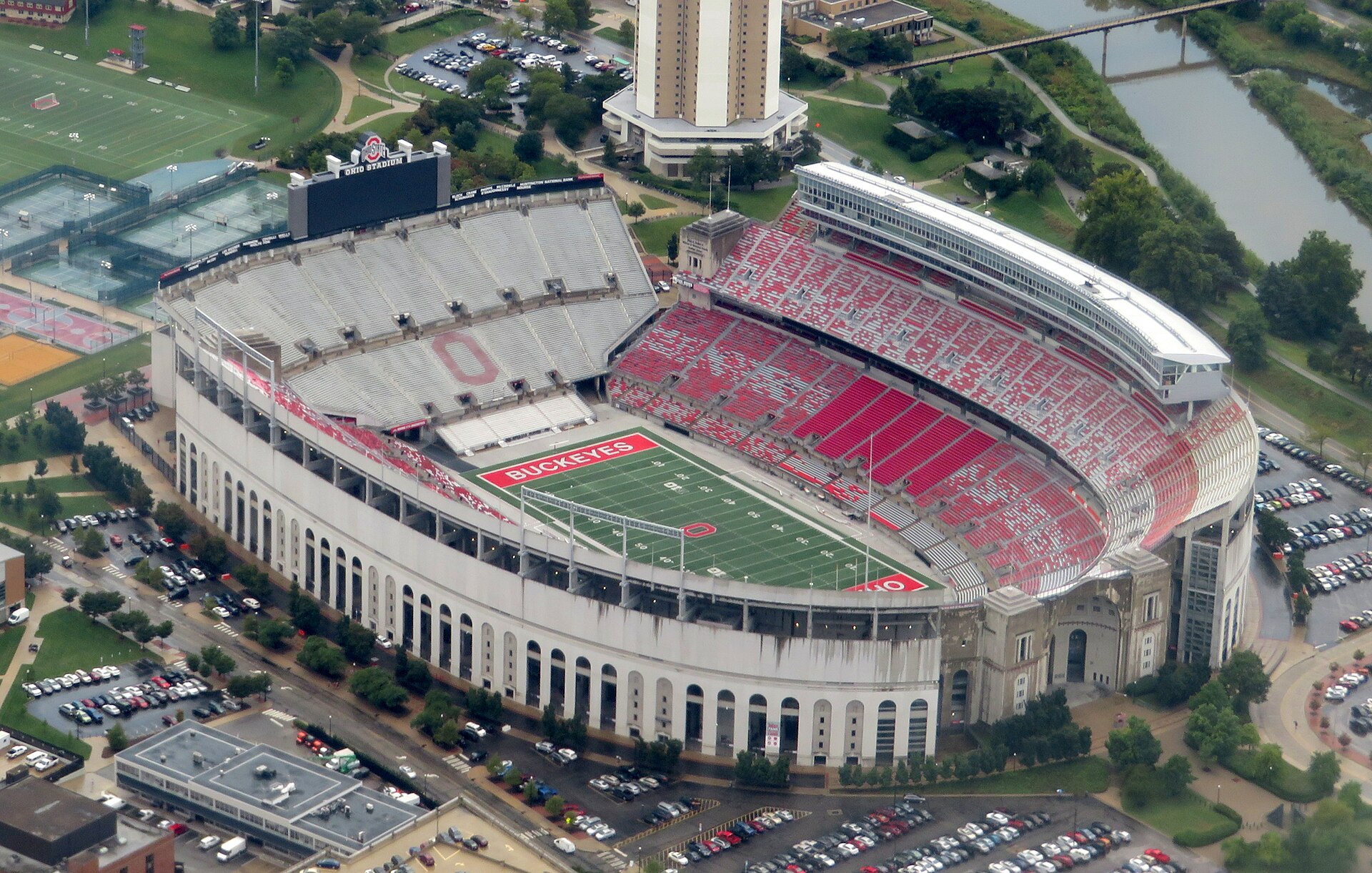
Two different football worlds looked at the same season this week and named two different No. 1 teams. ESPN's Football Power Index, in its latest update reported by Sports Illustrated on Oct. 20, moved Ohio State to No. 1 — ahead of Notre Dame at No. 2, Georgia at No. 3, Miami at No. 4 and Indiana at No. 5. The human polls and the wider consensus, by contrast, have Miami at No. 1. Both rankings can be read at once without contradiction, because they are not measuring the same thing — and the gap between them is the most interesting argument in college football this week. Follow it on Previously's college football hub.
Ohio State's case, as the model sees it
The result sitting underneath Ohio State's rise is a 19-15 win at Indiana — a road victory that snapped the defending champions' 22-game winning streak, according to SI's reporting on the FPI update. Beating the team FPI itself ranks fifth, on that team's field, in a low-scoring game, is precisely the kind of result a predictive model rewards: it is evidence about how a team performs play by play against elite opposition, not just a line in the win column. That is why the Buckeyes can climb to the top of this particular ranking off a four-point win that looked, to the naked eye, more like survival than dominance.
There is a real concern attached to the same afternoon. Ohio State quarterback Julian Sayin left the Indiana game with a shoulder injury, per SI. A predictive ranking built on efficiency data accumulated with Sayin at quarterback cannot, by itself, price in what the Buckeyes look like without him — which is one reason to treat any single model's No. 1 as a snapshot of measured performance so far, not a forecast carved in stone. The model's verdict and the injury report are both part of the story, and readers should hold them together.
How FPI works — and why it disagrees with the polls
As reported, the Football Power Index is a predictive model, not a résumé ranking. It is built on expected points added — the value a team generates, play by play, on offense, defense and special teams — adjusted for the quality of the opponent across from it. Scoring efficiently against a strong defense counts for more than piling up points against a weak one, and the same discounting applies in reverse on the defensive side. Those adjusted efficiency measures then feed 20,000 simulations of the rest of the season, which produce the model's projections for wins, playoff chances and national-title odds.
That design explains the disagreement with the human polls almost by itself. Poll voters tend to rank the season that has happened: who is unbeaten, who owns the best wins, who survived the hardest Saturday. FPI ranks the team its numbers expect to be strongest from here forward. Miami's case to human voters is easy to state — the Hurricanes needed double overtime to beat Florida State 43-35 last weekend, per reporting on that game, and escaped with their record intact; one Duke Wire account this week described Miami as the No. 1 team in the human rankings and the ACC favorite. To a predictive model, needing two overtimes against Florida State can read as a narrower efficiency edge than the win itself suggests. Neither reading is dishonest. They are answers to different questions.
Reading the top five
The rest of FPI's top five underlines the point. Notre Dame at No. 2 and Georgia at No. 3 sit above Miami — placements that make sense only in a system willing to rank predictive strength over the current shape of the standings. Indiana, even after the home loss to Ohio State that ended a 22-game winning streak, holds at No. 5: a résumé ranking might punish the Hoosiers for the defeat itself, while the model notes that losing 19-15 to its new No. 1 team is hardly evidence of weakness. That is FPI being FPI, consistently — process over outcome, efficiency over narrative.
What should a fan do with two No. 1 teams? Use each ranking for what it is built for. The human polls tell you who has earned the top spot on results. FPI tells you which team the play-by-play data trusts most for the games still to come — with the Sayin shoulder question hanging over exactly the team it just elevated. The weeks ahead will grade both answers. Previously's sports front and Stats Hub will keep tracking where the models and the voters converge — and where they keep arguing.
Why the Sayin question cuts both ways
The injury wrinkle deserves one more layer, because it shows the limits of every ranking system at once. FPI's simulations — all 20,000 of them — are only as current as the data fed into them, and that data describes an Ohio State offense led by Julian Sayin. If Sayin misses time with the shoulder injury SI reported, the team that takes the field next is not quite the team the model just ranked first, and no simulation run before an injury update can fully account for a backup quarterback's learning curve. Human voters face the mirror-image problem: they can react to the injury news instantly, but only with a guess, because they have no efficiency data on the replacement either. Heavy's analysis of the situation this week noted the practical stakes — Ohio State was inches from losing at Indiana, finished that game with Sayin in a sling on the sideline, and has a bye week to sort out the position before a difficult stretch. That timing, if it holds, may matter more than either ranking: a week to heal or to prepare a backup is the difference between a scare and a season-changing problem.
Miami's side carries a quieter version of the same lesson. The Hurricanes are, by the human consensus described in this week's coverage, the No. 1 team in the country — and they still needed double overtime, and 43 points, to put away Florida State 43-35. Polls reward the survival. FPI discounts the margin and the manner. When the two systems disagree this cleanly, the honest conclusion is not that one of them is broken; it is that October rankings are arguments, and this week's argument happens to have a model on one side and the entire voting public on the other.
Sources · 3 sources
- Sports Illustrated — ESPN Football Power Index update: Ohio State moves to No. 1 (October 20, 2026)
- ESPN — Football Power Index (October 20, 2026)
- Previously Sports — College football hub (October 20, 2026)