
TUESDAY, OCTOBER 13, 2026
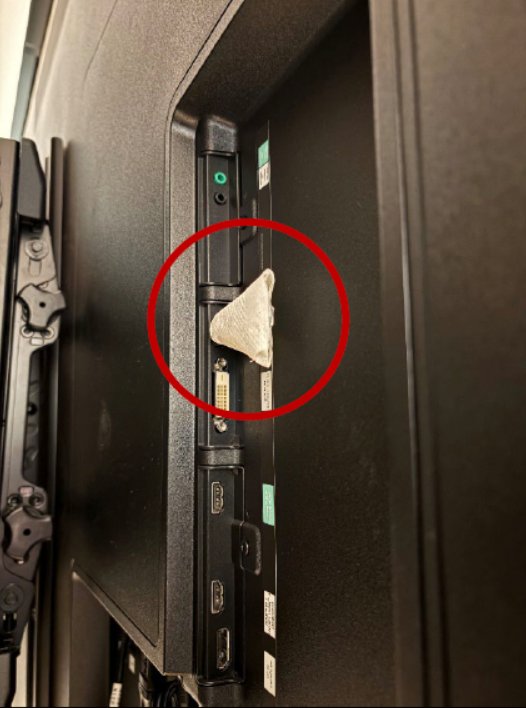
The most famous AI company in the world got bugged in its own boardroom — the listening kind of bug. On September 30, OpenAI personnel discovered a hidden audio recording device inside an executive conference room at the company’s San Francisco offices, concealed in toilet paper and plugged into a USB port on the back of a television. OpenAI says it turned its own AI models loose on the gadget to work out what it was and where it had come from. The trail, prosecutors say, led to one of the company’s own engineers. The FBI arrested him on Friday.
The engineer is Abdulrahman Alfozan, 35, a national of Saudi Arabia who joined OpenAI in July 2025 and worked on the product team, OpenAI spokesman Nate Evans confirmed to TechCrunch. On Tuesday, Alfozan made his first appearance in federal court in San Francisco, charged with using a device to intercept oral communications — in plain terms, secretly recording conversations he had no right to hear. If he is convicted, he faces up to five years in prison.
02 What the complaint says happened
According to the federal complaint unsealed Tuesday, the room was not just any meeting room. Discussions there, the Justice Department said, frequently covered highly confidential technical, commercial and strategic information — proprietary research, product plans, business development and government engagements. It was, in other words, one of the most sensitive rooms in the building, and prosecutors say Alfozan had no authority to be in it or to take part in the meetings held there.
Prosecutors say the run-up was methodical. Before the device appeared, Alfozan allegedly used a workplace productivity tool to ask about OpenAI’s building addresses, meeting rooms, room capacities and calendars, and the locations of leadership and executive offices. Between September 24 and September 30, a chatbot account associated with his spouse — one that shared multiple identifiers with his own account, the complaint says — submitted prompts about building, customizing, installing and remotely accessing a recording device — how to build a continuous audio recorder, customize its Wi-Fi connectivity, improve its live listening and encrypt its SD card. On September 27 and 28, the same account asked about the specific device prosecutors call Recording Device 1, down to its custom header and unique MAC address.
The device itself, OpenAI told TechCrunch, was not a toy: it carried advanced encryption, audio monitoring and a mechanism for transferring data designed to evade monitoring, and its contents were encrypted. Prosecutors say it was installed on or about September 28. Two days later, OpenAI found it. The company says it used its internal AI models to understand the device and to identify the employee who had planted it — then fired him and called the FBI. Closed-circuit footage, the complaint says, showed Alfozan near the executive conference room on multiple dates before the discovery.
03 The second device
The detail that turns a strange case into a spy-story one came five days after the discovery. On October 5, prosecutors say, Alfozan walked back into the executive conference room and was captured on camera looking behind the very television where the device had been hidden. That same day, the complaint alleges, he left a bag unattended in a different room in an OpenAI building. Security personnel opened it and found his wallet and ID — and a second recording device, similar to the first.

Federal agents arrested Alfozan on October 9. He is charged with using or endeavoring to use an electronic or mechanical device to intercept oral communications, a charge that carries a maximum of five years in prison, a $250,000 fine and three years of supervised release. The case is being prosecuted by Assistant U.S. Attorney Nicolas Parker for the Northern District of California, and the FBI says its investigation is ongoing.
04 What OpenAI says — and what nobody knows yet
OpenAI’s public position is narrow and, for the company, reassuring. In a post on X, the company said: “At this time, we have no indications of this individual inappropriately accessing or exfiltrating model weights, source code, or customer data.” Federal officials are framing the case in larger terms. FBI Director Kash Patel said the alleged scheme was to capture sensitive communications about the company’s super intelligence technology, and the Justice Department is prosecuting the case under its super-intelligence security initiative.
What Alfozan allegedly wanted with hours of boardroom audio, the complaint does not say, and officials have not offered a motive. Neither Alfozan nor his attorney could be reached for comment, TechCrunch reported, and the Saudi embassy in Washington did not immediately respond to a request for comment, according to Reuters. The charges are allegations; Alfozan has not been convicted of anything, and he is presumed innocent unless prosecutors prove their case in court.
05 The part of the story that sticks
Strip away the spy furniture and the case is about where the AI race now lives. The crown jewels of a frontier AI company are not in a vault — they are in the conversations its executives have in rooms like that one, which is why a recorder behind a TV is a national-security story in 2026. It is also not OpenAI’s first security scare: earlier this year, a Texas man was charged with throwing a Molotov cocktail at chief executive Sam Altman’s home and attempting to set fire to the company’s headquarters, according to Reuters.
But the irony is the part that will travel. A company whose products are built to listen, transcribe and remember was allegedly being listened to — by a device its own employee’s chatbot queries may have helped design. And the thing that caught him, by OpenAI’s own account, was its AI. The bug in the boardroom was found by the product on the other side of the wall.
Sources · 4 sources
- U.S. Department of Justice — “Saudi National Arrested for Installing Surreptitious Audio Recording Device at OpenAI”: the Department’s release stated the timeline in the complaint, the device findings, the second device, the charge and the maximum penalty. U.S. Department of Justice · Oct 13, 2026 — https://www.justice.gov/opa/pr/saudi-national-arrested-installing-surreptitious-audio-recording-device-openai
- TechCrunch — “FBI arrests OpenAI employee accused of planting hidden recording device in conference room”: TechCrunch confirmed Alfozan’s role and start date with OpenAI spokesman Nate Evans, and reported the company’s account of the device’s capabilities. TechCrunch · Oct 13, 2026 — https://techcrunch.com/2026/10/13/fbi-arrests-openai-employee-accused-of-planting-hidden-recording-device-in-conference-room/
- Reuters — “Saudi OpenAI engineer arrested by FBI for planting covert recording device, US DOJ says”: in its wire report, Reuters stated the outlines of the arrest and charges, noted the Saudi embassy’s non-response, and recalled this year’s earlier Molotov cocktail case involving OpenAI’s chief executive. Reuters · Oct 13, 2026 — https://ktwb.com/2026/10/13/fbi-arrests-former-openai-employee-for-planting-listening-device/
- Associated Press — “Employee arrested after listening device found in OpenAI conference room, FBI and the company say”: the wire account stated the outline of the complaint, the September 30 discovery and OpenAI’s statement. Associated Press · Oct 13, 2026 — https://www.akronnewsreporter.com/2026/10/13/ai-engineer-arrested/