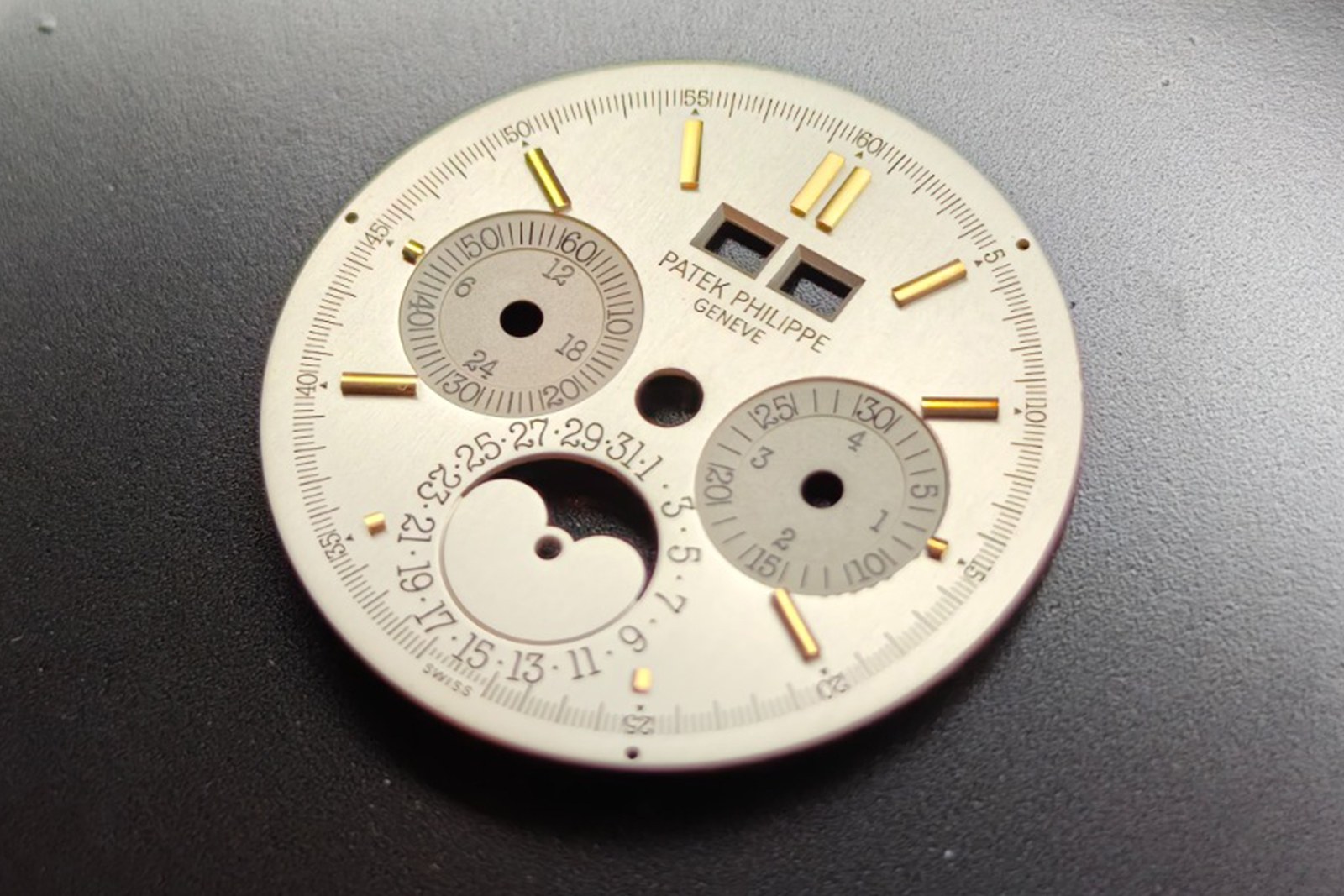
Every Patek Philippe movement carries a number, and the numbers run in order. So the perpetual calendar chronograph that Sotheby's put on the block in Geneva on Sunday carries the most eloquent number in its family: 875'000. Not a limited-edition stamp, not a vanity plate — simply the first calibre CH 27-70 Q ever made, cased in 1986 as the first numbered example of Reference 3970, the watch that succeeded the legendary 2499 and ran, in four series, until 2004.
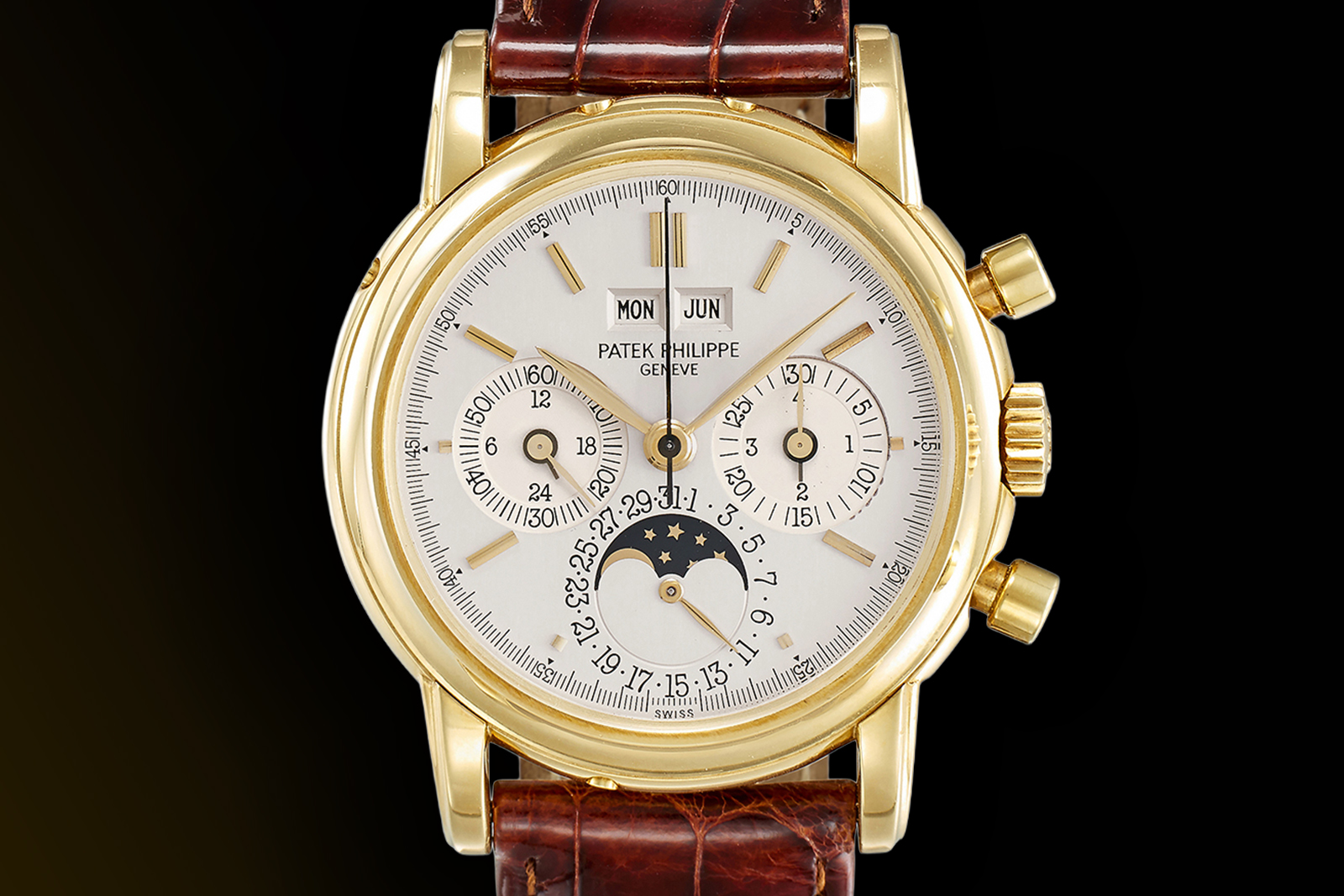
The room at the Mandarin Oriental priced the zero accordingly. Bidding for Lot 88 opened at CHF 700,000 and moved fast — a bidder in the room against the phones and the internet — before the hammer fell at CHF 1,600,000. With the buyer's premium, the price realised was CHF 2,048,000, about $2.5 million, and Sotheby's own results note names it what it is: a new benchmark for the yellow-gold Reference 3970.
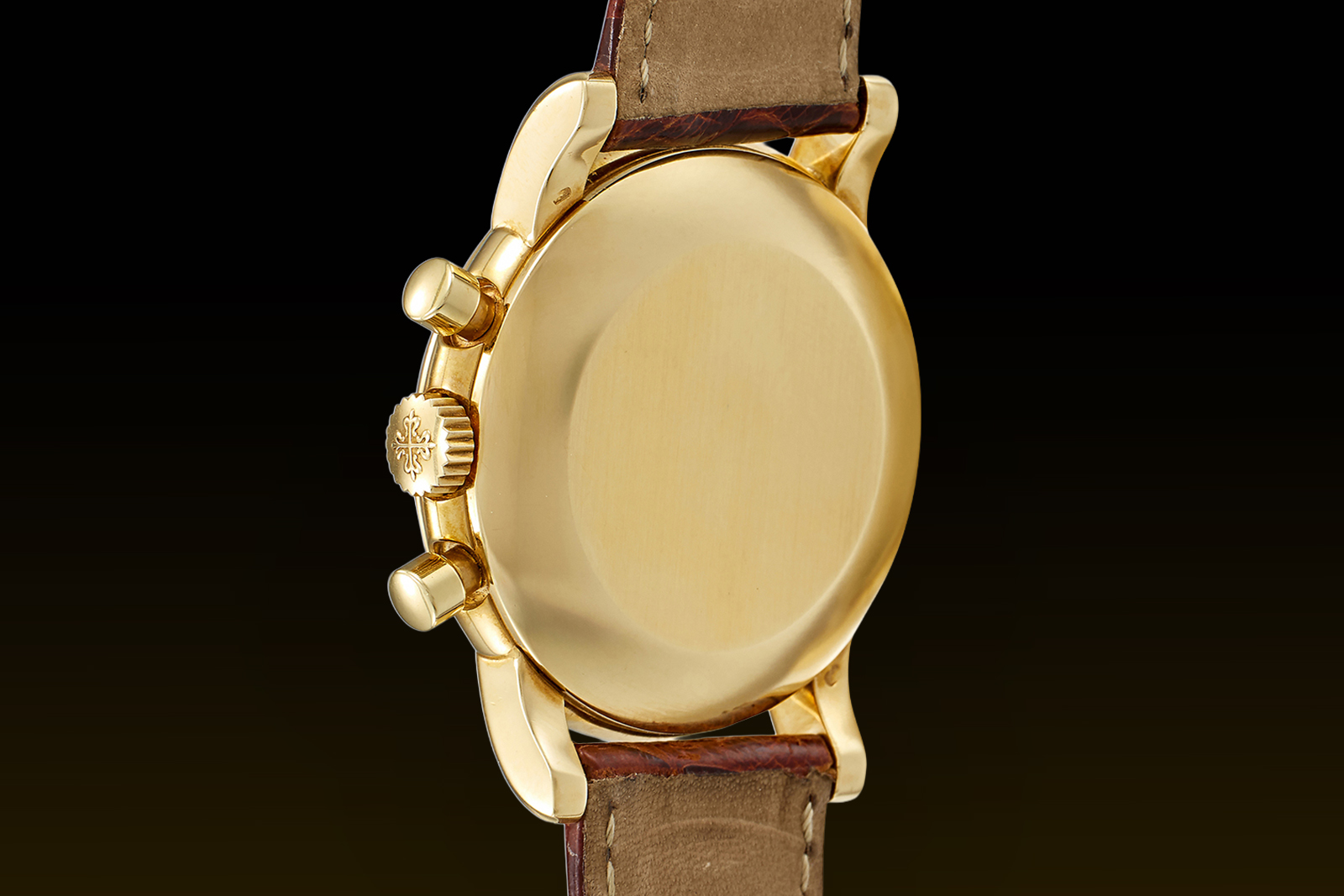
What the buyer bought, beyond a beautiful watch, is a documented beginning. The 3970 was Patek Philippe's third series-produced perpetual calendar chronograph, and the first to add a leap-year indicator — the little aperture that tells you whether February gets its extra day. This example belongs to the first series, with the solid snap-on caseback the manufacture abandoned for screw-down backs after fewer than a hundred pieces. Its dial is solid 18-karat gold with a grained silver finish, its hands the elegant feuille shape carried over from the 2499 era, its case — polished once, carefully, at some point in forty years — still sharp at the lines.
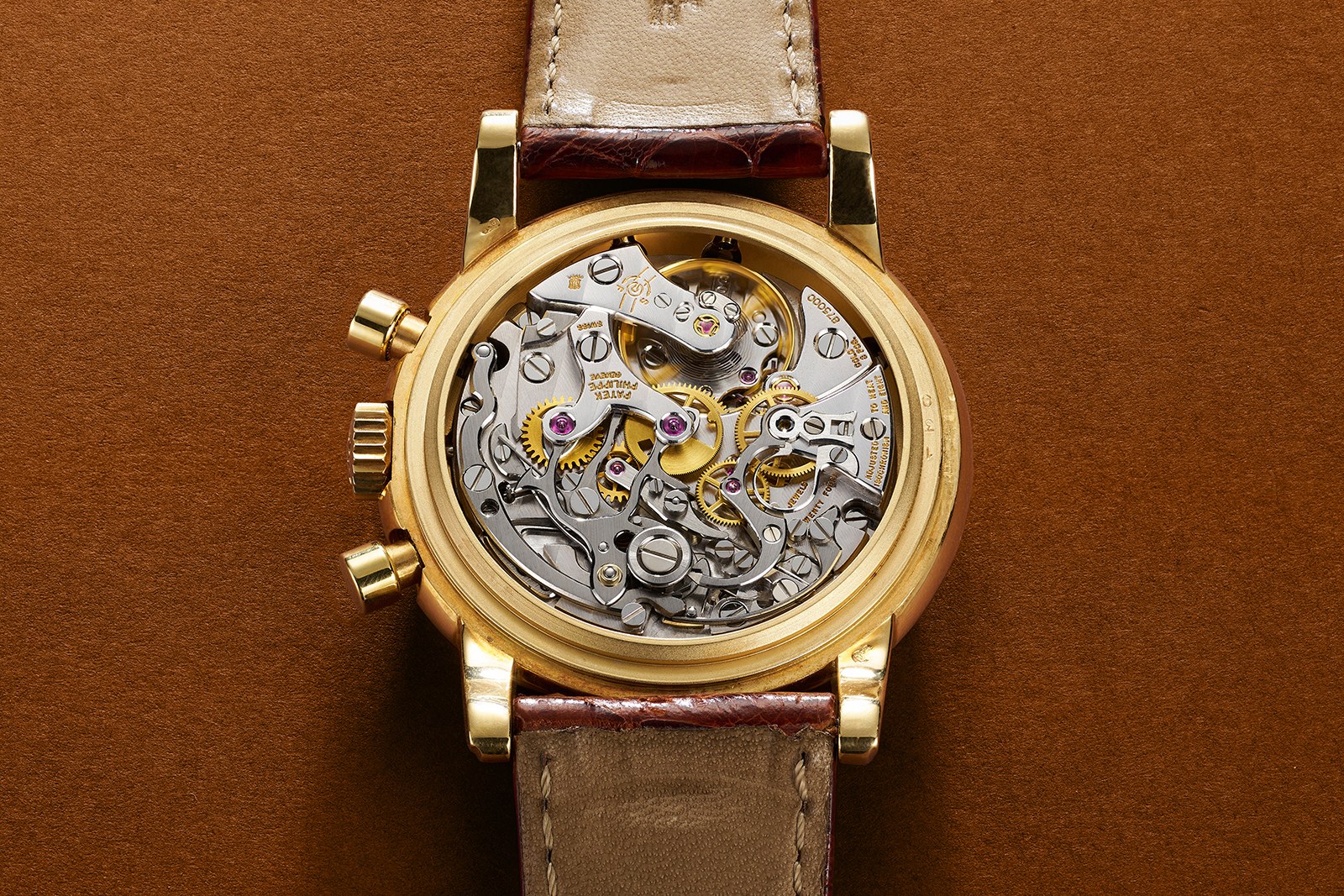
Under that snap back sits the transition itself. The 2499 ran on a Valjoux-based calibre; the 3970 moved the line to the smaller Lemania-based CH 27-70 Q that would power Patek's perpetual calendar chronographs for the next quarter-century. Movement 875'000 is where that quarter-century starts. Patek Philippe understood the weight of a first example early enough to keep the first Reference 3971 for its own museum. This one it sold — out the front door of its Rue du Rhône salon in Geneva on January 14, 1987, to a buyer whose name the record keeps private, with the Certificate of Origin that still travels with the watch today.
The papers are not decoration. The watch appeared at Antiquorum in 2005 and again in 2015, its condition essentially unchanged — a grained dial with a breath of oxidation near the minutes totaliser, hallmarks gone shallow from that one disciplined polish. For this sale Sotheby's arranged a fresh Extract from the Patek Philippe Archives, so the chain from the Rue du Rhône to the Mandarin Oriental is documented at every link. Collectors pay for watches; at this level they pay again for certainty, and Lot 88 carried all of its certainty with it, down to the number 130 stamped inside a case numbered 2'824'130.
There is a measuring stick one digit away. The next movement number, 875'001 — the second example ever produced, by scholars' reckoning — was Tom Brady's yellow-gold first-series 3970, and Sotheby's sold it in New York in December 2024 for $312,000. The first numbered example just made roughly eight times the second. That is the whole economics of this market in a single pair of numbers: the watch is the same watch, and the zero is worth two million francs.
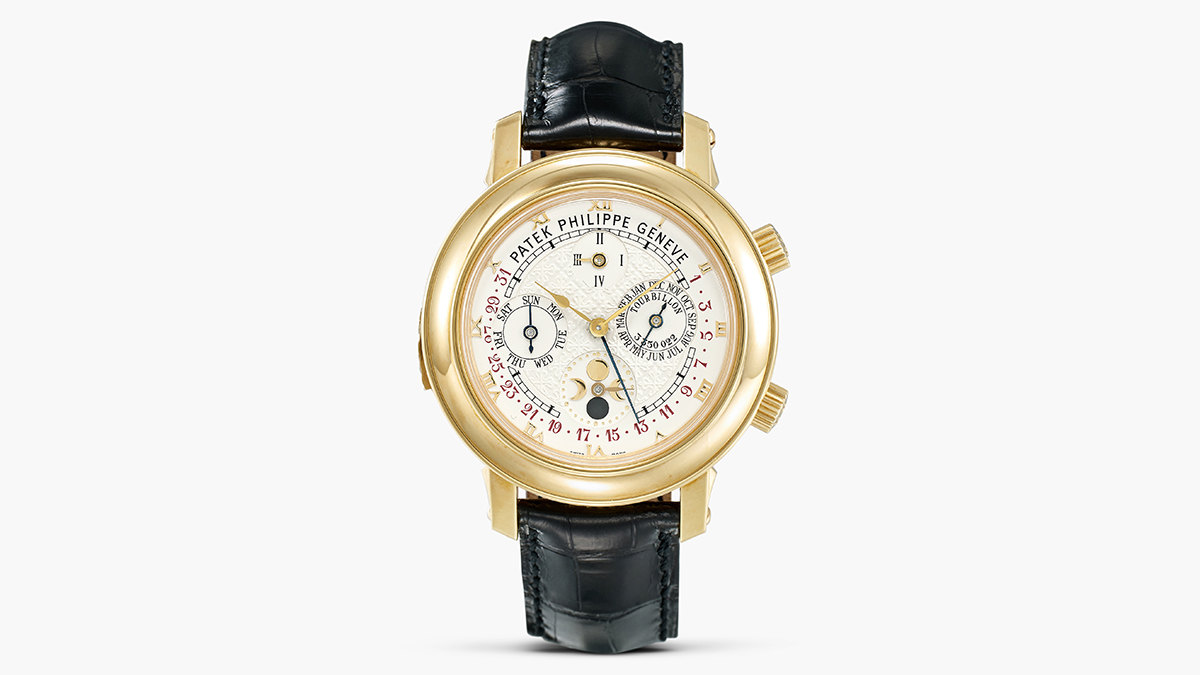
Lot 88 was the provenance peak of a sale that needed no help. Sotheby's took $32.1 million across the weekend — its richest Geneva watch sale in more than a decade, with all but one lot sold and more than 1,600 bidders in the chase. A Patek Philippe Sky Moon Tourbillon, Reference 5002, led the sale at CHF 2.29 million, about $2.8 million.
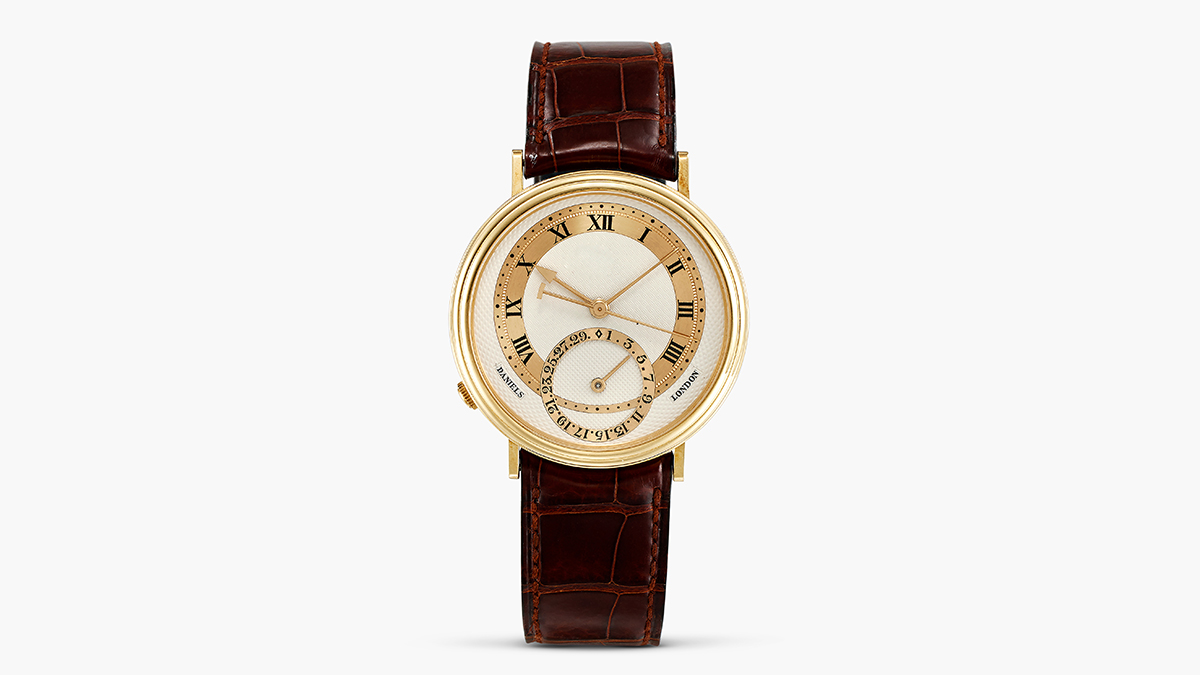
And the independents had their own night inside it: a yellow-gold George Daniels Millennium from 2001, estimated at CHF 300,000 to 600,000, made $1.9 million — a record for its reference, from the bench of the man who built watches one at a time and signed them with his own name.
Across the three houses — Phillips, Christie's and Sotheby's — Geneva moved $203 million of watches in a single weekend. The headline number, though, belongs to a 36-millimetre gold watch from 1986 that keeps the date, the phase of the moon and its own place at the front of the line. The first 3970 ever numbered is not the most expensive watch sold this year. It is something rarer than expensive: it is the beginning of a reference, with the papers to prove it, and beginnings do not come up for sale twice.
Sources · 6 sources
- Sotheby's — Important Watches, Geneva (sale ge2604), Nov 8–9, 2026 — Lot 88: the house's lot essay and highlights release (estimate CHF 1,000,000–3,000,000); the house's own results caption ('sold for CHF 2,048,000, setting a new benchmark for the yellow gold reference'); the house's sale film (hammer CHF 1,600,000, paddle 1306); the house's official YouTube film on the lot
- WatchPro — "Geneva Watch Auction Weekend Generates $203 Million" (Nov 10, 2026) — 3970 at CHF 2.048M ($2.5M), Sky Moon Tourbillon CHF 2.29M ($2.8M), Sotheby's total above $32M, weekend $203M
- Robb Report — "The First Patek Philippe Ref. 3970 Sold for a Record $2.3 Million" (Nov 10, 2026) — the full sale report: $32.1M total, all but one of 181 lots sold, 1,600+ bidders, Sky Moon $2.8M, Daniels Millennium $1.9M reference record. NOTE: Robb's USD figure for the 3970 itself is contradicted by the house's CHF record and is not carried — see the research packet's contradictions section
- SJX Watches — "The first Patek Philippe ref. 3970 returns to Geneva" (Oct 30, 2026, in partnership with Sotheby's) — provenance and condition scholarship: Antiquorum 2005 and 2015, the Rue du Rhône sale of Jan 14, 1987, the calibre transition, the museum-kept first 3971
- Luxurylaunches — "The first Patek Philippe 3970… sold for $2.5 million" (Nov 10, 2026) — CHF 2,048,000; case no. 2'824'130; the Tom Brady 875'001 comparator ($312,000, Sotheby's New York, Dec 2024)
- Il Sole 24 Ore — Geneva weekend coverage (Nov 12, 2026) — the $203M three-house frame