SEPTEMBER 11, 2026
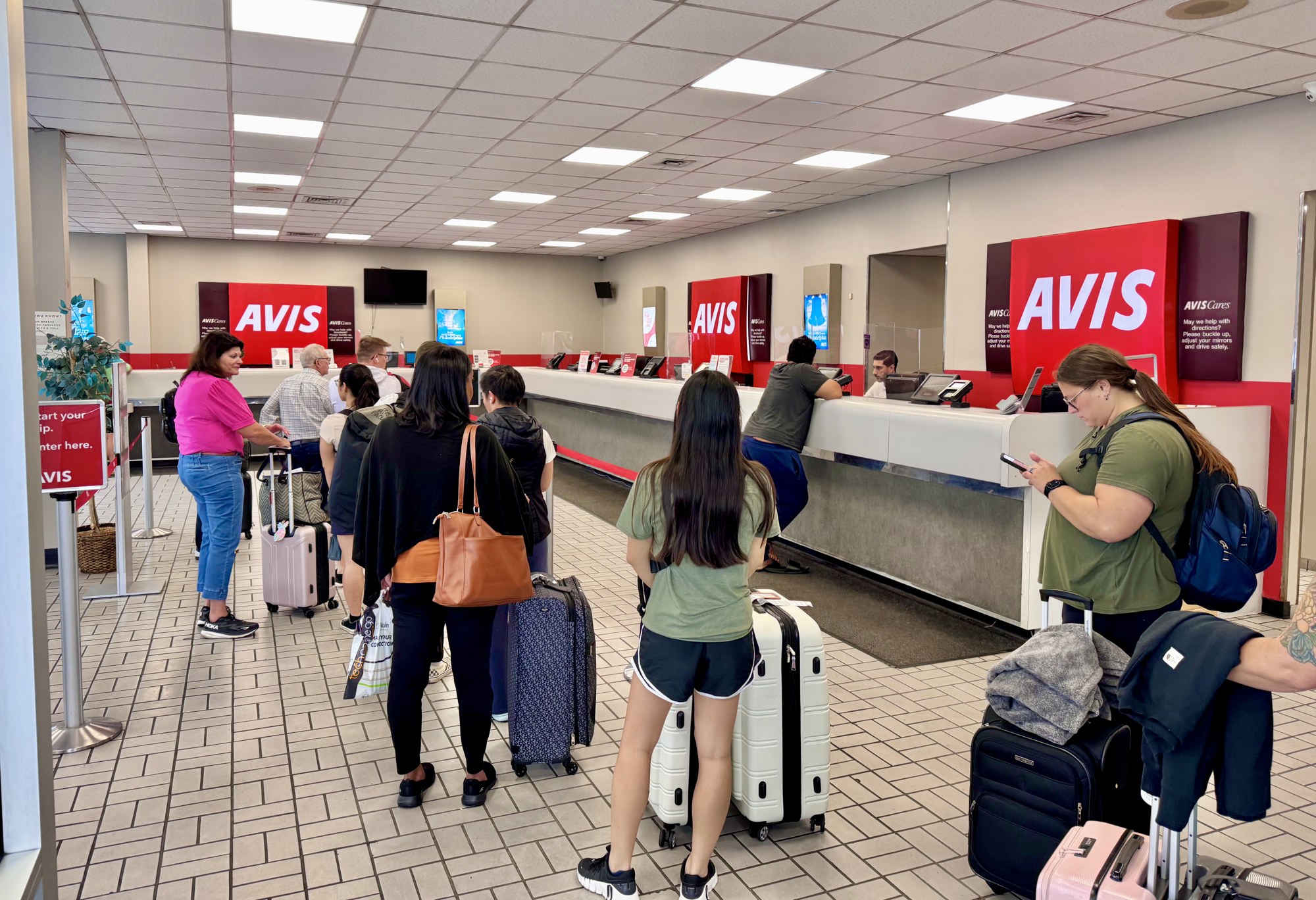
Let’s rewind the tape to September 11, in Montreal. Yuehao Huang has just flown in from Toronto to meet visiting family, and he does the most ordinary thing a man can do at the start of a road trip: he picks up the rental car he already paid for. More than CAD $1,000, prepaid, for seven days with Avis, as CityNews reported in its Speakers Corner segment and Dexerto reported on October 20. The trip itself was the good kind of unremarkable. Montreal. Mont-Tremblant. Ottawa. Quebec City. Family in the car, scenery out the window, the kind of week you take photographs of and tell nobody at work about because there is nothing dramatic to tell. Then Huang flew home to Toronto, looked at his statement, and found the drama waiting for him there: a CAD $5,900 charge from Avis — roughly US $4,300 — sitting on top of the money he had already paid. “I just said to myself, this can’t be right,” Huang told CityNews. He was understating it. The charge was not just wrong. It was physically impossible, and everybody at Avis who touched it for the next several weeks treated it like it was his job to prove that.
The math was never mathing
Here is the claim Avis put on that bill, and it deserves to be read slowly. According to CityNews, Avis said Huang had exceeded the mileage he prepaid by driving 28,933 kilometres in seven days. That is roughly 18,000 miles. In a week. CityNews opened its report with the obvious question: is it possible to drive 4,100 kilometres a day, for seven straight days, and only refuel twice the entire time? That is, as CityNews put it, roughly the equivalent of driving from Montreal to Revelstoke, British Columbia — a drive navigation apps say cannot be done in a 24-hour period — and then doing it again the next day, and the next, six more times, in a rental car, with your family. According to Dexerto, the planetary version of the same sum is this: 18,000 miles is almost 75 percent of the entire circumference of the Earth. Huang, to his credit, did the cleanest version of all, and it is the line this whole story hangs on. “The way I estimated it is that would be me driving 180 km/h, 24 hours, no stop, no gas, no sleep,” he told CityNews. He added the detail that ought to have ended the argument on the spot: if he really had driven 28,000 kilometres, the vehicle would have needed an oil change and maintenance. Rental cars do not hide 28,933 kilometres. They wear them. And against Avis’s number, Huang had a number of his own, recorded by a witness that never sleeps and has no reason to lie: his iPhone had tracked the entire trip and put it at 1,400 kilometres in total — about 870 miles — and that figure, Huang pointed out, includes the kilometres he walked while hiking, when he was not driving the car at all. One of these numbers describes a family holiday in Quebec. The other describes a man lapping the planet at motorway speed for a week without once stopping for fuel, food or sleep. Avis looked at both, and for weeks, Avis chose the planet.
Every checkpoint waved it through
Because the typo is not the story. Typos happen; a digit gets fat-fingered, a mileage reading gets entered wrong, and a sane system catches it the first time a human being looks at it. The story is how many human beings looked at this one and let it ride. Huang did everything a customer is told to do, in the order he is told to do it. He challenged the bill immediately and sent Avis his evidence, CityNews reported. According to CityNews, Avis agreed to investigate — and then, when Huang followed up weeks later, no refund had been issued and he was told to submit his complaint again. Start over. Resubmit the arithmetic. According to CityNews, he then went to the other referee available to him and challenged the charge with his credit card company, American Express. Amex investigated and reached out to Avis, and that, too, came back a dead end — the day before Huang spoke to CityNews, he got the reply: Avis had basically told Amex the charges were valid. Valid. Somebody at Avis, presented with a bill that required a customer to average 180 kilometres an hour for 168 consecutive hours, defended it to a card network as a legitimate charge. That is the part that should embarrass the company far more than the data entry ever could. A data entry error is an accident. Telling American Express the accident is valid is a decision. Somewhere between the impossible number and the customer’s credit card sat an investigation, a resubmission demand and a chargeback dispute, and the impossible number beat all three. Huang’s phone knew where he had been. His receipts knew what he had paid. The basic physics of the internal combustion engine knew the rest. None of it was enough, because none of it arrived with a camera crew.
Then a television station asked
So Huang did the last thing left to a man holding an impossible bill: he took it to television. He reached out to Speakers Corner, CityNews’ consumer segment, after failing to get the charges reversed on his own. Speakers Corner reached out to Avis — and within one day, CityNews reported, it received a response. One day. The thorough review that weeks of Huang’s evidence could not produce materialised overnight once the question came from a newsroom. And here is Avis, in its own words, as CityNews reported and Dexerto reported: “Following a thorough review, we confirmed that a data entry error resulted in the customer being incorrectly charged for excess mileage. We sincerely apologize to the customer for the frustration and delay in resolving the matter. We are processing a refund for the mileage charges. We are also reinforcing our procedures with our teams to help prevent similar issues in the future.” Read that statement fairly, because it does contain the right things: an admission, an apology, a refund in motion. But notice what it quietly concedes. The review was always possible. The error was always findable. The refund was always the answer. Nothing about the facts changed when Speakers Corner called — the kilometres were just as impossible the day Huang first disputed them. The only variable that changed was who was asking, and how many people would hear the answer. A global rental brand did not need new evidence to do right by this customer. It needed an audience.
Huang, happy with the outcome, left other renters with the one piece of advice this entire saga produced, and it is worth printing exactly as he gave it to CityNews. He had taken a photo of the odometer when he returned the vehicle, but not when he started the trip — something he said would have made the whole process easier. “No matter how you trust your rental car company, based on previous experience, remember to take a photo before you start driving and after,” he said. Think about what that advice really is. It is a customer warning other customers to build their own evidence file before a company’s billing system invents a road trip for them — because if it does, the company may spend weeks treating its own invention as the truth and the customer’s own phone records as an allegation. Huang won in the end. He has his refund coming and his apology in writing. But he only won because a television station stood next to him while he asked, and a man should not need a broadcast segment to prove he cannot drive at 180 kilometres an hour for seven days without stopping. The tape here is not complicated. One man drove 1,400 kilometres with his family. One company billed him for 28,933, defended the bill, and folded the moment it became a story. That is not a data entry error with an unfortunate delay attached. That is a company telling you exactly whose arithmetic it respects.
THE VERDICT — After review: Avis is outta pocket.
Sources · 2 sources
- Car rental apologizes after accusing man of driving 18,000 miles in a week Dexerto · Oct 20, 2026
- Toronto man accused of driving rental car 30,000 kms in just 7 days CityNews · Oct 2026