WELLINGTON, NEW ZEALAND
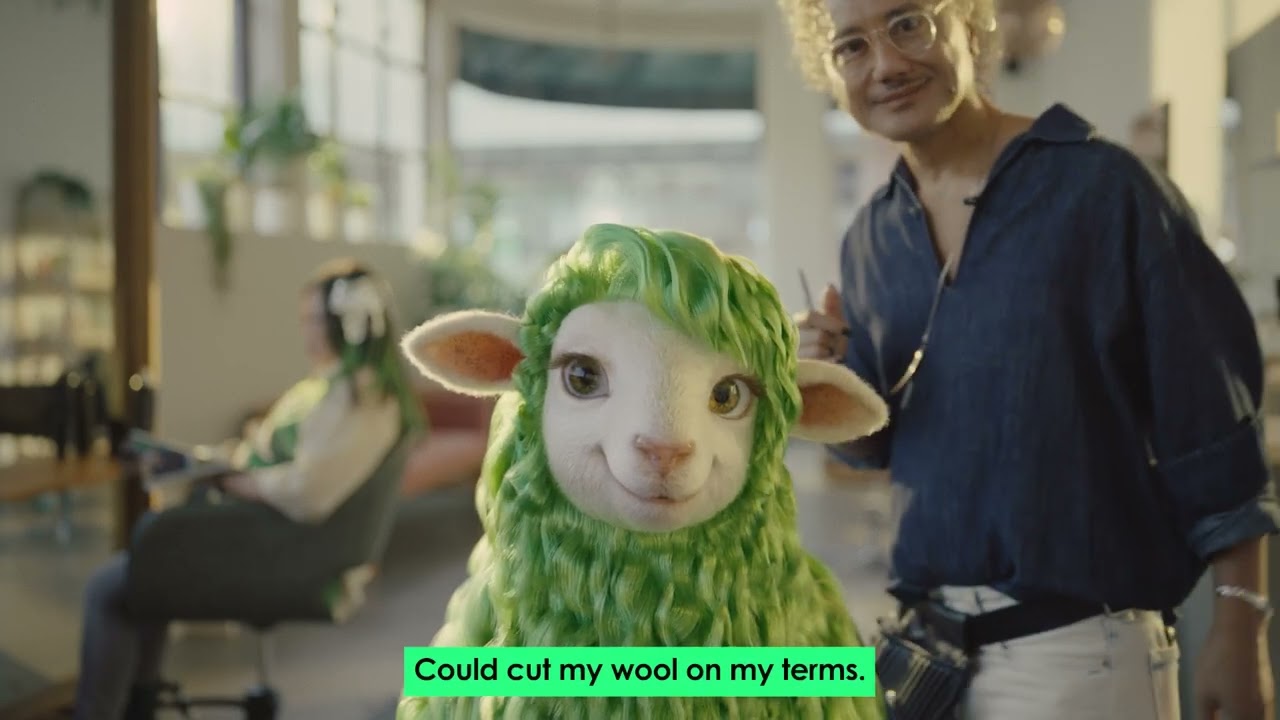
Let’s rewind the tape. Start with the brief, because the brief is the whole joke. This year Kiwibank, New Zealand’s state-owned bank, unveiled a new mascot: Buck, a green-wooled sheep whose entire personality, per the bank’s own brand page as reported by Mission Media, is that she has no interest in doing what the flock expects. A rebel sheep. A sheep who bucks the system. The bank spent real money building her — more than four million individual strands of simulated wool, per Mission Media — and launched her in July as the face of a campaign urging the country to “bank Kiwi.” Then the internet did exactly what the internet does with a character designed to be shared: it shared her, joked about her, and fell a little bit in love with her. And the bank that built a sheep who refuses to follow the flock responded by sending lawyers after the flock.
Walk the timeline, because every step of it was a choice. Buck launched on July 3 as the face of the Bank Kiwi platform, created with Special, Together, DNA and TRA, and built by Fathom VFX, per Mission Media. She was positioned as curious, optimistic and willing to challenge banking conventions — a challenger brand’s challenger sheep. Weeks later, posts on X began joking about Buck’s good looks, riffing, as AFP put it, on uncharitable stereotypes about New Zealanders and sheep. One follow-up post joked that years of work convincing the world otherwise had been undone in a single tweet. It was crude, it was juvenile, and it was, by any honest measure, a mascot doing the job mascots are hired to do: people who had never thought about Kiwibank for one second were now thinking about Kiwibank, voluntarily, for free.
Then came the takedown notices
Here is where a bank stops being the shepherd and starts being the fence. Since September 16, the law firm MinterEllisonRuddWatts has sent copyright takedown notices on Kiwibank’s behalf to X and Bluesky over posts about Buck, according to the Free Speech Union’s open letter to the bank. The Spinoff reported on October 3 that at least ten X accounts and a number of Bluesky artists had posts removed, the Free Speech Union letter says. AFP described what users found in place of the jokes: the image gone, replaced by the platform’s notice that the media had been disabled following a report by the copyright owner. Some of the posts caught up in it, the letter notes, used Kiwibank’s own advertising image unaltered, with the joke sitting in the caption — the image was the bank’s, but the joke was the poster’s. Bluesky artists also said drawings of sheep that had nothing to do with Buck were taken down. Read that back. A bank that owns one green sheep started, in effect, policing sheep.
Give the bank its say, because the Rewind always lets the subject speak before the verdict lands. Kiwibank spokesman Ben Mabon told AFP the bank had been responding to explicit and harmful content shared using Buck’s image, that its concern was a serious one, and that it felt doing nothing would not have been the right thing to do. The Free Speech Union letter records a similar line given to The Spinoff: that the bank acted to protect others from harmful content. That concern is not invented, and nobody here is pretending every post in the pile was a gentle limerick. A brand is allowed to defend its work. A bank is allowed to dislike a crude joke. The question this segment exists to ask is never whether Kiwibank had a feeling. It is what Kiwibank did with the feeling — and what that decision bought.
The Streisand effect, with wool on
What it bought was the oldest invoice on the internet: the Streisand effect, in which an attempt to hide a thing becomes the reason everybody looks at it. AFP reported that users answered the removals by barraging the platform with dozens more posts in their place, including one user’s rallying cry, in effect: say it all at once, they cannot get everybody. The original viral post has now passed four million views, AFP reported, and Mission Media, citing reporting by The Independent, put the same count on it: at least ten X accounts and several Bluesky artists removed, four million views and climbing. Commentators, AFP noted, called it a classic example of the effect. Of course they did. There is no cleaner specimen in the wild this year: a local bank campaign, a handful of jokes, a legal letter — and suddenly a sheep from Wellington is a global free-speech story.
Then the lawyers’ work product got reviewed by the one institution a bank cannot send a notice to: an open letter. On October 8, New Zealand’s Free Speech Union wrote to Kiwibank chief executive Steve Jurkovich, in a letter also copied to the takedown firm, arguing in plain terms that copyright exists to stop copying, not to shield a brand from laughter — and that using it to remove speech a company dislikes is censorship, even when the subject is a sheep. The letter asked the bank to withdraw the notices against posts that used its own unaltered images with commentary, and against artwork that does not copy Buck, to tell X and Bluesky about the withdrawals so posts could be restored, and to publicly back New Zealand’s stalled parody-and-satire bill. And here the tape gets genuinely rich: the letter points out that New Zealand law has no parody defence at all, that the bill meant to fix that lapsed when Parliament dissolved on October 1 — and that Kiwibank’s own lawyers had themselves argued for a wider parody exception. The bank’s firm supported the joke law. Then the bank’s firm sent the takedowns. You cannot script a flock this tangled.
And then, John Oliver
The final stop on a Streisand tour is always the same: late-night television in another country. Buck turned up in a Last Week Tonight segment, reported on October 12 by the New Zealand Herald and Stuff — the sheep a Wellington bank tried to tidy off two social platforms, presented to an American audience as a finished story with a beginning, a middle and a punchline the bank wrote itself. Mission Media reported that John Oliver called the bank’s response “completely counterproductive,” which is late-night language for what the numbers already said. Campaign, the brand-trade title, framed the whole episode the way the industry will remember it: a mascot designed to go against the flock had become a case study in brand control and free speech, per Campaign Canada’s October 13 account. A campaign built to make a state-owned bank look bold and different had succeeded beyond any media plan — just attached to the one story the bank never wanted told about it.
The verdict
So hand the verdict down with care, because the wronged parties here matter. It does not go to the posters and artists who took the notices — they made jokes and drawings, some crude, some harmless, and several of them, on the Free Speech Union’s account, were not even about Buck. It does not go to Buck, who performed flawlessly: a mascot people want to post about is a mascot working. It goes to the enforcement — to a state-owned bank that looked at free affection for its own rebel sheep and reached, not for a joke of its own, not for patience, but for copyright law as a content filter. The mascot’s whole pitch was refusing to follow the flock. The flock, it turns out, was the customers. Final score from Wellington: four million views, one open letter, one Oliver segment, zero jokes stopped.
THE VERDICT — After review: Kiwibank is outta pocket.
Sources · 4 sources
- NZ bank in free speech row over ‘explicit’ sheep memes AFP via Balita · Oct 13, 2026
- Open letter to Kiwibank: Buck, takedown notices and New Zealand’s missing parody law Free Speech Union NZ · Oct 8, 2026
- Social Mascots Are Turning Brand Control Into A Crisis Test Mission Media · Oct 2026
- How Kiwibank turned a sheep mascot into a censorship battle Campaign Canada · Oct 13, 2026