
Let’s rewind the tape to the part of Lacy’s restaurant story that did not require a translator. By his own account, he eventually learned that the giant bill he had been talking about was not what he owed. That was the opening for a very short update. Instead, the audience got to keep the dramatic version. The streamer’s explanation, posted Thursday, contains the sentence that earns this one its place in The Rewind: “Where I went wrong was not correcting the story once I found out.” The receipt here is his own statement, not somebody’s theory about what was in his head.
THE RECEIPT — Read Lacy’s complete October 29 statement on his own X account. It includes his explanation of the initial misunderstanding, his admission about the missing correction and his apology to the restaurant.
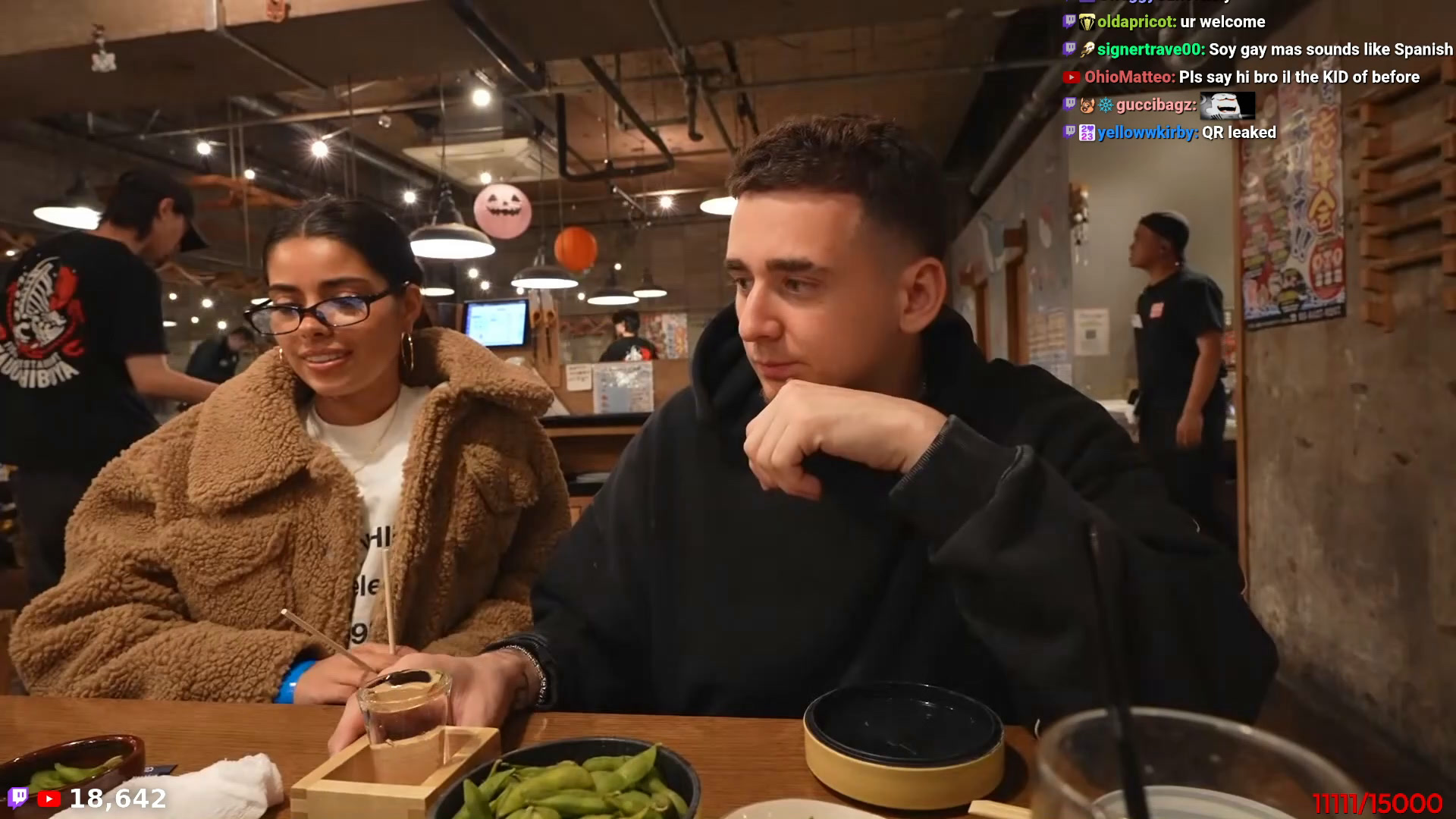
THE ORIGINAL — Lacy’s verified YouTube channel also carries his October 28 Japan vlog. Its transcript locates the QR-code exchange at 23:37 and the payment claim at 26:46. This upload contains the original account, before the correction linked above.
That distinction matters before we get anywhere near the verdict. Lacy says he genuinely believed he was responsible for $12,000 because of a language barrier. We have no basis to declare that he knowingly invented that initial belief. The public decision under review came later, when he says he knew more and did not tell the audience. Confusion deserves room. A correction deserves airtime.
First came the QR code. Then came the story.
The incident began during an October 28 livestream from Japan. Dexerto’s report says an ordering QR code at Lacy’s table became visible and viewers used it to submit unauthorized orders. He subsequently told his audience he had paid almost $12,000. That is the version that traveled: an enormous restaurant tab, an audience prank and a streamer left holding the bill. The dollar figure is his reported claim, not a final payment amount independently verified by Previously.
A QR ordering system makes a peculiar meeting point between livestream entertainment and ordinary work. On one side of the screen, an order can look like another button to press for a reaction. On the other, it is an instruction that somebody has to process. Staff do not receive a helpful label telling them which customer request is a joke. The stream can move on to its next scene; a restaurant still has tables to serve. None of that makes the prank orders a charming audience participation exercise.
It also makes precision unusually important. Saying the orders added up to a huge total, saying you believed you owed that total and saying you paid it are three different claims. They can fit inside the same breathless retelling. They still describe different events. A large total does not do the reporting for you, even when it gives the story its best hook.
The update was available. The correction wasn’t.
In the explanation reported by The Times of India, Lacy says he offered to cover the bill, asked that extra food go to families and left an assistant to deal with matters after his stream was interrupted. He says he returned to streaming still believing the full amount was his responsibility. Later, he learned he owed only for extra food already prepared. He says he failed to correct the story because he thought it was funny and did not expect it to spread so widely.
That is a remarkably manageable correction to fail to make. No investigative special was required. No production team had to rebuild the set. The essential update was that the earlier payment claim was wrong. Put that where the claim went, give it comparable clarity, and let people laugh at the misunderstanding with the correct information in front of them. The story would still have had an absurd QR-code episode. It would simply have lost a payment that, by his subsequent account, had not happened as described.
Instead, the joke was allowed to keep its most valuable accessory: the audience’s belief that he had paid $12,000. That is the editorial problem with treating a correction as something that might spoil a bit. The bit is being performed in public, about a business that is also real. Everyone watching is entitled to know when the performer has learned that the premise needs an update. An audience cannot participate knowingly in an exaggeration it has not been told is an exaggeration.
Nor does a story have to go viral before its accuracy matters. A smaller audience is still an audience. Waiting to discover how far a claim travels makes the responsibility depend on distribution rather than what the speaker knows. The sensible time to fix the record is when the information changes, while a correction is still just a correction and does not need an apology attached.
Fair’s fair: include the apology, and don’t invent the damage.
Lacy did eventually correct himself. Sportskeeda’s account of the statement includes his apology, his rejection of bad intentions and his statement that he contacted the restaurant to make things right. He also said the restaurant was not at fault. Those points belong in the story, prominently. An honest review cannot demand a correction and then quietly edit out the correction when it arrives.
There are also limits to what the available evidence establishes. Dexerto reported a restaurant denial through a translated response shared by a third party on X. Previously has not independently authenticated that screenshot. We are not treating it as a verified original statement, and we do not have a verified final bill. Nor have we established financial losses or harassment suffered by the restaurant. An admission that a story could hurt a business is not proof of a particular harm. There is no need to inflate the consequences to make the criticism land.
The strongest case is narrower, and Lacy supplied it himself. A person who broadcasts an account can discover that it is wrong. That discovery gives them something useful to broadcast next. Acknowledging the mistake deserves credit; it does not turn the interval before the acknowledgment into good judgment. Both things can be true without converting one bad editorial decision into a sweeping verdict on somebody’s character.
THE VERDICT
After review: Lacy earns this Rewind for leaving the correction off the menu. The language-barrier explanation gets a fair hearing. The eventual apology gets included. The admitted decision to let an inaccurate payment story stand because it was funny gets the scrutiny. If you have enough airtime for the spectacular bill, find some airtime for the actual update. The correction should not have to wait until it becomes the more embarrassing story.
More of the day’s tape lives with Previously’s entertainment coverage.
Sources · 5 sources
- Lacy / X — Original October 29 explanation and apology
- Lacy / official YouTube — I Took My Girlfriend to Japan! — October 28 original vlog
- Dexerto — Restaurant denies charging Lacy $12,000 for viewers’ troll food after leaking QR code
- The Times of India — Did Lacy misunderstand his Japan restaurant bill? Streamer reveals what actually happened
- Sportskeeda — “im dumb and thought it was funny”: Lacy responds to backlash for claiming he paid $12,000 at a restaurant in Japan