SATURDAY, OCTOBER 17, 2026
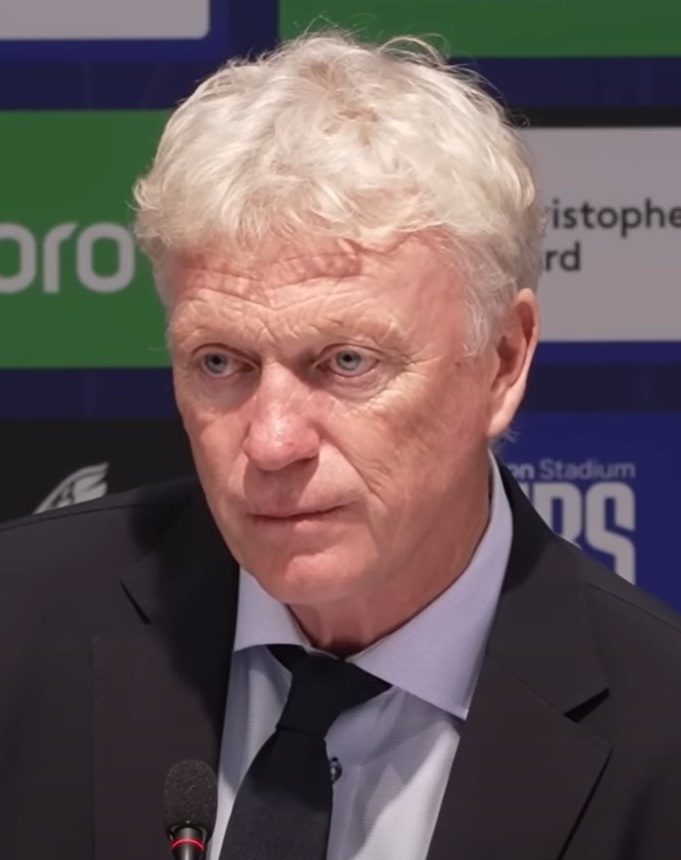
Let’s rewind the tape. Not to the goals, not to the run of play, and not even to the tackle itself. Rewind it to after the whistle, to a television interview at the Hill Dickinson Stadium, where Everton manager David Moyes stood in front of a TNT Sports microphone and prosecuted a refereeing decision in full — the tackle praised, the yellow card condemned, the free kick struck from the record — and then, right in the middle of the prosecution, entered the most honest piece of evidence in the whole case. His own. Everton had just lost 2–0 at home to Chelsea on Saturday, their first defeat of the season, beaten by a second-half double from Pedro Neto. Moyes was asked about Harrison Armstrong’s first-half yellow card for a strong challenge on Chelsea defender Josh Acheampong, the first booking of the game from referee Paul Tierney. And here is what the 63-year-old told TNT Sports, as reported identically by Everton News and Livescore: “I thought Harrison had a great tackle on the far side. I thought it was probably the best part of the first half and I think people who watch football appreciated it. I didn’t see any reason why he was carded. I’ve not seen it by the way but my feeling was I didn’t think it was in anyway a free kick, I think, is part of what we do. I think their player just got up and got on with it.” Read the middle of that sentence again. I’ve not seen it by the way. The best part of the first half, a tackle he had not seen. No reason for a card, in a play he had not seen. Not even a free kick, in an incident he had not seen. That is not a manager defending his player. That is a review written by a man who never opened the book, delivered with the confidence of a man who wrote it.
Understand the altitude here, because this segment punches up or it does not punch at all. David Moyes has been a manager since 1998. He has run Everton across two spells, Manchester United, Real Sociedad, Sunderland and West Ham, and he has given roughly a thousand versions of this interview. He knows exactly how the post-match ritual works: you protect your player, you pressure the officials’ assessors, you plant a flag for next week. Nobody is naive about the game being played. But the ritual has one rule, and it is not a complicated one: you are supposed to have watched the play you are ruling on. The replay exists. It exists on the monitor in the tunnel, on the analyst’s tablet, on the broadcast he was standing in front of. Moyes had every opportunity to see the tackle before he graded it the best moment of his team’s first half. He simply graded it first and disclosed the viewing afterwards — as a footnote, mid-sentence, in the tone of a man mentioning the weather. By the way. That little “by the way” is carrying an entire officiating prosecution on its back.
The second claim, and the look he did take
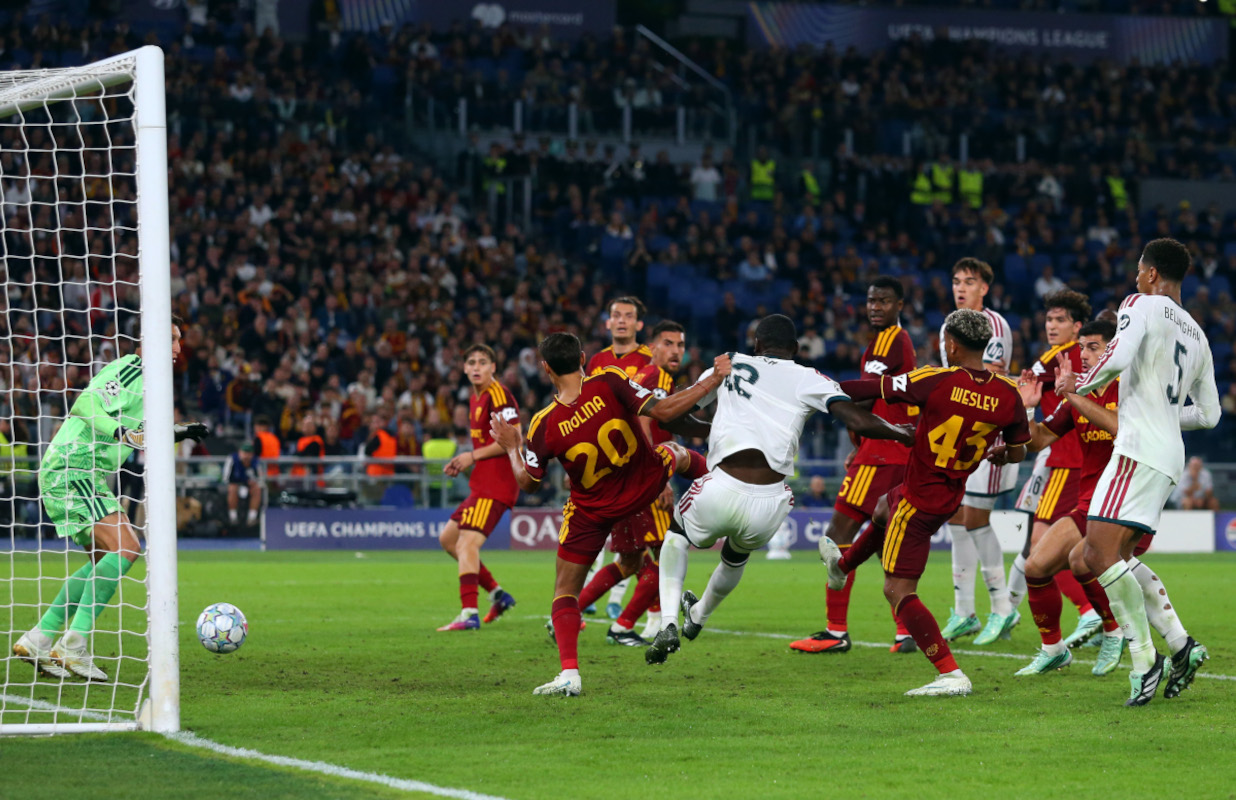
And it was not one ruling, it was a docket. In the same TNT Sports interview, Moyes moved on to Chelsea’s Morgan Rogers and James Garner: “I think the Morgan Rogers one on Jimmy could have been questioned but no we’re not saying that we want everything to be a free-kick. We want them to referee correctly and I didn’t think the tackle Harrison made was refereed correctly. I thought it was unfair.” The background, reported by Everton News, Livescore and Roundtable, is this: Rogers was already on a yellow card, shown in the 37th minute for shoving James Tarkowski during an altercation after Tarkowski had barged into Moises Caicedo off the ball. Two minutes before half-time, Rogers and Garner flew into a 50–50 challenge that left both players in pain and Garner needing medical attention after Rogers caught him with his studs. Tierney judged it a fair challenge from both sides and punished neither man. Former Everton winger Pat Nevin suggested Rogers could have been sent off for a second bookable offence, and Moyes, in his press conference, returned to it: “After a wee look at Morgan Rogers’ tackle on Jimmy, which you know — maybe some might have said something different. I think that might have made that a second yellow. It wasn’t the case.” Savour the wording. After a wee look. For the Rogers incident, the manager took a look. For his own player’s tackle — the one he called the best part of the first half — no look at all. The scrutiny in this story runs in exactly one direction: forensic for the opposition, faith-based for the home team.
Now keep the proportions straight, because the Rewind reports the whole tape, not just the funny part. Roundtable’s account of that 50–50 is a genuinely balanced one: Rogers touched the ball first, his momentum carried his foot over the top of the ball into Garner’s upper shin, and Garner was slightly late himself, catching Rogers’ trailing leg with his studs — a challenge Chelsea supporters could argue either way, in a game where Chelsea actually collected four of the seven yellow cards Tierney showed, had penalty appeals waved away, and were, in Roundtable’s judgment, the better side who deserved the points. Livescore made the same point about the football: Neto’s double — the first time he has scored twice in a Premier League game, in his 187th appearance in the competition — lifted Chelsea to fourth, while Everton managed only two shots in the entire second period. And to Moyes’s credit, in the press conference carried by HaytersTV, he said plainly that Chelsea were the better side. That admission is in this story because it happened. It also makes the Armstrong prosecution stranger, not stronger: a manager honest enough to concede the result then turned around and litigated, sight unseen, the one call that flattered his own team’s afternoon. Meanwhile the actual football problem he described himself — a toothless attack, two shots after the break, a first defeat to take into next weekend’s game against Arsenal — sat there with no “unfair” attached to it at all.
Nobody here failed except the verdict
So let us be precise about who this segment is not for. It is not for Harrison Armstrong, a young midfielder whose tackle is being debated by everybody except, apparently, the man praising it loudest — Armstrong did his job in real time, at full speed, and does not need his manager turning his challenge into a bit. It is not for Paul Tierney, the referee being criticised on national television by a witness who has just told the audience he did not witness the incident; whatever any of us think of the card, the official at least watched the tackle before he decided on it, which is more process than the prosecution managed. And it is not for the Everton supporters who booed the booking in the ground, because fans are allowed to rule from the heart in the stands — that is the ticket price. A manager on a microphone is held to a higher standard, and the standard is eyesight. Moyes also told his press conference, per Roundtable, that “we’ve got referees who we want to be the best in Europe or think they’re the best because they let things go,” and called Armstrong’s challenge “a half-decent tackle” while conceding “maybe somebody might tell me otherwise. I wasn’t sure it was the right decision.” Even softened, the structure never changes: certainty first, evidence available on request.
The verdict
So the verdict goes where it belongs: to David Moyes, and to the grand old ritual that lets a manager turn a press obligation into an appeal hearing with no exhibits. Your team lost 2–0 at home. Your winger’s opponent scored twice. Your own honest sentence — Chelsea were the better side — was the correct review of the afternoon. And then you called a tackle the best part of the first half and its booking “unfair,” and confessed, by the way, that you had not seen it. Coach, the tape is right there. It has been right there since before you walked to the microphone. Watch the play, then prosecute it. That order is the whole job.
THE VERDICT — After review: prosecuting a tackle you never saw is outta pocket.